
The complete guide
How To Choose And Fit Gutter Guard Mesh
Why gutters overflow
A gutter has one job. It catches the rain coming off the roof and carries it along to a downpipe. It only needs a clear channel and a slight fall to do that.
The trouble is that a gutter is also an open trough sitting under the sky. Leaves blow into it every autumn. Moss grows on the roof and rolls down in lumps. Birds drop twigs. Over a season or two this turns into a dark, wet mat lying in the bottom of the channel.
Water cannot get through the mat to the outlet, so it takes the easy way out. It pours over the front lip in a sheet, or it runs back behind the gutter and down the wall. You see green streaks on the render, splashed windows and a soggy strip of ground along the house. Left for years, that damp gets into fascia boards and walls.
The cure is to clear the gutter. The way to do that less often is to stop the leaves getting in.
What gutter mesh does
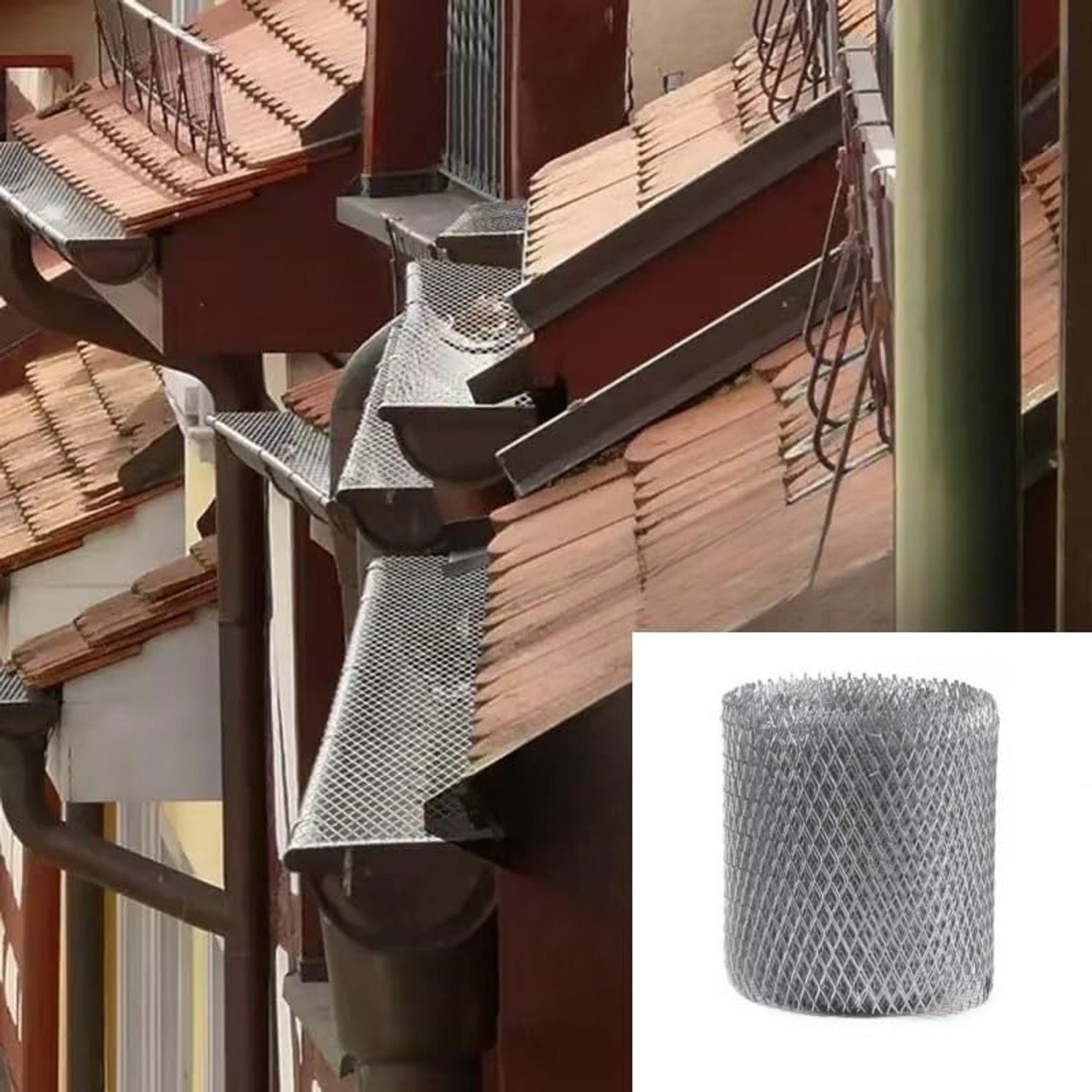
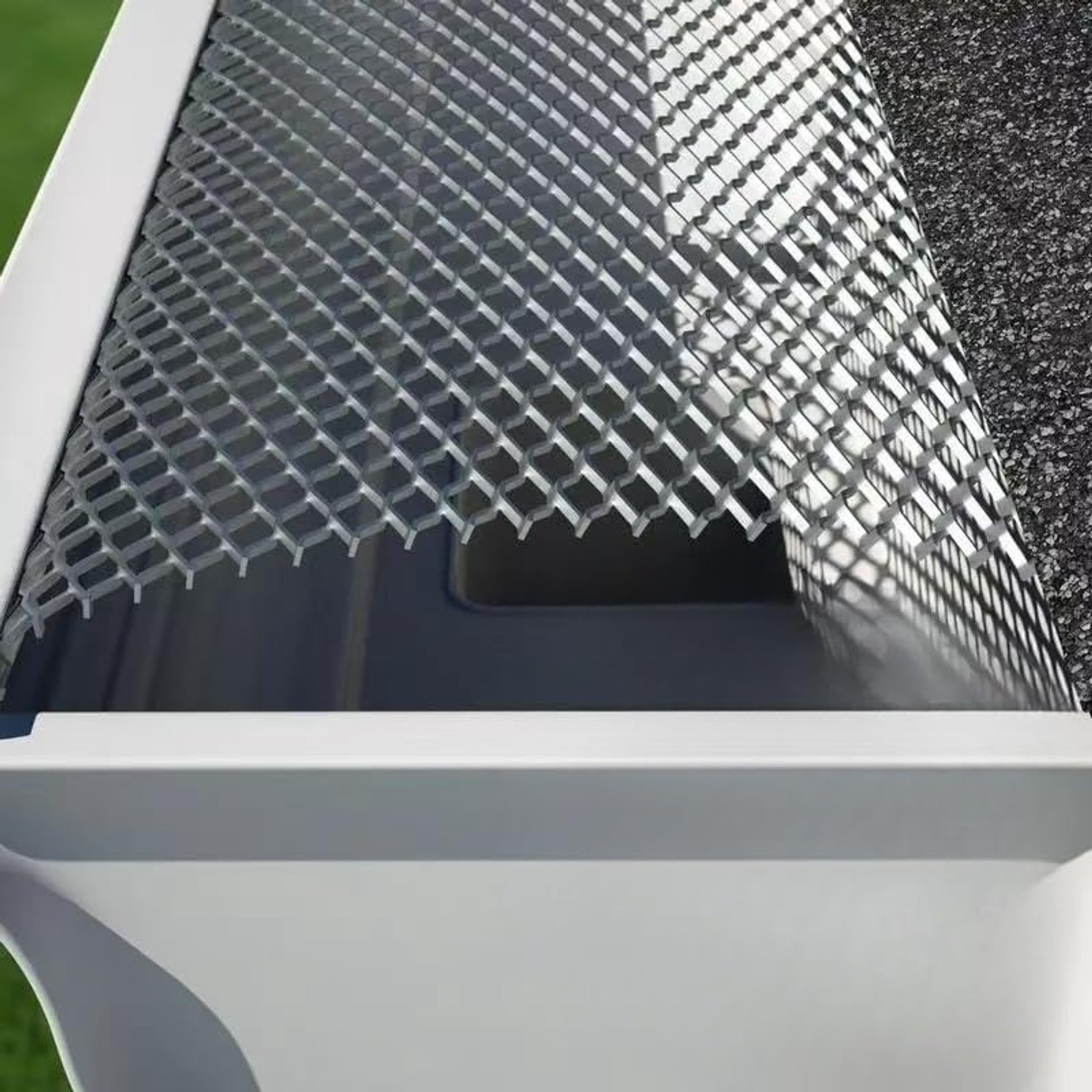
Gutter mesh is a simple idea. A strip of open mesh sits over the gutter. Rain runs off the roof, hits the mesh and passes through the openings. Leaves and twigs are too big to follow, so they stay on top.
Once they are on top, they are out in the wind. Many dry out and blow off. The rest can be swept away with a brush on a pole, which is a much quicker job than scooping sludge out of the gutter by hand.
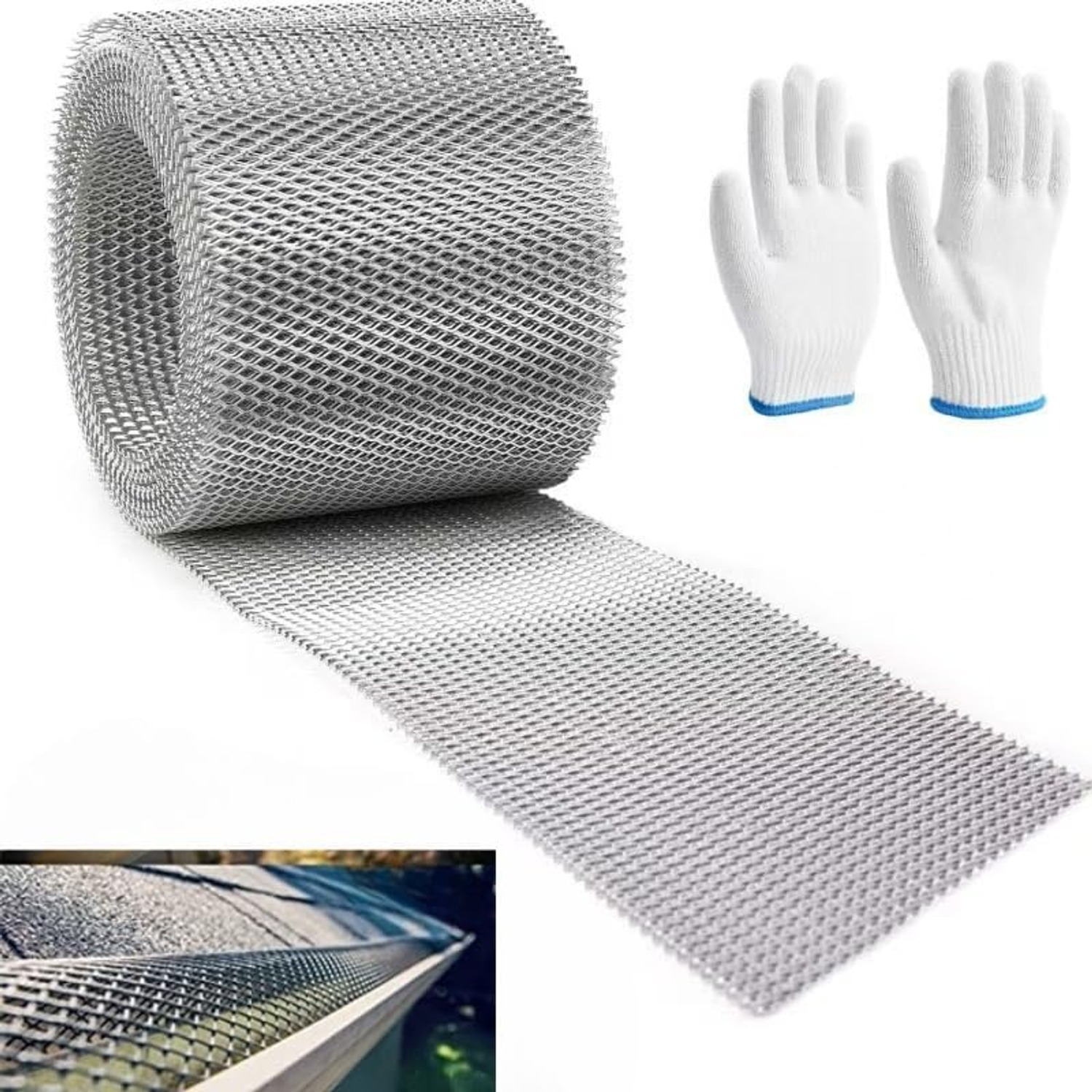
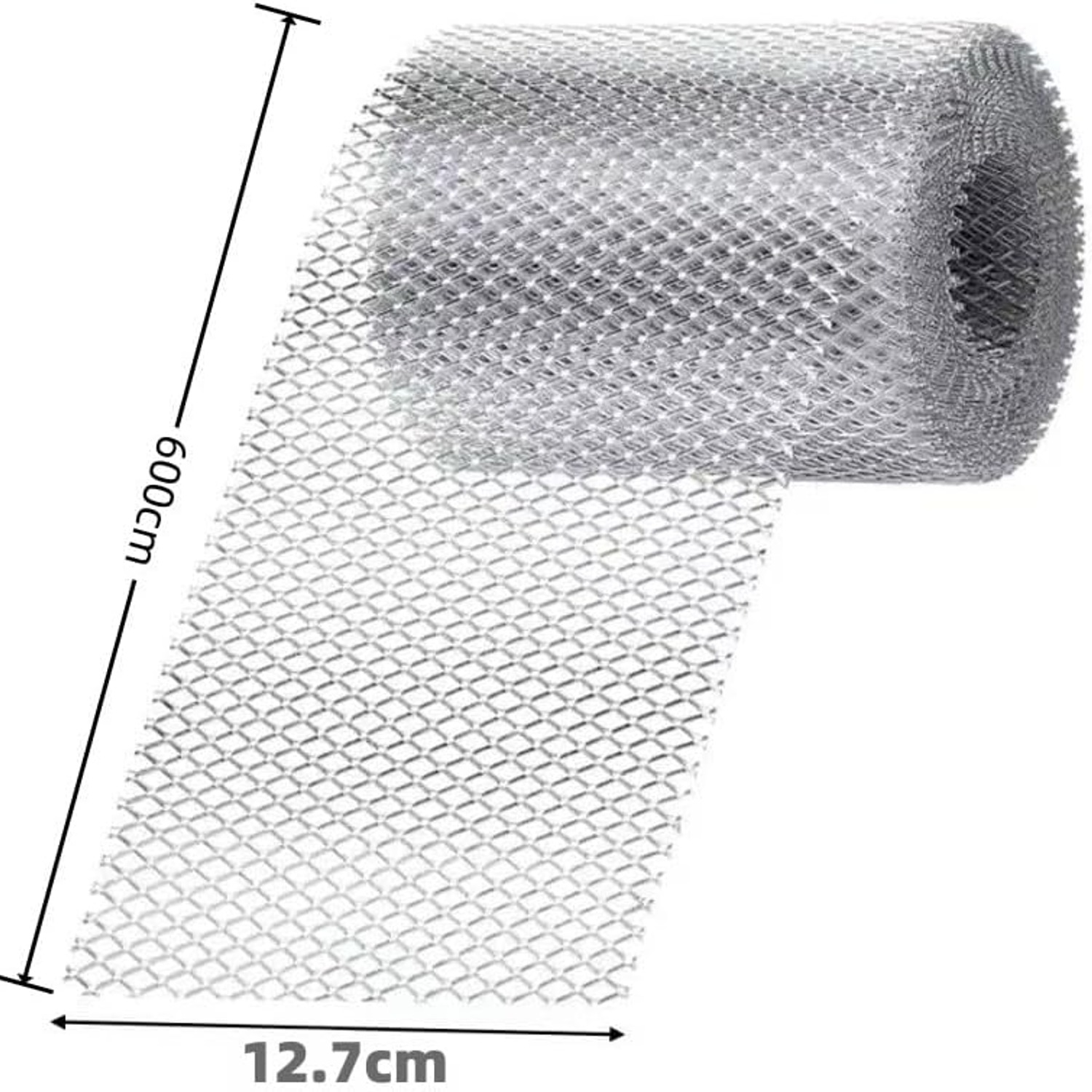
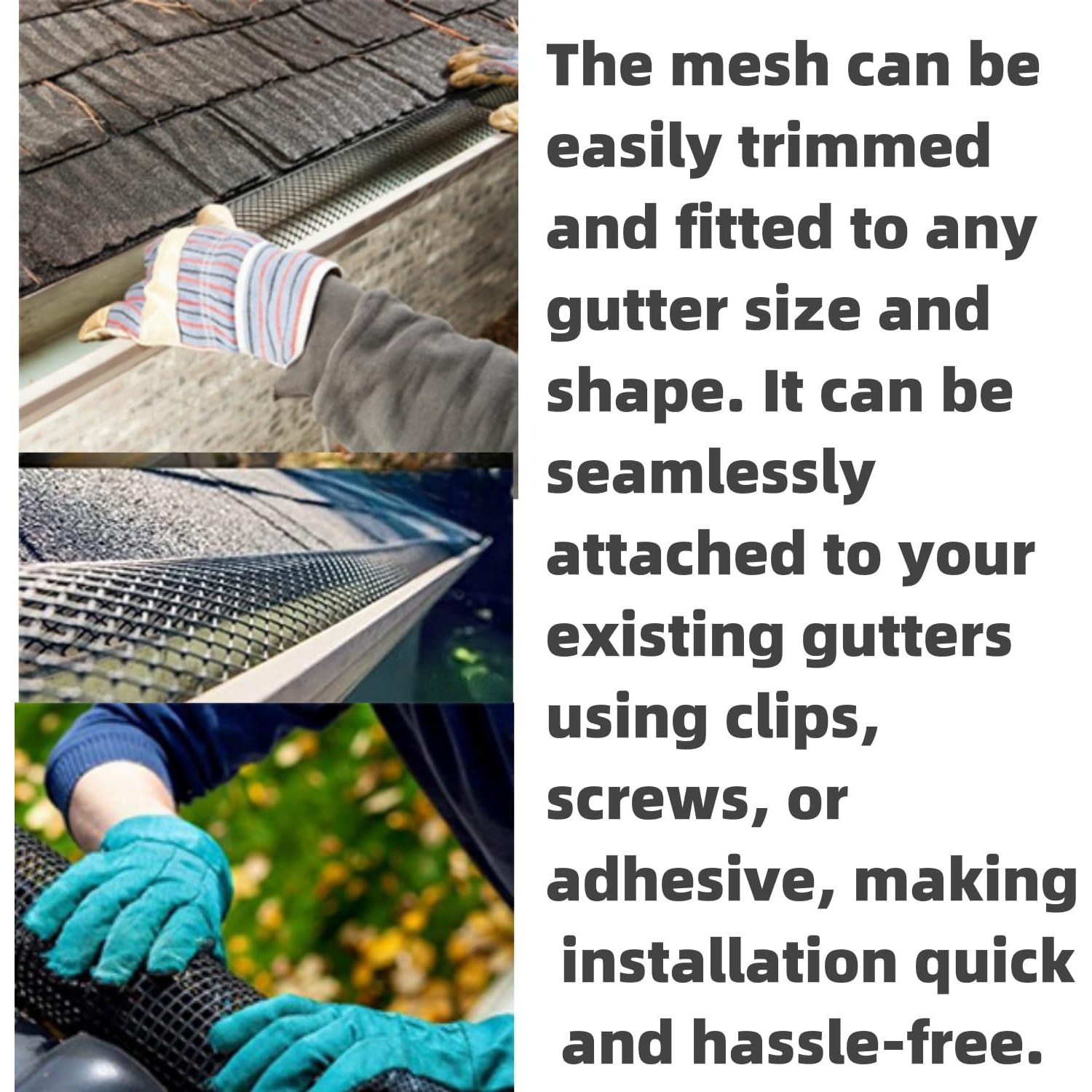
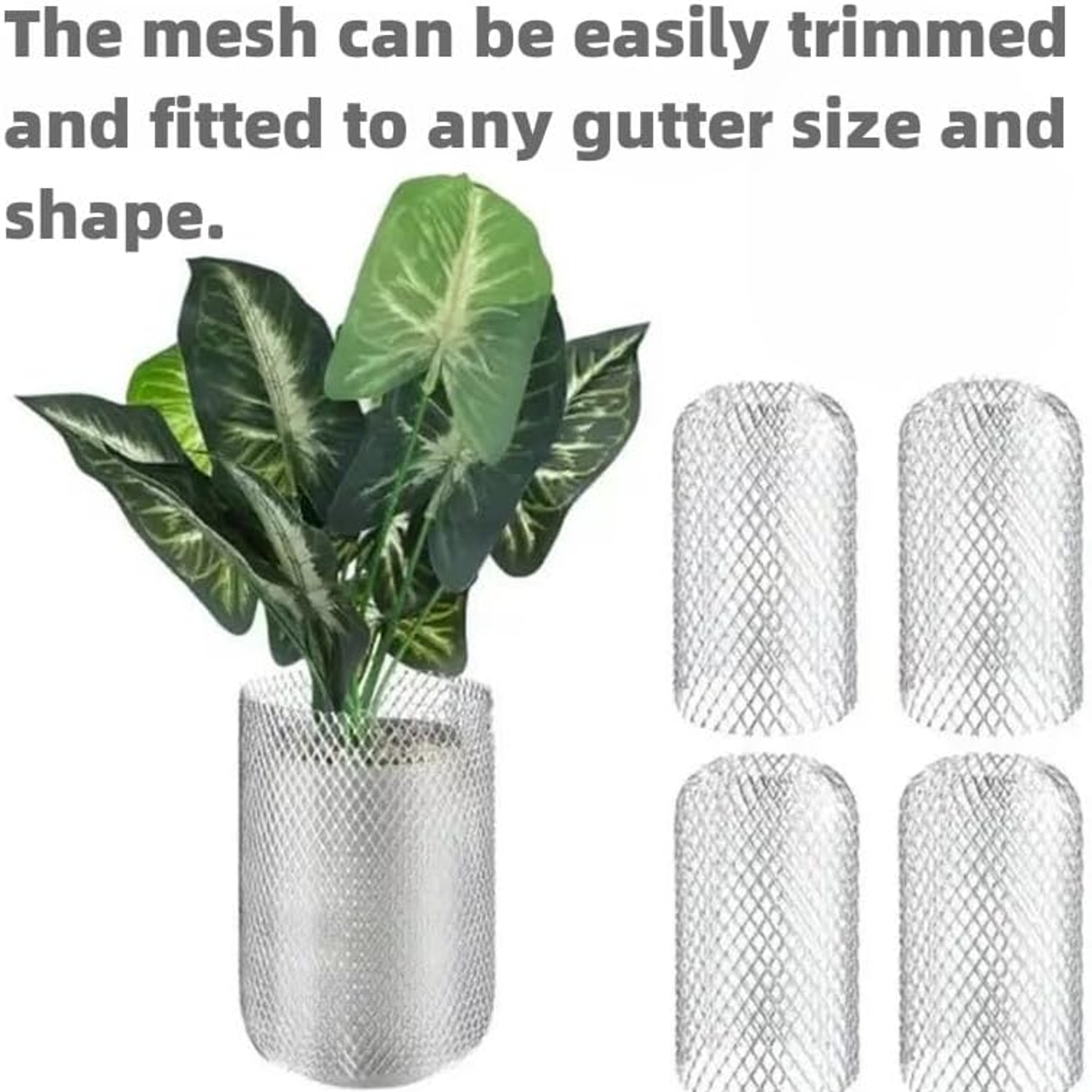
This product is one 6 metre length of aluminium mesh, 12.7cm wide. The maker says it can be cut to size, and that it can be trimmed to suit the size and shape of an existing gutter.
What comes in the pack, and what does not
The pack holds the 6 metre mesh and a pair of protective gloves. The gloves matter. Metal mesh has sharp edges, and the edges you make when you cut it are sharper still.
The maker says the mesh can be attached with clips, screws or adhesive. None of those is listed in the pack. Decide how you will fix it and buy the fixings before the day you plan to do the work.
A few details are not stated by the maker. These are the size of the openings, the thickness of the metal and the colour. The product photos are the guide for those.
The whole thing is light. The maker gives the package as 14 x 11 x 11 cm and 340 g.
Measuring up
Two measurements decide whether this is the right product.
The first is the width of your gutter. Measure across the open top, from the back edge against the fascia to the front lip. The mesh is 12.7cm wide. If your gutter is narrower than that, you have width to spare for shaping the mesh or for fixing it. If the gutter is wider than 12.7cm, this strip will not cover it.
The second is length. Walk along the outside of the house and measure each gutter run. Add them together. One pack covers 6 metres at full width. Allow a few centimetres of overlap wherever two lengths meet, and a little waste at corners.
It is worth doing this with a tape and a notebook from the ground before you order. Guessing from memory is how people end up one length short on the last wall.
Fitting it
Start with a clean gutter. Scoop out the leaves and silt, then pour a can of water in at the far end and watch it run to the downpipe. If it does not run away, the outlet or the downpipe is blocked and needs clearing first. Mesh over a blocked gutter fixes nothing.
Do your cutting on the ground. The maker does not name a cutting tool. Tin snips or heavy scissors are what most people use on light aluminium mesh. Wear the gloves.
How you fix the mesh depends on the gutter you have. The maker names three options, clips, screws or adhesive. Clips are the gentlest on a plastic gutter, since they can come off again and they make no holes. Screws hold firmly but mean drilling, and holes should be kept away from joints and brackets. Adhesive needs a clean, dry surface, which is not easy to find on an old gutter in an Irish winter.
Whichever you choose, leave the roof covering alone. The maker describes attaching the mesh to the gutter. Pushing mesh up under slates or tiles is a different method and can crack them or lift them.
Where two lengths meet, overlap them so there is no gap. At a corner, cut the mesh to follow the angle and overlap again.
Working at height
This is the part that deserves real thought. A fall from a ladder is a far bigger risk than an overflowing gutter.
Use a ladder that is in good condition, set on firm level ground, at a sensible angle. Have a second person hold the foot of it. Move the ladder often, so you never lean out to the side. Do not rest the ladder on the gutter itself, especially a plastic one.
Do not work in wind or rain, and do not work over a conservatory roof from a ladder.
If the gutters are at first floor height or above, or if any of the above makes you uneasy, pay a gutter contractor to fit the mesh. It is a short job for someone with the right access gear.
Is your house a good candidate
Mesh earns its place on houses that sit near trees dropping whole leaves, and on low gutters that block every year, like those on a shed, a garage or a conservatory. Those small gutters are often the worst, because they are shallow and close to overhanging branches.
It is less clear cut under conifers. Needles are thin and can lodge in or slip through open mesh, and the opening size of this mesh is not stated by the maker. It will still hold back cones and twigs, but expect to brush it more often.
If there is not a tree within sight of your roof and the gutters only ever collect a little moss, a yearly clean may be all you need.
What mesh will not do
It is fair to be plain about the limits.
Mesh reduces blockages. It does not stop every one. Fine silt washes off roof tiles and passes through any open mesh. So do small seeds and moss spores. Over a few years a thin layer builds up in the gutter underneath.
Leaves also sit on top in still, wet weather. If a thick layer is left there, rain can run over it and miss the gutter. A quick brush along the mesh once or twice a year deals with that.
And mesh cannot help with a problem lower down. If the gully at the foot of the downpipe is full, or the drain beyond it is blocked, water will back up no matter how clean the gutter is. A blockage in a public sewer is a matter for Uisce Éireann or your local authority. One on your own property needs a drainage contractor.
Looking after it
Aluminium is light and does not rust the way plain steel does, which is why it is so widely used for gutter mesh. The maker describes this mesh as made to cope with outdoor weather.
Once a year, late in the autumn when the trees are bare, look along the gutters. Brush off anything lying on the mesh. Check that the fixings are still holding and that no section has lifted in the wind. Every couple of years, lift a section and look underneath for silt.
If a length gets bent or damaged, cut out that piece and replace it. That is one advantage of a cut to size product.
The short version
Gutters overflow because leaves and moss block them. A mesh over the top keeps most of that out while letting the rain through.
This is a 6 metre length of aluminium mesh, 12.7cm wide, with a pair of protective gloves in the pack. The maker says it can be cut to size and fixed with clips, screws or adhesive, which you buy separately. The opening size and colour are not stated by the maker.
Measure your gutter width and your total run before you order. Clean the gutter first, cut on the ground, wear the gloves and treat the ladder with respect. Then check the mesh once a year, and expect a lot less sludge than before.