
The complete guide
How To Choose A Shower And Sink Drain Hair Catcher
The problem nobody deals with until it is too late
A blocked drain is one of those household jobs that gets worse quietly. Nobody notices the first few strands of hair. Nobody notices the hundredth. What people notice is standing in two inches of grey water, or watching a sink empty at the speed of a leaking bucket.
The material causing it is almost always the same. Hair, soap, grease and small food scraps meet inside the pipe and knit together into a plug. Hair is the scaffolding, because it tangles and anchors, and everything else sticks to it. Pour a chemical cleaner down there and you are dissolving a problem you created months ago, in a pipe you cannot see, with a product you would rather not have in the house.
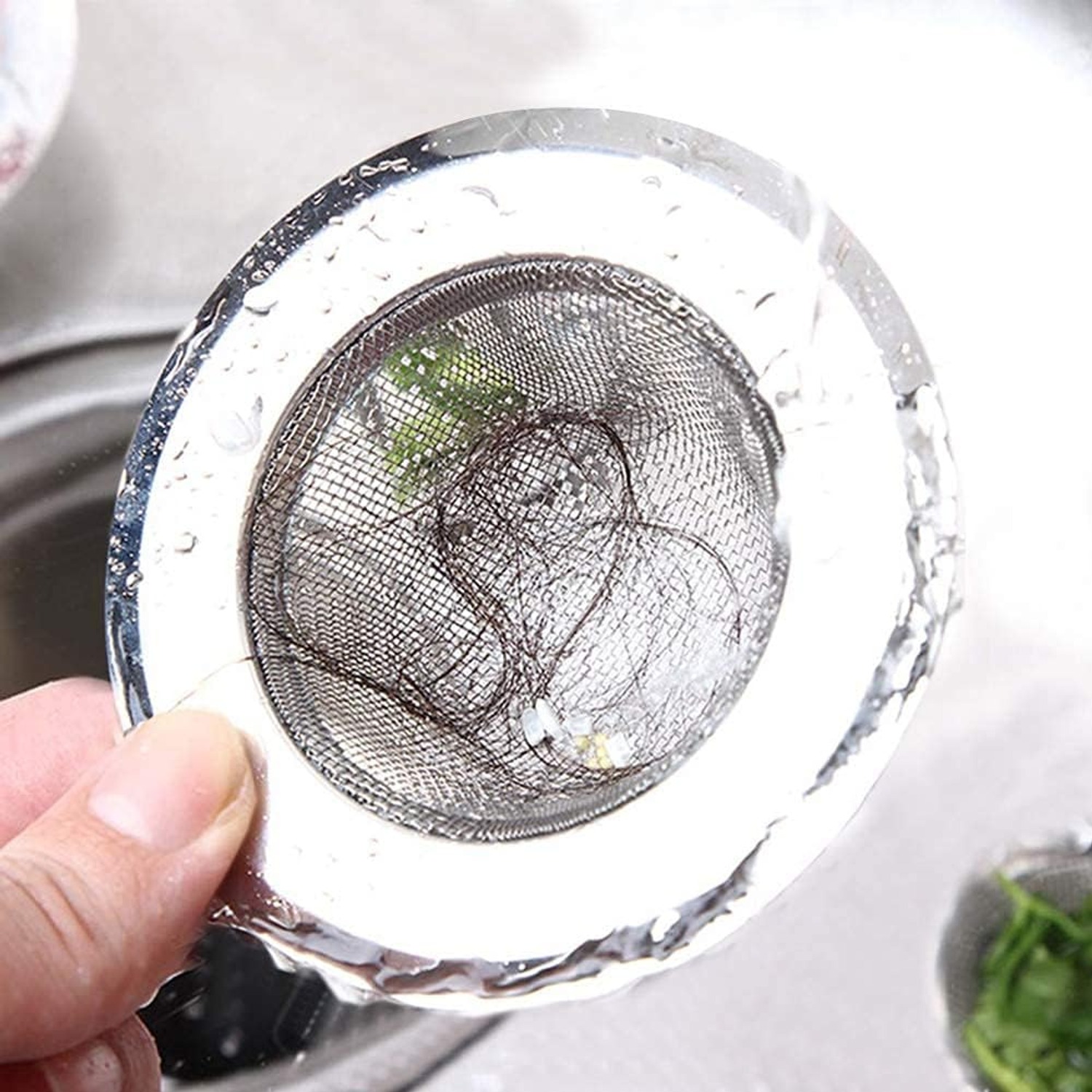
A strainer sitting over the opening works on the other end of that chain. It stops the scaffolding getting in. Everything you would have had to dissolve later now sits in plain view, where you can lift it with a finger and put it in the bin. It is not clever technology. It is just the right thing in the right place.
How a flat drain strainer works
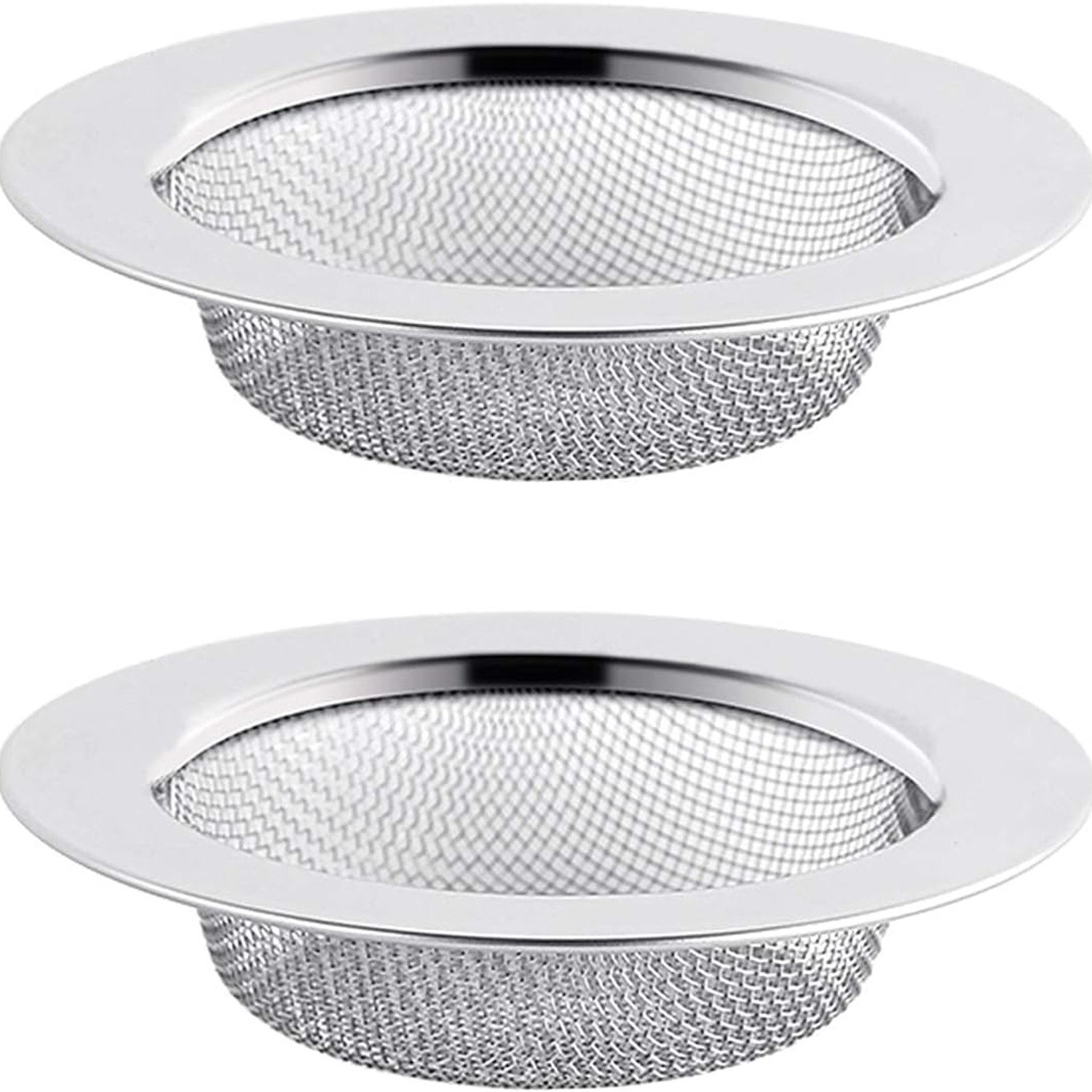
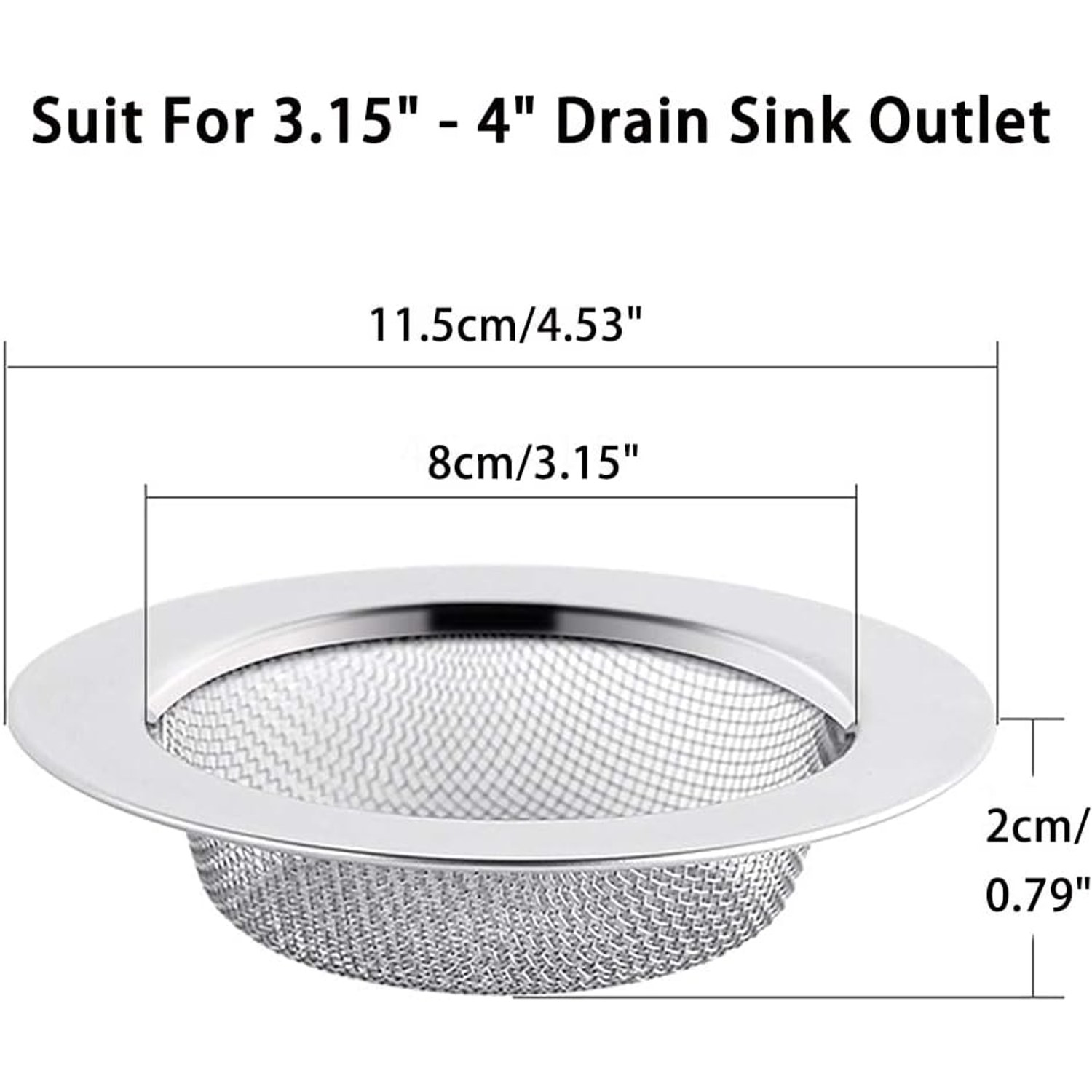
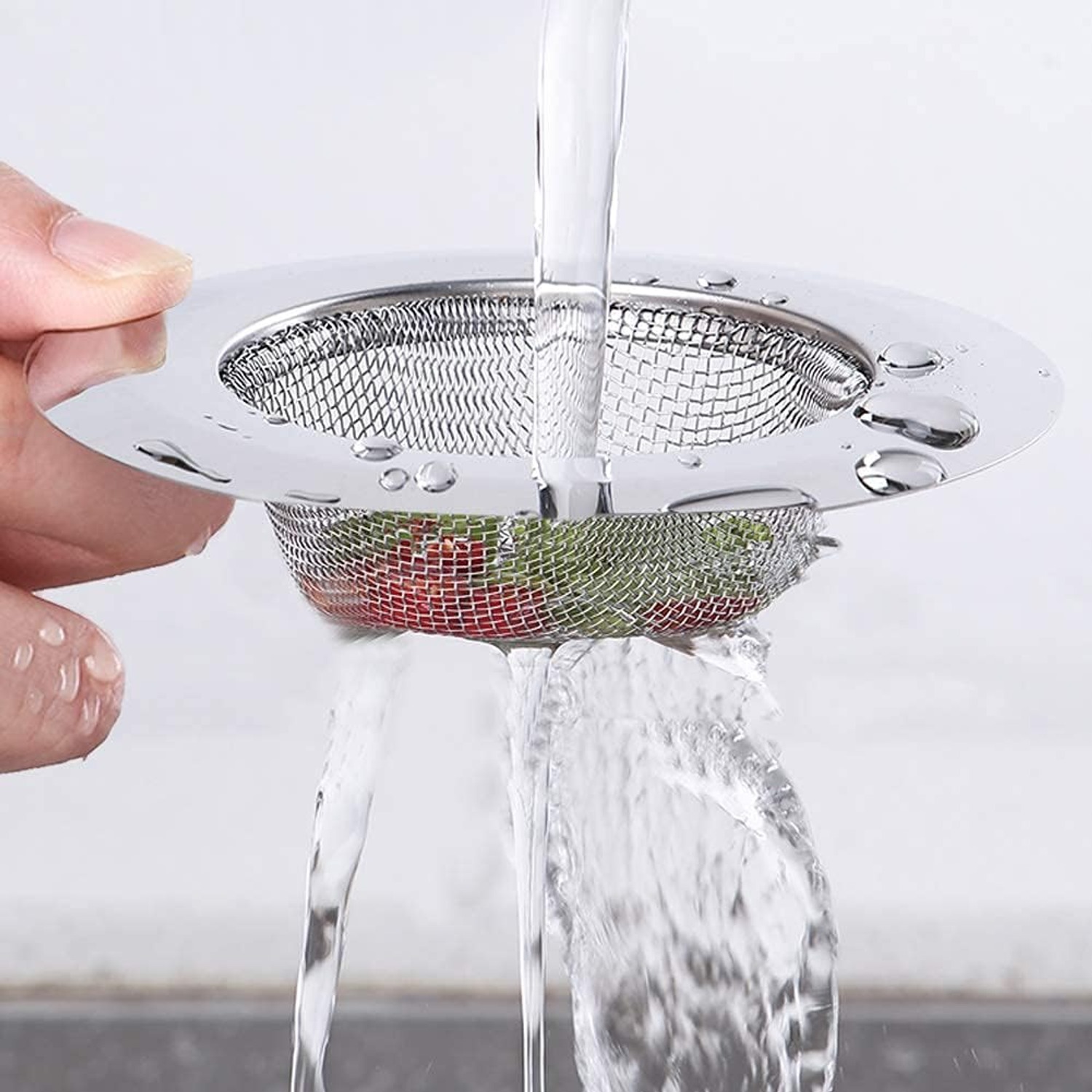
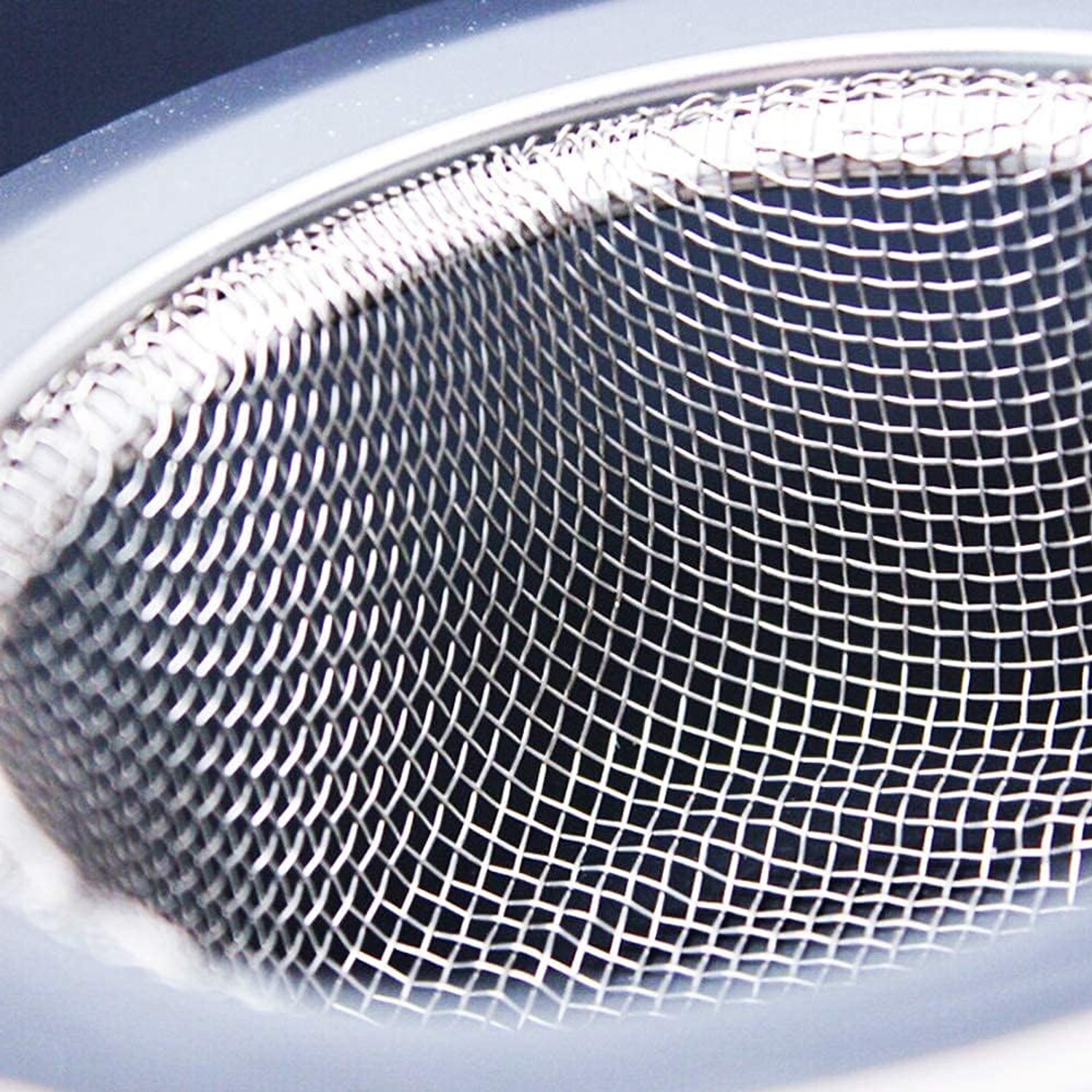
This type of cover is a shallow stainless steel disc, 115mm across and about 2cm deep, with the face punched full of small round holes. It rests over the drain opening. Water falls onto it, runs through the holes and away. Anything larger than a hole stays on top.
The hole size is the whole design. Too large and hair slips through, which makes the cover decorative rather than useful. Too small and the water backs up, especially once a bit of shampoo foam is in the mix. The perforations here are set to catch hair and particles while keeping flow close to normal, so in daily use you should not feel like your shower has slowed down.
Note that it strains rather than seals. Water goes through by design, so this is not a plug. If you want to fill a bath or hold water in a sink, you still need the stopper that came with the fitting. Plenty of people use both, with the strainer going back over the top once the water has drained.
The other thing worth understanding is that a surface catcher only helps if you clear it. Its job is to make the clearing easy, not to make it unnecessary. Thirty seconds a day beats an evening with a drain snake.
Why stainless steel instead of plastic or silicone
Walk through any homeware aisle and you will see three versions of this product. Plastic domes, silicone mats, and metal discs.
Plastic is the cheapest and it does work at first. The trouble is that bathroom plastic goes brittle. Hot water, shampoo and sunlight through a window all shorten its life, and when it cracks the broken piece can end up in the drain, which is exactly what you were trying to avoid. Silicone lasts better but it is soft, so it can shift under the force of running water and tends to collect a greasy film that is a chore to clean.
Stainless steel sits in a wet environment without changing. It does not warp, does not go yellow and does not soften. This set is listed as rust resistant with a polished finish, which means soap residue wipes off rather than soaking in. The weight also helps. A metal disc has enough heft to stay put when water hits it, where a light plastic one can float or slide.
Steel is also easy to clean properly. These are dishwasher safe, so the kitchen one can go in with the plates rather than getting scrubbed by hand.
Will it fit your drain
Fit is the one thing worth checking before you buy anything in this category, and it takes about a minute.
Take a tape measure and measure across the drain opening itself, not the decorative plate around it. These strainers are 115mm wide and are designed to sit over openings of roughly 80mm to 100mm, with the rim resting on the flat surface around the hole. If your opening is much wider than 100mm, the cover will fall in. If it is tiny, the cover still works, it just overhangs more than necessary.
The second thing to check is whether the surface around the drain is flat. A standard shower tray, bath or sink gives you that. A tiled wet room with a strong fall, or a drain set into a recess with a raised lip, may not let the disc sit flush. It will still catch hair, but it may rock.
The third check is your existing plug. If you have a pop-up waste with a mechanism that stands proud of the drain, the cover may perch on top of it rather than lying flat. Many pop-ups lift out, which solves it. Where the plug sits level or can be left in the open position, there is usually no issue.
Who gets the most out of it
Households with long hair are the obvious group. One person with long hair sheds more than enough in a week to start a clog, and a family with two or three makes it inevitable. This is the single cheapest piece of plumbing insurance you can buy.
Dog owners are the next group. Washing a shedding breed in the bath puts an astonishing amount of coat into the drain in one session. Expect to clear the strainer partway through the wash rather than at the end.
Renters benefit too, because nothing is fitted. There is no adhesive, no screw and no modification. You put it down, use it, and take it with you. If the landlord charges for a blocked drain at the end of a tenancy, that is a strong argument on its own.
In the kitchen, the second strainer in the pack earns its place catching rice, coffee grounds, tea leaves and peelings. Those are the solids that bind with cooking grease and cause slow sinks. Many people find the kitchen one is the piece they use more.
Keeping it clean and keeping it working
The routine is simple. Lift the strainer, tip whatever is on it into the bin, rinse it under the tap, put it back. In a busy shower that is a daily job. In a guest bathroom it might be weekly.
Once a week or so, give it a proper wash. Warm soapy water and a soft brush will clear anything stuck in the holes. Dry it off afterwards if you want to keep the polished face free of water marks. Hard water areas will leave limescale spotting over time, and a diluted descaler or a wipe with white vinegar handles that.
Avoid steel wool and scouring powders. They will scratch the polish and leave a dull patch that then holds onto grime. A nylon brush is plenty for anything a drain cover picks up.
If the holes do slowly clog with soap residue, a soak in hot soapy water loosens it. Push the softened residue out from the underside rather than the top, so you are pushing in the direction the water normally flows.
A few honest limitations
It is worth being straight about what a surface strainer cannot do. It will not clear an existing blockage. If your drain is already slow, deal with that first, then fit the strainer to stop it coming back.
It will not catch dissolved grease. Liquid fat goes straight through the holes with the water and cools further down the pipe. Kitchen habits still matter, so pour cooking fat into a jar rather than the sink.
It is also visible. It sits on top of the drain, so you can see it. Some people prefer the look of a flush chrome grate with nothing on it. If that matters more to you than the maintenance, this is not the product for you. Most people decide a small silver disc is a reasonable trade for never using a plunger again.
The short version
If you have hair going down a drain, something is going to catch it. Either you catch it at the top with a strainer you can empty in seconds, or the pipe catches it in a place that needs tools and chemicals.
This two-pack gives you a 115mm polished stainless steel cover for the shower and another for the kitchen sink. Rust resistant, dishwasher safe, no fitting required, and nothing to break. Measure your drain opening, check the surface around it is reasonably flat, and that is the whole decision.