

The complete guide
How To Choose And Fit A Leaf Guard For An Outdoor Gully
Leaves, gullies and a wet autumn
Every house has a few of them. A small square opening in the ground at the foot of a downpipe, outside the kitchen wall, or in a corner of the patio. It is called a gully, and its job is to take rainwater and waste water into the drain.
It is also the lowest point in the yard, which means everything ends up there. Leaves blow in. Moss drops off the roof and washes down the downpipe. Grass cuttings and soil arrive with every heavy shower. From October on, a gully without a cover can fill in a week.
What goes in does not come out by itself. Leaves sink into the water in the gully pot and rot. In a few months you have a thick black sludge that smells, slows the drain, and has to be scooped out by hand. Leave it long enough and it washes on into the pipe, where it is far harder to reach.
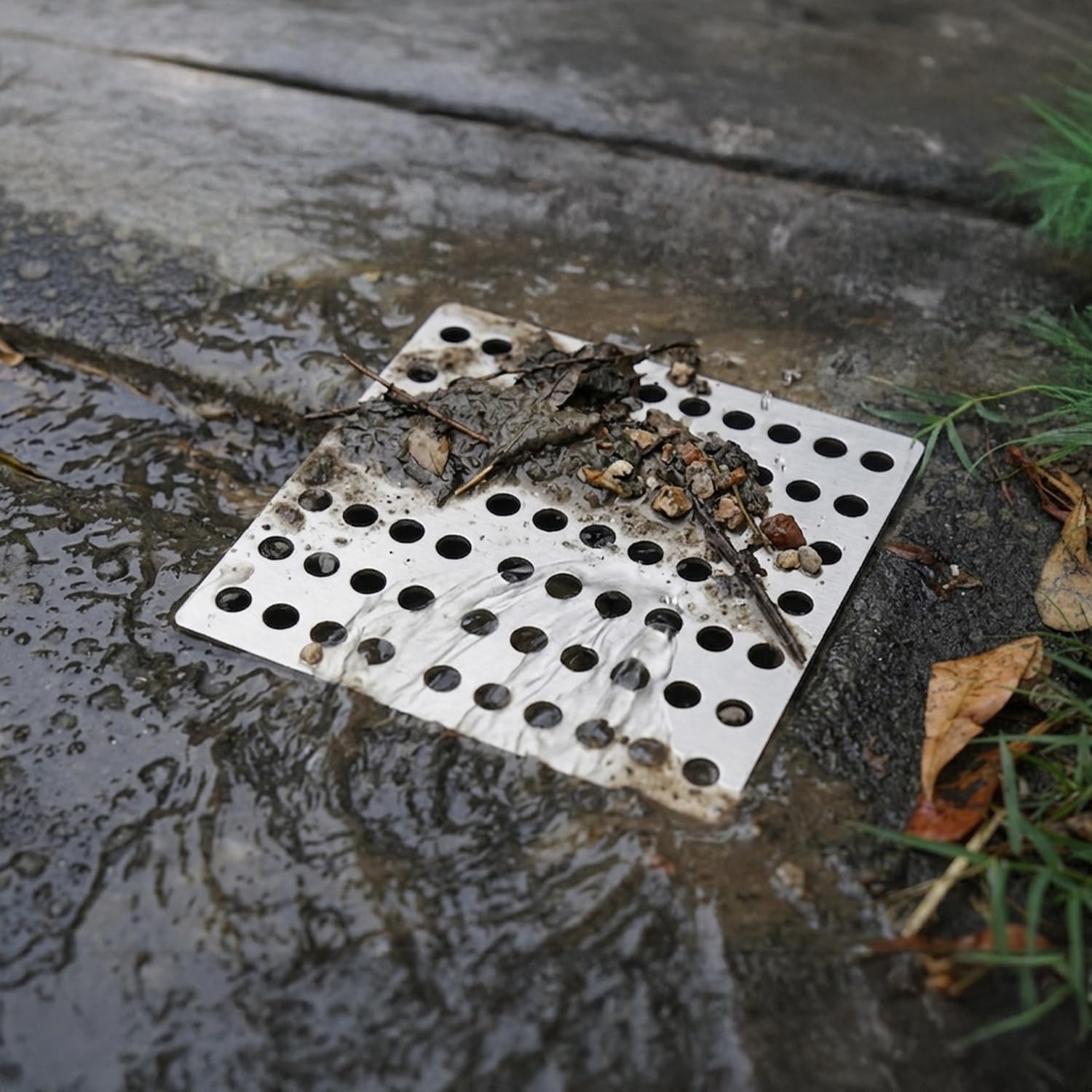
A leaf guard changes where the mess collects. Instead of sinking into the pot, the leaves sit on a plate at ground level. You brush them off and the job is done.
What this cover is
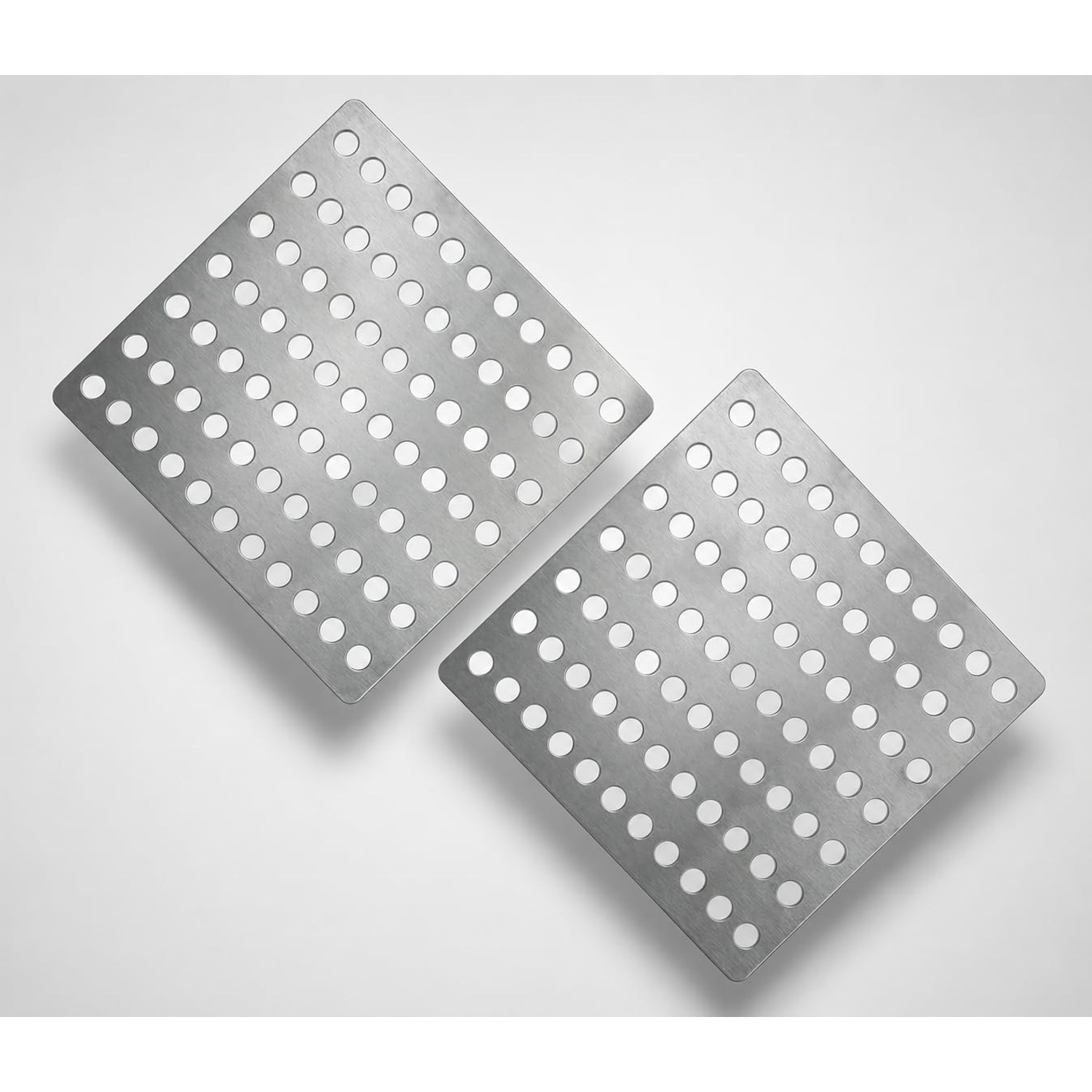
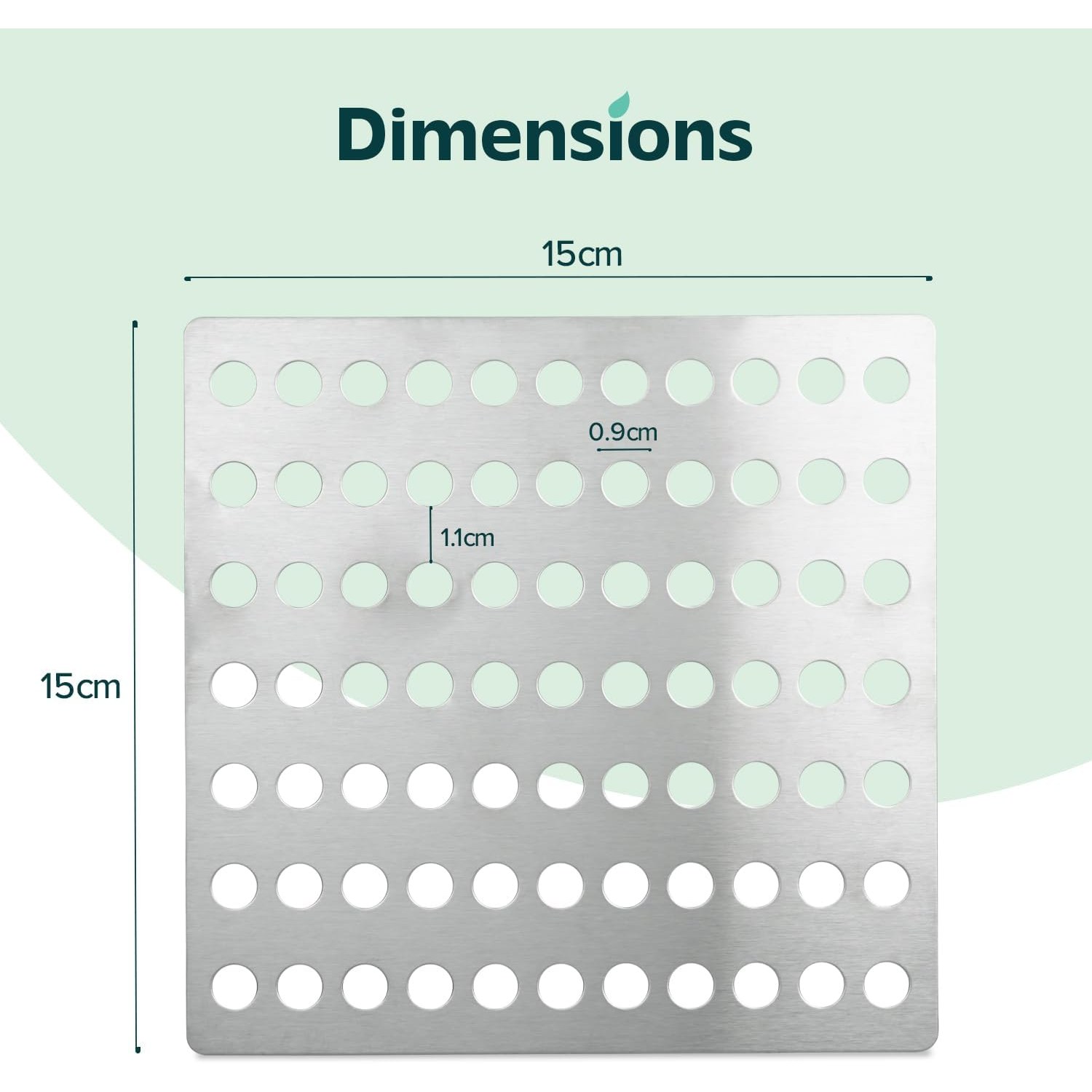
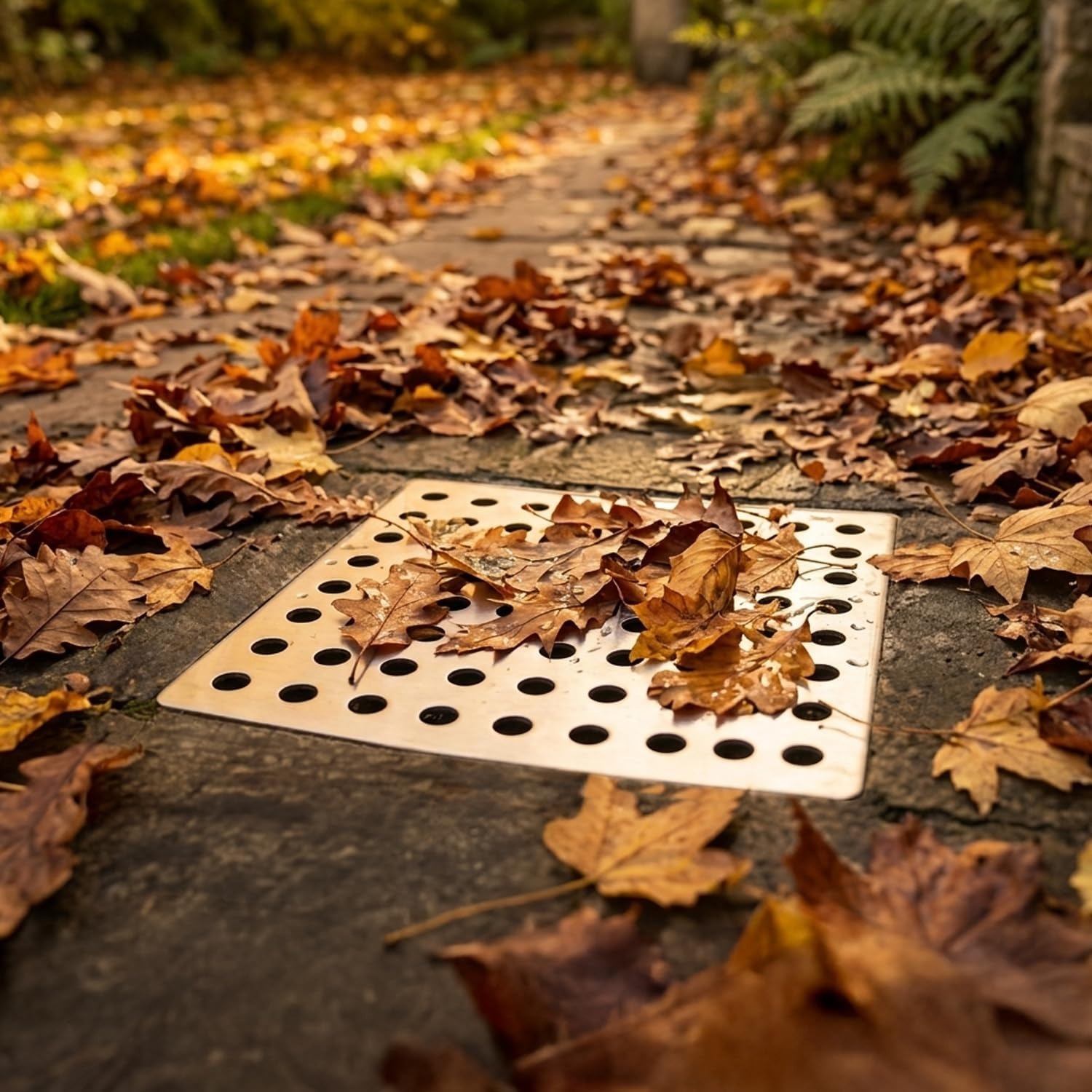
This is a pack of two covers. Each is a flat, square plate of stainless steel with a polished finish. The maker gives the size as 15 x 15 cm, which is 150mm square, and a depth of 0.7 cm.
The surface is perforated. The maker describes the holes as evenly spaced, there to let rainwater and poured water through while holding back leaves and larger bits. The hole size is not stated by the maker.
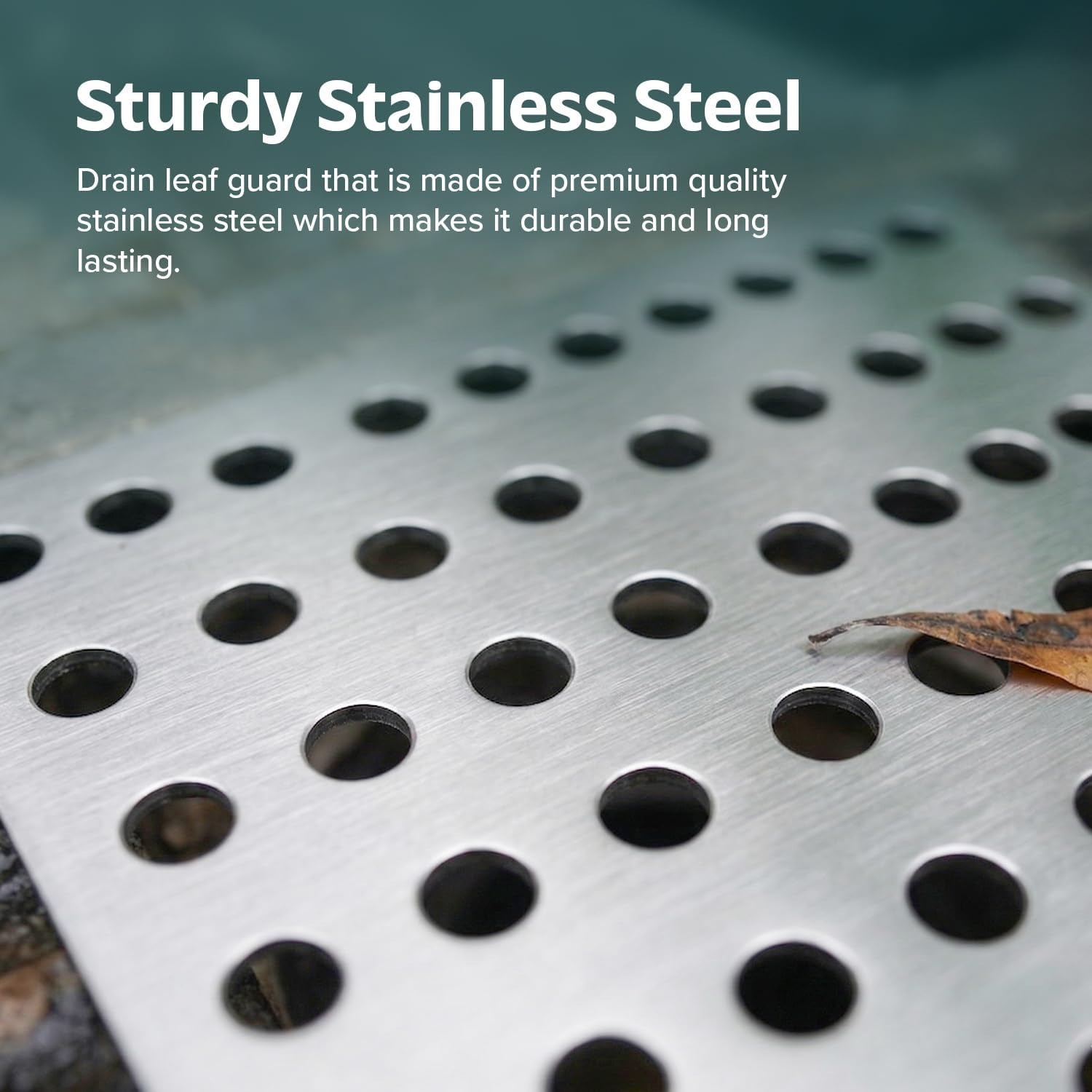
The maker describes the steel as rust resistant and suited to rain and damp. The grade of steel is not stated. The stated weight is 180 g, and the maker does not say if that figure is for one plate or for the pack. Either way, these are light.
No screws, clips or other fixings are mentioned. The maker describes the plate as shaped to sit within the drain opening, flat and flush, without standing above the surface.
Measure the opening first
This is the step that decides if the cover will work for you, so do not skip it.
Go out to the gully with a tape. If there is an old grid in place, lift it out. Most gullies have a square recess at the top, a shallow ledge that the grid rests on. Measure that recess from side to side and from front to back, in millimetres.
You are looking for a recess that takes a 150mm square plate. A millimetre or two of play is fine. If the recess is clearly smaller, the plate will not go in. If it is clearly larger, the plate will have nothing to rest on and could drop into the pot.
Check the shape as well. This is a square plate for a square opening. A round gully needs a round cover.
Look at how the downpipe meets the gully too. Where the pipe stops above the gully and water falls onto the grid, a flat plate works well. Where the pipe runs down through the opening into the pot, a flat plate cannot fit around it. Do not cut the plate to get round a pipe. It is not made to be cut, and a cut edge is sharp.
Where it belongs, and where it does not
The maker describes outdoor use on patios, in gardens and in driveway drainage areas.
Here is the part that is not stated. The maker gives no rating for foot traffic and no rating for vehicle traffic. With no stated rating, the safe way to treat this cover is as a leaf guard and not as a load-bearing cover.
In practice that means choosing where it goes. A gully tucked against the house wall, under a downpipe or in a planted corner is a good place for it. Nobody stands there. A gully in the middle of a path, at a back door step, or in the part of a drive where wheels run is not a good place. Those need a grid that is rated for the load.
If you already have a sound grid in a walked-on spot, leave it there.
Fitting it
There is very little to do. Clear the gully first. Put on gloves, lift out any old grid, and scoop the leaves and silt out of the pot with a trowel or an old ladle. Run a bucket of water through to make sure it drains.
Brush the recess clean so the plate can sit flat. Then lower the plate in. It should rest evenly on all four sides and lie flush. If it rocks, lift it and clear whatever grit is under one edge.
That is the whole fitting. Do the same at the second gully with the second plate.
Placing a cover like this is a job for any householder. Replacing the gully itself, or altering the pipework around it, is not. That work should go to a qualified plumber, and the Irish Building Regulations apply to drainage work.
Keeping it clear
A leaf guard that is never cleared becomes a lid. Wet leaves mat together over the holes, and rainwater then runs across the yard instead of into the drain.
So build it into the routine. In autumn, look at each gully once a week and after any windy night. Lift the plate, tip the leaves into the brown bin or the compost heap, brush both faces and put it back. For the remainder of the year a monthly check is usually enough.
Now and then, rinse the plates with clean water and wipe them. Stainless steel left outdoors can pick up brown surface marks over time, and more so near the coast. A wash keeps it looking well.
Fine silt and grit will still pass through the holes. That is normal for any perforated cover. Once or twice a year, lift the plate and scoop out what has settled in the pot.
Getting the most from a pack of two
Most houses have more than one gully, and they do not all work as hard. Before you place the two covers, walk round the house on a wet day and see which gullies collect the most.
The busiest is usually the one under the downpipe nearest to trees, because the gutter feeds it everything that lands on the roof. Moss, twigs and leaf mould all come down that pipe. The second is often a yard or patio gully in a sheltered corner where the wind drops whatever it is carrying. Those two are the places where a patio drain cover saves the most work.
If only one of your gullies suits a 150mm square plate, keep the second cover as a spare. A light plate can be mislaid during a garden tidy-up, and a spare means the gully is not left open in the meantime.
When the gully is already blocked
A cover prevents. It does not cure. If the gully is holding water today, fitting a plate over it will change nothing.
Start by clearing the pot by hand, as described above. In most cases that is all it takes, because the blockage is a plug of rotted leaves sitting in the trap of the gully.
We do not recommend chemical drain cleaners. They do little against a mass of leaves and silt, and whatever goes into a gully ends up further down the drain.
If the gully is clean and the water still will not go, the blockage is further along the drain. That is a job for drain rods or a drainage contractor. If the blockage turns out to be in a public sewer, it is not yours to clear. Contact Uisce Éireann or your local authority.
The short version
Outdoor gullies fill with leaves, and leaves in the pot turn to sludge. A perforated cover keeps them on top.
This pack gives you two polished stainless steel plates, each 150mm square with a stated depth of 0.7 cm. They sit within the opening and lift out by hand. The maker describes the steel as rust resistant.
Measure the recess before you order. Use them where nobody walks or drives, because the maker states no load rating. Then brush the leaves off once a week in autumn.