
The complete guide
How To Clear An Outside Drain With Drain Rods
When the problem is outside the house
A plunger sorts out a blocked sink. A blocked drain in the yard is a different animal. The signs are hard to miss. The gully outside the kitchen overflows when the washing machine empties. The downstairs toilet fills up and drains away slowly. There is a smell near the back door that was not there last week.
All of these point to the underground drain, the pipe that carries waste from the house to the sewer or the septic tank. Something is sitting in that pipe and holding everything back. It is usually a build-up of fat, wipes and paper. Sometimes it is leaves and silt washed in through a gully.
You cannot reach that from indoors. You reach it through an inspection chamber, which is the covered access point in the ground that many people call a manhole or an AJ. And you reach it with drain rods.
How drain rods work
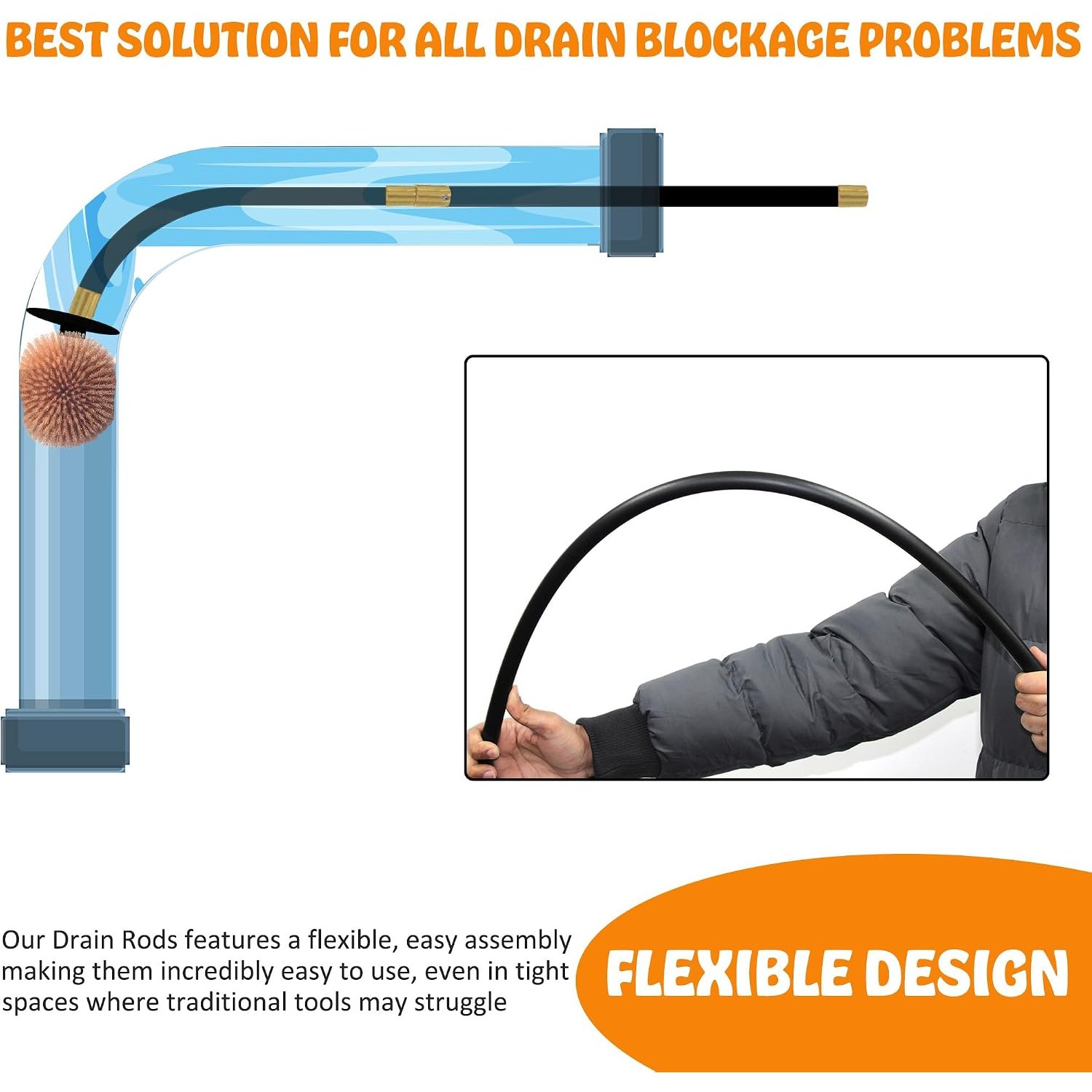
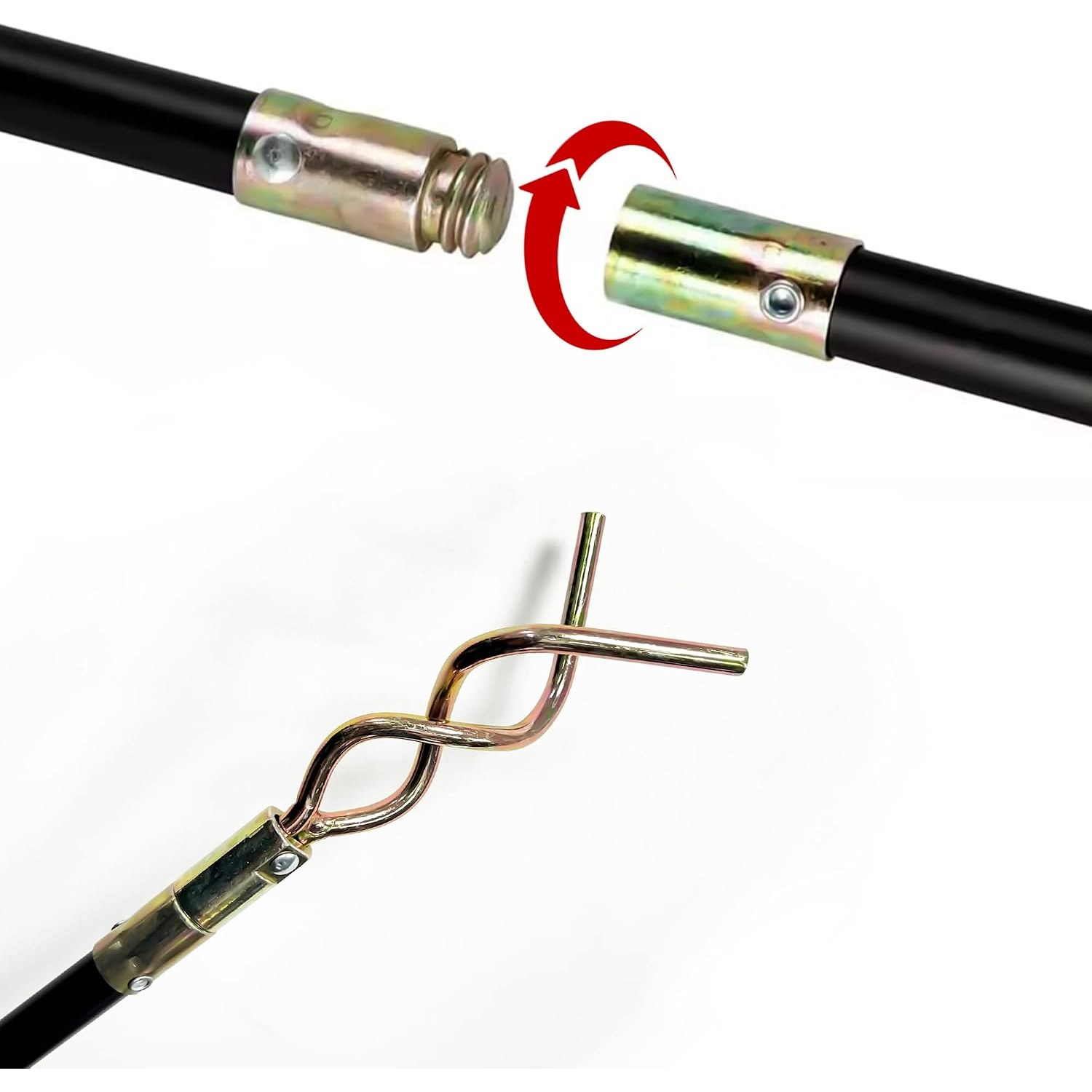
The idea is very old and very simple. A drain rod is a flexible pole about a metre long with a threaded fitting at each end. You screw one to the next to build a pole as long as you need. On the front goes a tool. You push the tool along the pipe from the chamber until it meets the blockage, and then you work it until the blockage gives way.
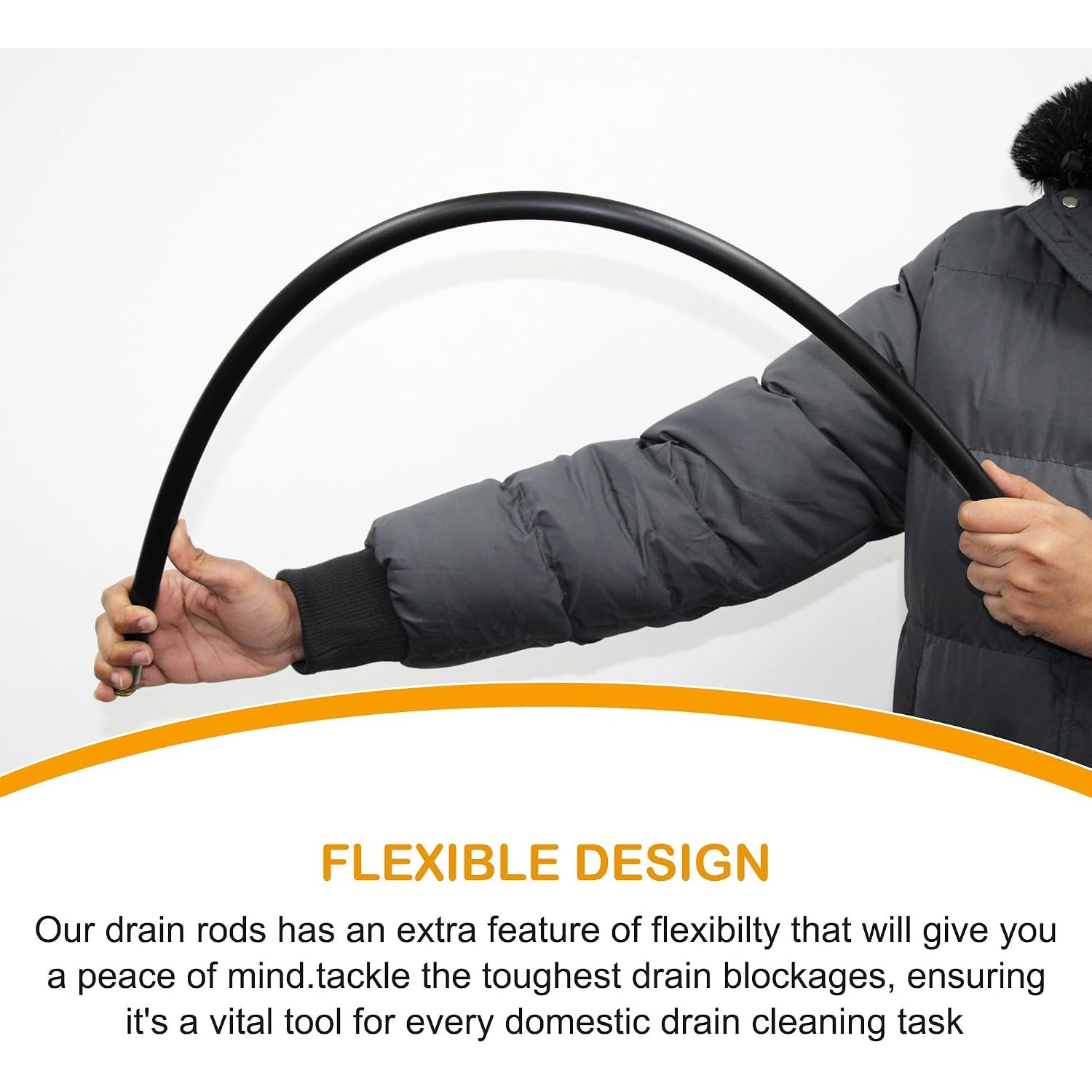
The rods need to bend, because you are feeding them down into a chamber and then around into a horizontal pipe. They also need to be stiff enough to push. That balance is why they are sold as flexible rods and not as rigid poles.
The tool on the front decides what the rods do. A flat rubber disc, called a plunger, acts like a piston. It pushes the water in front of it, and that moving water shifts a soft blockage. A worm screw is a corkscrew that bites into packed material and breaks it up or pulls it back.
What is in this set
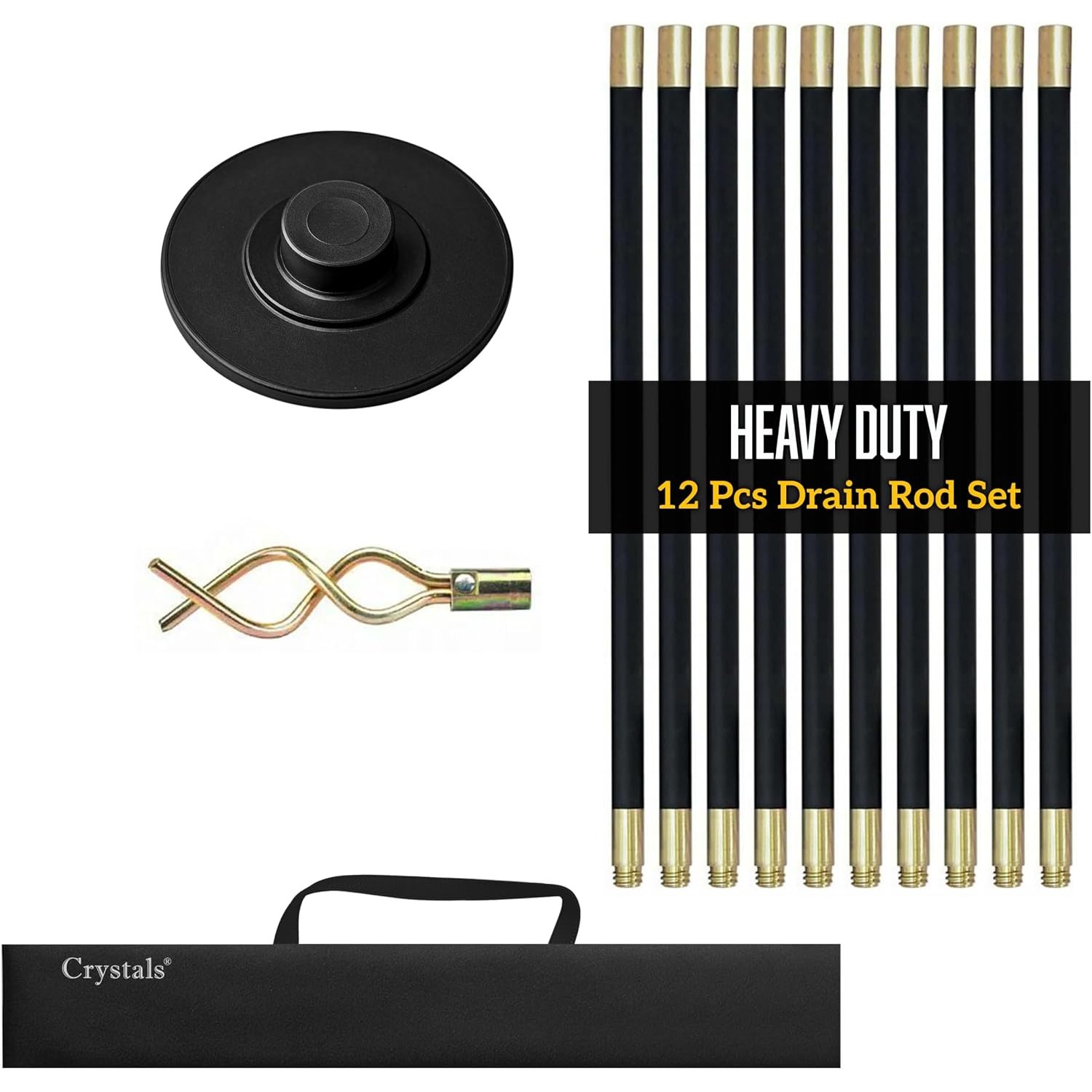
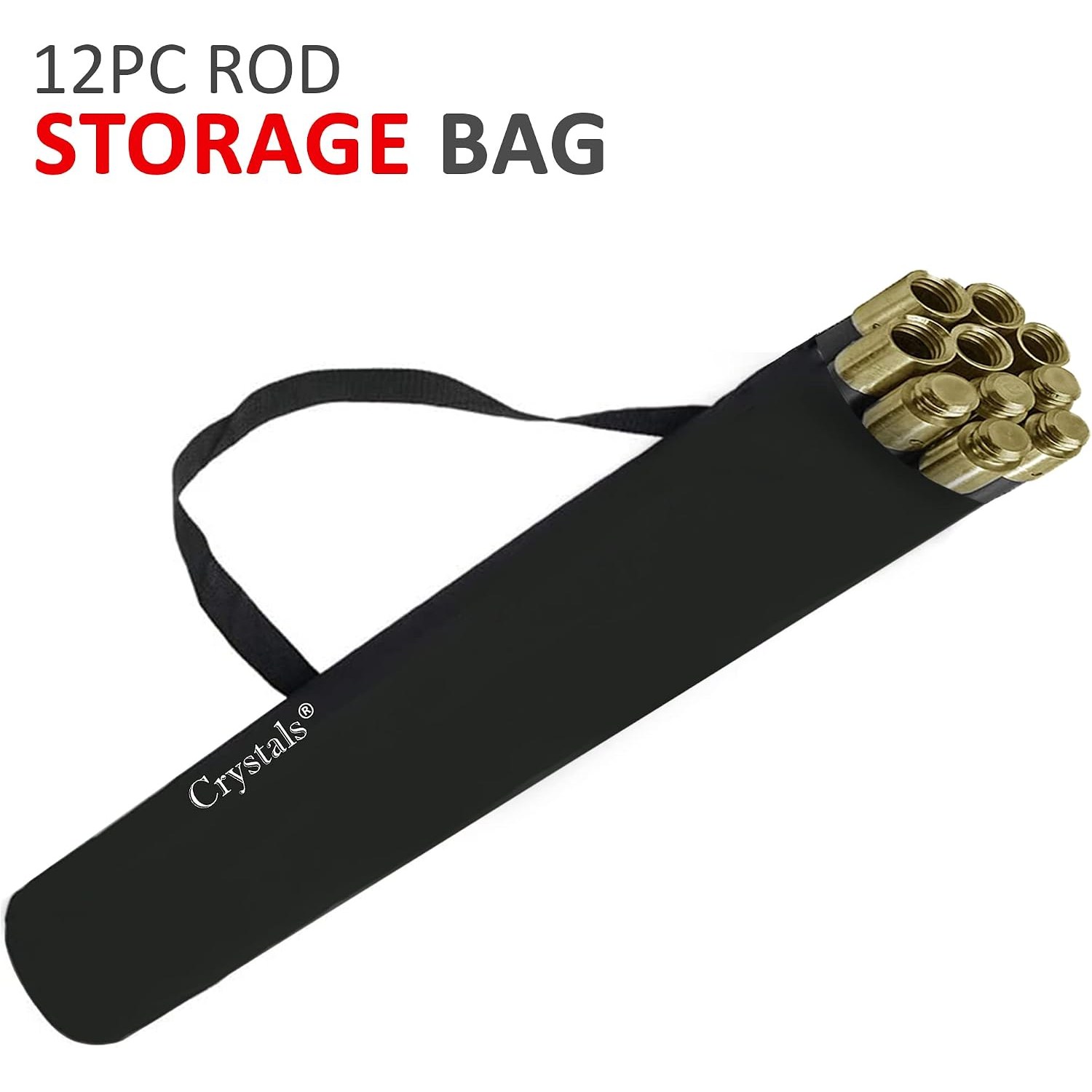
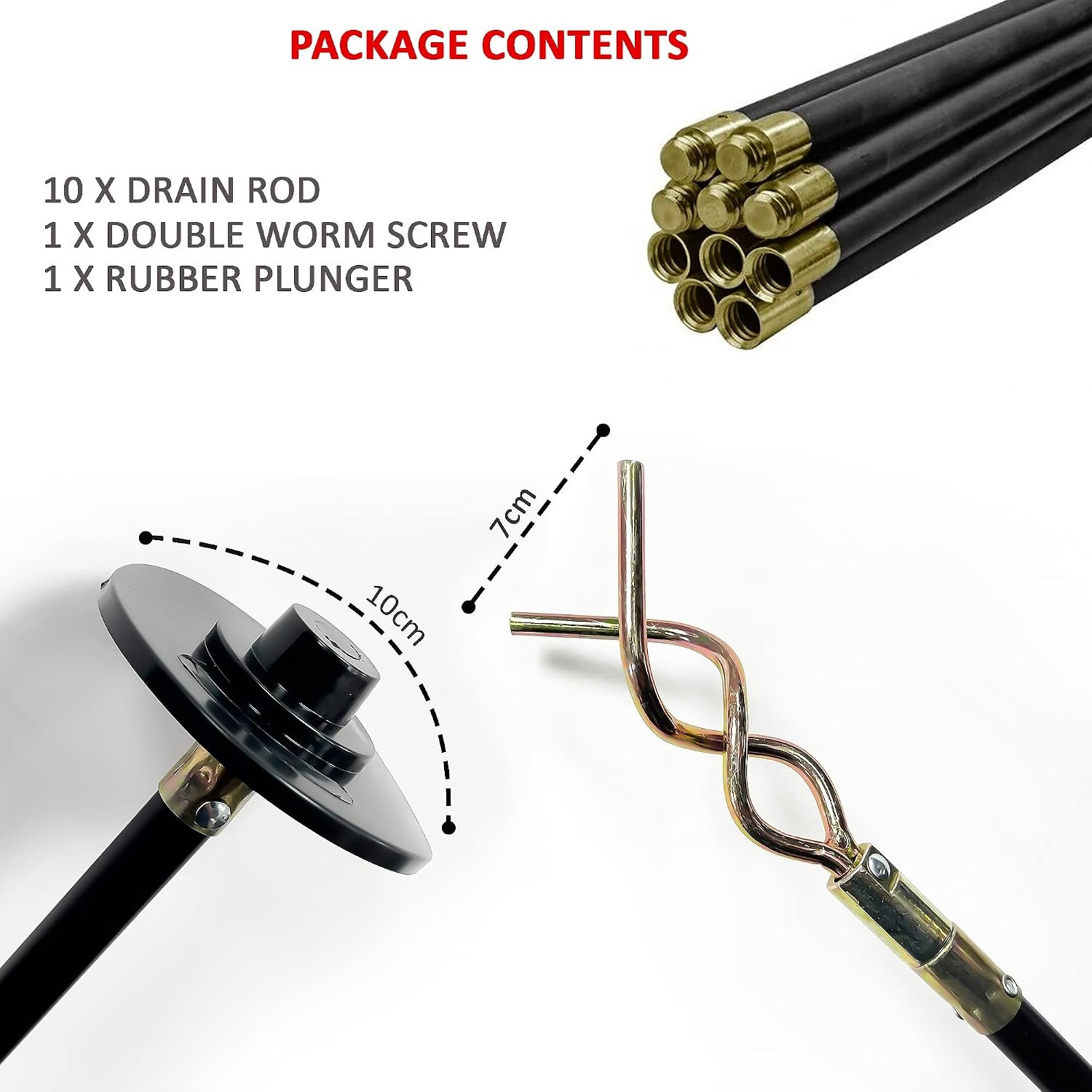
This is a 12 piece set. Here is exactly what the maker lists.
There are ten flexible rods, each 920mm long. Joined together they reach 9.2 metres. The rods are black.
There is one rubber plunger, 100mm across.
There is one double worm screw, 70mm.
The maker describes the connectors as crimped and pinned, with brass plated end connections, and says the rods join by screwing together in a clockwise direction. The stated weight of the whole set is 1.94 kg.
Two details are not stated by the maker. One is the material the rods are made from. The other is the diameter of the rods. There is no brush in the set, in spite of brushes being a common extra with other kits.
The maker also mentions chimneys as a use. Without a chimney brush, the set as it arrives is a drain rodding set, and that is how we describe it.
Find the blockage before you start
Ten minutes spent looking saves an hour of rodding in the wrong direction.
Start at the chamber nearest the house and lift the cover. Covers can be heavy and can be stuck with dirt, so use a proper lifting key or a strong flat bar, and mind your back and your fingers. Then lift the next cover along the run, towards the road or the tank.
What you see tells you where the trouble is. If the first chamber is full of standing water and the next one is empty, the blockage is in the pipe between them. If both are full, the blockage is further downstream again. If the first chamber is empty and dry while the house is still backing up, the problem is between the house and that chamber.
The easiest way to rod is from the empty chamber, pushing back upstream towards the blockage. The water is not in your way and you can see what you are doing. If that is not possible, you can rod downstream from the full chamber, but you will be working by feel.
Rodding the drain
Put on long waterproof gloves, old clothes and eye protection before you touch anything. Keep children and pets indoors.
Screw the rubber plunger onto the first rod and tighten it firmly. Screw a second rod onto the back of the first. Lower the plunger into the chamber and guide it into the mouth of the pipe that leads towards the blockage.
Push the rods forward. When most of the second rod has gone in, screw on a third and carry on. Give the rods a clockwise twist as you push. That helps the plunger ride over joints in the pipe and keeps the connectors tight.
When you meet the blockage you will feel it. The rods stop moving freely. Work the plunger back and forth against it in short strokes, pushing a little further each time. With a soft blockage, the water in the full chamber will suddenly start to fall. Keep going for another minute to push the debris well clear.
If the plunger makes no impression, withdraw the rods, swap the plunger for the double worm screw and go back in. Turn the rods clockwise as the screw meets the blockage so it winds its way in. Pull back a little, wind in again, and repeat until it breaks up.
When the drain is running, run a hose or a few buckets of clean water through it from the house end to flush the pipe.
The one rule that matters most
Turn clockwise. Only ever clockwise.
The joints on these rods tighten clockwise. Every clockwise twist you give them in the drain keeps them tight. An anticlockwise twist does the opposite. It loosens a joint that you cannot see and cannot reach, and when you pull back, part of your set stays in the pipe.
A lost rod and plunger make a far worse blockage than fat and paper ever did. Getting them out normally means paying a drainage contractor. So turn clockwise going in, turn clockwise coming out, and tell anyone helping you to do the same.
Whose drain is it?
Before you spend a Saturday on it, be sure the blockage is yours.
Drains that sit inside your boundary and serve only your home are normally your own responsibility. Once the pipe joins the public sewer, it is not. A blockage in a public sewer is a matter for Uisce Éireann or your local authority, and you should report it instead of trying to clear it.
Shared drains sit somewhere in between. If your neighbours are backing up too, talk to them, and ring Uisce Éireann or the local authority to ask where the public sewer starts.
Homes on a septic tank have one more thing to check. If the tank is overdue for emptying, the drains will back up however well you rod them.
When to stop
Rods deal with soft blockages. They do not repair drains.
If the rods come to a dead stop and nothing you do moves them forward, do not force them. A hard stop often means a collapsed or displaced pipe, tree roots, or a solid object. Pushing harder can wedge the rods.
If the drain clears but blocks again within weeks, something is catching debris, and it needs a camera inspection.
Repairs to an underground drain are not a householder job. They are work for a drainage contractor, and the Irish Building Regulations apply to drainage work.
Never climb into a chamber, however shallow it looks. And never use chemical drain cleaners in an outside drain. They do very little to a packed blockage, and they make the water you are leaning over hazardous.
Cleaning up and storing the set
Withdraw the rods slowly, turning clockwise, and unscrew each one as it comes clear of the chamber. Lay them on the ground beside the open drain and hose them down so the dirty water runs back in. Do the same with the plunger and the worm screw.
Put the chamber covers back properly and check that they sit flat. Wash down the area around them.
Let the rods dry, then check the threads on each connector. Grit in a thread stops it from tightening fully next time. Store the set somewhere dry, such as a shed or garage. Wash your gloves, then wash your hands and arms with hot water and soap.
The short version
A blocked outside drain shows up as an overflowing gully, a slow toilet and a full inspection chamber. Drain rods let you clear it from the surface.
This set gives you ten 920mm flexible rods, a 100mm rubber plunger and a 70mm double worm screw. That is 9.2 metres of reach with every rod joined. The connectors are described by the maker as crimped and pinned with brass plated ends. The rod material and diameter are not stated by the maker.
Find the blockage first by checking which chambers are full. Start with the plunger and move to the worm screw if you need to. Turn clockwise at all times. If the rods hit something solid, or the blockage is in the public sewer, stop and call the right people.