
The complete guide
How To Choose And Use A 10m Manual Drain Auger
The clog you cannot see
A slow bath rarely blocks overnight. It starts with water that takes a little longer to clear. A few weeks later there is a grey ring left behind after every bath. Then one evening the water just sits there.
The cause is nearly always the same. Hair goes down the plughole every day. Soap and shampoo leave a waxy film on the inside of the pipe. The hair catches on the film, more hair catches on the hair, and a soft plug grows in the trap or just past it.
That spot is the problem. It is too far down for fingers or a bent coat hanger. A plunger can rock the plug back and forth but cannot grip it. So the clog stays put and the water keeps backing up.
A manual drain auger is the plain answer. It is a long spring cable that you feed down the waste and turn by hand until it reaches the plug and works into it.
What this tool is
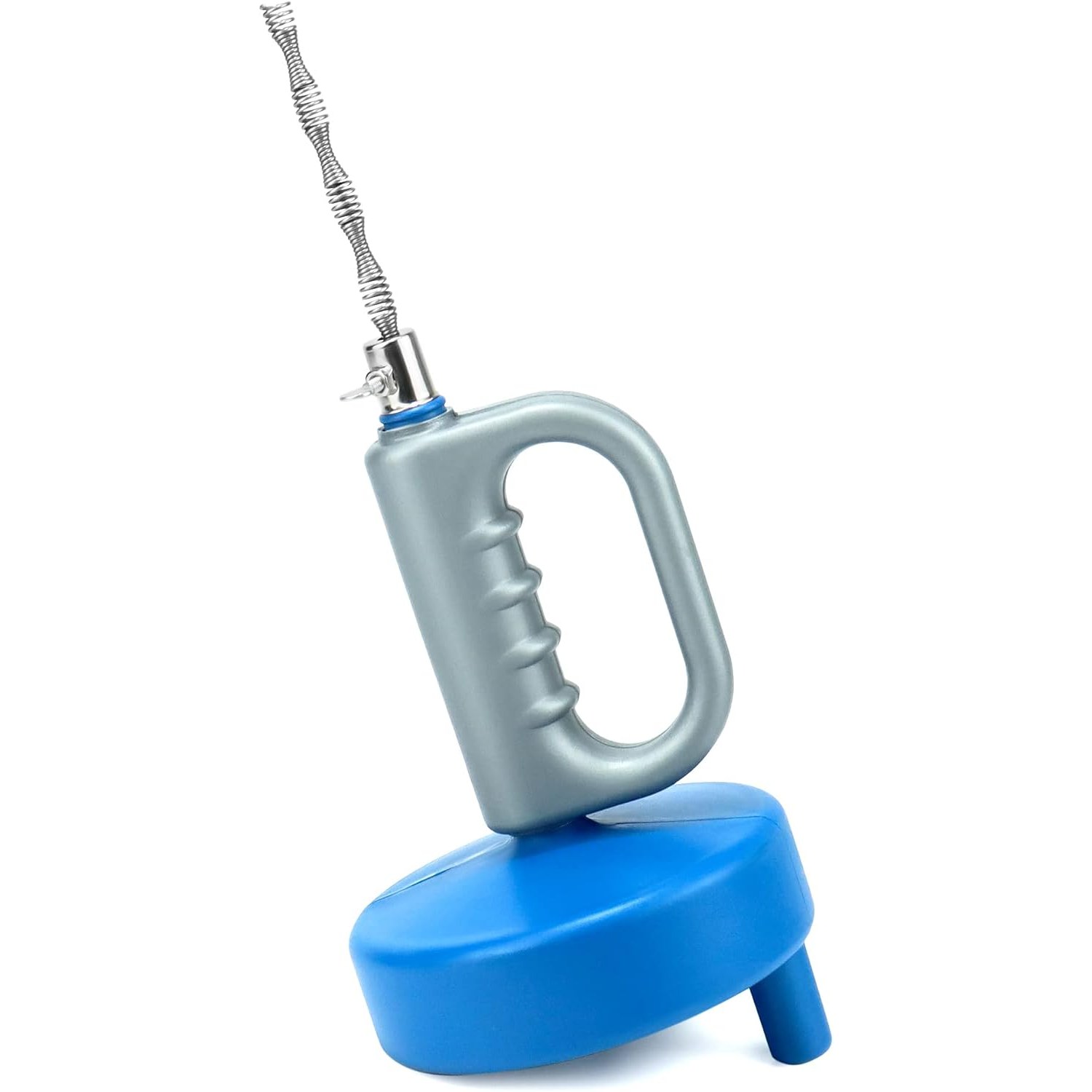
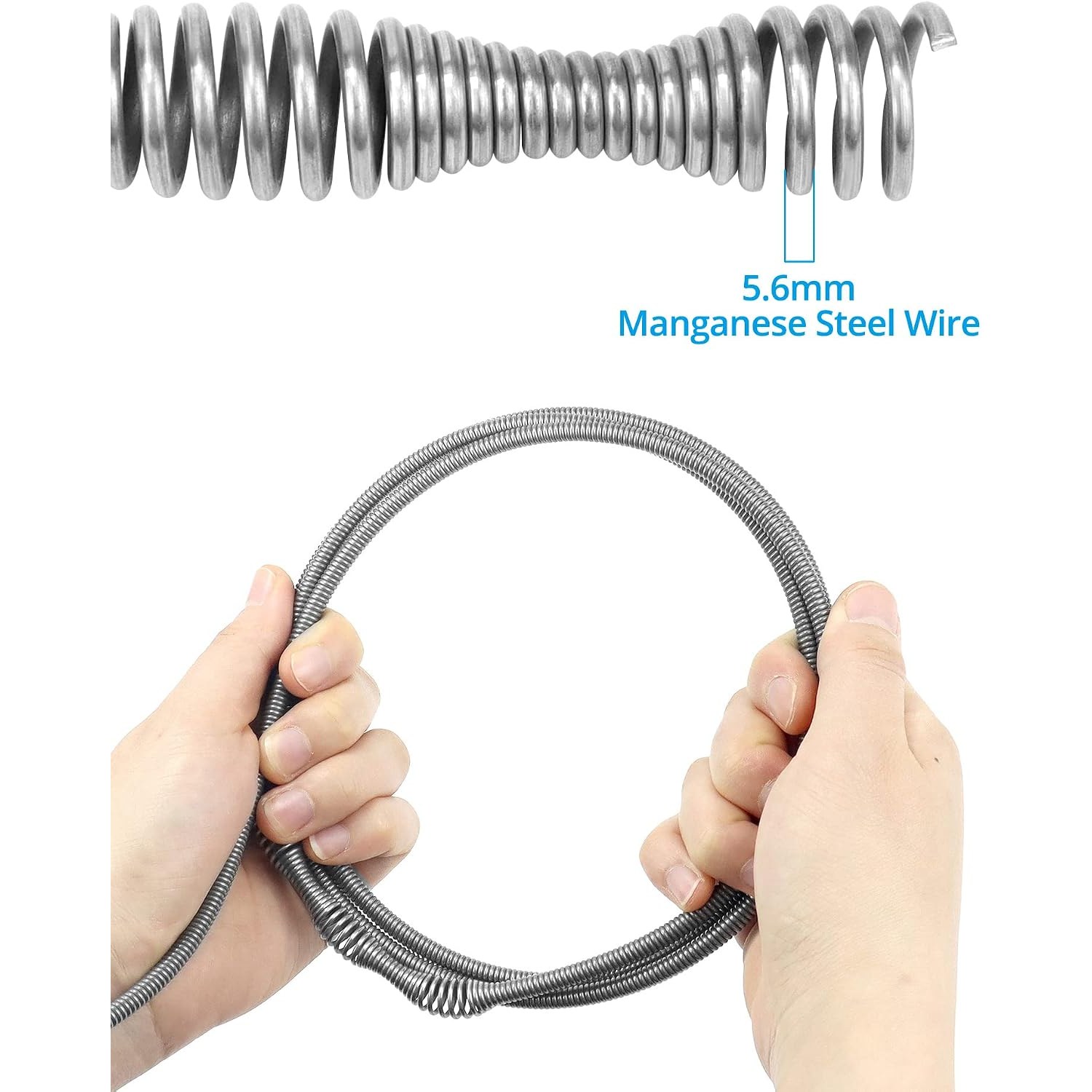
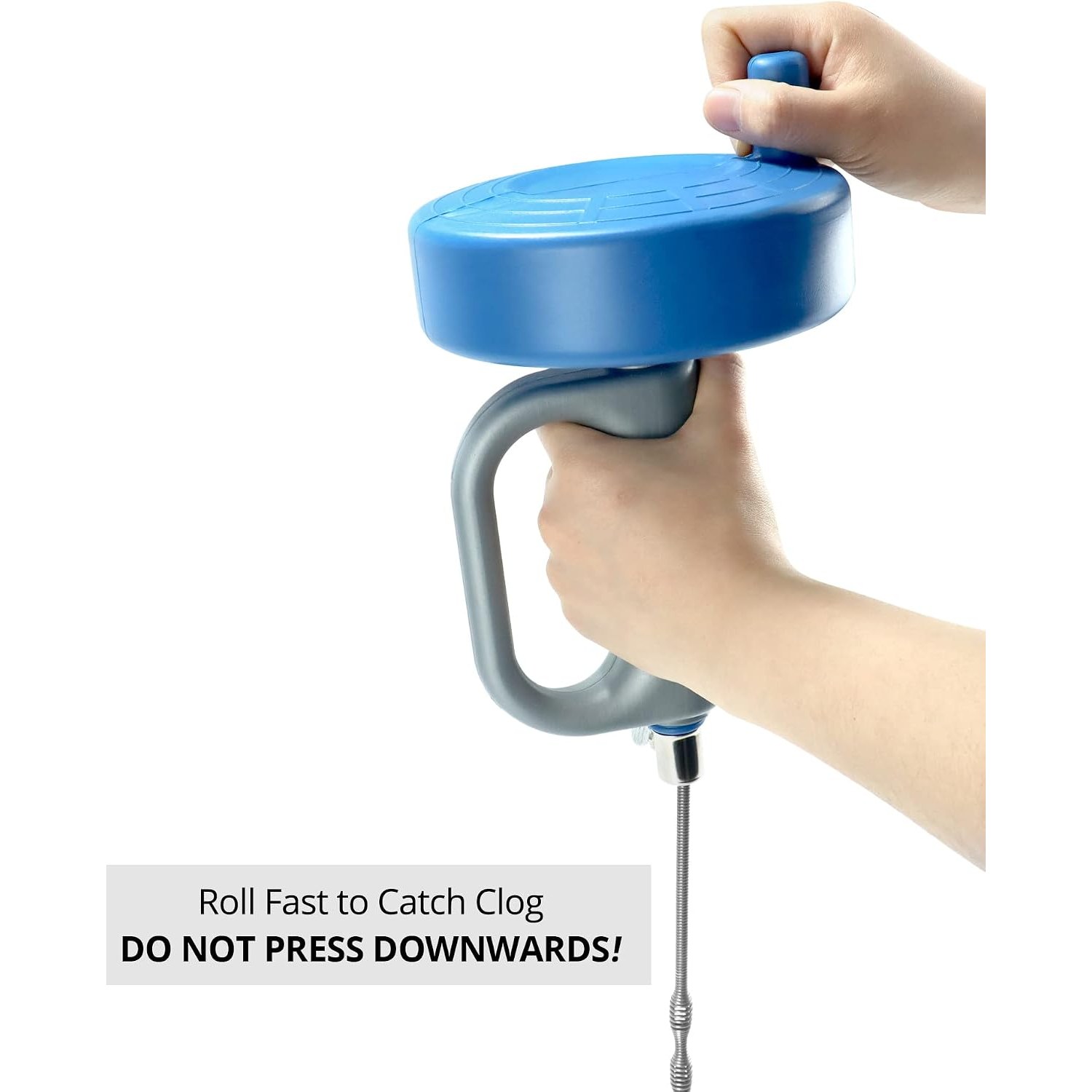
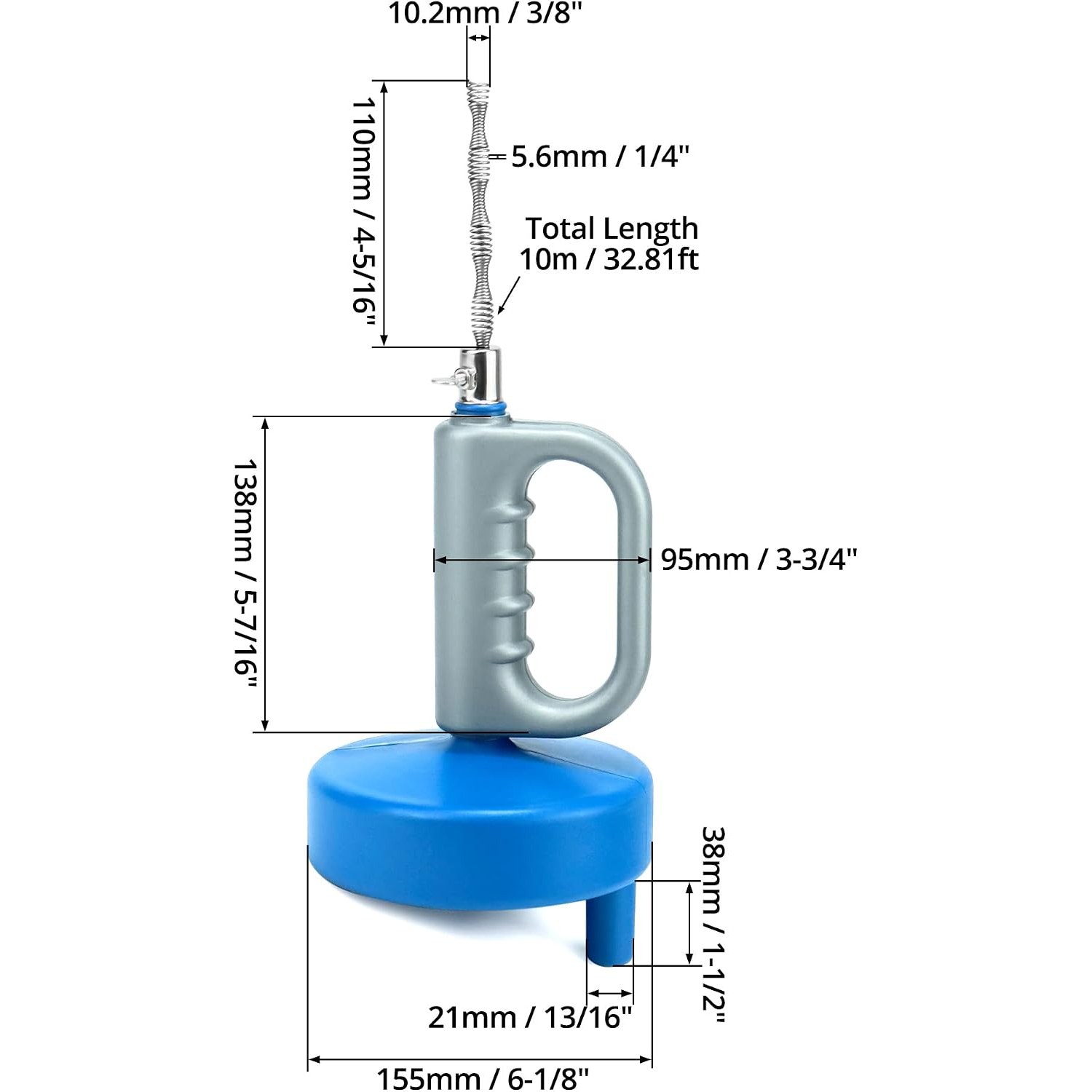
This one is a handheld body holding 10 metres of flexible spring steel cable. The maker gives the spring diameter as about 5.6mm, and the tip head as about 10.2mm. On the body there is a locking screw.
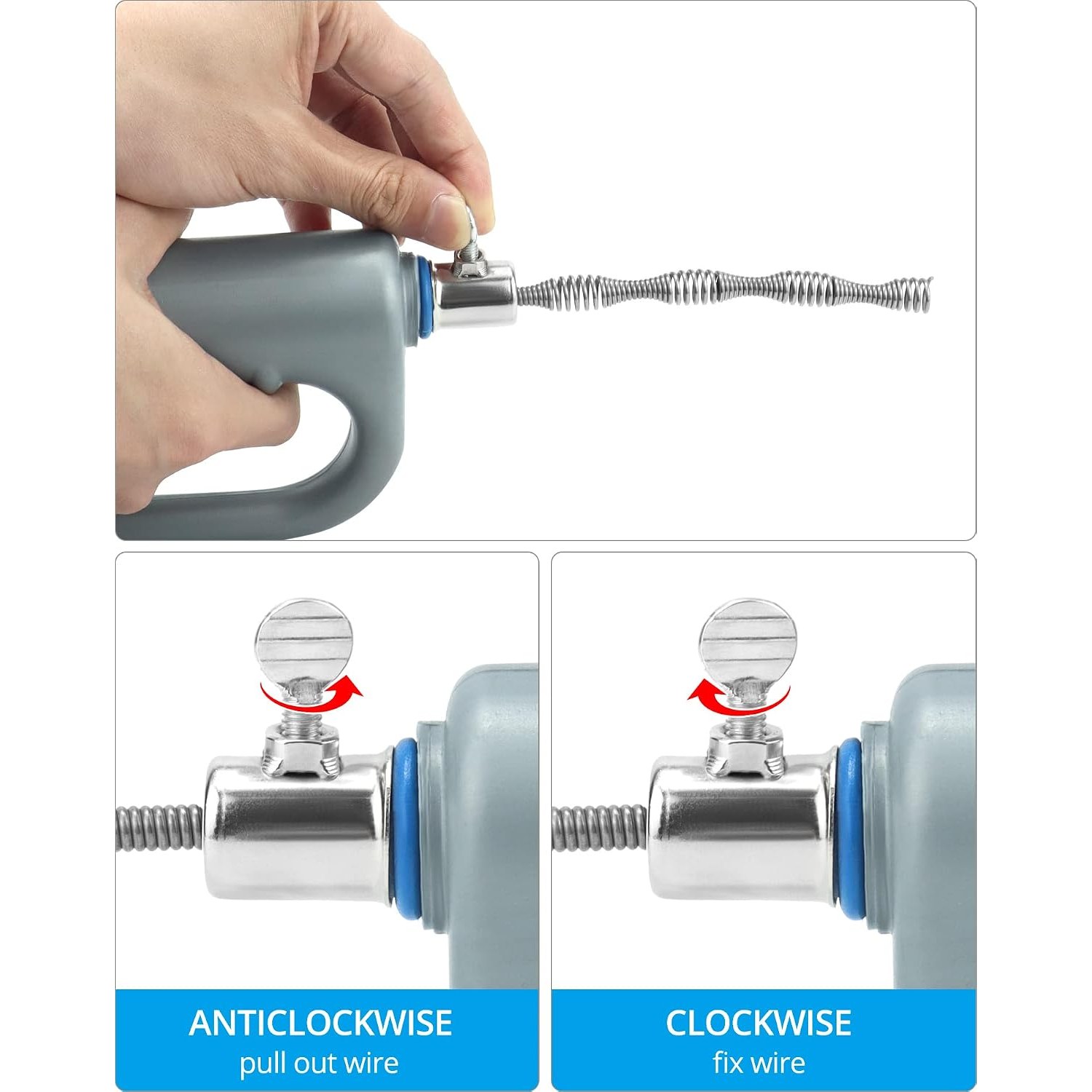
That screw is the whole control system. Loosen it and the cable slides freely, so you can feed it into the drain. Tighten it and the cable is gripped. Now when you rotate the body, the cable rotates too.
There is no motor and no battery. You supply the turning. That sounds like a drawback, but it has a real benefit. You can feel what the tip is doing. A soft clog feels spongy. A bend feels like a firm stop that gives when you turn. Something solid feels like a wall. A motor hides all of that from you.
The maker does not state the colour of the tool or what the body is made of, so we will not guess at either. The package measures 44.7 x 17.4 x 16.8 cm and weighs 1.25 kg.
What it is meant for, and what it is not
The maker is specific here, and it is worth reading before you buy.
This tool is for hair, soap residue and other light organic blockages. It is suited to bath, shower and bathroom basin drains, where soft clogs build up near bends and traps. If you have been looking for a drain snake for hair clogs, that is exactly its job.
It is not intended for toilets. It is not for heavy grease build-up, solid obstructions, tree roots or cement-like debris. It is not for large outdoor drain systems either. The maker says plainly that severe blockages may need a heavier tool.
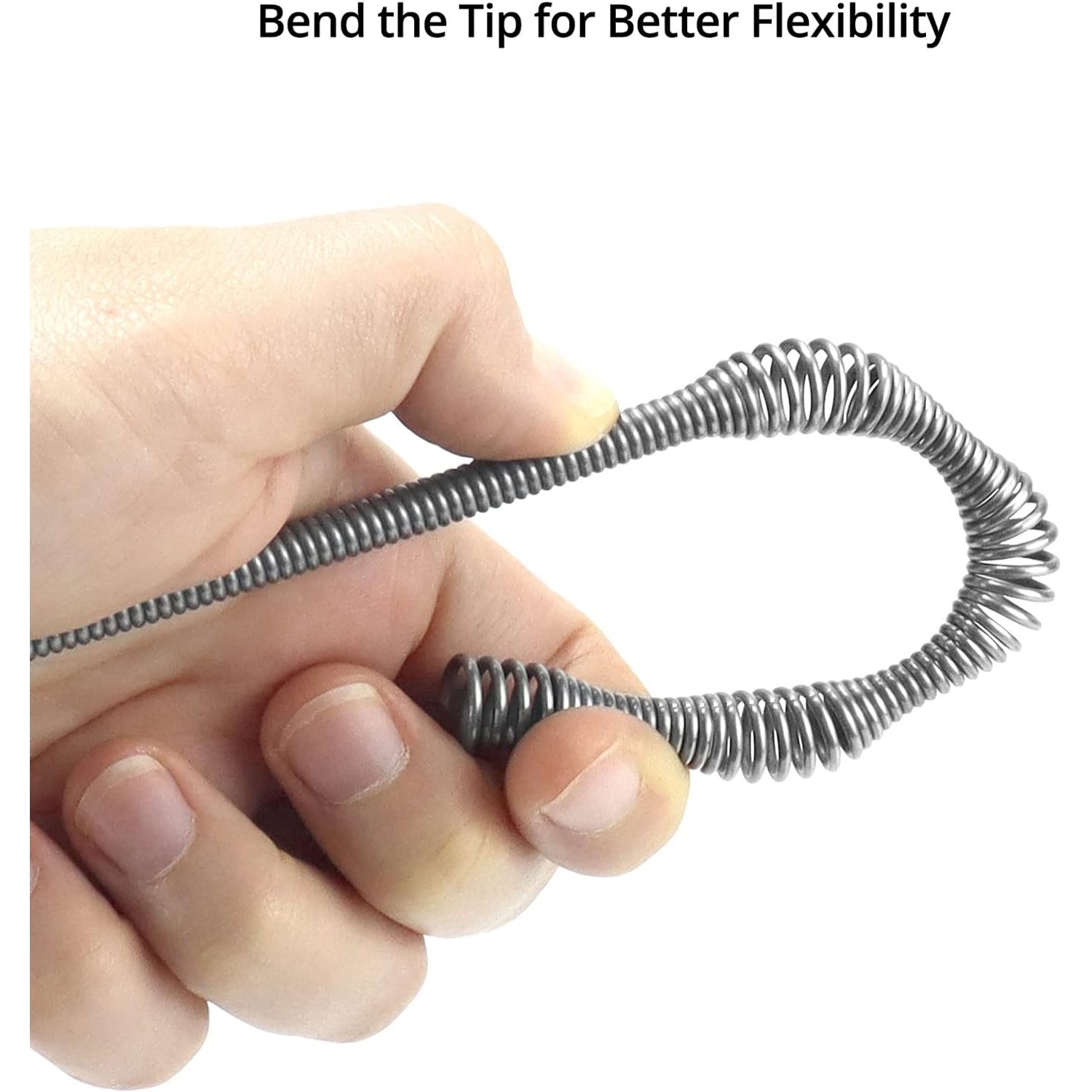
That honesty is useful. A 5.6mm spring is slim and flexible, which is why it gets round a bathroom trap. The same slimness means it will fold up in a wide pipe and will not cut through anything hard. Use it where it fits and it does good work. Push it into the wrong job and you will end up with a kinked cable.
One more boundary matters in Ireland. If the trouble is in the public sewer and not in your own pipework, it is not yours to clear. That is a matter for Uisce Éireann or your local authority.
Is 10 metres the right length for you?
Hand augers come in many lengths, and longer is not always better.
A short tool of a few metres will reach a basin trap and a little way beyond. That covers most everyday clogs. It is also light and small to store.
A 10m drain snake gives you much more reach. That helps when the bath is a long way from the stack, or when a soft clog has been pushed along the pipe by earlier attempts with a plunger. It also means one tool can serve every bathroom in the house.
The trade is size and weight. At 1.25 kg in its package, this is not a tool for a kitchen drawer. It wants a shelf in the utility room or a spot under the stairs.
Remember too that you never have to use the full length. You feed out what the job needs and no more. Most of the cable may stay in the body for years. So the question is simple. If you want one tool with reach in reserve, 10 metres makes sense. If you only ever clear one basin, a shorter one would do.
Using it step by step
Start by getting ready, because this is a messy job. Put on gloves. Lay an old towel around the plughole. Keep a bag or bucket beside you for whatever comes out.
Next, look at the plughole. The tip head is about 10.2mm across, and many grids and pop-up plugs have smaller gaps than that. Lift out the plug or strainer if it comes away by hand, so the tip has a clear path.
Release the locking screw and feed the cable in by hand. Go gently. When it stops, you have most likely reached the trap. Hold the body close to the plughole, tighten the screw, and rotate the body while pressing forward lightly. The tip should find its way round.
Loosen the screw, feed a little more cable, tighten and turn again. Keep working like this in short stages. It feels slow, but it keeps the loose cable short, and a short length is far less likely to twist or kink.
When you reach the clog the feel changes. The cable meets something soft that pushes back. Keep the screw tight and keep rotating with steady pressure. The maker warns against forcing the cable sharply into a hard blockage, and that is good advice. Let the turning do the work.
Then draw the cable back slowly. Wipe it with an old cloth as it comes out. The hair goes in the bin, never back down the drain. Finish by running the hot tap for a minute to carry away what is left.
If the water still drains slowly, go in a second time. A second pass often brings out more than the first.
A word on chemical cleaners
We do not recommend chemical drain cleaners, with this tool or on their own. They are harsh to handle and to store. They also sit in the trap when a drain is fully blocked, which means the next thing you put down there meets a pool of chemical.
If a cleaner has already been poured in, do not start work straight away. Flush the drain with plenty of water first. Wear gloves and eye protection, because a cable can flick liquid as it comes out of the pipe.
Looking after the cable
Care is short. Rinse the cable with clean water once you finish. Wipe it down and leave it stretched out to dry. Only then wind it back into the body and tighten the screw.
Do not put it away wet. Steel that sits damp inside a closed body can rust, and a rusty spring is rough to feed and weaker at every coil.
Store it indoors. A dry cupboard is better than a damp shed. If the cable does pick up a slight bend, ease it straight by hand. Do not bend it hard the other way, because a spring that has been kinked twice in one place will keep folding there.
When to put the tool down
A hand auger suits one kind of problem, which is a soft clog in a single bathroom waste. Some signs tell you the problem is something else.
If the cable meets a hard stop that will not give, stop. It may be a solid object or a fault in the pipe. Forcing it helps nothing.
If several fixtures back up together, or water rises in the shower when the basin empties, the trouble is further along in a shared pipe. That is beyond this tool.
Any work that means altering fixed pipework is a job for a qualified plumber, and the Irish Building Regulations apply to drainage work. Clearing a clog with a household drain auger is fine for a householder. Cutting, moving or replacing pipes is not a weekend project.
Keeping the drain clear afterwards
Once the water runs freely, a few small habits will keep it that way. A simple hair catcher over the shower or bath plughole stops most hair before it enters the pipe. Clearing that catcher after each shower takes seconds.
Run the hot tap for a short while after a bath to carry soap film along. Lift any visible hair out of the plughole by hand each week. Small steps like these mean the auger may only come out once or twice a year.
The short version
Slow bathroom drains are usually a soft plug of hair and soap sitting past the plughole. This manual drain auger reaches it with 10 metres of spring steel cable, about 5.6mm thick, with a tip head of about 10.2mm.
You feed the cable out through a locking screw, tighten it, and rotate the body by hand. There is no power and nothing to charge.
It is for baths, showers and bathroom basins. It is not for toilets, heavy grease, solid objects, roots or outdoor drains. Use it gently, dry it before you store it, and call a qualified plumber when the cable meets something that will not move.