
The complete guide
How to Choose and Fit a Kitchen Sink Strainer and Plug
The problem with a tired sink plug
Nobody shops for a sink plug out of excitement. You buy one because the old one has given up. Usually it goes in one of three ways. The rubber perishes and the water drains away while you are halfway through a stack of plates. The knob seizes up so you end up fishing it out with a fingernail every time. Or the basket cracks and food scraps start going down the pipe, which means a smelly trap and eventually a blockage.
It is a small part doing a surprising amount of work. A kitchen sink plug sits in hot water, cold water, grease, dish soap, lemon juice, tomato sauce and whatever else goes down the drain, many times a day, for years. Plastic fittings go cloudy and brittle. Thin metal pits around the rim. The rubber hardens and stops sealing.
The good news is that replacing it is one of the easiest fixes in a kitchen. You are not touching the pipework. You are swapping the piece that sits in the hole in the bowl, and it takes less time than making a cup of tea.
How this fitting works
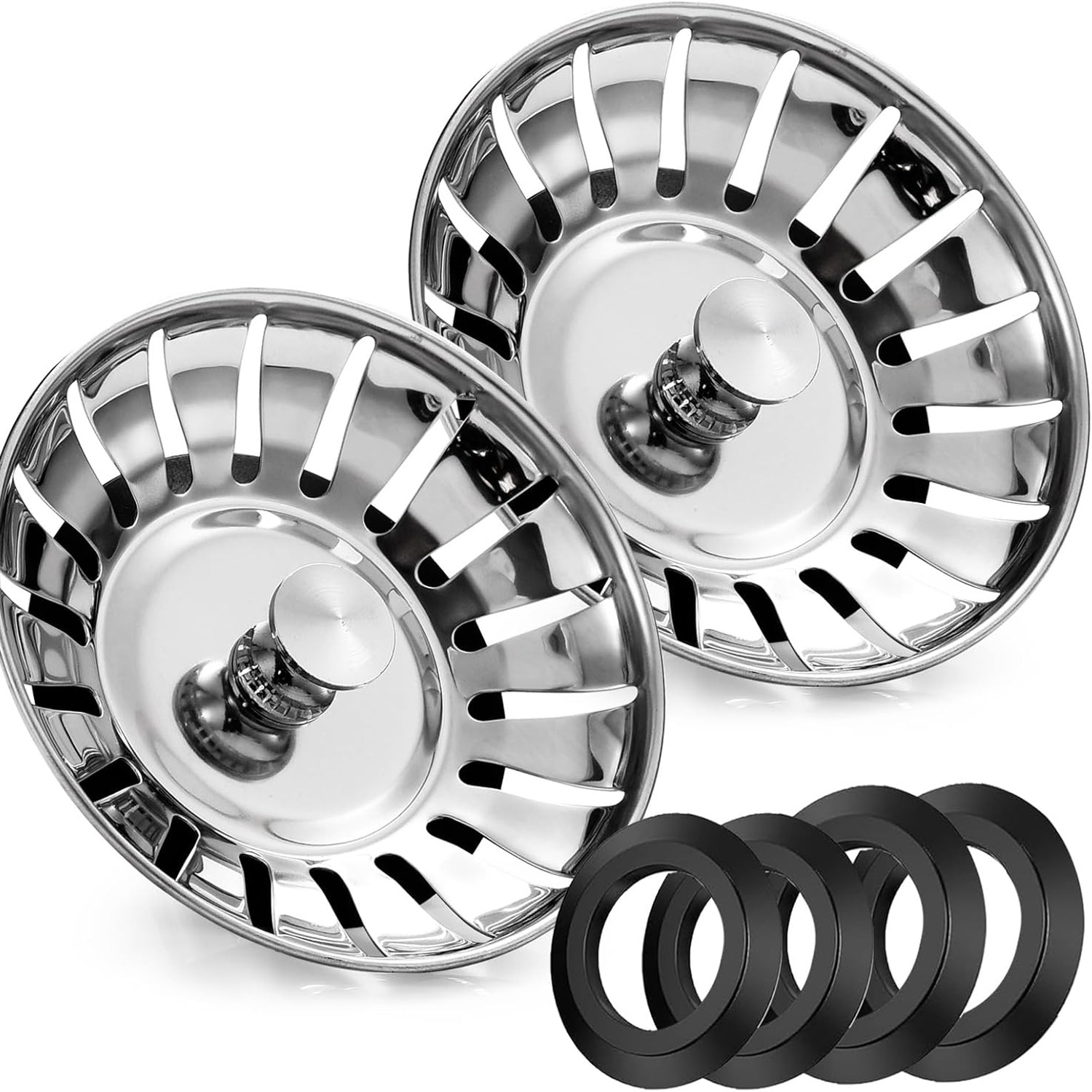
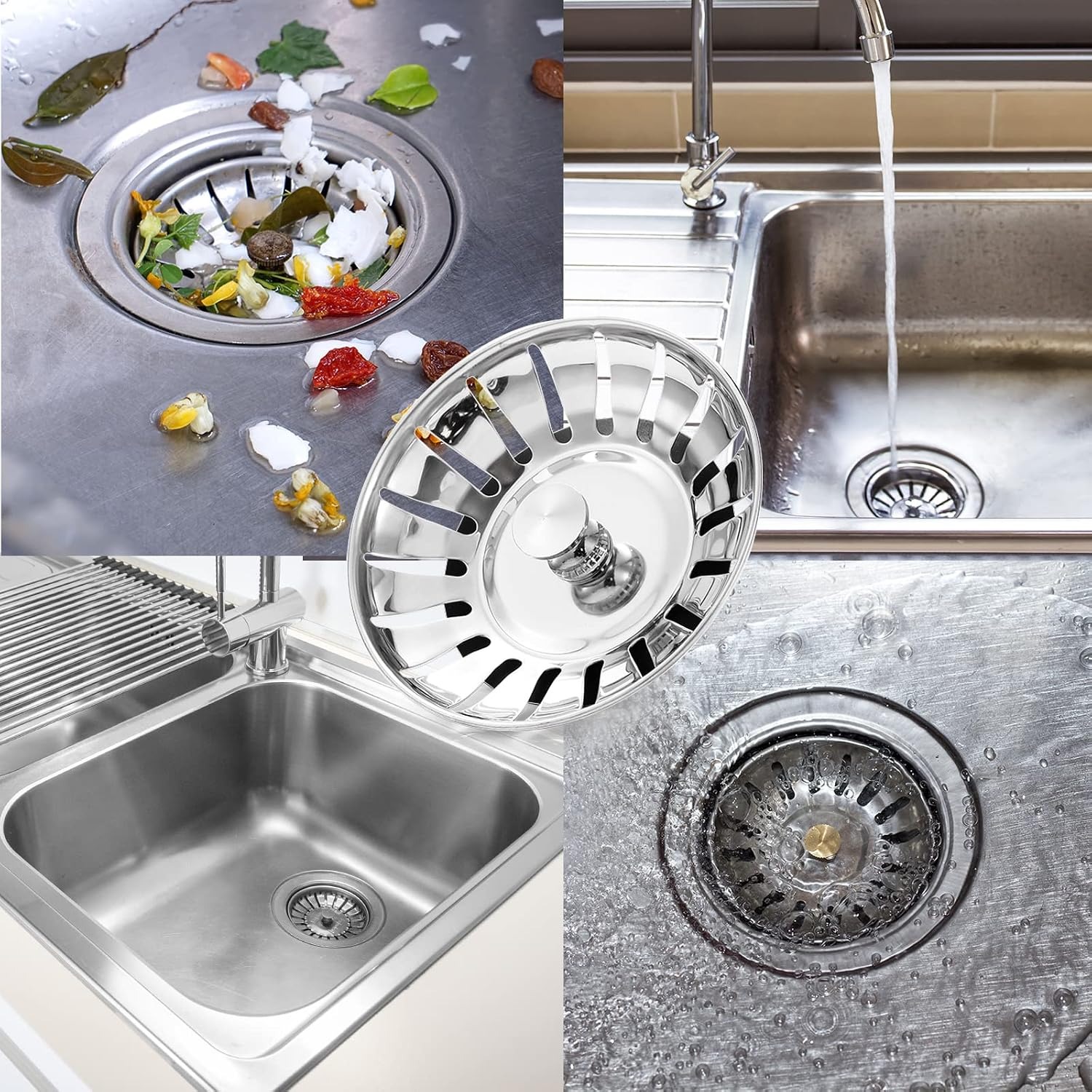
This is a combined plug and strainer, which is the sensible design for a kitchen rather than a bathroom. The body is polished stainless steel, shaped like a shallow basket with twenty small holes in it. On top sits a knob.
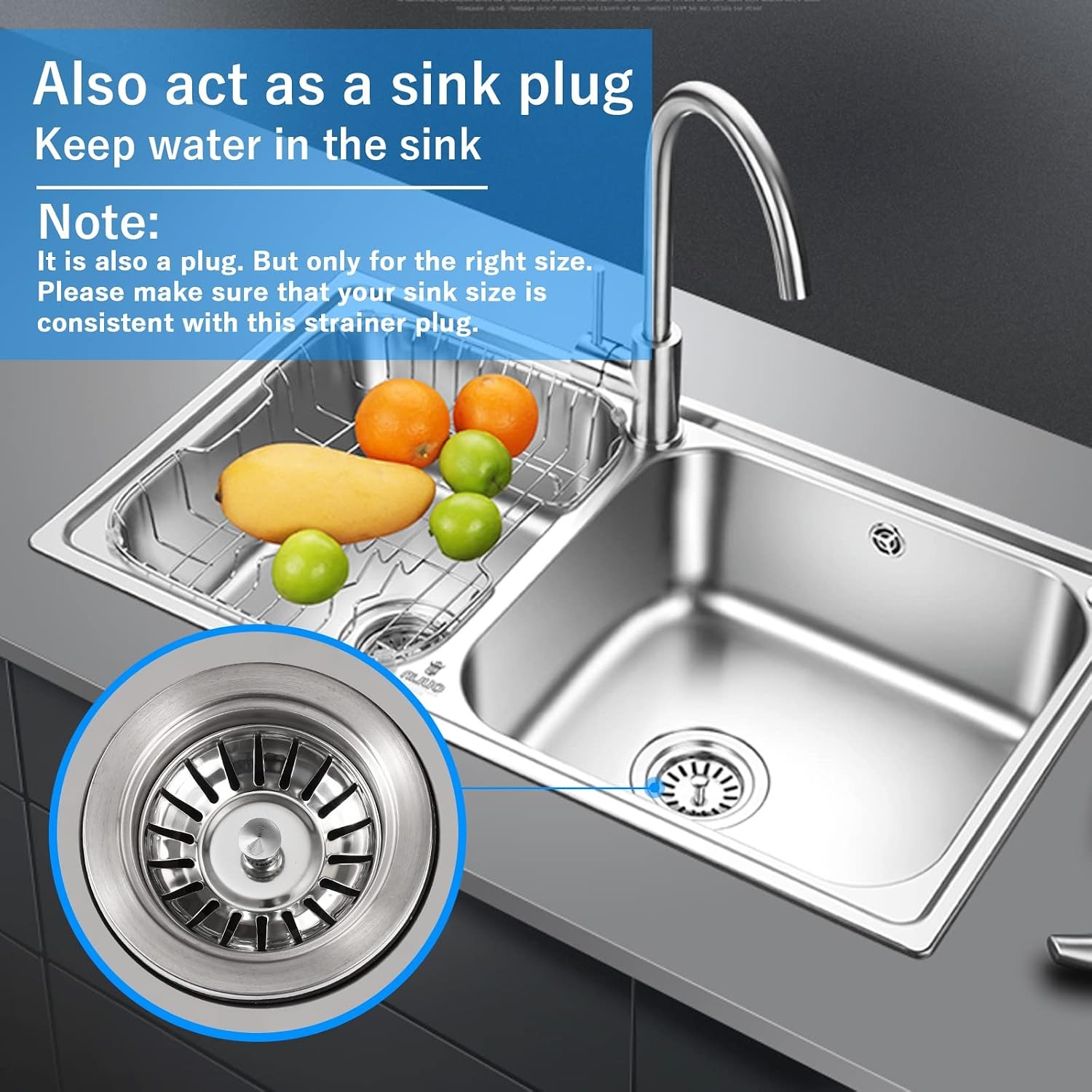
Press the knob down and the rubber seal underneath presses against the waste. The bowl fills and holds water, which is what you want for washing up, soaking a baking tray or rinsing vegetables. Lift the knob slightly and the seal releases. Water runs away through the holes in the basket while anything solid stays on top.
That second part matters more than people expect. Rice, tea leaves, coffee grounds, onion skins, bits of pasta: these are the things that build up in a trap and start to smell. Catching them in a basket you can tip into the bin takes about two seconds and saves you a very unpleasant job later. A good kitchen sink filter is cheap insurance against a plumber's call-out fee.
The whole thing lifts straight out when you want to clear it or clean it. There is no mechanism to go wrong, no pop-up linkage under the sink, and nothing that needs adjusting.
Why stainless steel
Walk down any hardware aisle and you will find sink plugs in plastic, chrome-plated metal and stainless steel. They are not equivalent.
Plastic is cheapest and it fails fastest. Hot water and dish soap make it cloudy, then brittle, and a cracked basket is useless. Chrome plating looks fine for a while, but once the plating lifts around the edge, the metal underneath starts to corrode and you get rust streaks in a clean sink.
Stainless steel does not have those problems. It handles the constant wet and the food acids without pitting, and a polished finish wipes clean with a sponge. The look is neutral enough to sit happily in a stainless bowl, a composite bowl or a ceramic butler sink. That is why a stainless steel sink plug is the standard choice for anyone replacing a fitting they do not want to think about again.
Who this suits
Anyone with a standard kitchen sink whose plug has stopped sealing. That is the simple answer.
It is particularly useful if you have a double bowl sink, because there are two fittings in the pack. Replacing both at once means they match and they wear at the same rate, so you are not back in six months swapping the other one. If you have a single bowl, you still get a spare, which is handy because the day a plug fails is rarely the day you have time to go shopping.
It also suits renters doing a bit of quiet improvement. The swap needs no tools and nothing permanent changes, so you can keep the original and put it back if you ever move out.
Renovators and anyone fitting a new sink will find this useful too, though in that case check the specification of the new bowl rather than guessing. Not every sink uses the same opening.
Getting the size right
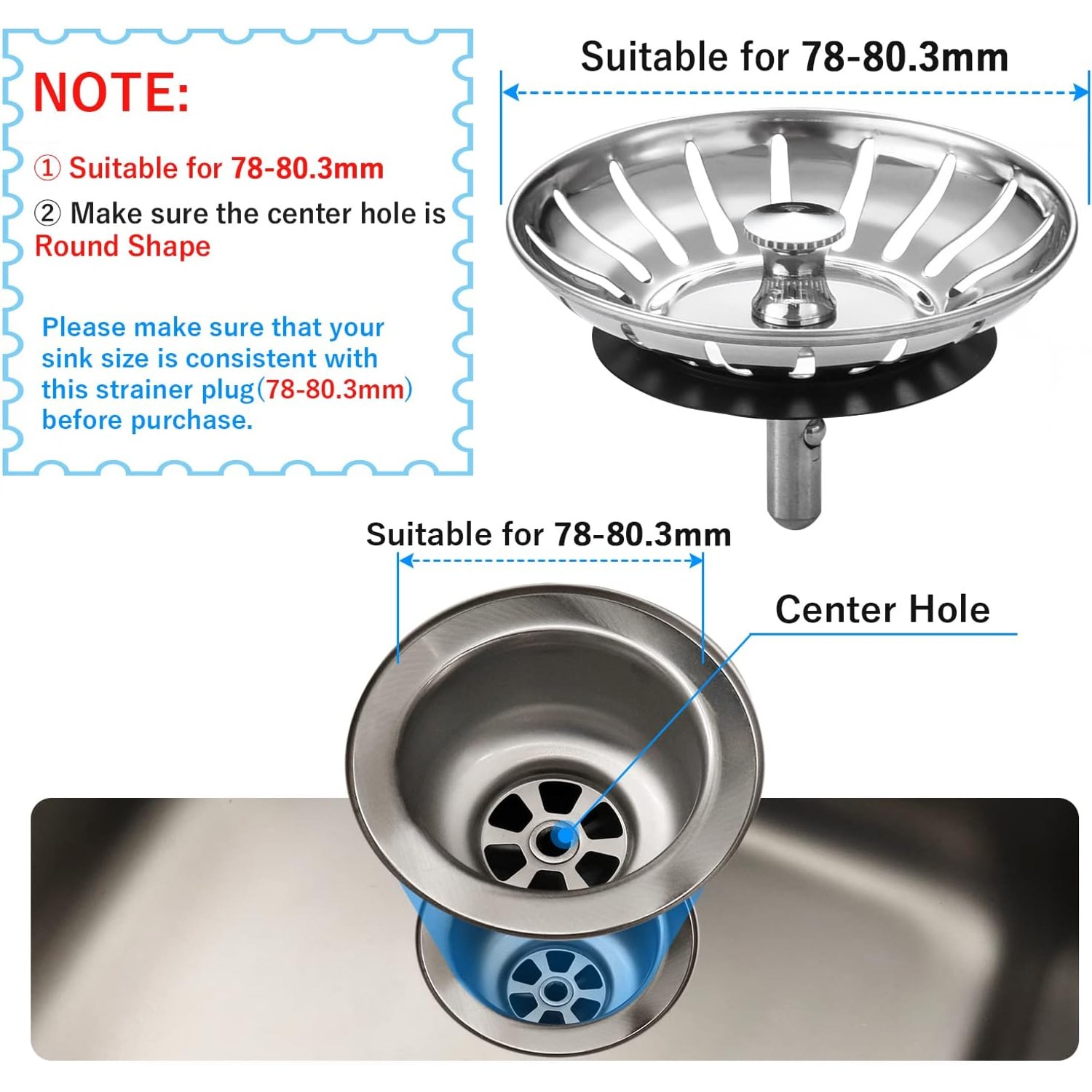
This is the one thing worth slowing down for. Sink holes are not universal, and a plug that is a few millimetres out will either sit proud of the bowl or rattle around without sealing.
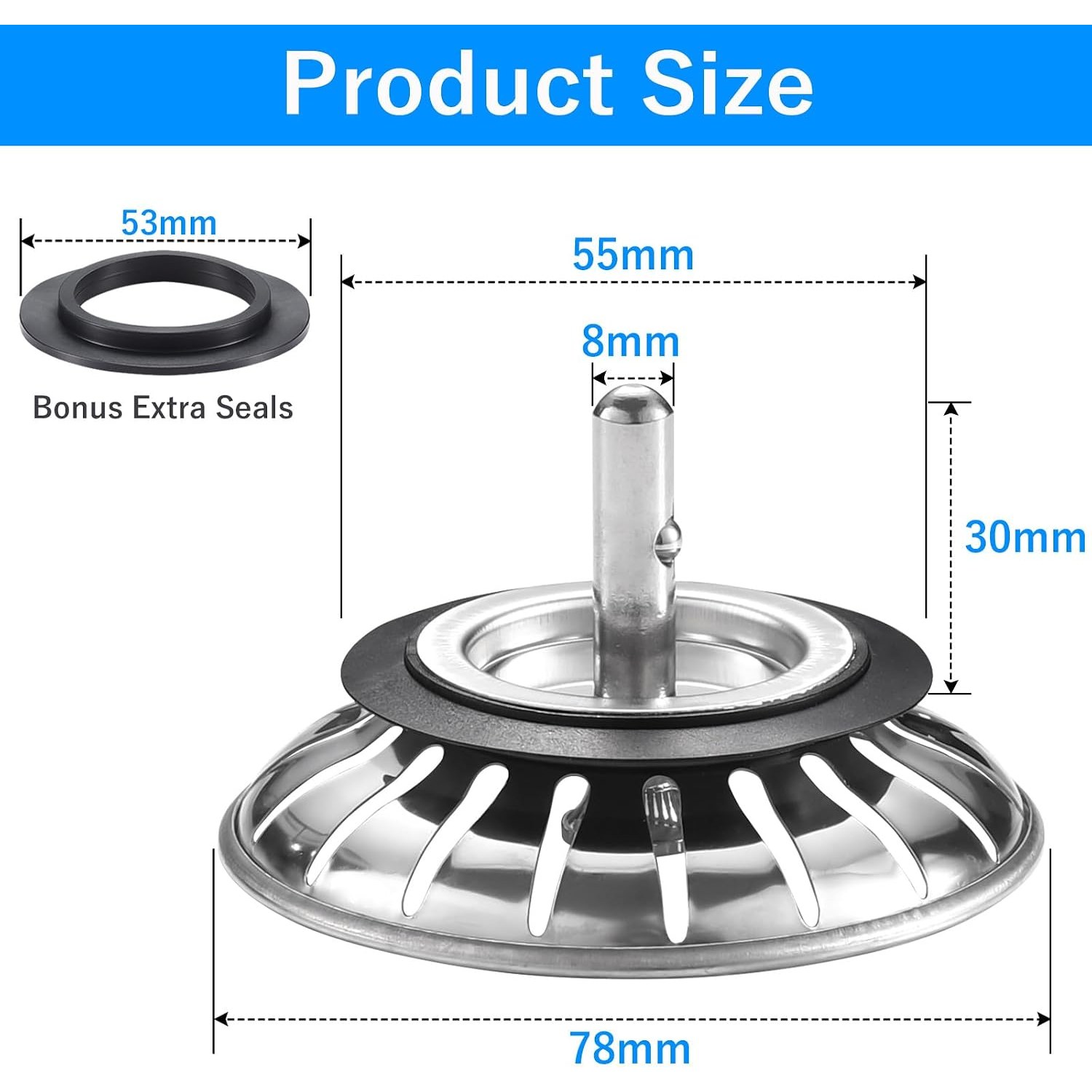
This fitting is made for a groove diameter of 78mm, which suits sink holes in roughly the 78 to 80mm range. That covers a great many standard kitchen sinks, but not every single one.
To check, take the old plug out and lay a ruler or tape measure across the widest part of the circular opening in the bowl. Measure the hole itself, not the rim of the old plug, because rims usually overhang the opening. If your number lands near 78mm, you are in the right place. If it comes out around 90mm, which is common on sinks fitted with a waste disposal unit, you need a different size.
If the measurement is awkward to take or you are not confident about it, send us the number you have and a photo of the sink, and we will tell you whether it matches. It takes a minute and saves a return.
Fitting it
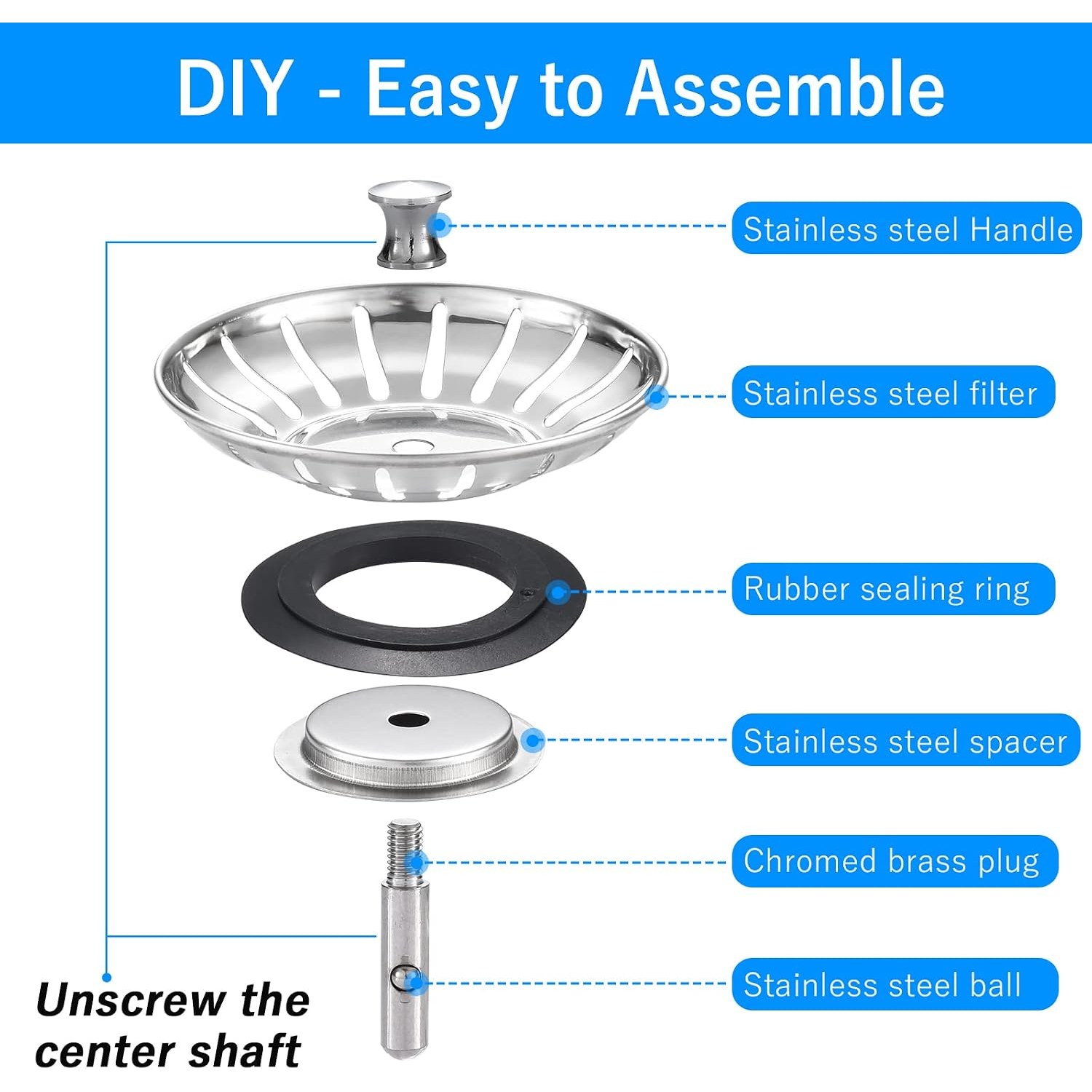
There is no trick to it. Pull the old plug out of the hole. Give the opening a quick wipe, since grit and old soap residue sitting in the groove is a common reason a new seal does not hold. Check the rubber ring on the new strainer is seated evenly all the way round. Drop it into the hole.
That is it. Press the knob down, run some water, and check it holds. Lift the knob and check it drains. If there is any seeping, lift the strainer out and look for a hair or a crumb caught under the seal, which is usually the culprit.
Keeping it working
The maintenance is nothing, but doing it makes a real difference to how long the fitting lasts.
After washing up, lift the strainer and tip the scraps into the bin rather than pushing them through with your finger. Rinse the basket under warm water. Once a week or so, give it a wipe with a sponge and a little dish soap to clear grease from around the holes, then dry the steel so you do not get water marks on the polished surface.
Stay away from steel wool, scouring powder and bleach. Abrasives leave fine scratches that dull the shine and hold dirt, and strong chemicals harden rubber. Warm soapy water genuinely does the job.
When the seal eventually goes, and it will before the steel does, that is what the spare rubber seals in the pack are for. Slide the old one off, clean the groove, fit the new one evenly and drop the strainer back in. You have effectively bought yourself another few years for no extra cost.
The short version
A kitchen sink strainer and plug is a small part that quietly prevents two annoying problems: water that will not stay in the bowl, and food scraps that end up in your trap. This 2 pack gives you two polished stainless steel fittings sized for a 78mm sink hole, each working as both a plug and a filter, with spare seals included.
Measure your sink opening first. If it sits in the 78 to 80mm range, the swap takes under a minute and needs no tools. Rinse the basket after washing up, keep abrasives away from the steel, and change the seal when it hardens. Do that and you will not think about your sink plug again for a long while, which is exactly the point.