
The complete guide
How To Choose And Fit A Downpipe Leaf Guard
The blockage you cannot see
A blocked gutter is easy to spot. Grass grows out of it, or water pours over the front in a sheet when it rains. A blocked downpipe is harder. From the ground the pipe looks the same as ever. The first sign is often a gutter that fills and overflows at one end, or a damp patch spreading on the wall behind the pipe.
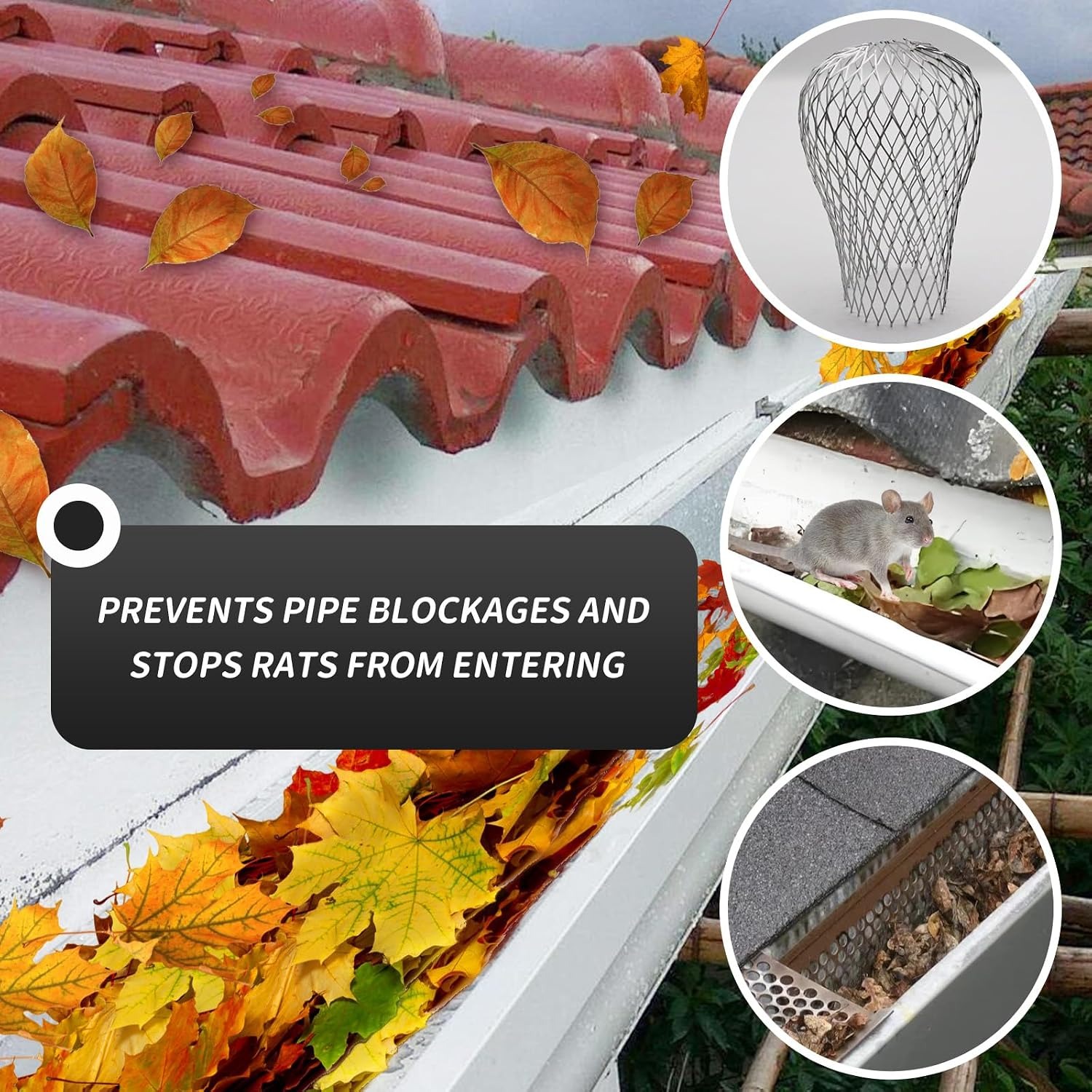
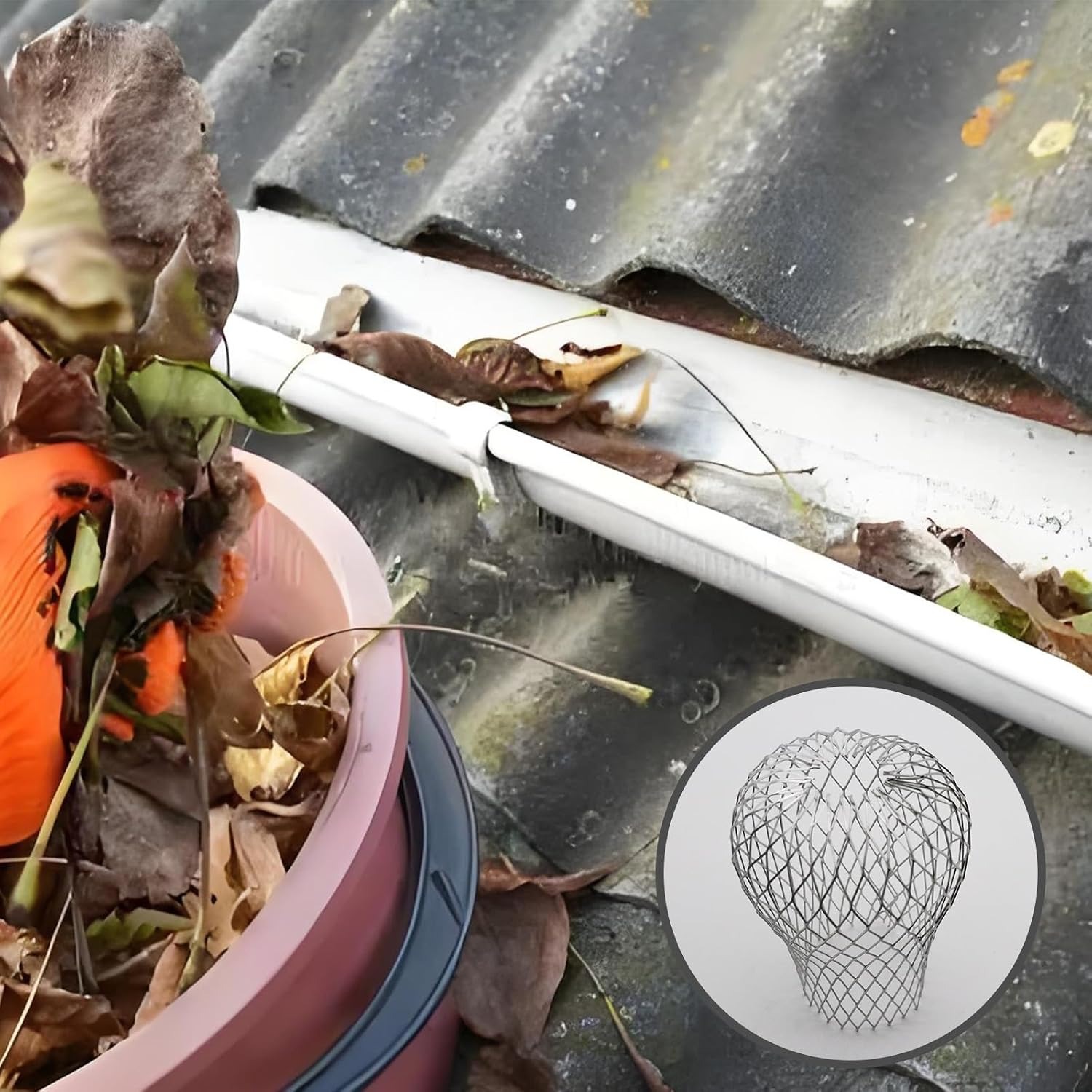
By then the plug has usually been building for a season or two. Leaves wash along the gutter to the outlet and drop into the pipe. Most go straight through. Some catch at the first bend, where the pipe kicks back towards the wall. More leaves catch on those. Moss and grit pack the gaps. In the end the pipe holds a solid column of wet compost.
Getting that out means taking the pipe apart or pushing rods through it from above. Keeping it out in the first place is a much smaller job. That is what an outlet guard is for.
What an outlet guard does
The idea is plain. Put a strainer over the hole so water gets through and debris does not.
The guard sits in the gutter outlet, the opening in the bottom of the gutter where the downpipe begins. Rainwater runs along the gutter, reaches the guard and passes through the mesh into the pipe. Leaves and twigs arrive at the same place and stop.
The debris then sits in the gutter around the guard. That is the right place for it. A gutter is open at the top. You can see into it from a ladder and scoop it out with a gloved hand. A downpipe is a closed tube, and nothing in it can be reached without tools.
A guard does not make the leaves go away. It moves them from a place you cannot reach to a place you can.
How these guards are made
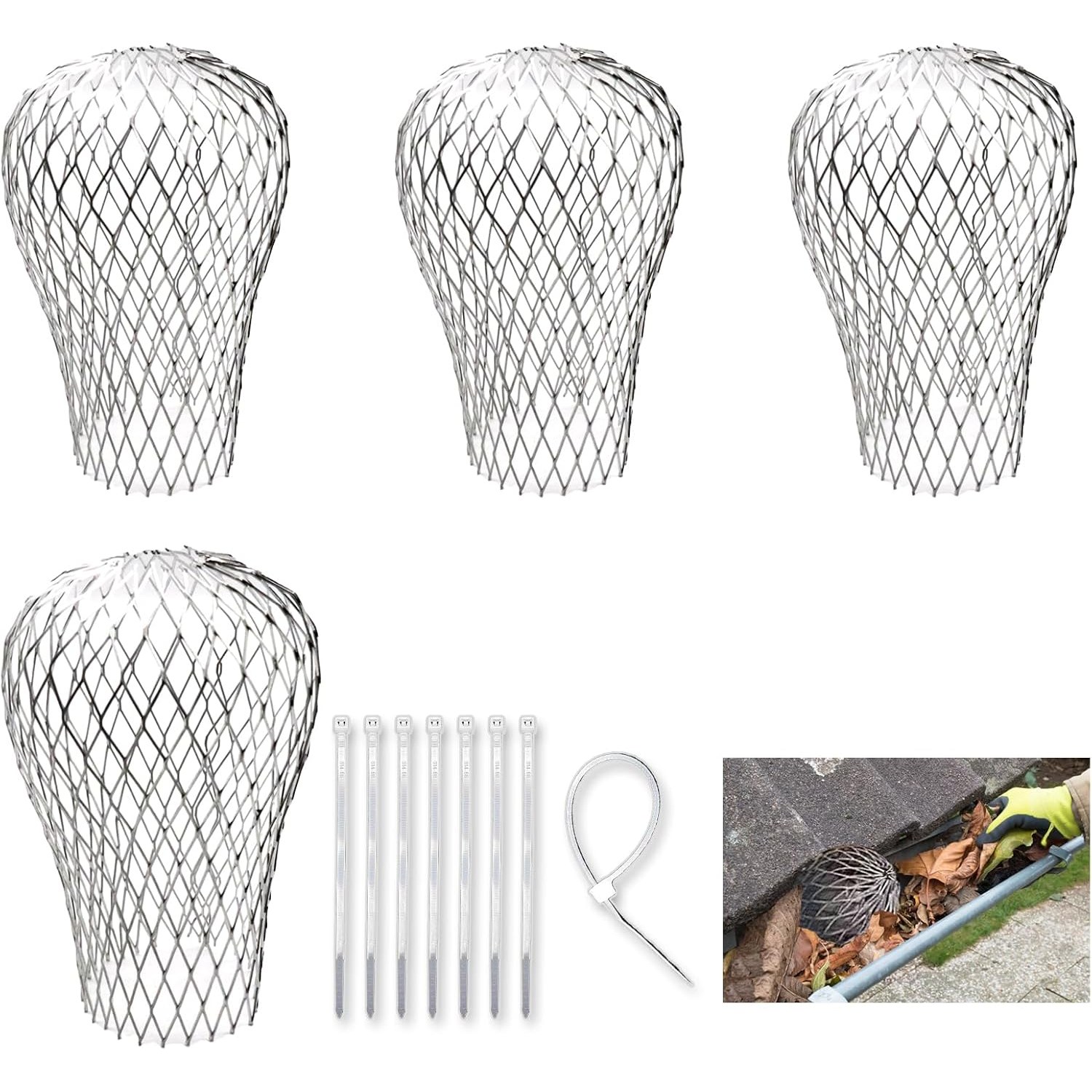
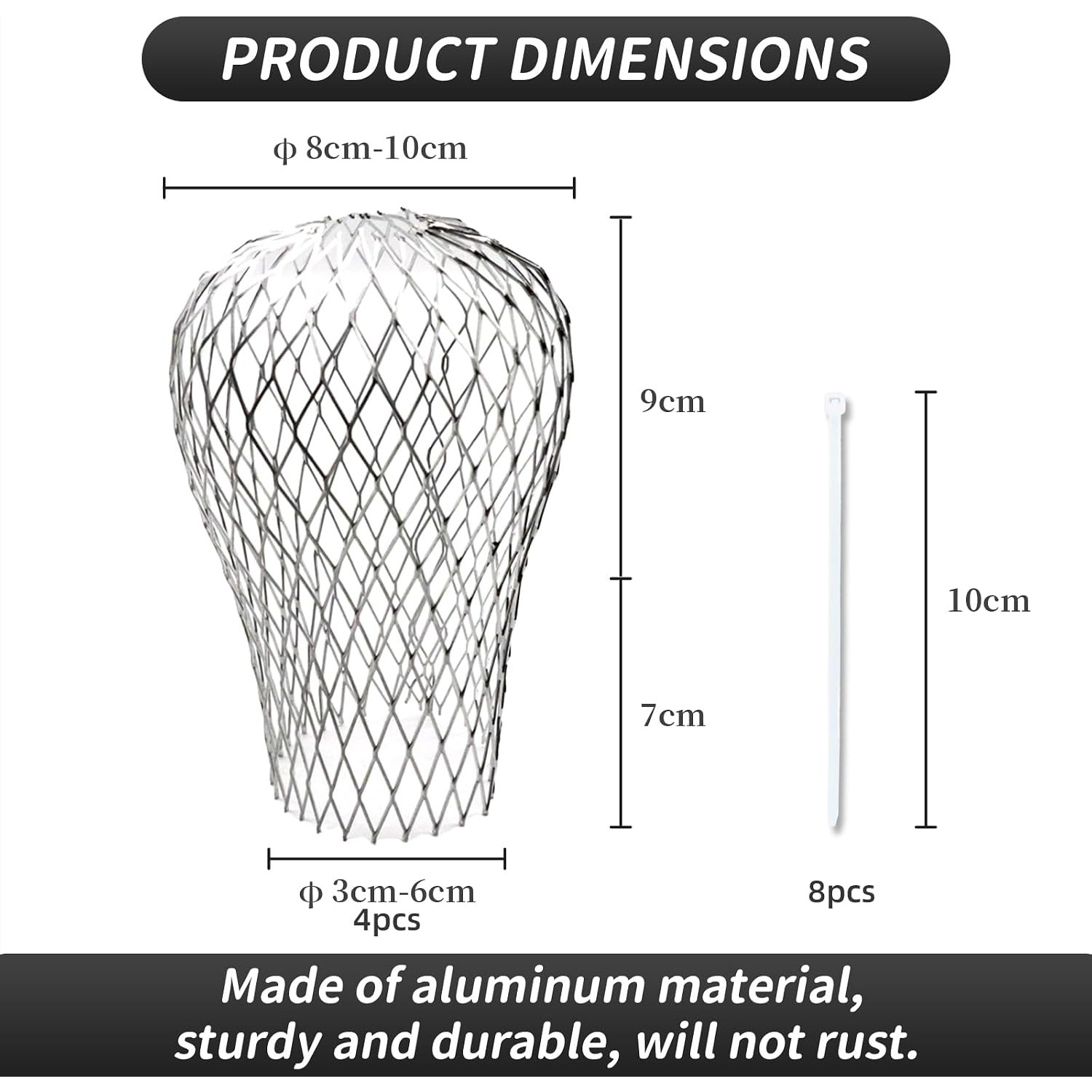
There are four guards in the pack. Each is made from aluminium alloy mesh. The maker describes the mesh as dense and the metal as lightweight, and lists the colour as silvery.
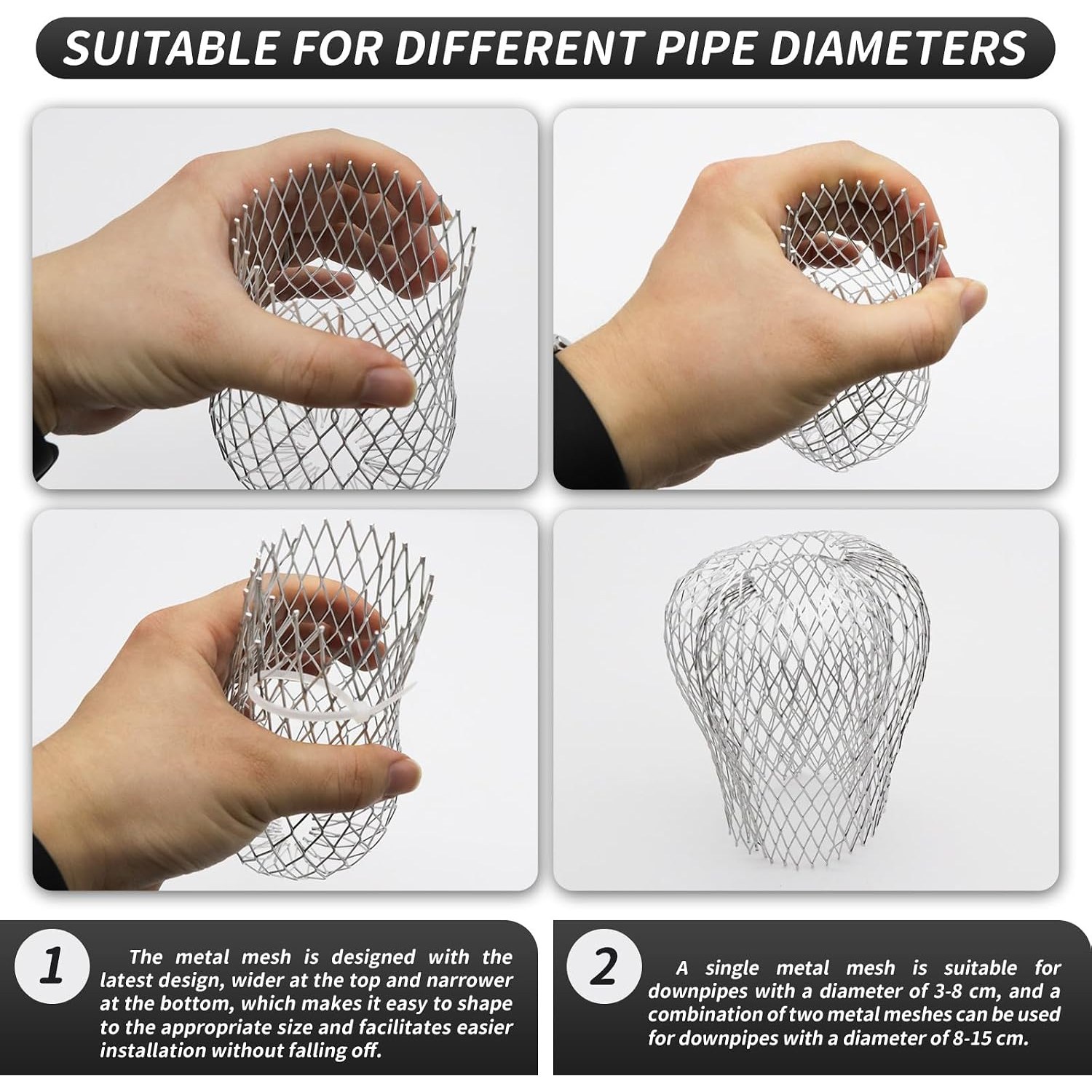
The shape matters. Each guard is wide at the top and narrow at the bottom. The narrow end goes down into the outlet and the wide end stands up in the gutter. The maker says this makes it hard for the guard to fall into the pipe, which is the obvious worry with anything you push into a hole above a long drop.
The maker lists the size as 8 x 8 x 15 cm and the weight as 100 g. It does not say whether that weight is for one guard or all four.
The maker also describes the guards as reusable. You can take one out, clean it and put it back.
Getting the size right
Mesh can be bent, and that is the point of this design. The maker says the shape and diameter are adjustable.
Two size ranges are given. One guard on its own fits an opening of 3 to 8cm. For an opening of 8 to 15cm, two guards are combined into one larger guard.
That affects how far a pack goes. Four guards protect four outlets in the smaller range. In the larger range, four guards protect two outlets.
So measure before you order. From a ladder, measure straight across the inside of the outlet at the bottom of the gutter. If you would sooner stay on the ground, measure across the downpipe itself, which gives you a close guide. Then count the downpipes on the house, including the ones on a porch, a garage or an extension. A semi-detached house commonly has two or three. A detached house with a garage can have six.
The maker does not mention square pipes specifically. The mesh is shaped by hand, so the measurement across the opening is what counts.
Fitting them safely
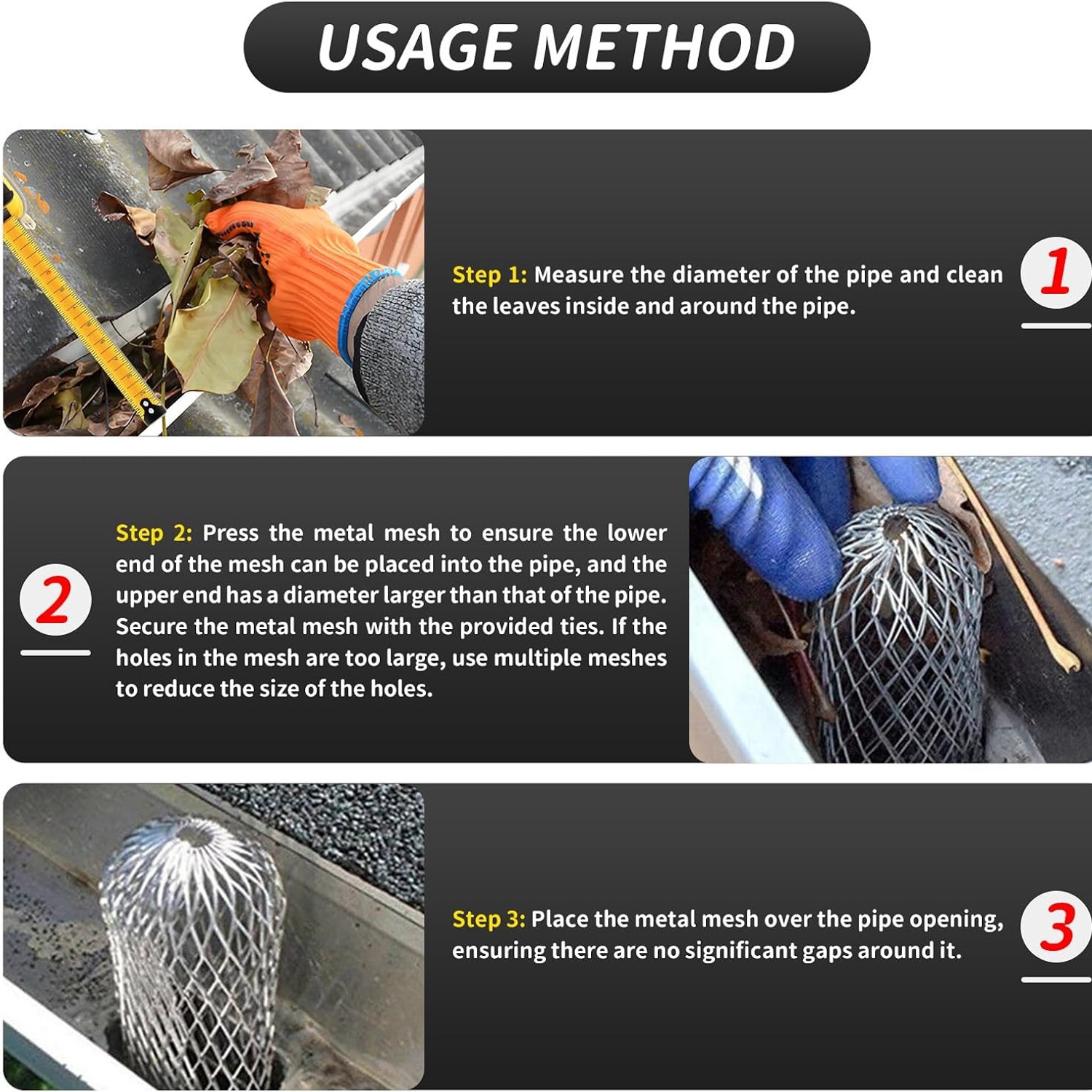
The maker sums up fitting in a line. Adjust the diameter, insert the guard and secure it. Cable ties are included for fixing, though the maker does not say how many.
Here is a sensible way to go about it.
Put gloves on first and keep them on. The maker warns about sharp edges, and metal mesh will find bare skin.
Clear the gutter for an arm's length either side of the outlet. There is no sense fitting a guard into a heap of old leaves. Check that the outlet itself is open by pouring a jug of water into it.
Shape the guard on the ground or at the top of the ladder so the narrow end is a snug fit in the opening. Push it in until it holds, with the wide end standing clear above. Fix it with a cable tie where there is something to tie to, such as a gutter bracket or the lip of the outlet.
For a large outlet, open out two guards, overlap them into a single larger shape and tie them to each other before fitting.
None of this alters the gutter or the pipe. Nothing is cut or drilled. It is a householder's job, as long as the ladder work is done properly.
And that is the real risk. Use a ladder tall enough that you are not stretching. Stand it on firm, level ground. Have someone hold it. Move the ladder along instead of leaning out. If you are not comfortable at gutter height, a gutter cleaning service will fit guards in minutes while they are up there anyway.
What a guard will not do
It will not keep the gutter clean. Leaves still land in the gutter and still need to be taken out.
It will not stop fine material. Grit off the roof tiles and silt are smaller than the mesh and wash through.
It will not clear a pipe that is already blocked. If water is not getting away, have the pipe cleared before you fit anything.
And it can make a neglected gutter overflow sooner. A guard buried under a thick mat of leaves lets little water through. That is still better than a blocked pipe, because the fix is a handful of leaves and not a dismantled downpipe. But it does mean the guards need looking at.
Upkeep through the year
Twice a year is the minimum. Go up once the leaves are fully down in late autumn, and again in spring when the moss has been loosened by frost and birds. Check after a big storm too.
At each visit, clear the debris from around the guard and lift the guard out. Knock it against the ladder or brush it to clear the mesh, rinse it if you have water to hand, and refit it. If you had to cut a cable tie, use a new one.
Aluminium does not rust the way steel does. Over time it goes dull and grey outdoors, which is normal. If a guard gets crushed or torn, replace it.
Houses under large trees are a different case. Sycamore, ash and beech can fill a gutter in a fortnight in October. There the guards may need clearing several times in a season.
Choosing a downpipe guard
When people compare outlet guards, a few things separate them.
Material is the first. Some guards are moulded plastic in one fixed size. Metal mesh can be bent by hand to suit the opening. These are aluminium alloy.
Fit is the second. A fixed-size guard either fits your outlet or it does not. An adjustable mesh covers a range, here 3 to 15cm across the two ways of using it. That makes it a practical choice for a house with mixed pipe sizes, and it is why many people looking for the best gutter leaf guard for an older house end up with a shaped mesh type.
Then there is how it stays put. A guard that only rests in the hole can lift out in the wind or float in a full gutter. These come with cable ties.
Last is the count. Work out how many outlets you have and whether each needs one guard or two.
The short version
Downpipes block when leaves and moss wash in from the gutter. A mesh guard in the outlet holds that debris in the gutter, where it is easy to clear.
This pack has four aluminium alloy mesh guards, wider at the top than the bottom. The maker says one guard fits openings of 3 to 8cm and two combined fit 8 to 15cm. Cable ties are included. The edges can be sharp, so wear gloves.
Measure your outlets, count your downpipes, fit the guards from a safe ladder and check them in autumn and spring.