
The complete guide
How To Extend A Washing Machine Or Dishwasher Drain Hose
When the hose will not reach
It happens in nearly every house move and every kitchen refit. The washing machine goes into its new spot, you pull the waste hose round the back, and it stops well short of the standpipe. Or the dishwasher moves one unit along and the waste hose no longer makes it to the sink.
The hose that comes on an appliance is only as long as the maker expects you to need. Usually that is enough to reach a waste connection close by, and no more.
People try all sorts of things at this point. They stretch the hose tight, which pulls on the fitting at the back of the machine. They push the machine in at an angle. They bind two hoses together with tape, which holds until the first hot wash.
The proper answer is a hose extension with a real connector and a clamp on each side. It is a small job and it does not cost much.
What is in the kit
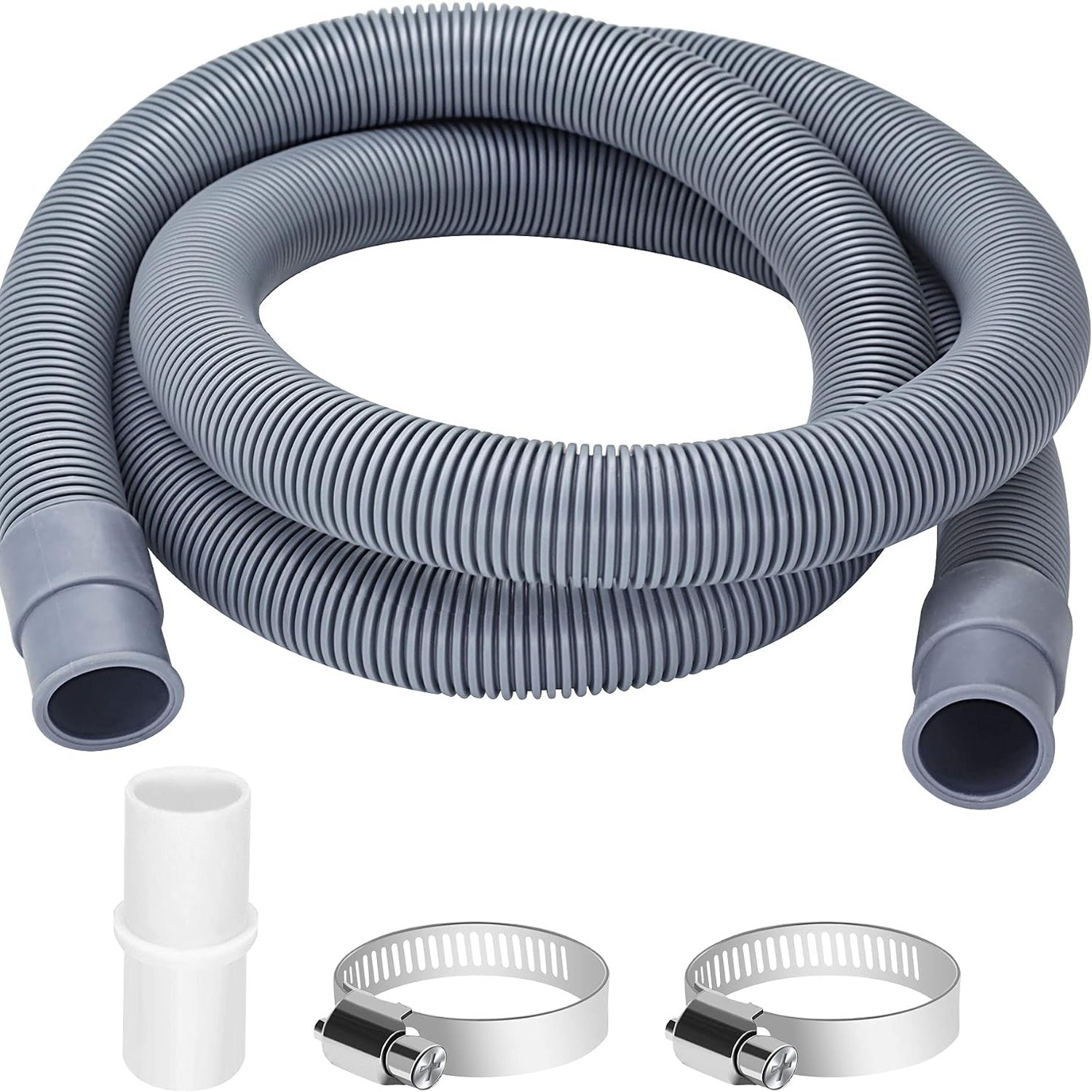
This kit has a 1 metre hose, one white extension adapter and two stainless steel clamps.
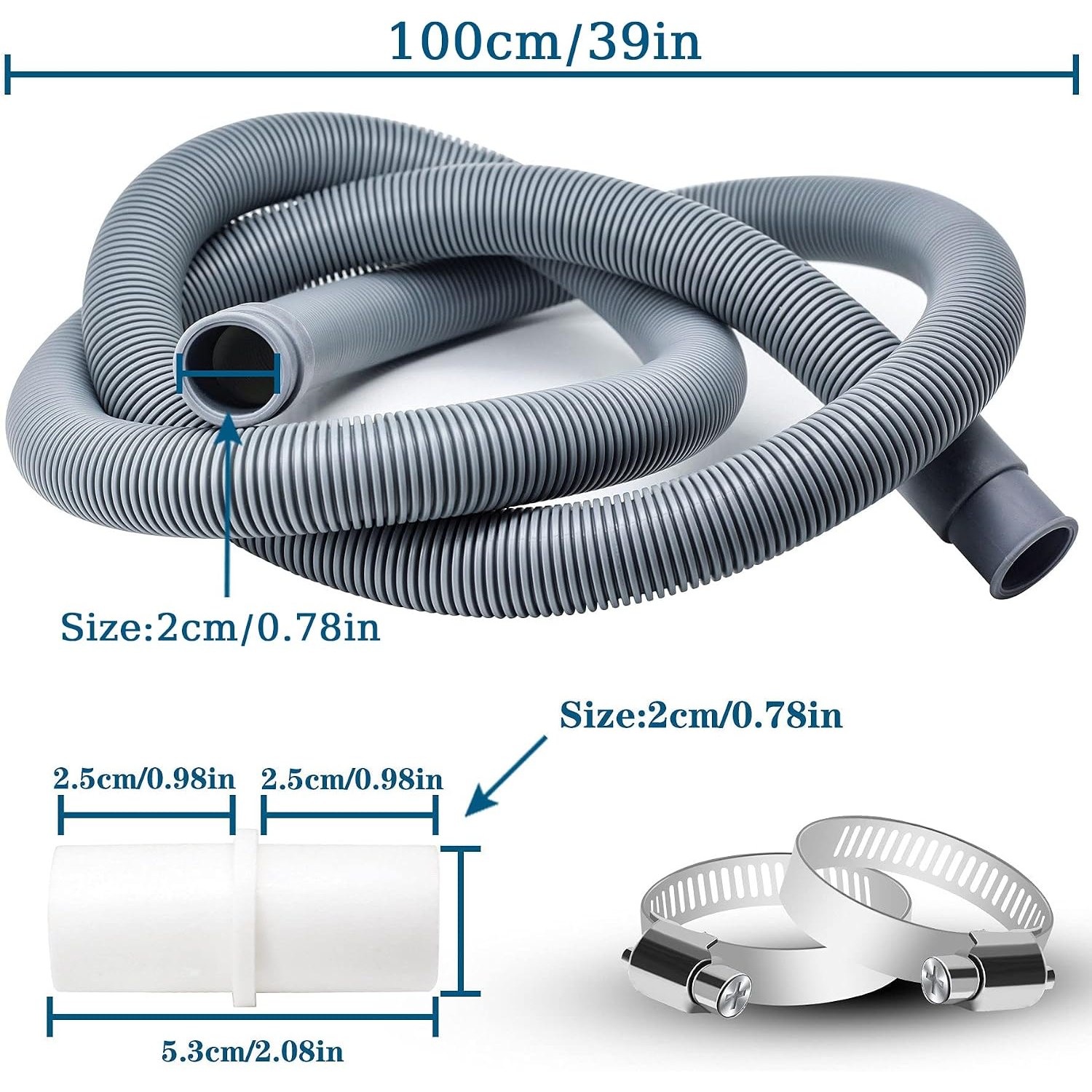
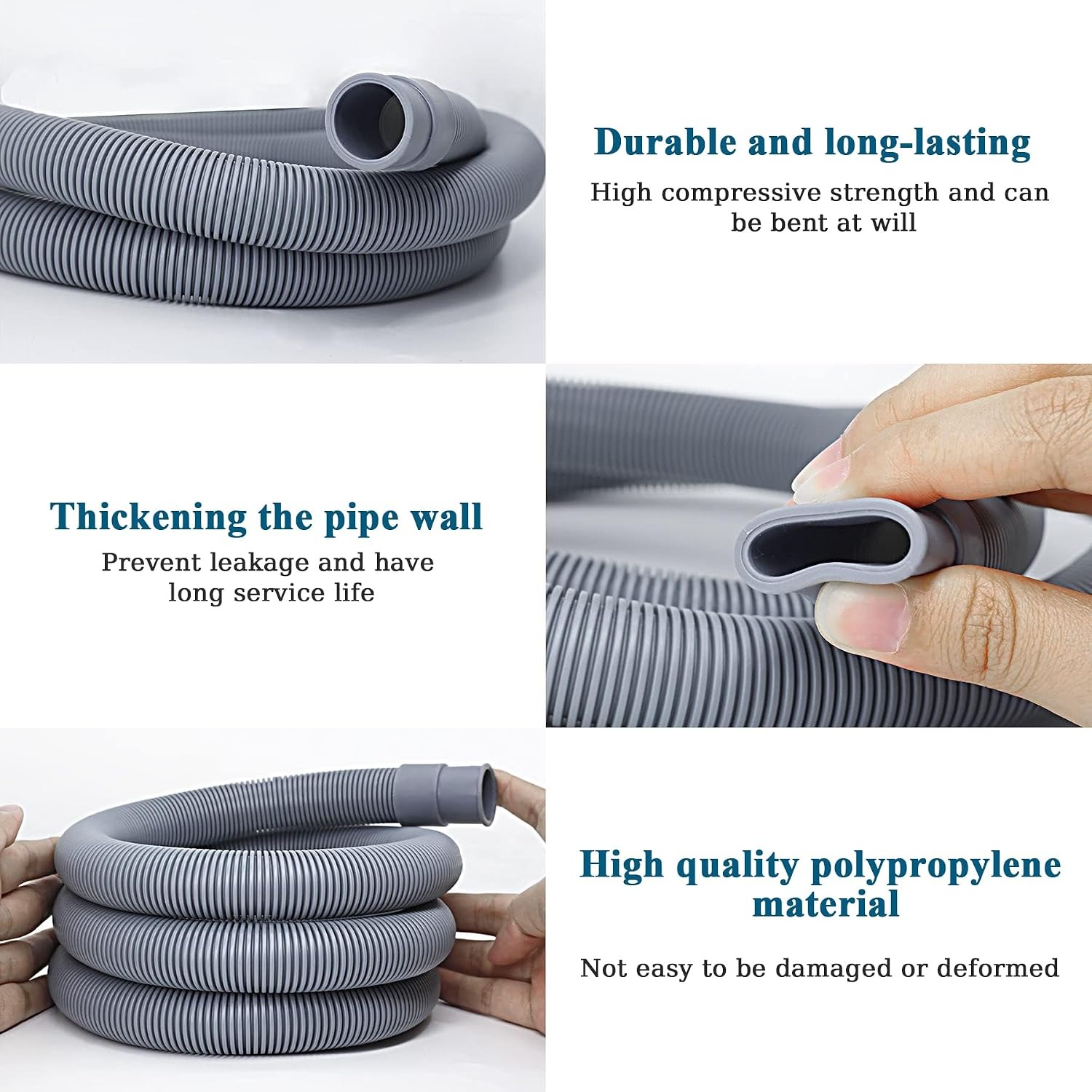
The hose is white and made from polypropylene. The maker states an inner diameter of 20mm. The maker also describes the wall as thick, with the aim of resisting kinks, squashing and the blockages that follow from them. The outer diameter is not stated.
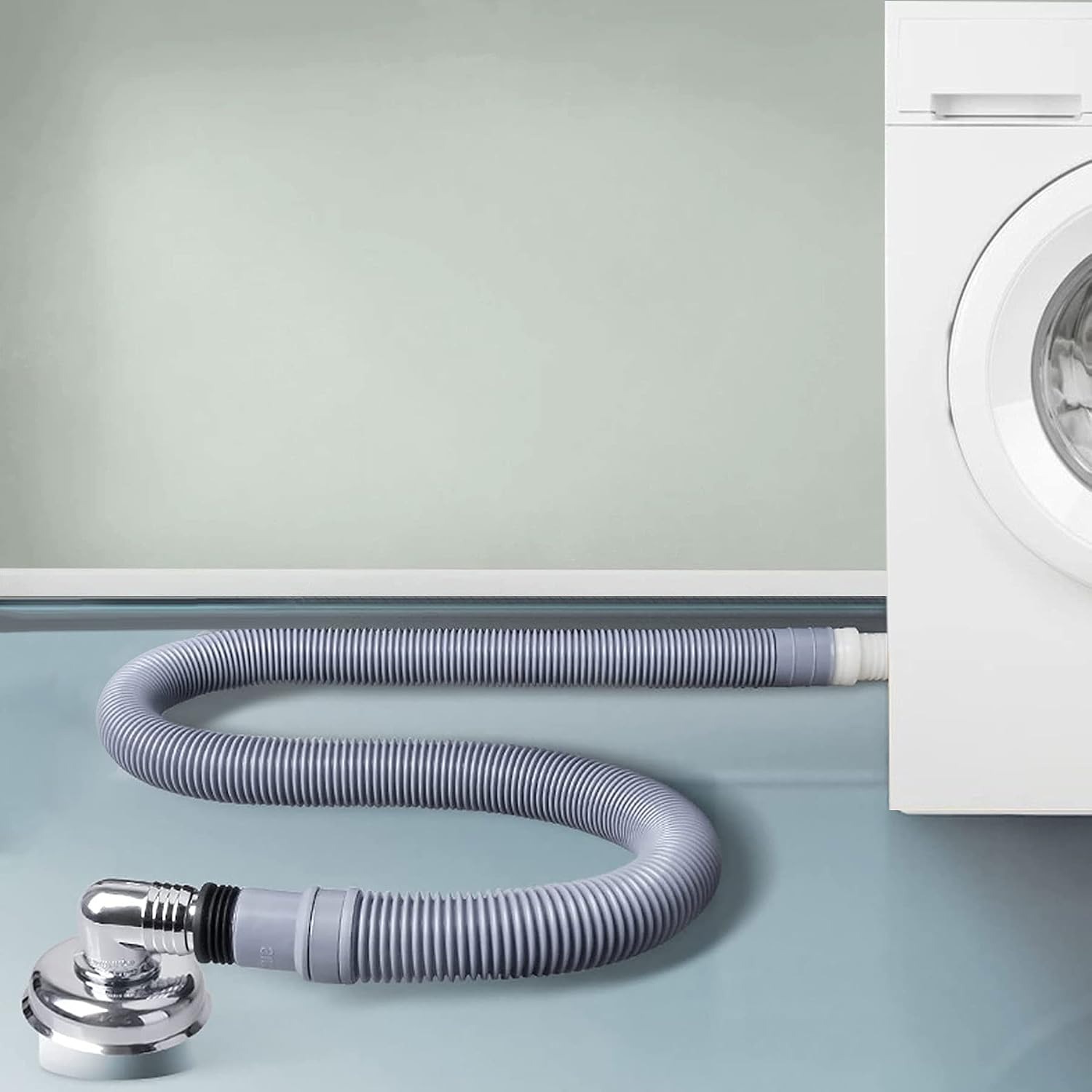
The extension adapter is the connector. It is the short white piece that goes between your existing hose and the new one, so that water passes from one into the other.
The two clamps are stainless steel. One goes over each side of the joint. The type of clamp is not stated by the maker.
The stated product dimensions are 100 x 2 x 0.1 cm and the stated weight is 80 g.
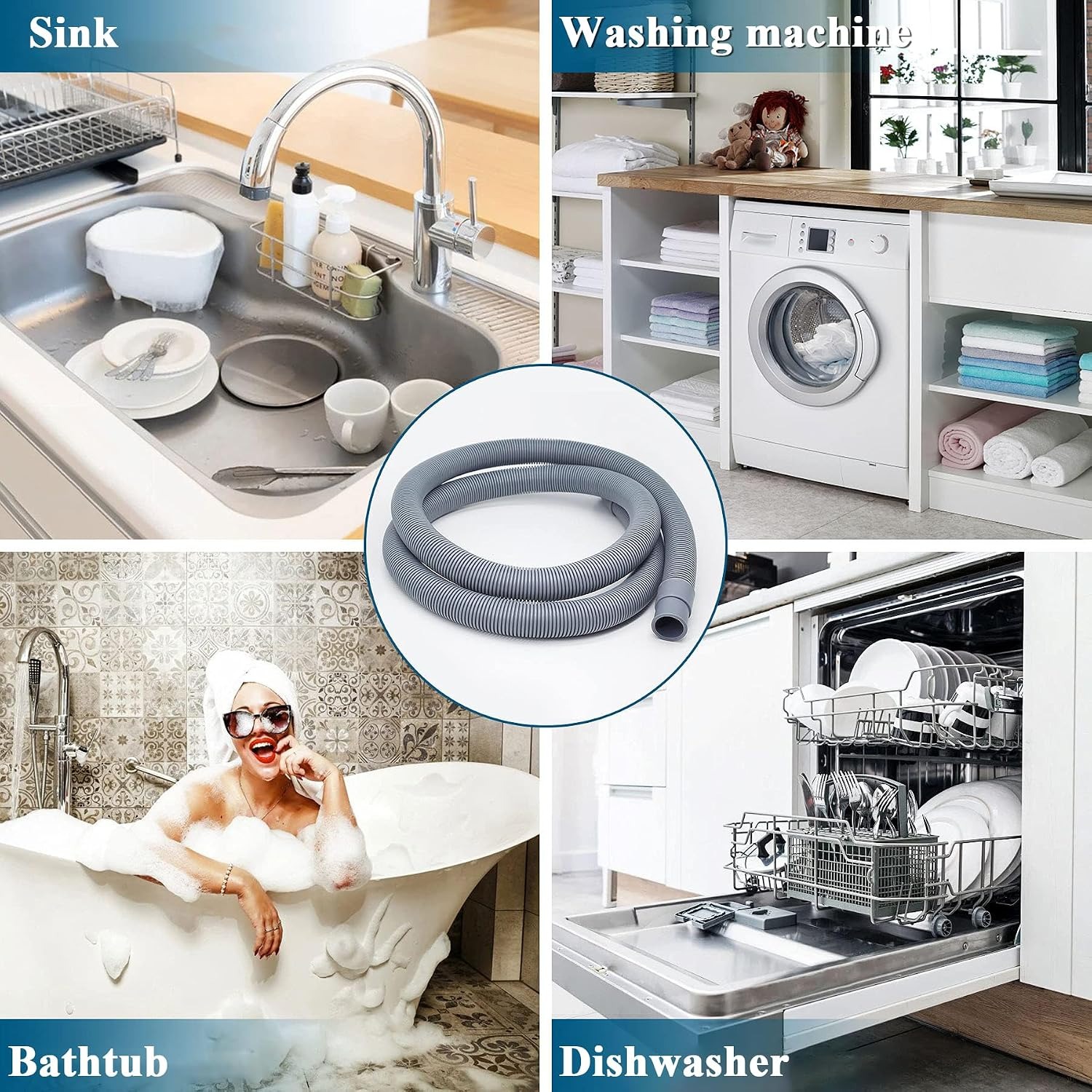
The maker names two appliances for it. Washing machines and dishwashers.
Check the size before you buy
Drain hoses are not all one size. This is the step that saves you a return.
Pull your machine out far enough to get at the drain hose. Look at the free end, the one that goes into the standpipe or onto the waste. Measure across the opening in millimetres.
This extension has a stated inner diameter of 20mm. The adapter is made to join hoses of that sort of size. If your hose is close to that, you are in the right place. If it is much smaller or much larger, this kit is not for your machine.
The maker asks buyers to measure the machine's water outlet before ordering. We would add one thing. Check the gap as well. Measure how far short the existing hose falls, and allow for gentle curves. One metre of extra hose does not give one metre of straight-line reach once it has gone round a corner.
Check the manual too
There is a limit on how long a drain hose can be, and it comes from the appliance and not from the hose.
A washing machine or dishwasher empties itself with a small pump. That pump is built to push water a certain distance and lift it to a certain height. Go beyond that and the machine may not empty properly, and dirty water can sit in the hose or run back.
The figures are in the manual for your machine. Look for the section on installation or drainage. It will give a maximum drain hose length, and a minimum and maximum height for the top of the hose. Stay inside those numbers. If you no longer have the booklet, most makers publish their manuals online under the model number on the door or the rating plate.
If the manual says the hose must not be extended at all, follow the manual.
Joining the hoses
The maker says this goes together without tools. Have a screwdriver nearby all the same, in case the clamps supplied have a screw. You will want an old towel and a shallow tray or basin.
Switch the machine off and unplug it. Pull it forward gently. Lift the end of the existing drain hose out of the standpipe, keeping the end pointing up, because there is always some water lying in it. Tip that into the basin.
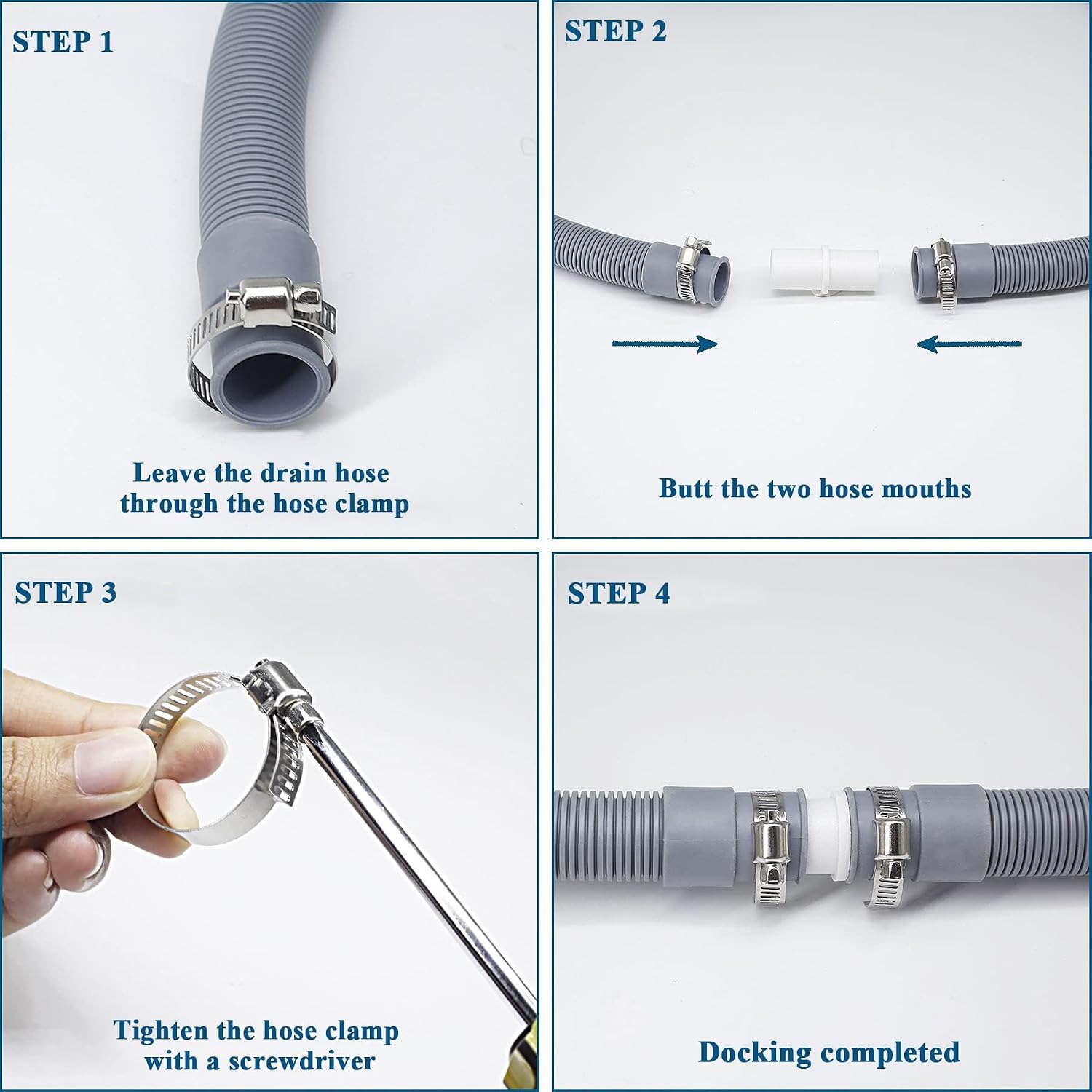
Slide one clamp loosely onto the existing hose. Push the adapter into the end of the hose as far as it will go. Slide the second clamp loosely onto the extension, then push the extension onto the other side of the adapter, again fully home.
Move each clamp so that it sits over the part of the hose that covers the adapter, and tighten both. Firm is enough. Give each hose a gentle pull to check that it holds.
Put the free end of the extension where the old hose used to go.
Routing the longer hose
A longer hose has more chances to go wrong, so take a minute over the route.
Lay it in wide, gentle curves. The maker describes a thick wall meant to resist kinking, but any hose will fold if it is forced round a sharp corner or crushed when the machine is pushed back. Leave a gap behind the appliance.
Keep the joint somewhere you can see it. Behind the kickboard beside the machine is better than out of sight behind the drum. If the joint ever weeps, you want to notice.
Do not leave spare hose in tight coils on the floor, and do not let the hose sag into a deep loop where water and fluff can settle. Do not cut it either, since the maker does not say it can be cut.
Then test it. Plug the machine in and run a short rinse or drain cycle. Watch the joint with a dry piece of kitchen paper under it while the pump runs. Look again after the first two or three full washes.
Standpipes, spigots and where the end goes
The free end of the extension goes wherever the old hose went. In many Irish utility rooms that is a standpipe, an upright length of waste pipe with an open top that the hose hooks into. The hose should sit in the top of the standpipe loosely, with air able to get in around it. Do not seal the gap with tape, and do not push the hose a long way down the pipe. Your appliance manual shows how far it should go in.
In many kitchens the dishwasher outlet hose pushes onto a spigot on the sink trap instead. This kit lists a hose, an adapter for joining hose to hose, and two clamps. It does not list a fitting for a trap spigot, so check that the end of the extension suits your connection before you take the old hose off.
Where a plumber comes in
Joining one hose to another is a job for any householder. It does not touch the fixed plumbing.
It is different if the extension is still not enough, or if there is nowhere for the hose to go. Fitting a new standpipe, adding a trap, or making a new connection into the waste pipe all mean altering fixed pipework. That is a job for a qualified plumber, and the Irish Building Regulations apply to drainage work.
A machine that will not drain is a separate matter again. An extension adds reach. It does not clear a blockage. Check the filter on the machine and look for a kinked hose first. We do not recommend chemical drain cleaners, and they should never go into an appliance waste. If sinks and other fittings in the house are slow as well, the trouble is in the main drain. If it is in a public sewer, contact Uisce Éireann or your local authority.
Looking after it
There is little to maintain. Every few months, and any time the machine has been moved, pull it forward and look at the joint. Check that both clamps are tight and that the hose has not been flattened against the wall.
Wipe the outside with a damp cloth if it has gathered dust and fluff. Keep it away from sharp edges on the back of the machine or the cabinet.
The short version
When an appliance drain hose is too short, the right fix is an extension with a connector and clamps.
This kit gives you a 1 metre white polypropylene hose with a stated 20mm inner diameter, one white adapter and two stainless steel clamps. The maker names washing machines and dishwashers.
Measure your outlet hose first. Check the maximum hose length in your appliance manual. Push the adapter fully home, clamp both sides, keep the curves gentle, and watch the joint on the first cycle.