
The complete guide
How To Clean A Slow Drain With A Brush Set
Blockages start as slime
Very few drains block suddenly. What usually happens is slower and less dramatic. Every time someone washes their hands or brushes their teeth, a thin film is left on the inside of the waste pipe. Soap, toothpaste, shaving foam and skin oils all add to it.
That film is sticky. Hair catches on it. Fluff and grit catch on the hair. Over a few months the inside of the pipe gets narrower, and the basin takes longer to empty. There may be a smell as well, because the slime is a home for bacteria.
At this stage nothing is truly blocked. Water still gets through. This is the easiest time to deal with it, and it is the stage a brush is made for. You are not fighting a plug. You are scrubbing a dirty pipe.
What is in this set
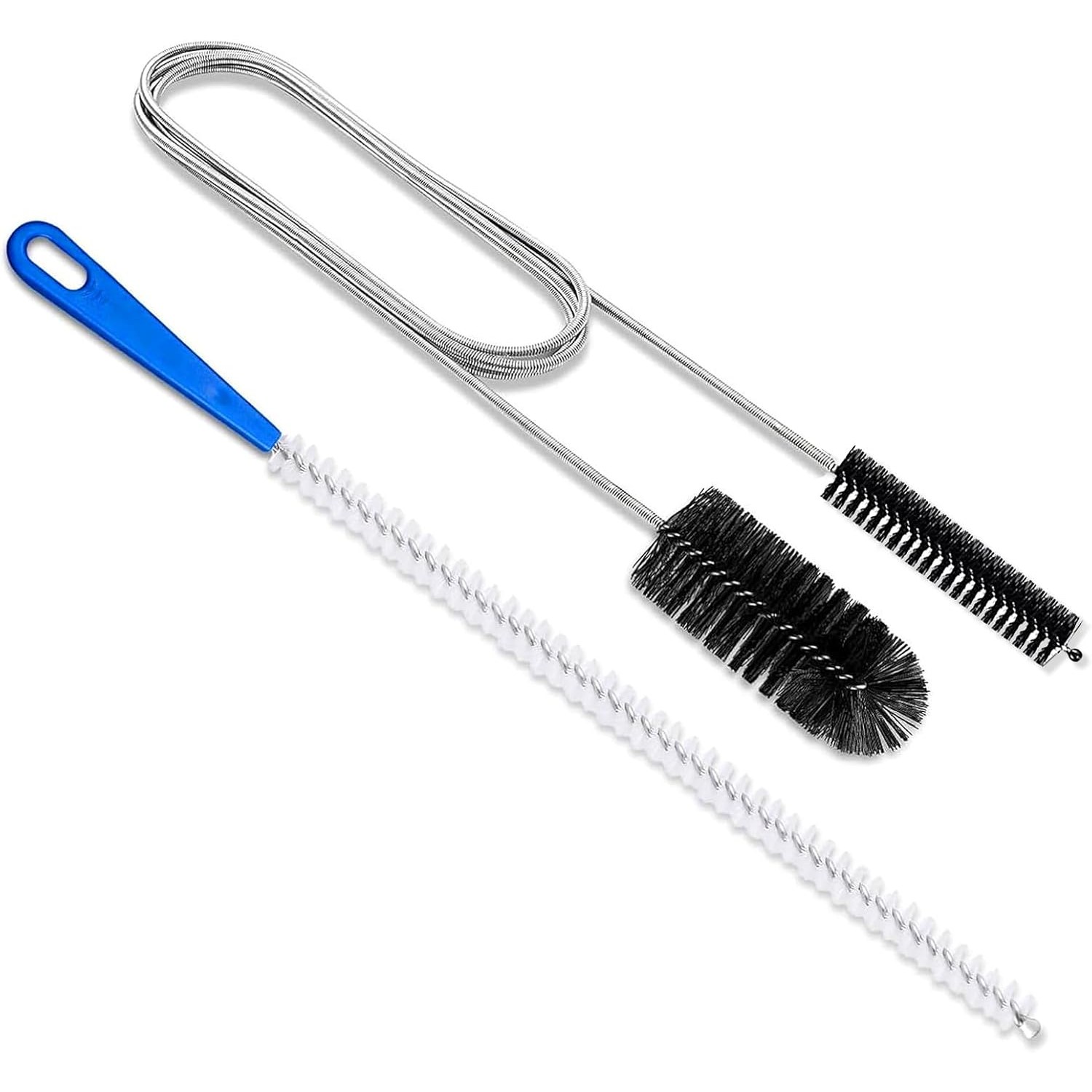
There are two pieces.
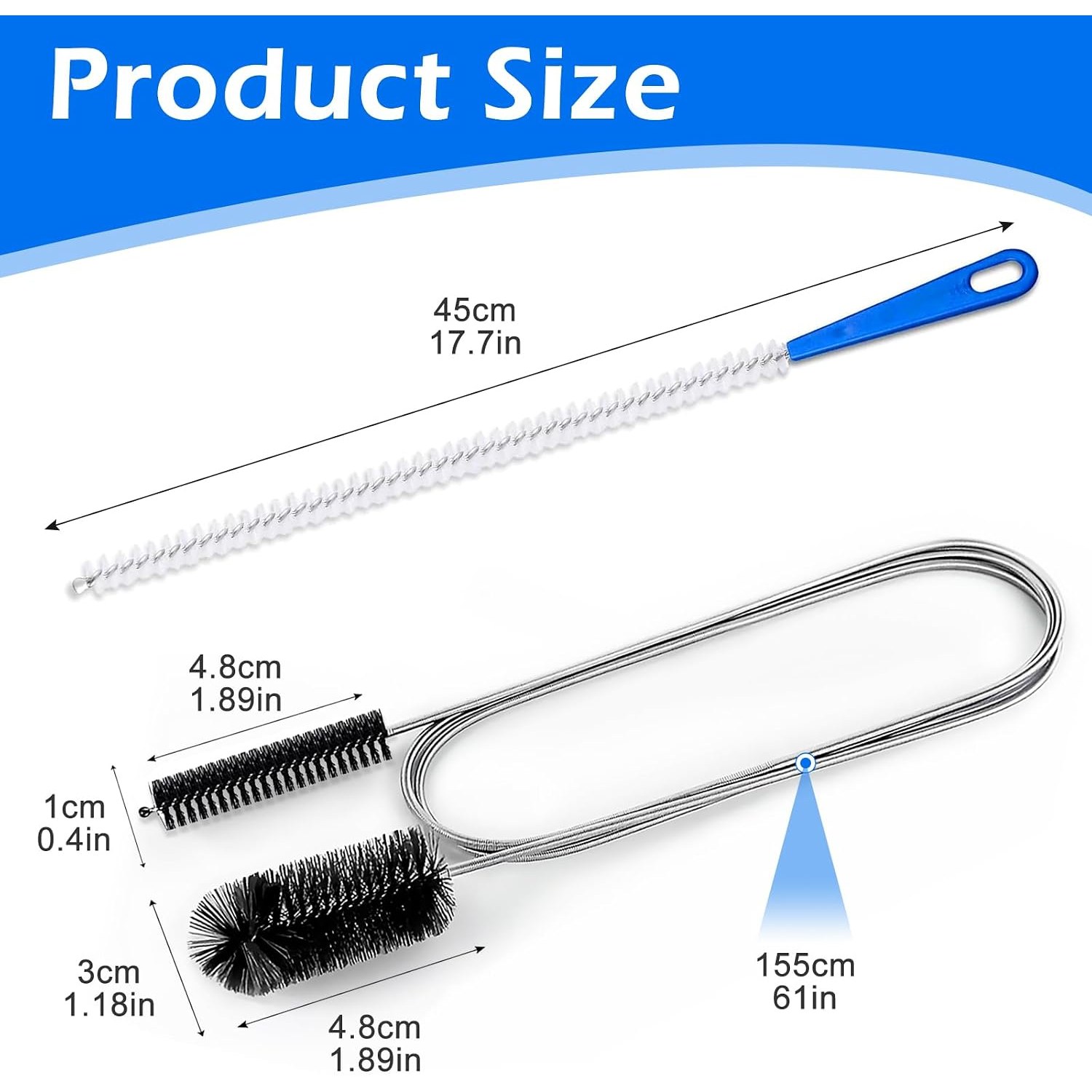
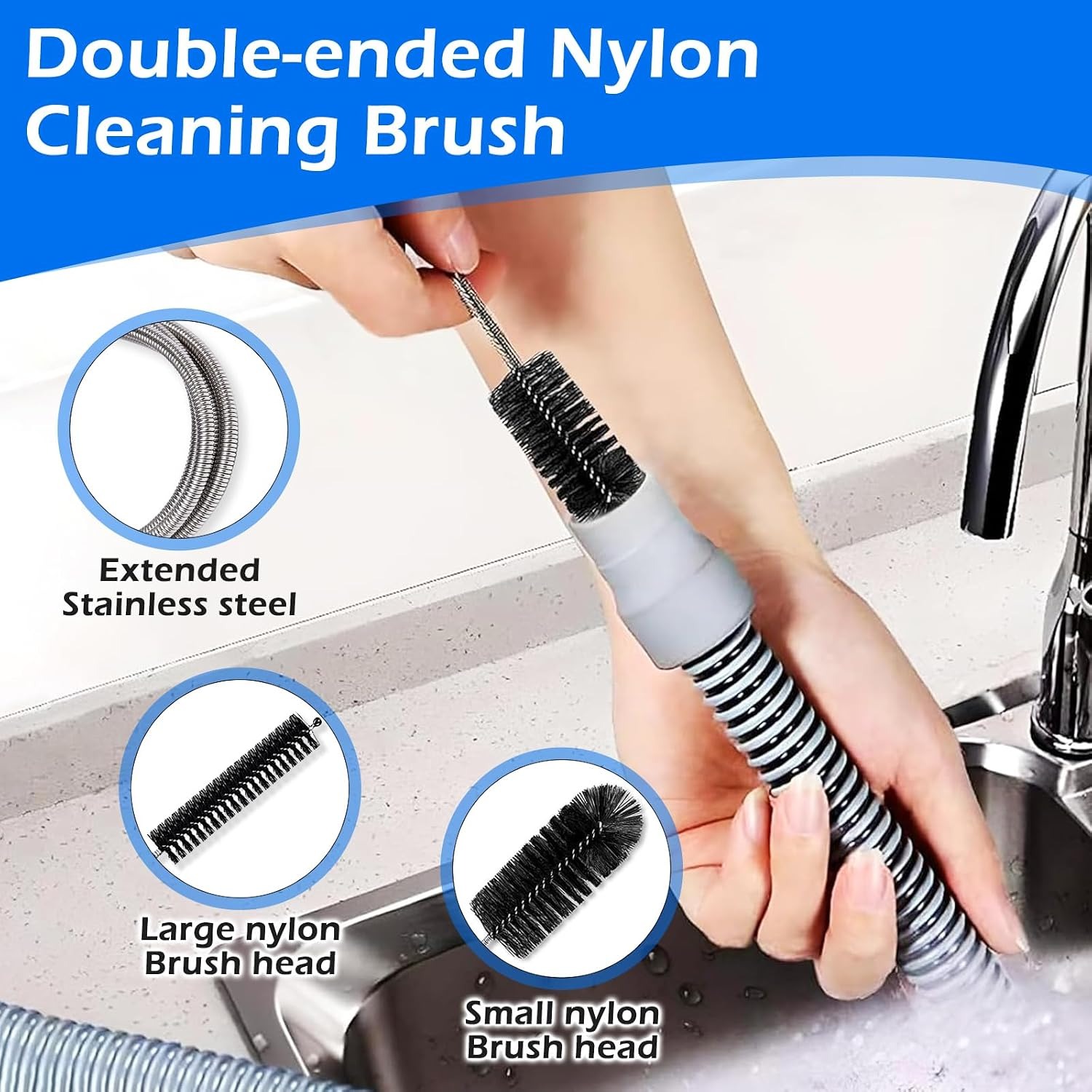
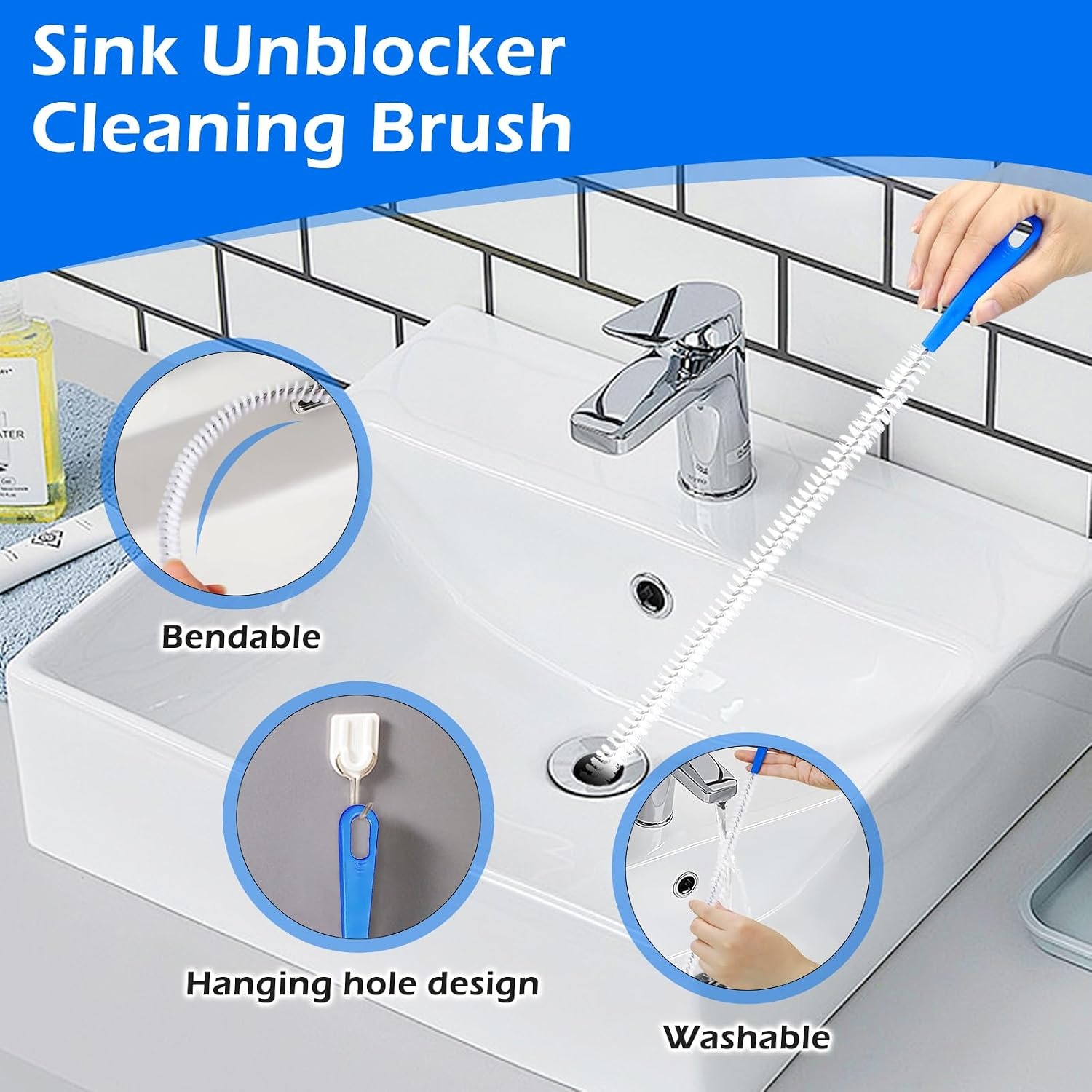
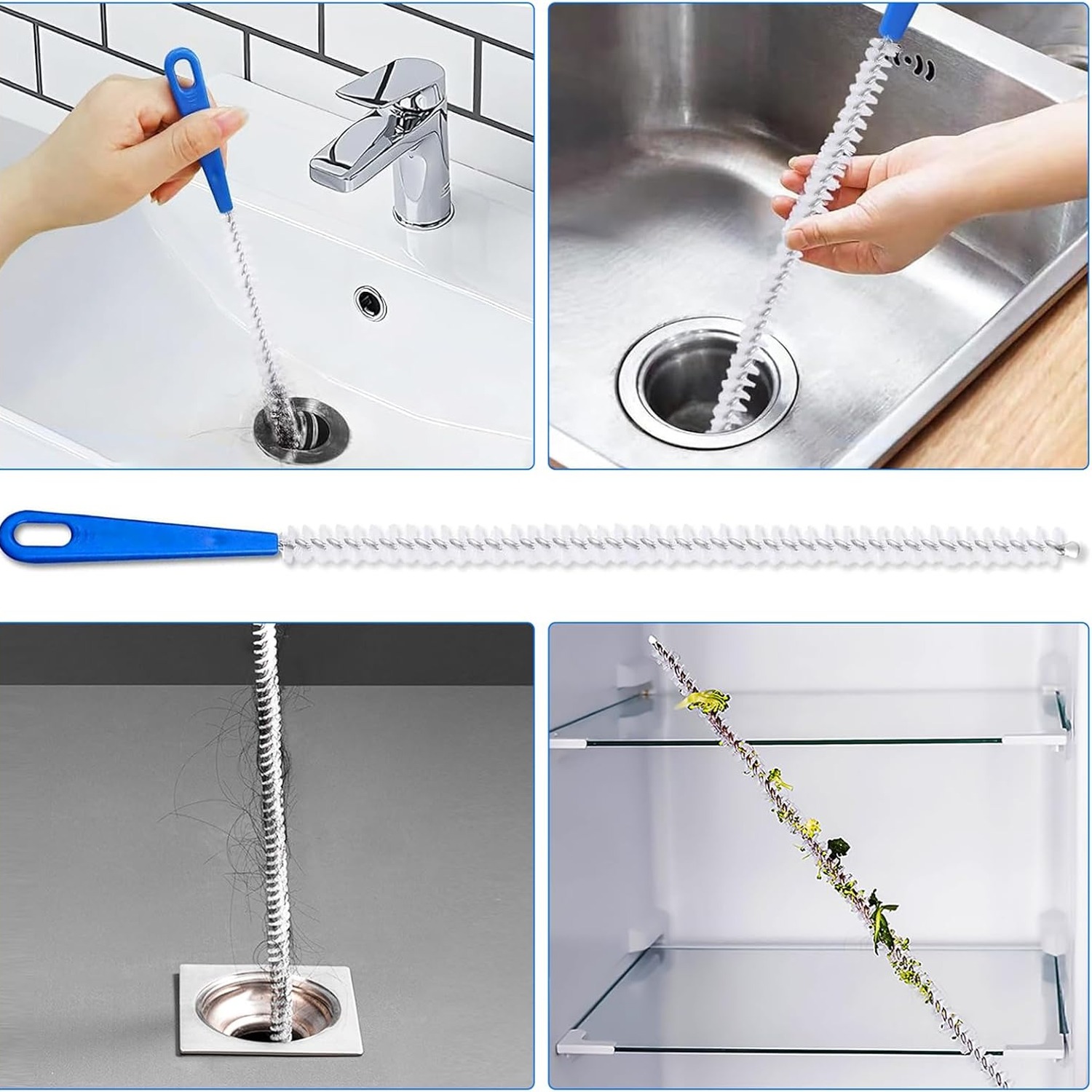
The first is a double head pipe brush. The maker gives its length as 61 inch, which is about 155cm. It is described as a flexible stainless steel rod with nylon bristles at both ends.
The second is a plastic tool, 17.7 inch long by the maker's figure, or about 45cm. This is the plughole hair tool. You insert it, turn it slightly so it picks up hair and gunk, and pull it out slowly.
The maker lists the colour as silver. The listed dimensions are 20 x 15 x 2 cm and the listed weight is 20 g. Since one piece is 155cm long, those numbers read like a packed size with the rod coiled, so treat them as a rough guide.
The diameter of the bristle heads is not stated by the maker. The maker says the kit suits many different pipe sizes, without figures. If you have a particular narrow pipe in mind, measure it and ask us first.
Start with the short tool
Most bathroom hair never gets far. It wraps around the cross-bars under the plughole or sits in a clump a few centimetres down. The 45cm tool is for that.
Lift out the plug or strainer if it comes away by hand. Slide the tool into the plughole. Turn it slightly, as the maker directs, so it picks up what is there. Then draw it out slowly. Pulling fast tends to leave half the clump behind.
Have tissue or an old cloth ready. What comes out is not pretty. Wipe the tool, put the mess in the bin and go again. Three or four passes is normal for a basin that has not been cleaned in a year. Stop when the tool comes out clean.
This step alone fixes a lot of slow basins and shower trays. It takes about two minutes.
Then use the long brush
If the water is still slow, or there is a smell, the build-up is further along. This is where the 155cm double head pipe brush comes in.
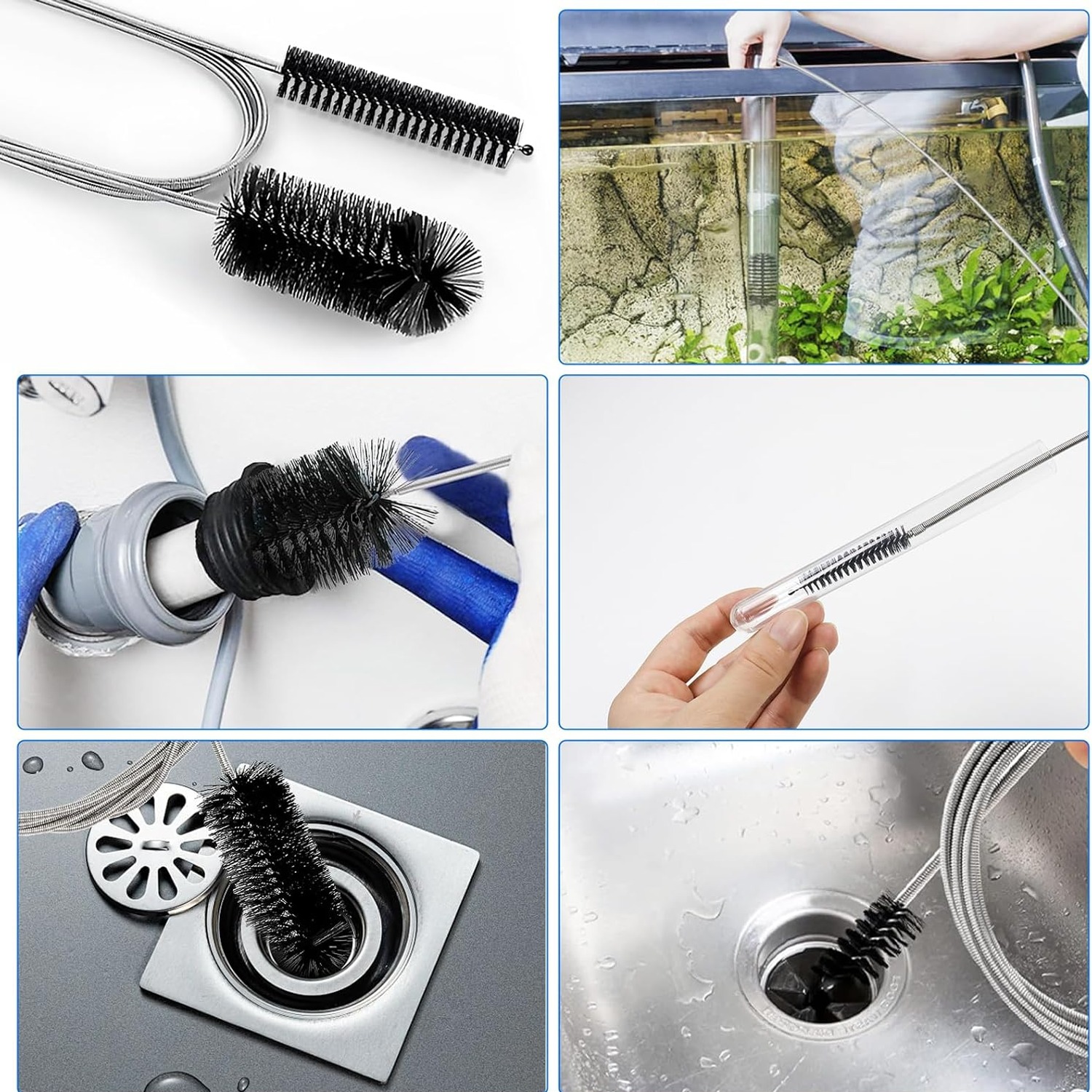
Feed one brush end into the plughole. Push gently and turn the rod between your fingers as it goes. The rod is flexible, and the maker suggests it for curved pipes such as U-shaped traps. When you feel it stop at a bend, do not shove. Pull back a little, turn, and try again. It usually finds the way.
Once it is through, work it back and forth in short strokes. You are scrubbing the walls of the pipe, the same way you would clean a bottle. Pull the brush out, rinse it under the tap and look at what came off. Repeat until it comes back fairly clean.
Because both ends have bristles, you have a spare head. When one end is caked, turn the rod round and carry on with the other.
Finish by running the hot tap for a minute or two. That flushes the loosened material through the trap and away.
Other places a slim brush is useful
The maker lists several uses beyond sinks. They include fridges, washing machines, coffee machines, aquarium filters and car drains. The maker does not give details for any of them, so use some judgement.
A fridge often has a small drain hole at the back of the main compartment, which can block with food bits. A washing machine collects slime in the detergent drawer housing. Aquarium filters have tubes that foul over time. Many cars have drain channels that clog with leaves.
Whether a brush end fits any of these depends on a head size the maker does not state. Try gently and never force a brush into an opening.
There is one firm rule here. Do not move a brush between dirty and clean jobs. A brush that has been down a bathroom waste must never go near a coffee machine, a fridge or a fish tank. If you want to clean those, keep a separate set for them and store it somewhere else.
What a brush will not do
It helps to be clear about limits.
A brush cleans. It is not built to break through a solid plug packed deep in the pipe. If water will not drain at all, a plunger or a drain snake is the better tool. Once the drain is running again, the brush is what keeps it that way.
It reaches 155cm. A blockage further along than that is beyond it.
It is also not a reason to take pipes apart. If a job means altering fixed pipework, that is work for a qualified plumber, and the Irish Building Regulations apply to drainage work. And if the trouble is in the public sewer and not in your own pipes, contact Uisce Éireann or your local authority.
Skip the chemical drain cleaners too. We do not recommend them. They are harsh to handle, and liquid left sitting in a trap can flick back at you when a brush goes in. If one has been used recently, flush the drain well with water first and wear gloves and eye protection.
How often to brush
There is no fixed rule, but a simple routine works for most homes.
Use the short tool on shower and bath plugholes about once a month, more often if several people with long hair use the same shower. Use the long brush on basin wastes every two or three months, or whenever you notice the water slowing or a smell starting.
Kitchen sinks are different. The build-up there is mostly fat and food. A brush helps, but the best prevention is to keep fat out of the sink in the first place. Wipe greasy pans with kitchen paper before washing them, and use a strainer in the plughole.
A few minutes of brushing on a regular basis is far less trouble than a blocked basin on a busy morning.
Looking after the set
Both pieces are described by the maker as reusable, and they last longer with a little care.
After each job, pull away any hair with tissue. Rinse both pieces under hot running water. If they are greasy, a drop of washing-up liquid on the bristles helps. Shake them off and leave them somewhere to dry.
Store the long brush in a loose, wide coil. A hook in the utility room or inside a cupboard door is ideal. Avoid folding the rod sharply, because a tight bend in steel tends to stay, and a kinked rod is harder to feed round a trap.
Keep the set away from anything used for food. A labelled bag or a spot with the other cleaning tools is enough.
Choosing between a brush, a plunger and a snake
These three tools do different jobs, and many homes end up with all of them.
A plunger is for a sudden soft blockage close to the fixture. A drain snake is for a plug of hair that sits past the trap. A drain cleaning brush is for the film and slime that build up on the pipe walls, and for the hair just under the plughole.
If your drain is slow but still running, start with the brush set. It is the gentlest option and often the only one you need. If the drain has stopped completely, use a plunger or snake first and keep the brush for afterwards.
The short version
Slow drains usually begin as a sticky film on the inside of the pipe, with hair caught in it. This two piece set tackles both. The 45cm plastic tool lifts hair and gunk from the plughole. The 155cm brush, a flexible stainless steel rod with nylon bristles at both ends, scrubs along the pipe and round the trap.
The maker does not state the bristle head diameter, so check with us if you have a very narrow pipe in mind. Keep one set for drains only. Rinse it, dry it and coil it loosely.
Use it every month or two and most slow drains never get the chance to become blocked ones.