

The complete guide
How To Choose And Use A Plughole Hair Catcher
Hair is behind most slow bathroom wastes
A basin rarely blocks in one go. It gets slower over weeks. The water sits for a few seconds after you pull the plug, then for a minute, and one morning it does not go at all.
Open up the waste at that point and you nearly always find the same thing. Hair. A few strands go down every time someone washes or shaves. They snag on the crossbars of the waste or on the first joint below it. Soap, toothpaste and conditioner stick to the strands, and the lump grows until it fills the pipe.
Showers and baths are worse than basins, because that is where long hair gets washed. The plug of hair forms just below the plughole where you cannot see it, and it only gets noticed when you are standing in grey water.
The cheapest way to deal with this is to stop the hair going down in the first place. That is all a hair catcher does. It sits at the top of the drain and holds the hair where you can see it and lift it off.
What you get in this pack
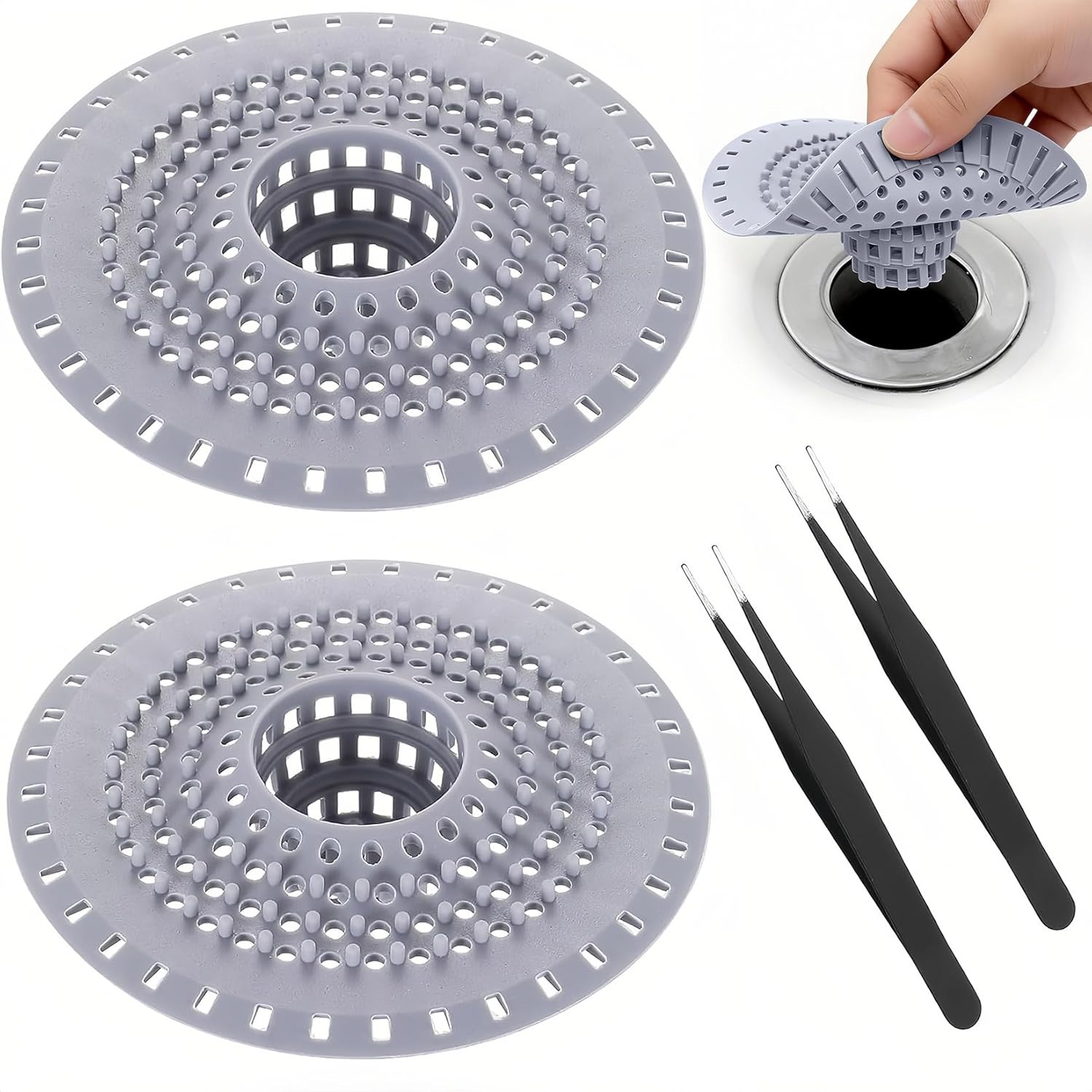
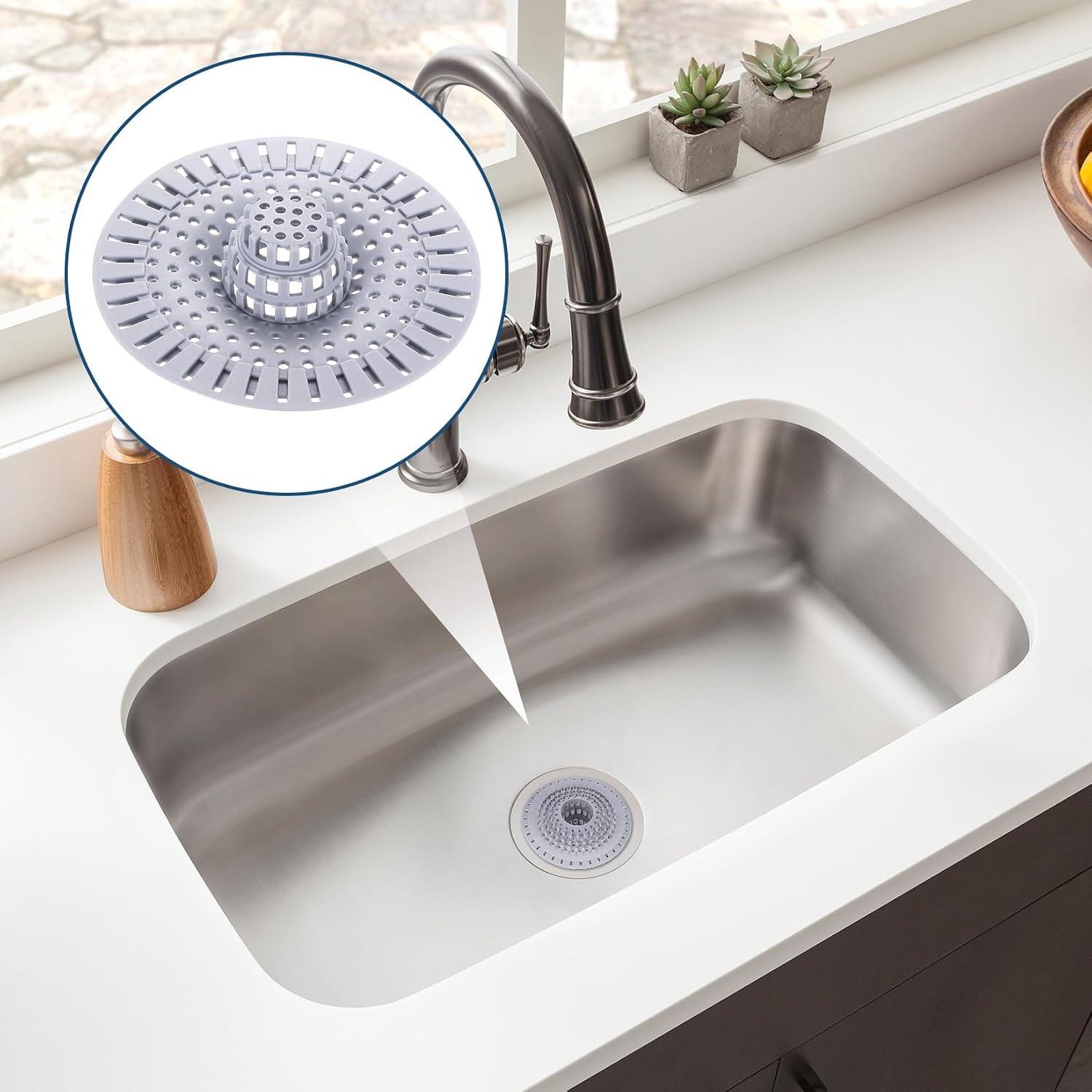
This is a pack of two. Each catcher is a soft grey strainer, and the pack also holds two pairs of black tweezers. There is nothing else in the box and nothing else to buy.
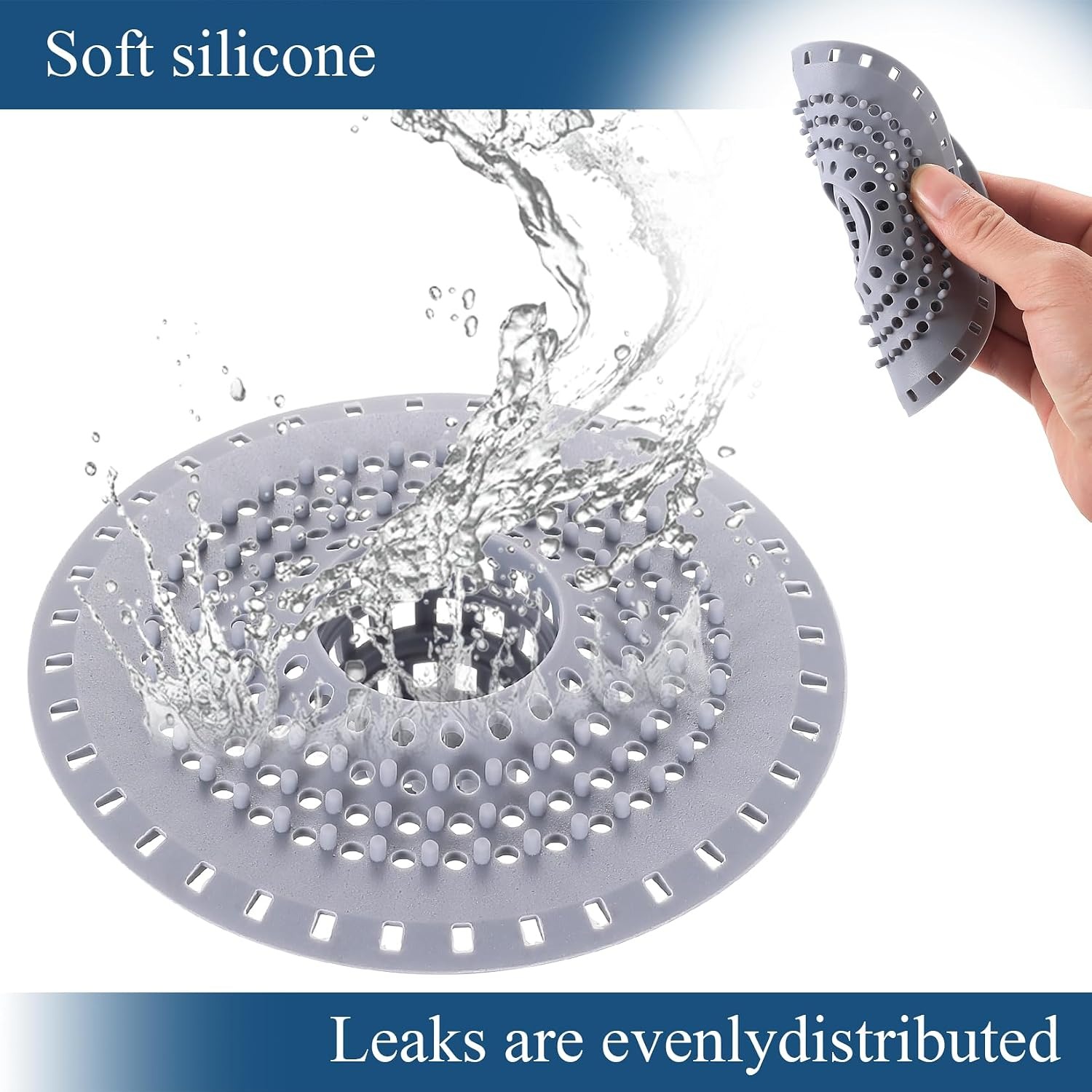
The catchers are made from a flexible, rubbery material. The maker describes it as TPR silicone. The product details list it as thermoplastic elastomer, usually shortened to TPE. In plain terms it is a bendy strainer with smooth edges, not a stiff metal one. The maker says it holds its shape after repeated use.
A soft strainer has two practical points in its favour. It will not scratch an enamel bath or a ceramic basin when you drop it in. And it bends a little to sit over a waste that is not perfectly flat.
There is also a suction cup, which helps the catcher stay over the plughole when the water is running. The maker gives little detail on it, so the photos are the place to see how it sits.
How the double filter works
A single flat mesh has a weakness. If the holes are big, short hairs and small bits slip through. If the holes are tiny, they clog in one shower and the water pools.
The maker describes this catcher as a double filter. A coarse mesh does the heavy work and holds back clumps of hair. Smaller pores then hold finer debris. Water runs through both.
It still needs emptying. Every strainer does. Once the mesh is matted with hair, water backs up behind it, and that is your signal to lift it and wipe it. A catcher that is cleared after each shower will drain far better than one left for a week.
Getting the size right
This is where most people go wrong with any plughole hair catcher, so it is worth two minutes with a ruler.
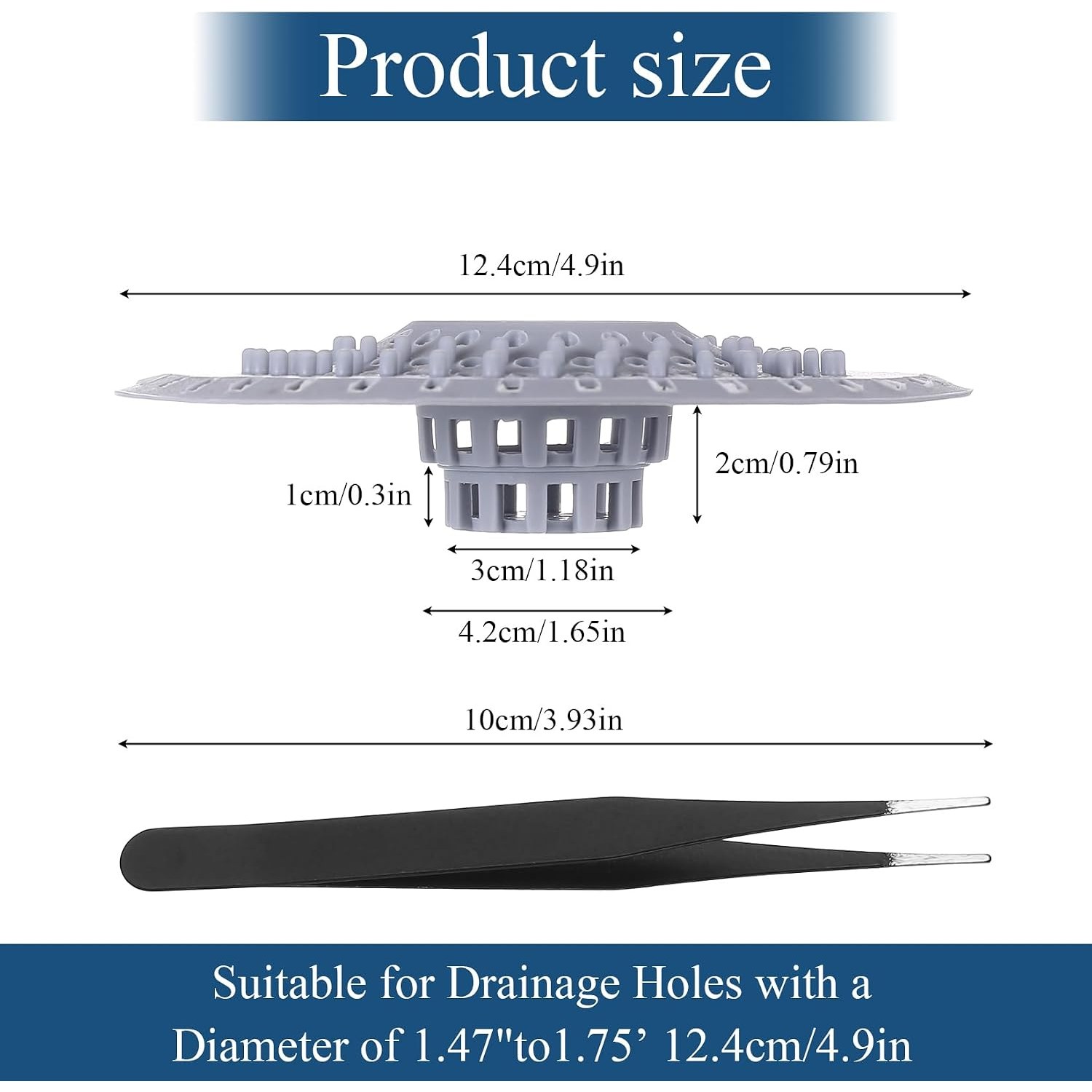
The maker states that this one fits drain holes with a diameter of 37 to 44mm. Measure the open hole in your basin, bath or shower. Lay the ruler across the widest point of the opening and read it in millimetres. Ignore the chrome flange around the edge. It is the hole that counts.
If your number falls between 37 and 44mm, you are inside the stated range. If it is under 37mm or over 44mm, do not order this one and hope. A catcher that is too small can slide about, and one sitting over a much wider hole will not cover it.
Wide shower tray wastes are the common mismatch. Many trays have a waste of 90mm or so, with a domed cover on top. This catcher is not made for those. Kitchen sinks vary too, and a lot of them have a waste opening wider than 44mm, so measure there as well.
The outer diameter of the catcher is not stated by the maker. Nor is the weight. The photos give a fair idea of how much rim sits beyond the hole.
Where it can go
The maker lists baths, showers and kitchen sinks. A bathroom basin with a hole in the stated range is an obvious home for it as well.
With two in the pack, a sensible split is one for the basin and one for the bath or shower. Those are the two places where hair goes down every day. If you only have one drain that fits, keep the second as a spare or use it in the kitchen sink to hold back food scraps.
Do not swap the same catcher between the kitchen and the bathroom. Give each one a home and leave it there.
A word on pop-up plugs. The maker does not say how the catcher behaves with a pop-up waste, where the plug stays in the hole and lifts on a spring or lever. A catcher that sits over the drain generally wants a clear opening. If you have a pop-up, look closely at the photos before you buy.
Fitting it and living with it
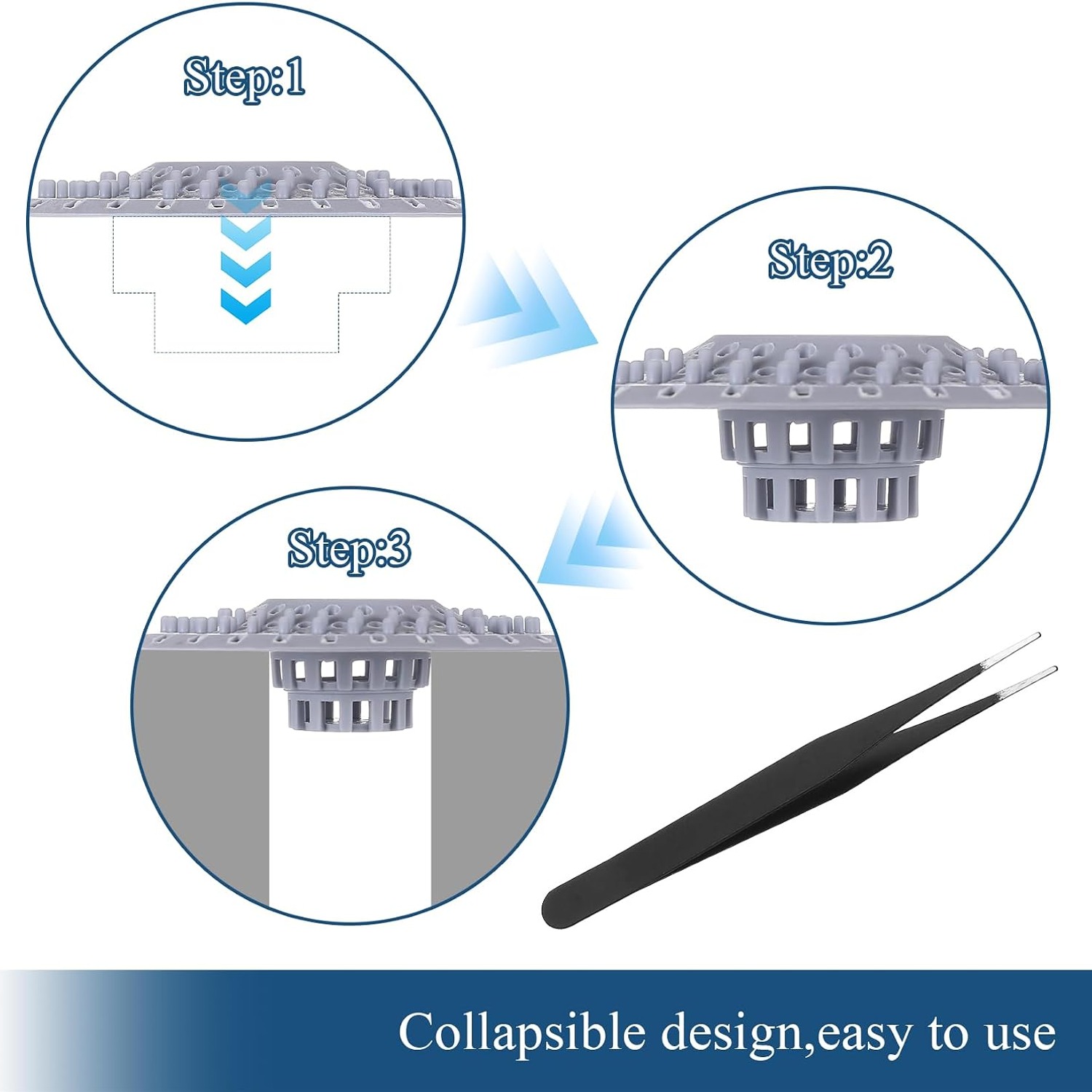
There is no installation. You place the catcher over the drain and make sure it is centred. No tools, no sealant, no screws. That also makes it a good fit for rented homes, because it leaves no mark and comes with you when you move.
Wipe the area around the plughole before you put it down the first time. A suction cup holds better on a clean, smooth surface than on a film of soap.
Then get into one small habit. After a shower or bath, lift the catcher out. Pick the hair off with the tweezers, or wipe it away with a piece of kitchen paper. Rinse the catcher under the tap and put it back. The tweezers mean you never have to touch the wet hair, which is the part most people dislike.
Put the hair in the bin. Do not rinse it down the plughole and do not flush it. A small pedal bin in the bathroom takes care of it.
Keeping it clean
Hair is easy to lift off. Soap film takes a little more. Every week or two, give the catcher a proper wash with a drop of washing-up liquid and an old toothbrush, working the bristles through the mesh. Rinse it and let it dry.
The maker does not say that it is dishwasher safe, so wash it by hand. No heat limit is given either. Hot water from a tap or shower is normal use. If you are about to pour a kettle of very hot water down the waste, lift the catcher out first.
Rinse the tweezers at the same time and leave them to dry beside the catcher.
Choosing between catcher types
It helps to know where this one sits among the options. Rigid metal strainers are hard-wearing but can rattle and mark an enamel bath. Mushroom-style catchers drop down inside the waste and hide the hair, which looks tidy but means pulling out a wet plug of it later. Flat, soft catchers like this one sit on top. The hair is in plain view, which is less pretty and much easier to deal with.
For most homes, the right silicone drain strainer is decided by two things. The size of the hole, and how willing the household is to empty it. A catcher that people find easy to lift and wipe is one that gets emptied.
What a hair catcher will not do
It is a prevention tool. It will not clear a drain that is already slow, because the plug of hair is sitting in the pipe below it. Deal with that first. A plastic hair hook or a small plunger will usually bring the lump up in a few minutes. After that, the catcher keeps new hair out.
We do not recommend chemical drain cleaners. They are harsh on skin and eyes, and a solid plug of hair often lets the liquid run past without shifting it.
No strainer stops every blockage. Soap and toothpaste still coat the inside of a pipe over the years. And if several fittings in the house back up together, or water comes up in the shower when the basin empties, the problem is further along the drain. That is a job for a plumber. If the blockage is in a public sewer, contact Uisce Éireann or your local authority.
The short version
Hair causes most slow basins, baths and showers. A catcher over the plughole stops it at the top.
This pack gives you two soft grey catchers with a double filter, and two pairs of black tweezers for lifting the hair off. The maker states a fit for drain holes from 37 to 44mm across, so measure yours before you order.
Place it over the drain, lift it out after you wash, wipe it, rinse it and put it back. Clear any existing blockage first, and bin the hair every time.