
The complete guide
How To Choose A Silicone Press Drain Plug That Actually Seals
The small annoyance nobody fixes
Plugs are the kind of thing you only think about when they stop working. The chain rusts through and the rubber disc sinks to the bottom of the bowl. The pop-up waste that came with the basin jams half open, so you can fill the sink but you can never quite empty it on the first try. Or the original stopper simply disappeared sometime around the last house move and you have been using a folded facecloth ever since.
Then there is the hair. Anyone who washes long hair over a basin knows the slow decline. Water drains a bit slower each week until one morning you are standing in two inches of grey water wondering who to call. Most of that is hair bound up with soap scum, caught in the trap just below the plughole. It is completely preventable, and the thing that prevents it costs less than a takeaway.
A silicone press drain plug deals with both problems using one piece of soft rubbery plastic. It seals when you want water, it strains when you want drainage, and it lifts out when you want to clean it. That is the whole idea.
How a press plug works
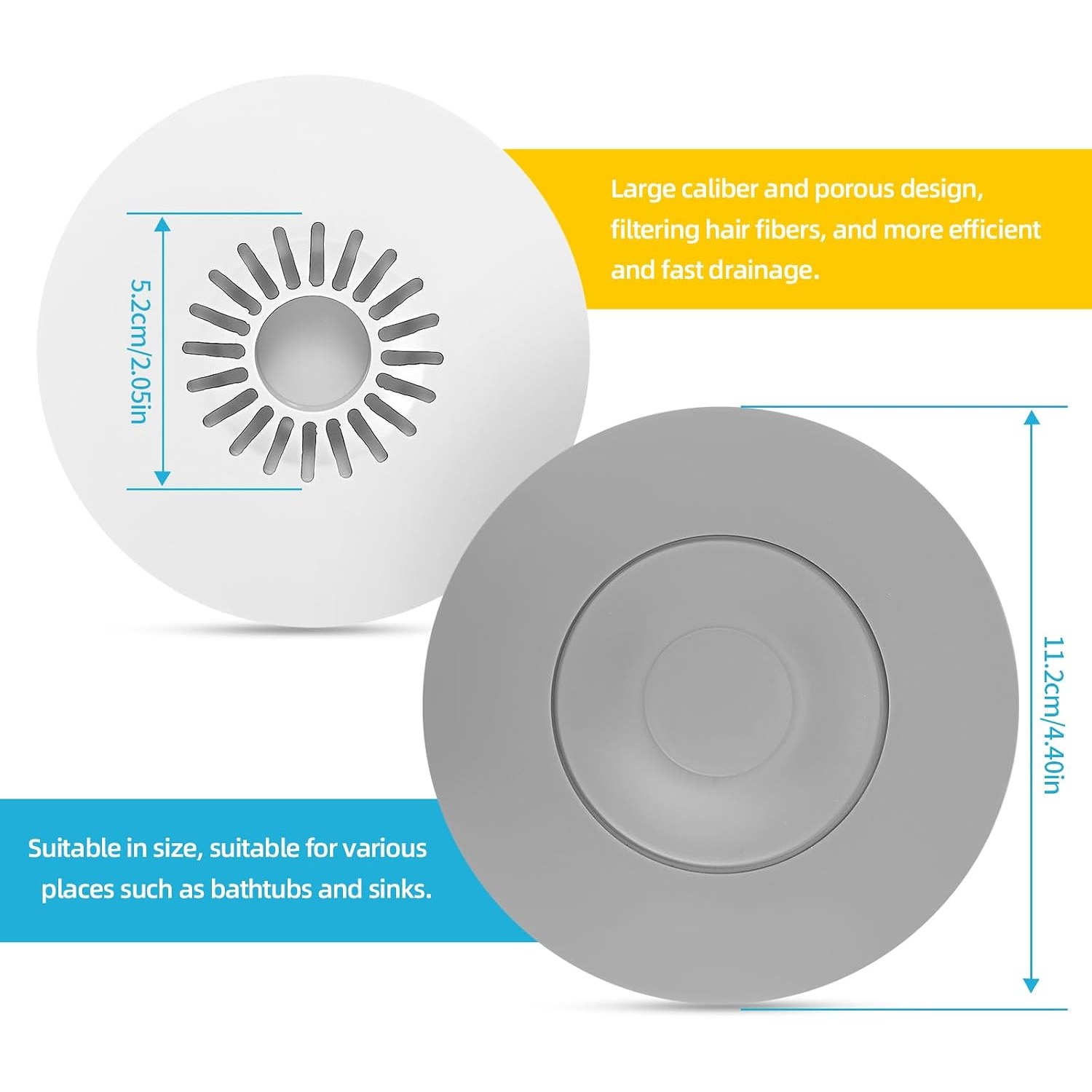
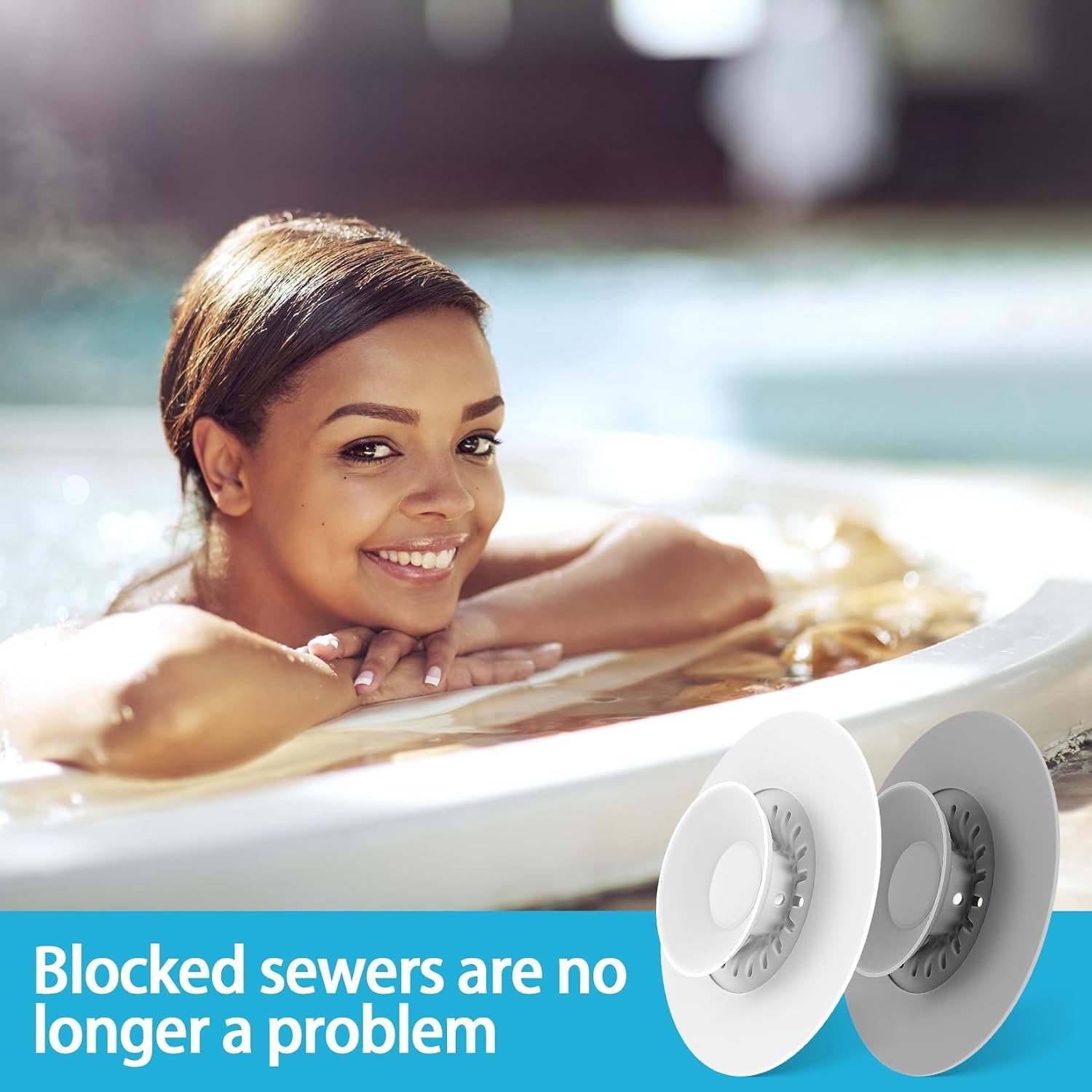
Think of it as a suction cup with a trapdoor in the middle. The main body is a flat disc of silicone, about 11.2 cm across and under 2 cm tall. You lay it over your drain opening and press down. That pushes the air out from under the disc, and the pressure difference plus the grip of soft silicone against a smooth surface holds it in place. Fill the basin and the weight of the water pressing down actually helps it stay sealed.
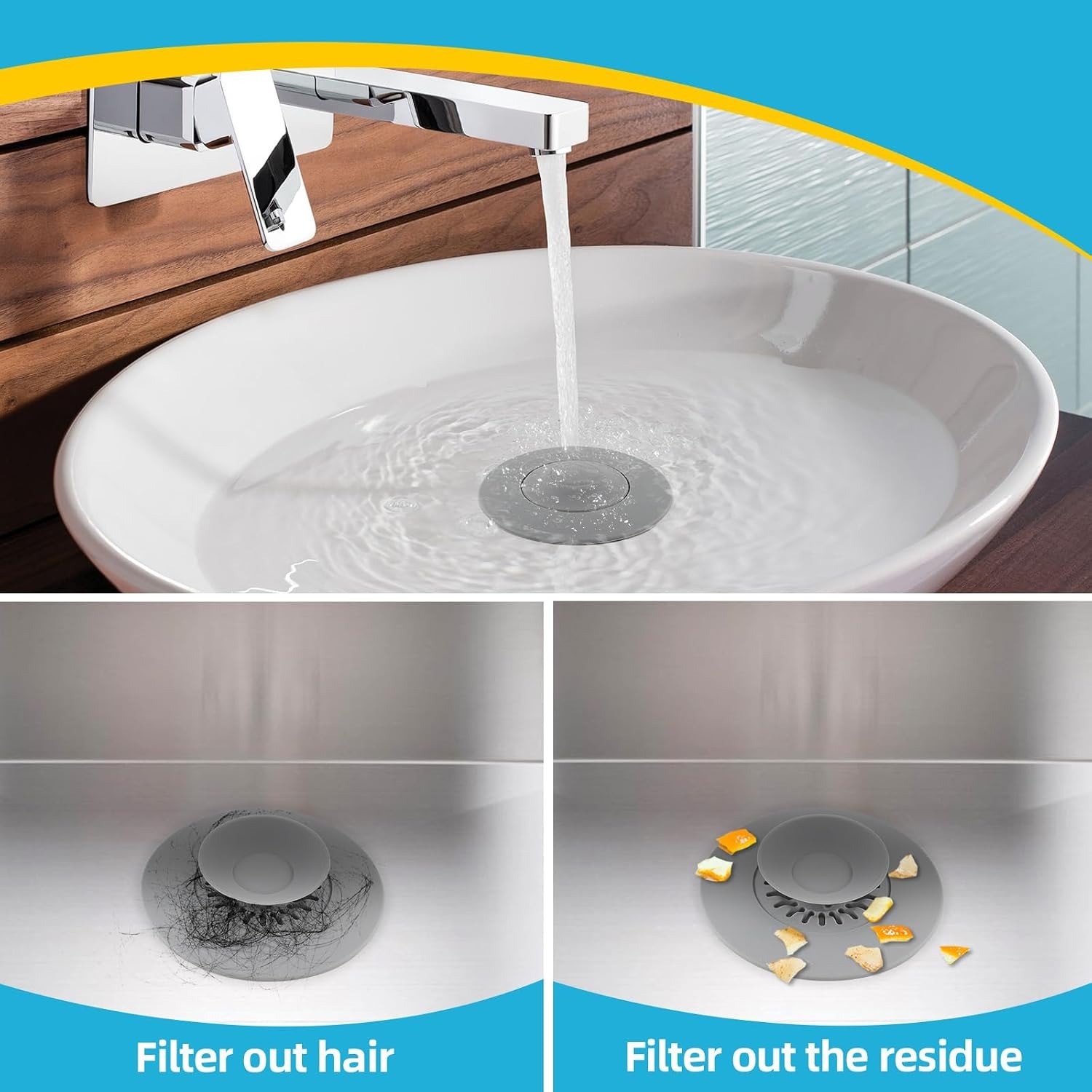
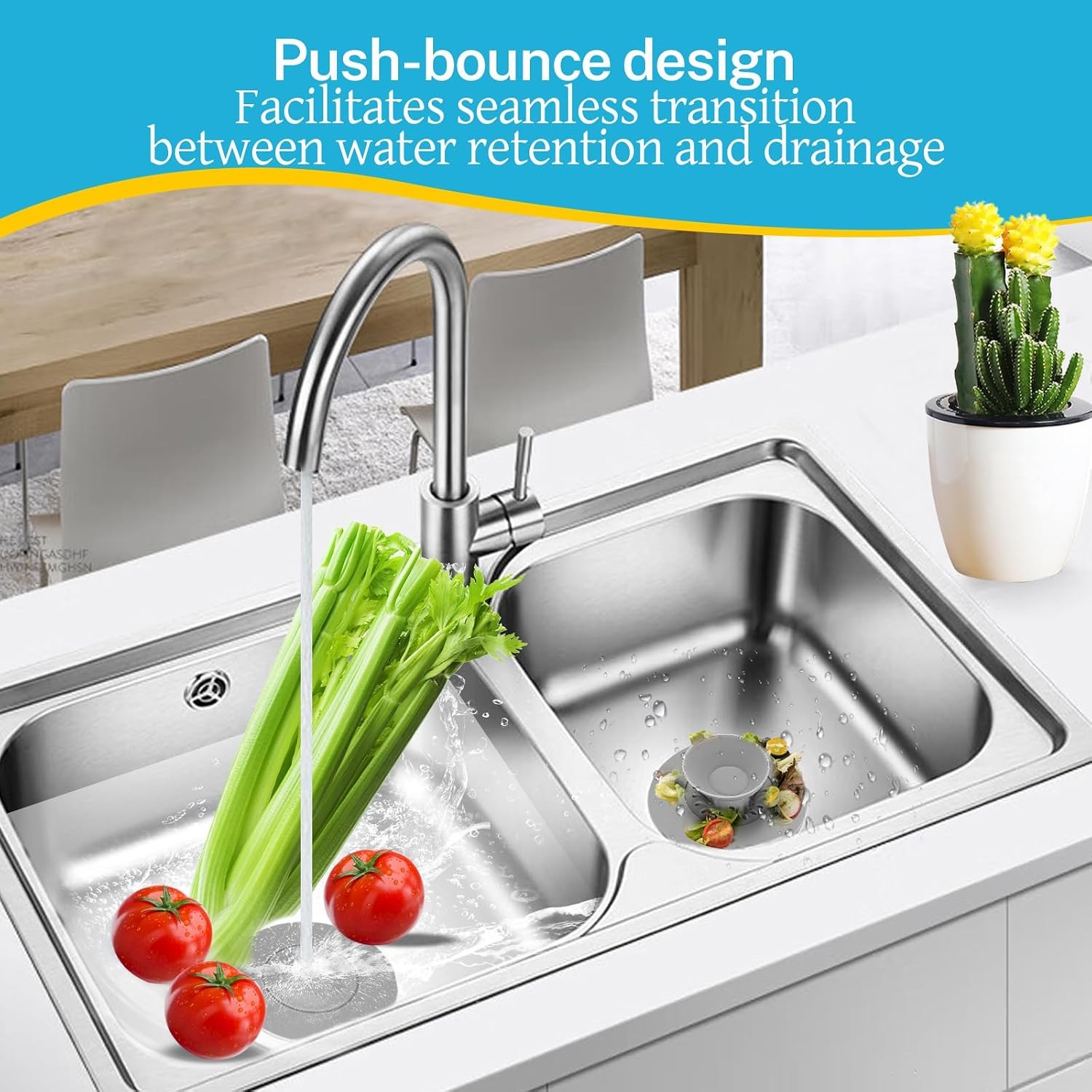
When you want the water gone, you press the centre. The strainer section pops upward, breaking the seal around the rim and opening a channel for water to escape. The raised part is a grid, so water slips through the gaps while hair, vegetable peelings and anything else larger than the openings stay on top where you can pick them off.
There is no mechanism in the usual sense. No springs, no hinges, no metal rod running down behind the tap. That matters because mechanisms are what fail. The silicone either seals or it does not, and if it stops sealing it is because something is dirty or the surface is wrong, both of which you can see and fix in a minute.
Who this suits
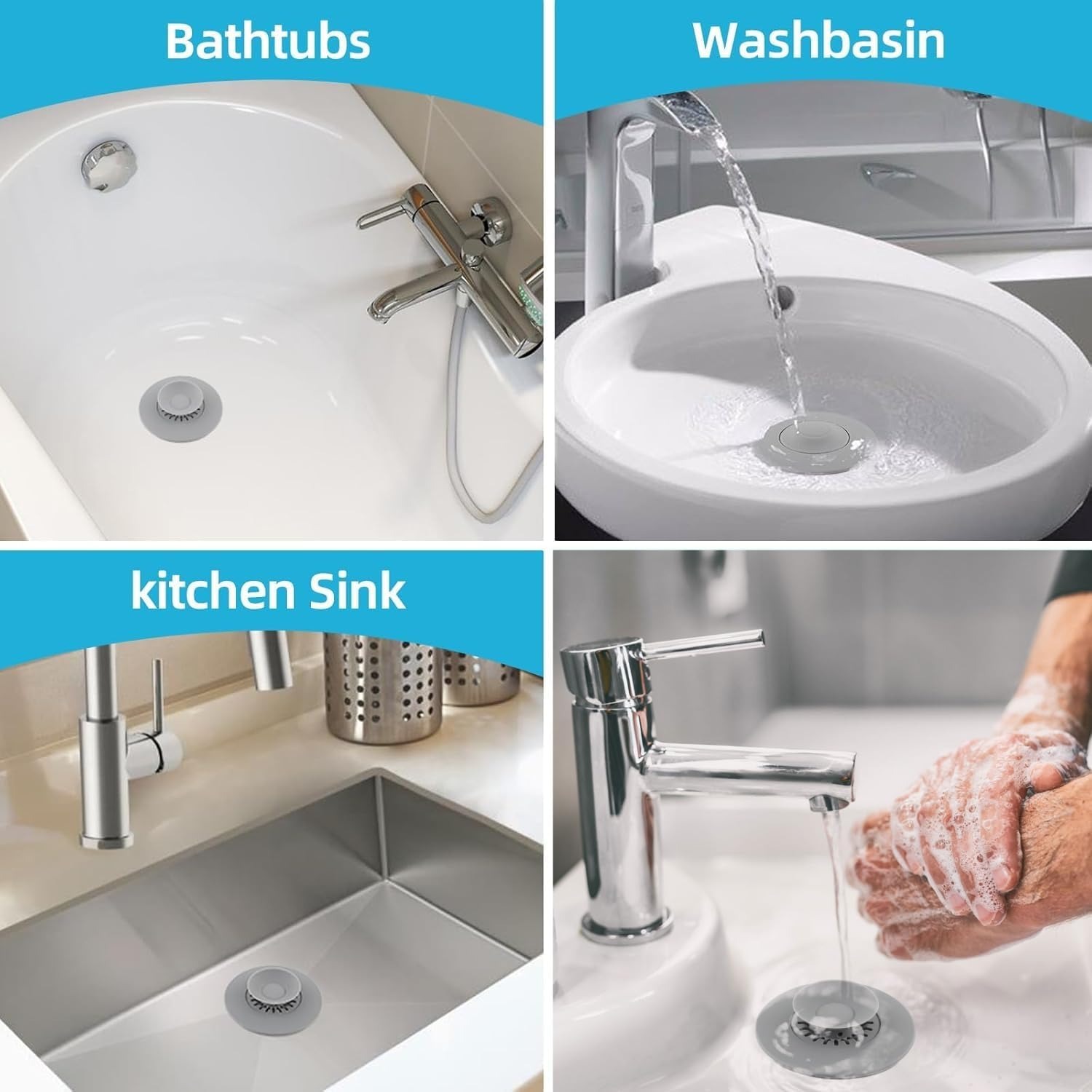
Renters get the most obvious benefit. Nothing is installed, nothing is screwed in, and you can take it with you when you leave. If your landlord's basin has a tired pop-up waste that you are not allowed to touch, a press plug sits on top and works around it.
Shared houses are another good fit. The best universal basin plug in a house share is the one that needs no explanation. Press to seal, press to drain. Nobody has to be taught, and nobody can break it by pressing too hard.
Families with long hair in the house will care more about the strainer than the seal. Catching hair at the surface is far easier than fishing it out of a trap later, and it is the single cheapest thing you can do to avoid a slow drain.
Kitchens are worth considering too. A best sink drain strainer in the kitchen catches the rice grains and coffee grounds that rinse off plates and quietly build up in the waste pipe. The same plug seals the bowl when you want to fill it for washing up.
Getting the size right
This is where most plug purchases go wrong, so take two minutes with a tape measure.
Measure the diameter of your drain opening, the actual hole. Then measure the flat, smooth area of basin surrounding it. For this plug to seal, the disc needs to cover the hole with a decent overlap onto flat surface all the way around. At 11.2 cm it fits the great majority of household basins, baths and kitchen sinks, but oversized laundry or commercial drains can defeat it.
The surface matters as much as the size. Glazed ceramic and stainless steel are ideal because they are smooth and non-porous. A best plug for ceramic basin job is exactly what silicone is designed for. Rough stone, heavily textured composite, or a basin with chips and cracks around the waste will leak, because air keeps finding a way under the edge.
Watch out for raised fittings too. If your waste has a cross bar standing proud of the basin floor, or a grille that sits above the surrounding surface, the disc cannot lie flat and the seal will be poor. Recessed wastes are fine. Proud ones are not.
Getting a good seal every time
A few habits make the difference between a plug that holds and one that slowly lets go.
Wipe the area around the drain before you press the plug down. Grit, soap residue and stray hair caught under the rim are the usual culprits when a plug leaks. The underside of the plug should be clean too.
Press from the centre outward. Lay it flat first, then push down in the middle so air escapes from the edges rather than being trapped in a pocket.
A slightly damp surface seals better than a bone dry one. You do not need to wet it deliberately, but if you have just dried the basin with a towel, a quick splash helps.
If it still will not hold, check whether your waste is fully closed underneath. A press plug seals the top of the opening, but if your pop-up is partly open and the water has somewhere else to go, you will see the level creeping down.
Looking after it
Silicone is easy to live with. Lift the plug out after use and rinse both sides under warm water. Once a week, or whenever it feels greasy, wash it with a drop of dish soap on a soft cloth and rinse properly. Let it dry or pat it with a towel before putting it back.
Do not attack it with a scouring pad or a wire brush. Scratches in the sealing face are what eventually cause leaks, and silicone scratches more easily than it looks. Harsh solvents and bleach-heavy cleaners are also worth avoiding, since they can make the material stiff over time.
Clear the strainer grid whenever you see it collecting hair or food. Letting it build up slows drainage and defeats the point. It takes a few seconds with a piece of tissue.
Two plugs in a pack also means you can rotate them. Pull one out for a proper clean and drop the other in while it dries.
What it will not do
Being straight about limits saves disappointment. This is a cover that seals by suction, not a fitted waste. It will not create an airtight barrier against drain gas, so it is not a replacement for a correctly fitted trap. If you have a persistent smell coming from a drain, the trap is the thing to look at, possibly dry or possibly blocked.
It also will not rescue a drain that is already clogged. A best press down drain plug stops new hair from going down. It cannot remove what went down last year. Clear the existing blockage first, then use the strainer to keep it clear.
And it needs a sensible surface. No amount of pressing will seal silicone against a deeply pitted or cracked basin. If your bowl is in that condition, the plug is not the part that needs replacing.
The short version
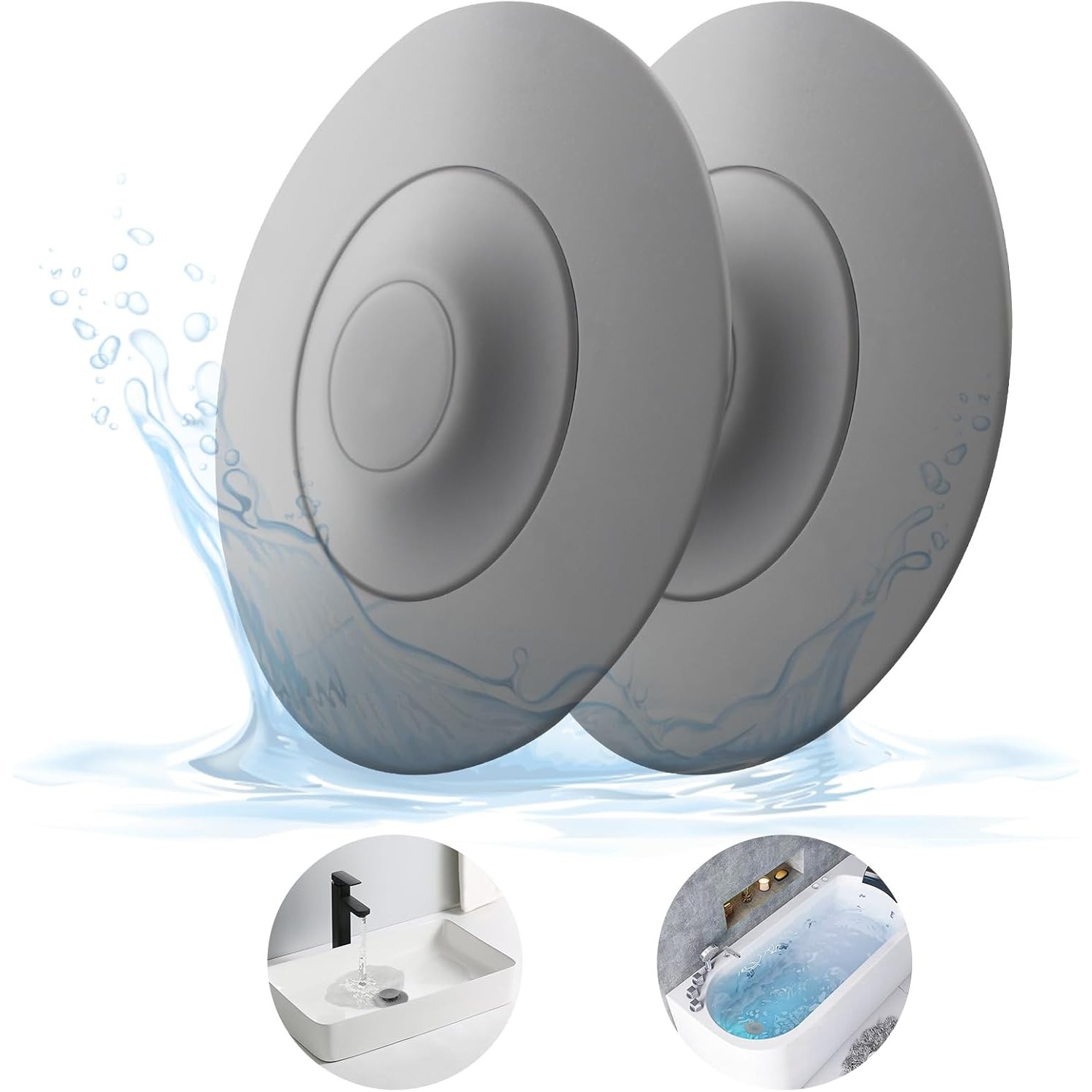
Two grey silicone discs, 11.2 cm across. Lay one over your drain and press to hold water. Press the middle and the strainer pops up to let water out while catching hair and scraps. Lift it out to rinse. Nothing is installed, nothing can rust, and nothing can jam.
Check your drain opening is under 11.2 cm, check the surround is smooth and flat, and you have a plug that solves two household irritations at once. Keep one in the bathroom, one in the kitchen, and get on with your day.