
The complete guide
How To Choose And Use A Bellows Toilet Plunger
When the water rises instead of falling
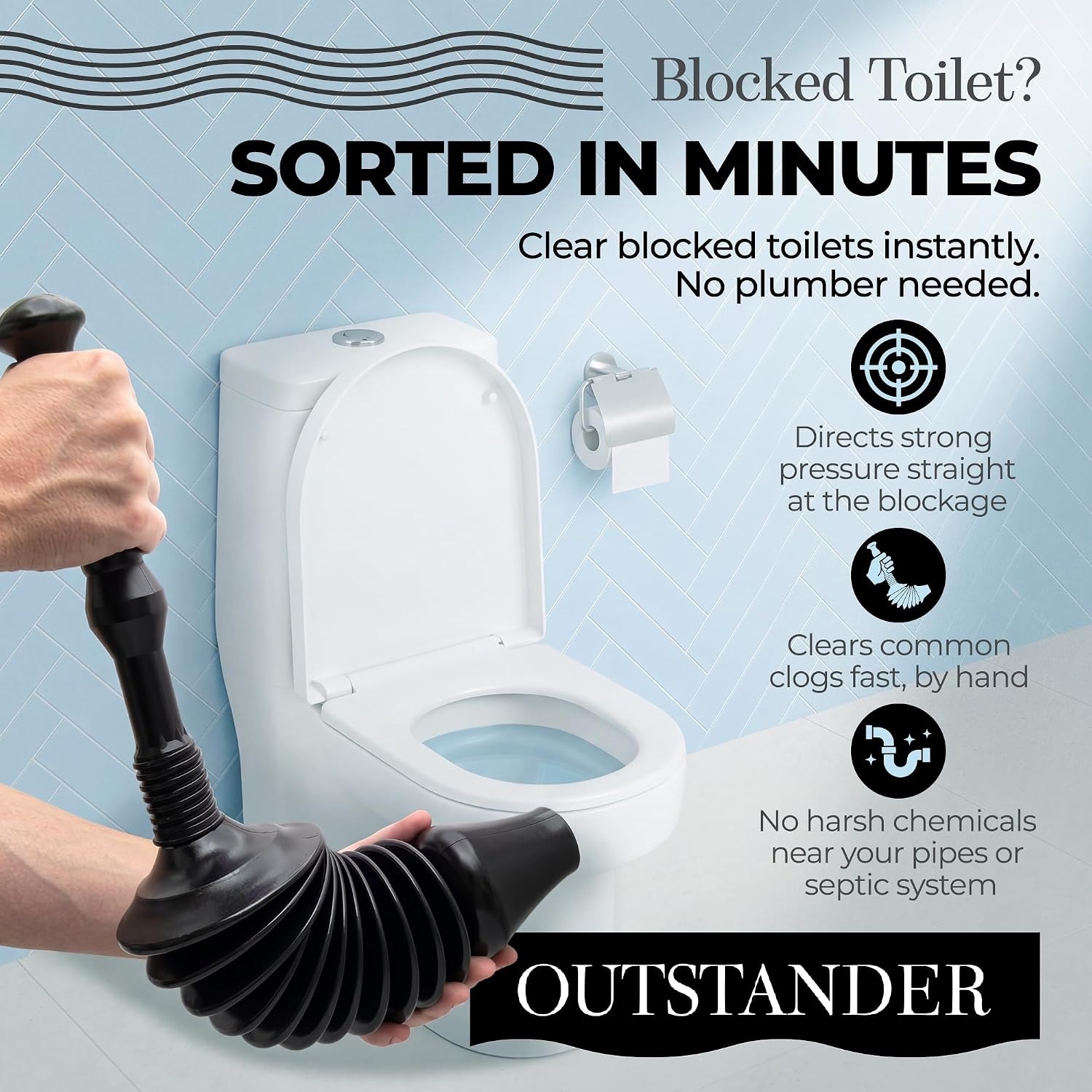
You press the flush and the water climbs. It stops a few centimetres under the rim and sits there. Nobody wants to deal with it, and everybody in the house needs it fixed within the hour.
Most toilet blockages are simple. Too much paper went down in one go, or something that should have gone in the bin went in the pan. The lump lodges in the bend built into the base of the toilet, which is the narrowest point in the whole run. Water backs up behind it.
To move it, you need to push water at it. That is all a plunger does. The question is how much water it moves and how well it copes with the shape of your pan.
How a bellows plunger works
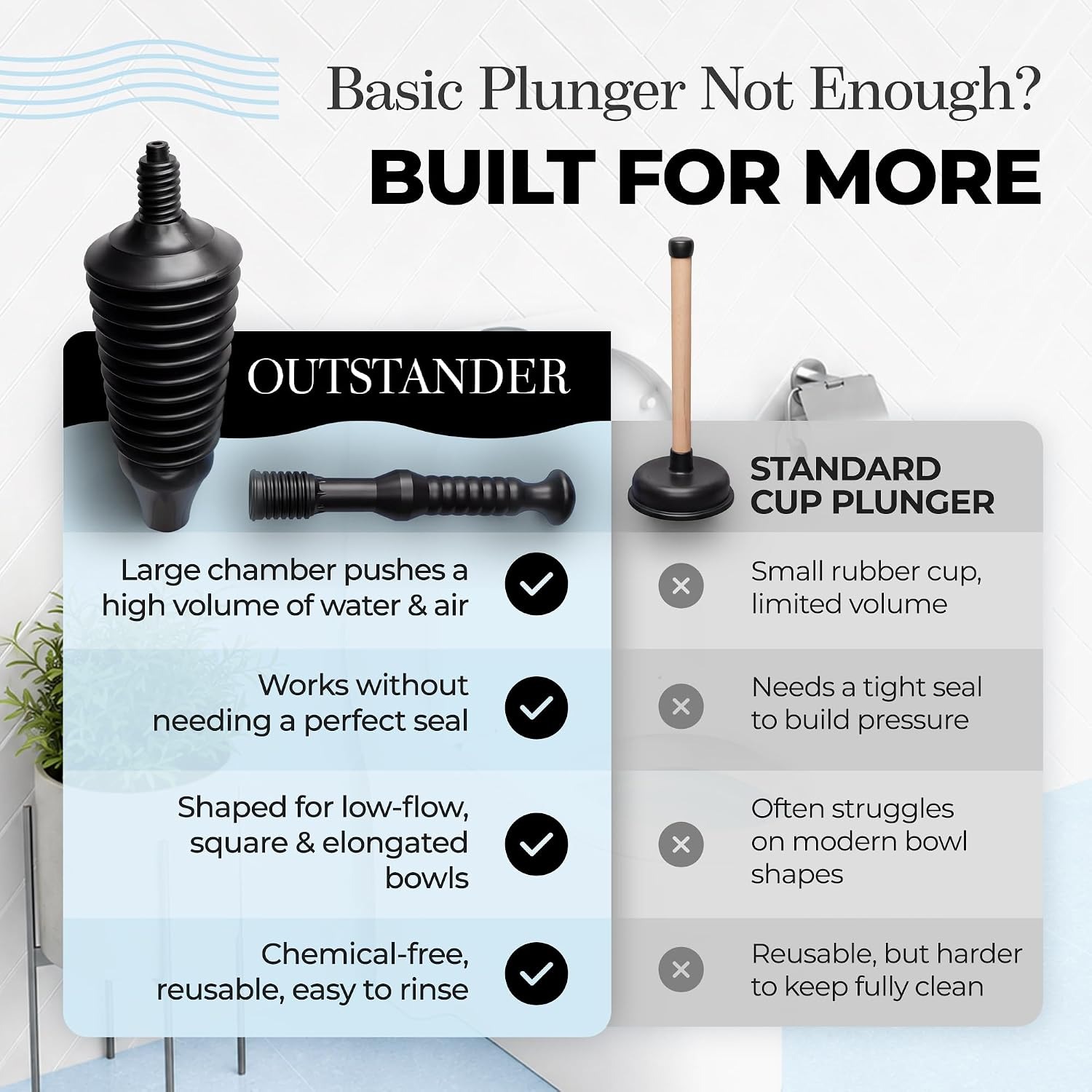
The familiar plunger is a rubber cup on a wooden stick. It works by sealing against a flat surface and flexing. On a flat sink bottom that is fine. In a toilet, the outlet sits at the bottom of a curved bowl, and a flat cup often cannot seal against it at all. You end up splashing water around the bowl and moving very little of it down the pipe.
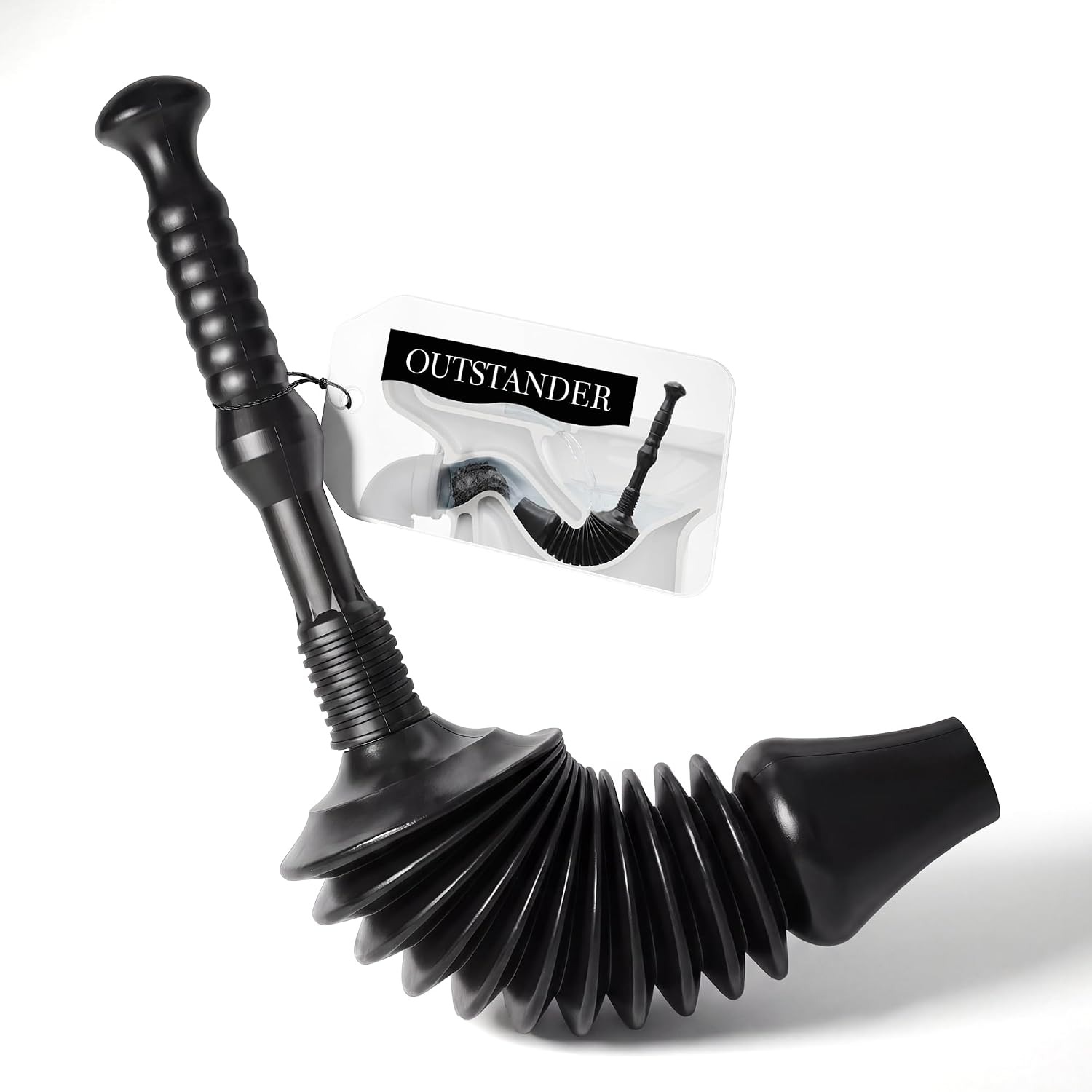
A bellows plunger takes a different approach. The working end is a tall column of folded plastic, like an accordion. This one is 60cm long overall and about 13cm across, and the maker describes the body as flexible PVC. At the bottom there is an opening 5cm in diameter. That opening sits in the outlet of the pan.
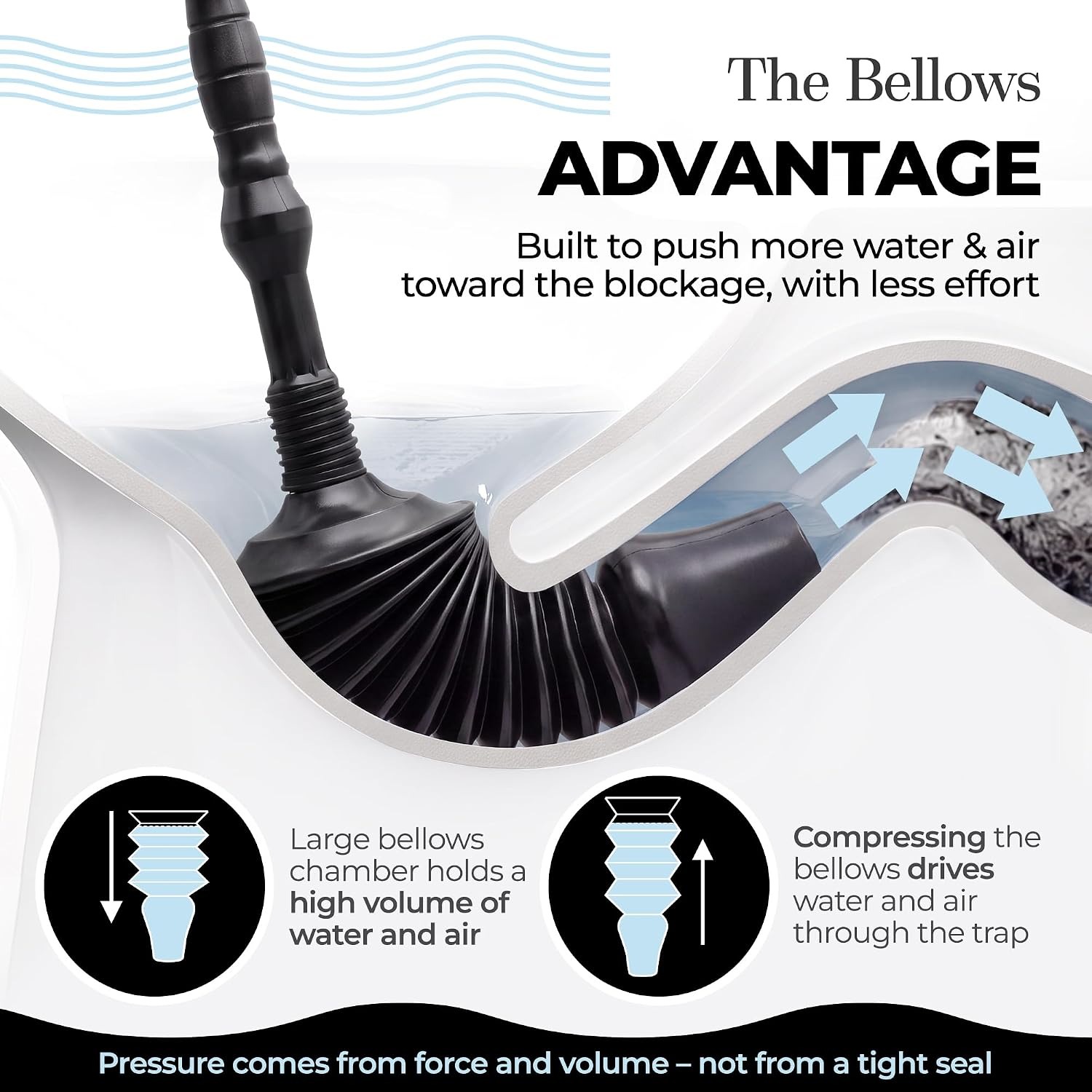
With water in the bowl, the folds fill. When you press down, the column shortens and everything inside it has one way to go, which is out through the opening and down the outlet. When you pull back up, the column stretches and takes in more water and air. Each stroke is a push followed by a pull, and both help. The push drives the blockage forward. The pull tugs it back and loosens it.
This is what "water driven" means on a plunger like this. There is no hose and no tap connection. The water doing the work is the water already in your toilet.
Why the seal matters less
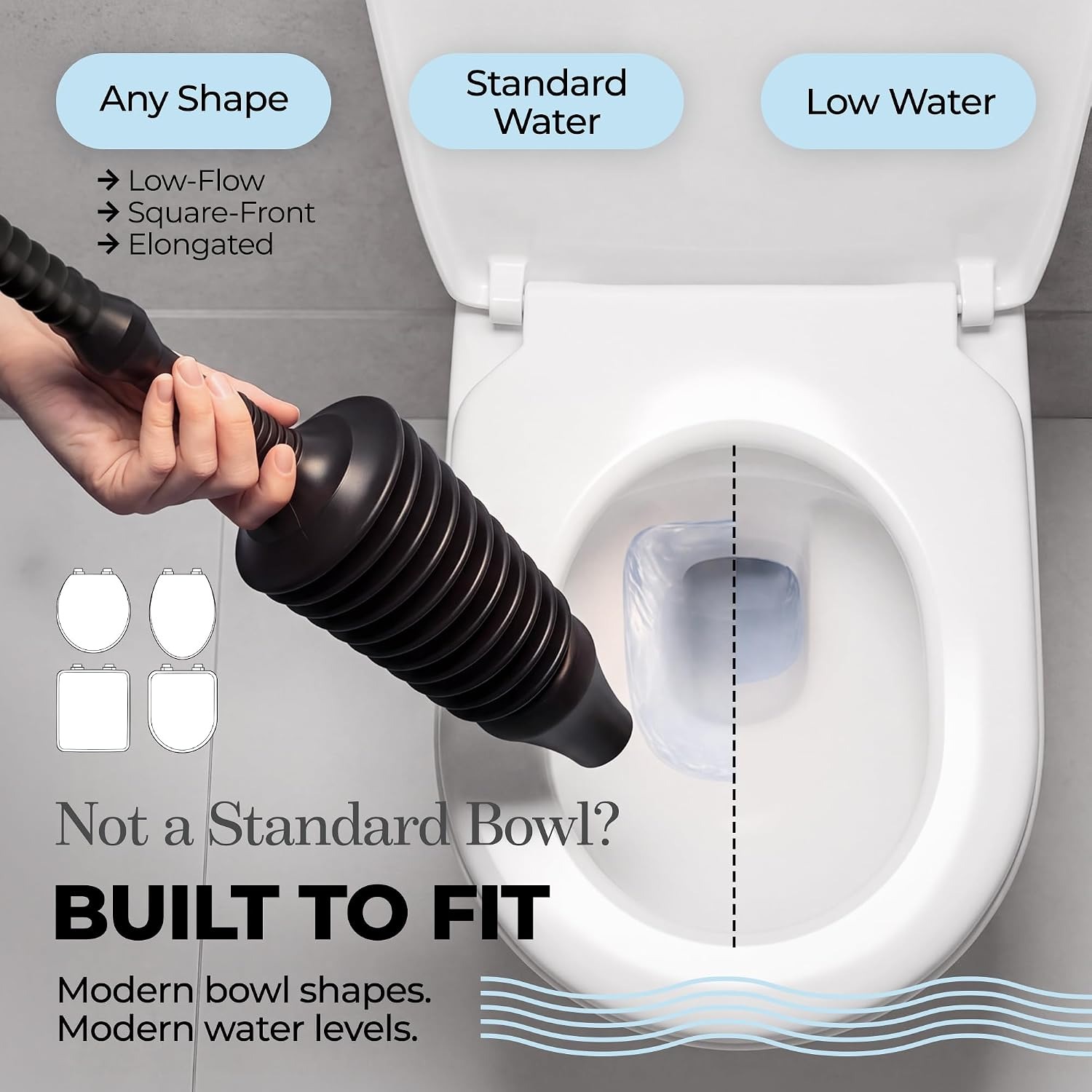
Anyone who has fought a cup plunger on a modern toilet knows the problem. Pans come in many shapes now. Some have a squared-off base. Some are long from front to back. Low-flow models can have a smaller, oddly shaped outlet. A flat cup made for one shape leaks on the others.
The maker of this plunger says it is designed to work even when the fit around the bowl is not perfectly sealed, and lists low-flow, square bottom and elongated toilets among the types it suits. That makes sense for the design. The opening is narrow, the force comes from the volume inside the folds, and it does not depend on a wide lip gripping the porcelain.
It is still worth seating it properly. Lower the base into the outlet, feel for the point where it sits squarely, and start with a gentle press. The better it sits, the less water escapes around the sides.
Using it without flooding the floor
A little preparation saves a lot of mopping.
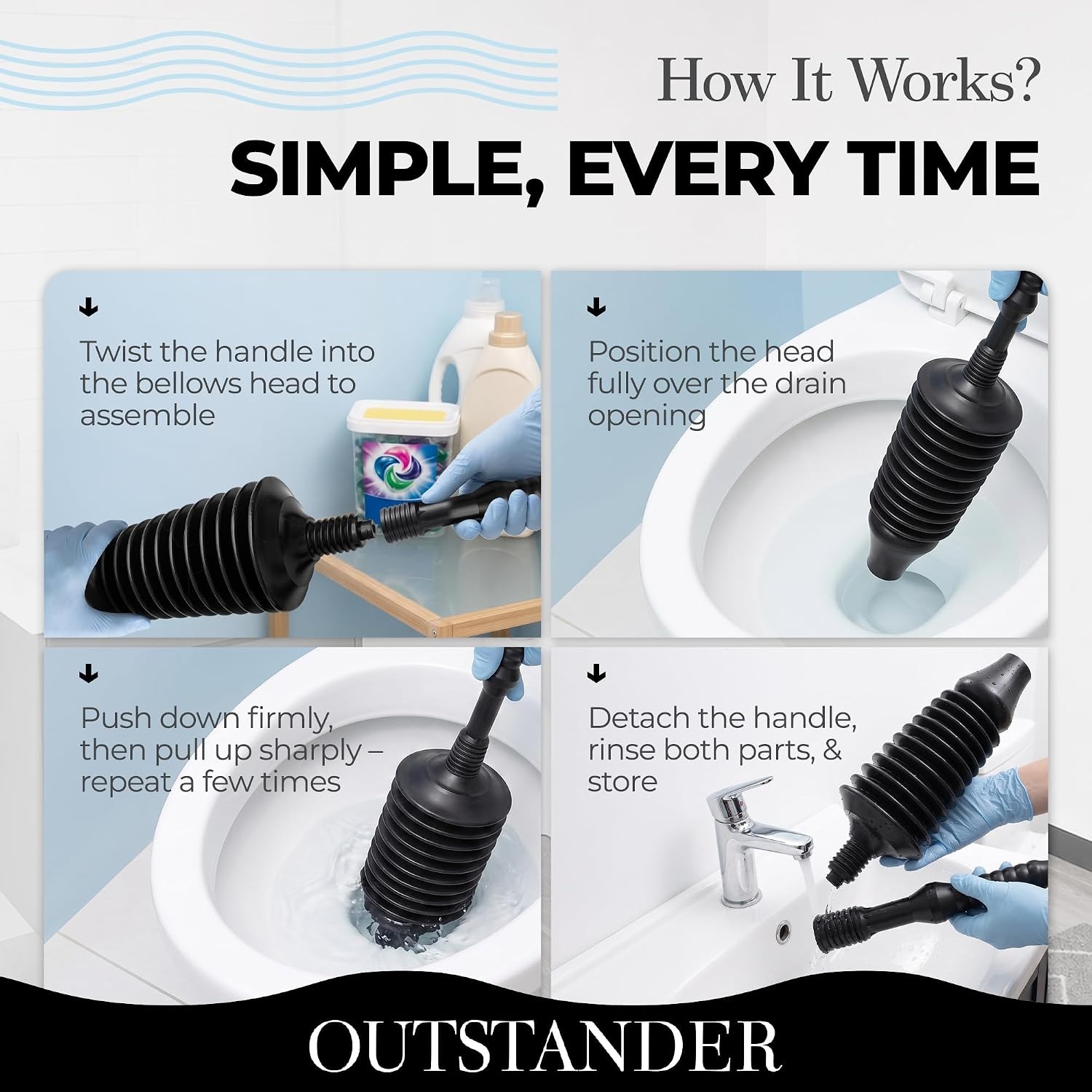
Start by looking at the water level. If it is near the rim, do not flush again. Bail some into a bucket with an old jug until the bowl is about half full. If the bowl has drained almost empty, add water until the base of the plunger will be covered. The bellows needs water inside it, not only air.
Put old towels around the base of the toilet and wear rubber gloves. Lift the seat.
Lower the plunger in at an angle so the folds fill with water as it goes down. Seat the opening in the outlet. Make the first press slow, because a fast first stroke pushes the air out of the folds and up into your face. After that, work in a steady rhythm. Press down firmly, pull back, press again. Six to ten strokes make a round. Stop and watch the water.
If the level drops with a gulp, the blockage has moved. Wait a moment, then flush once with your hand near the cistern stop valve in case it has not fully cleared. If the level has not changed, do another round.
When to stop
A plunger is a first response and not a cure for everything. Know the signs that it is the wrong tool.
If something solid went down the toilet, such as a child's toy, a plastic bottle top or an air freshener block, do not plunge. Pressure cannot break a hard object up. It can only wedge it tighter or push it out of reach. That job needs a plumber.
If water rises in the shower tray or bath when you plunge the toilet, the blockage is not in the pan. It is in the shared drain further on. The same applies if a gully outside is overflowing, or every toilet in the house is slow at once. More plunging will not help.
At that point, ring a plumber. If your neighbours have the same trouble, the fault may be in the public sewer, and that is a matter for Uisce Éireann or your local authority. It costs nothing to ask them before you pay for work on your own side of the boundary.
One firm rule. Never plunge a toilet that has drain chemicals in it. We do not recommend chemical drain cleaners in any case. They sit in the bowl on top of the blockage, and a plunger will throw them straight back at you.
Choosing a toilet plunger
If you are comparing plungers, a few points decide whether one will work in your bathroom.
The first is what it is made for. A plunger for a toilet and a plunger for a sink are different tools. This one is for toilets only. Keep a small cup plunger for basins and the kitchen sink, and never swap them over. That is as much about hygiene as fit.
The second is the shape of your pan. If you have an older pan with a round, open outlet, most plungers will cope. If you have a square bottom, elongated or low-flow toilet, look for a plunger whose maker names those shapes, as this one does. People hunting for the best plunger for low flow toilet outlets are usually reacting to a cup plunger that would not seal.
The third is size and storage. At 60cm tall, a bellows plunger does not hide behind the pan as easily as a short one. It weighs 250 g, so it is easy to handle, but you need somewhere upright to keep it.
The last is what you get. This comes as one plunger and an instruction manual. The maker does not mention a holder or tray, so an old bucket or a plant saucer under it is a sensible addition.
Cleaning and storing it
Nobody enjoys this part, but it takes two minutes.
Once the toilet is flushing normally, flush again and work the bellows up and down in the clean water. That rinses the inside of the folds. Then wash it with hot soapy water or a household disinfectant, in the toilet bowl or in a bucket kept for the purpose. Never in a sink you use for anything else.
Shake the water out, which takes a few firm shakes because the folds hold it. Stand the plunger upright to dry. Put it away only when it is fully dry, or the folds will smell the next time you need it.
Flexible plastics last longest away from heat and strong light. A cupboard, the corner of a utility room or the space beside the cistern are all fine. On top of a radiator or on a sunny windowsill is not.
Stopping the next blockage
Most toilet blockages come from the same short list. Wipes are the worst, including the ones sold as flushable. Cotton buds, dental floss, sanitary items, nappies and kitchen roll follow close behind. None of them break down like toilet paper. A small bin with a lid beside the toilet does more for your drains than any tool.
If a toilet has always been slow to clear, even with nothing odd going down it, mention it to a plumber the next time one is in the house. A poor flush can come from the cistern and not the drain.
The short version
A bellows toilet plunger pushes a larger volume of water down the outlet than a flat cup, and it depends less on a perfect seal. This one is 60cm long with a 5cm base opening, weighs 250 g and is made from flexible PVC. The maker lists low-flow, square bottom and elongated toilets as suitable.
Use it with water in the bowl, start slowly and work in steady rounds. Clean it, dry it and store it upright.
If the blockage is soft and sits in the pan, this is the right tool. If something solid went down, or other drains in the house are backing up too, stop and ring a plumber.