
The complete guide
How To Extend A Washing Machine Or Dishwasher Drain Hose
The hose that is a hand's width too short
It happens more often than you would think. The new washing machine arrives, the delivery crew slide it into the gap, and the drain hose stops a little short of the standpipe. Or you move the dishwasher to the other side of the sink during a kitchen refit, and the waste is now on the wrong side of the cupboard.
The temptation is to pull the hose tight and make it reach. That is a mistake. A drain hose under tension pulls at its fitting on the back of the machine every time the drum spins. Sooner or later it works loose, and the first you know of it is water across the floor.
The other fix is to move the waste pipe. That is proper plumbing work, and for the sake of half a metre it is hard to justify.
An extension hose is the middle way. It adds length to the hose you have, with a secure join in between.
What is in this kit
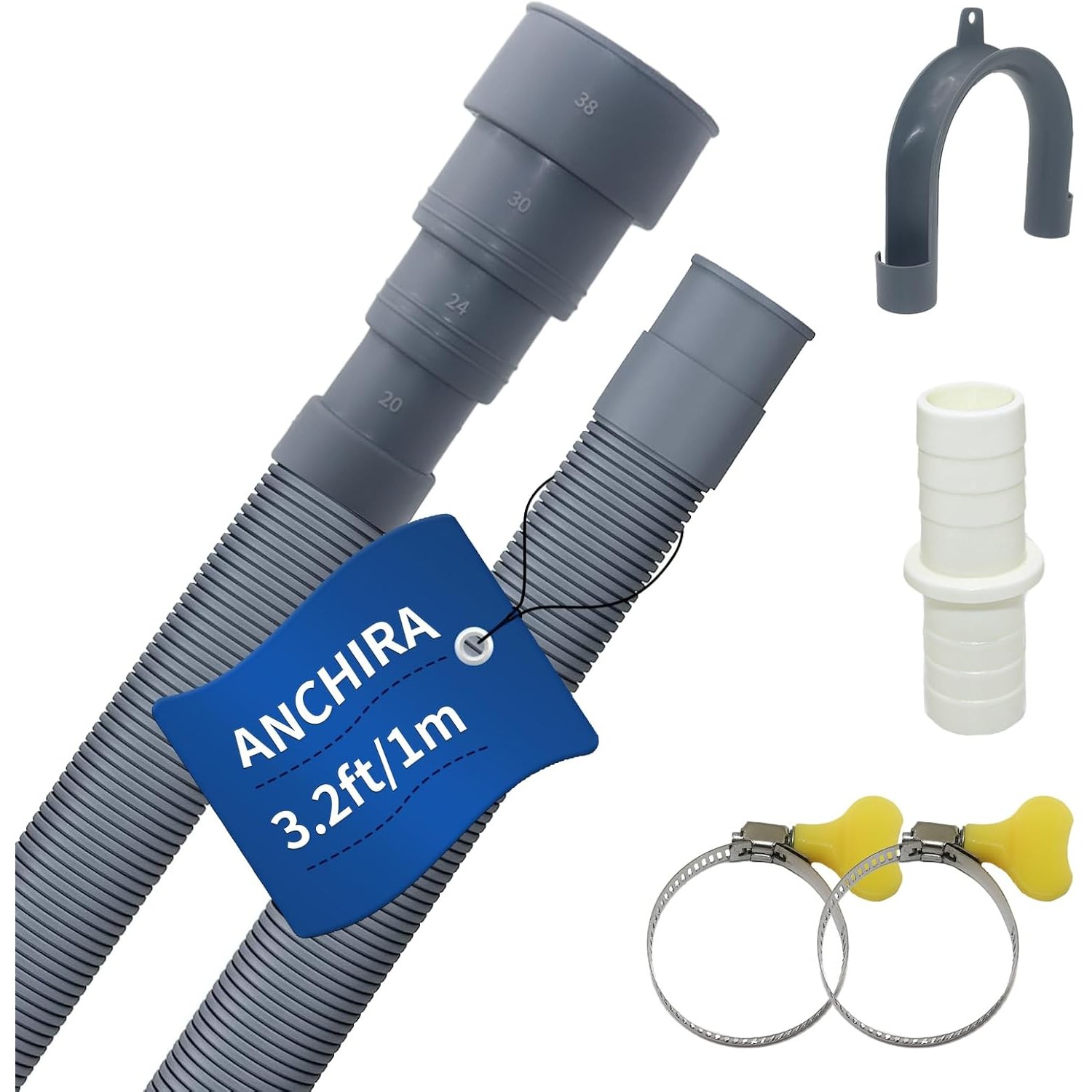
There are four parts, and the maker lists them plainly.
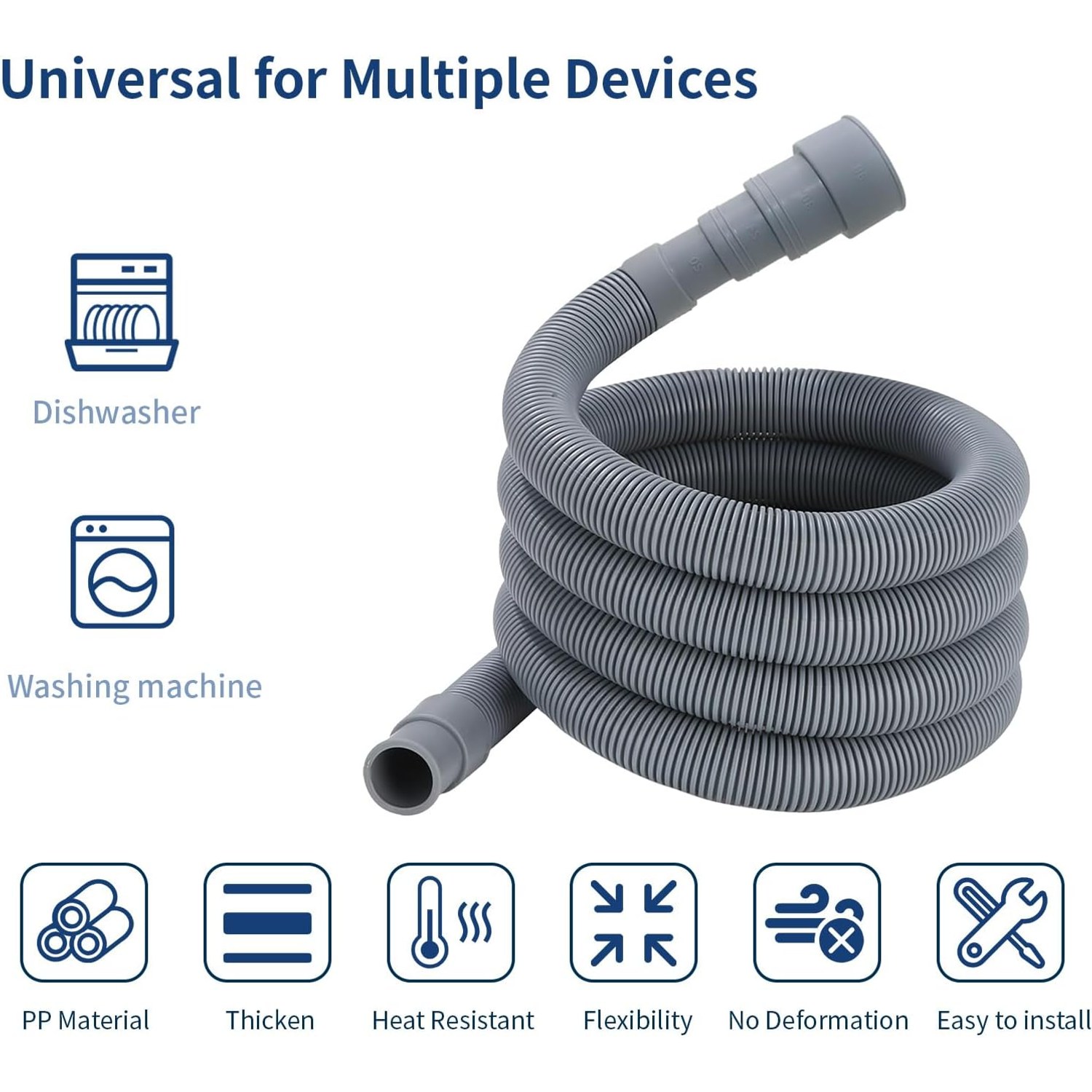
The first is the hose. It is 1 metre long, grey, corrugated and made of polypropylene. The maker gives a nominal wall thickness of 3 mm and says the hose can carry hot water up to 95 degrees Celsius.
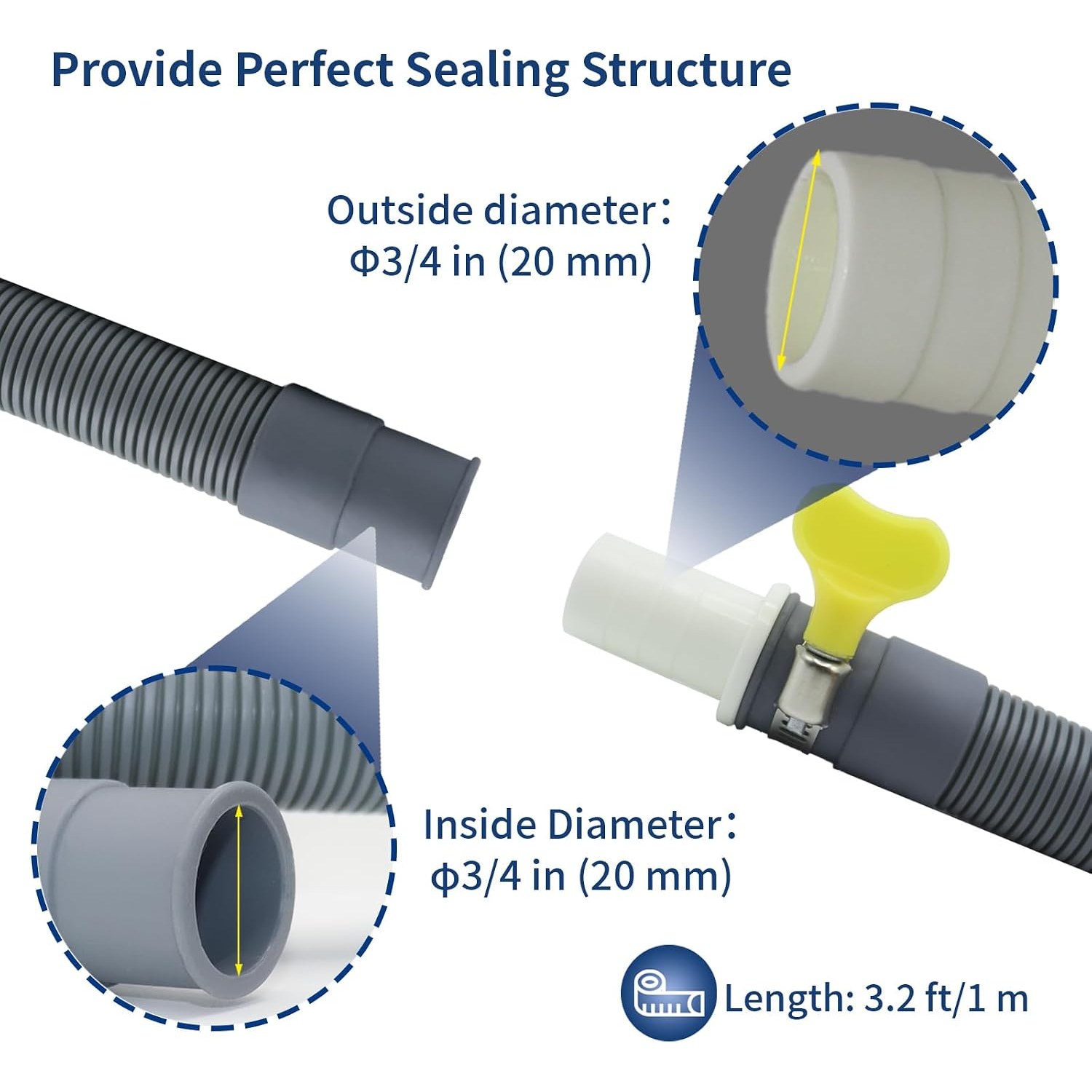
The second is the extension connector. This is a short barbed tube with an outer diameter of 20 mm. It is the piece that joins your existing hose to the new one.
The third is a pair of stainless steel hose clamps. The maker gives their range as 18 to 38 mm.
The fourth is a U-bend bracket, a curved holder that keeps the end of the hose in a hook shape.
The whole kit weighs 0.14 kg.
How the sizes work
This is the part to read before you order.
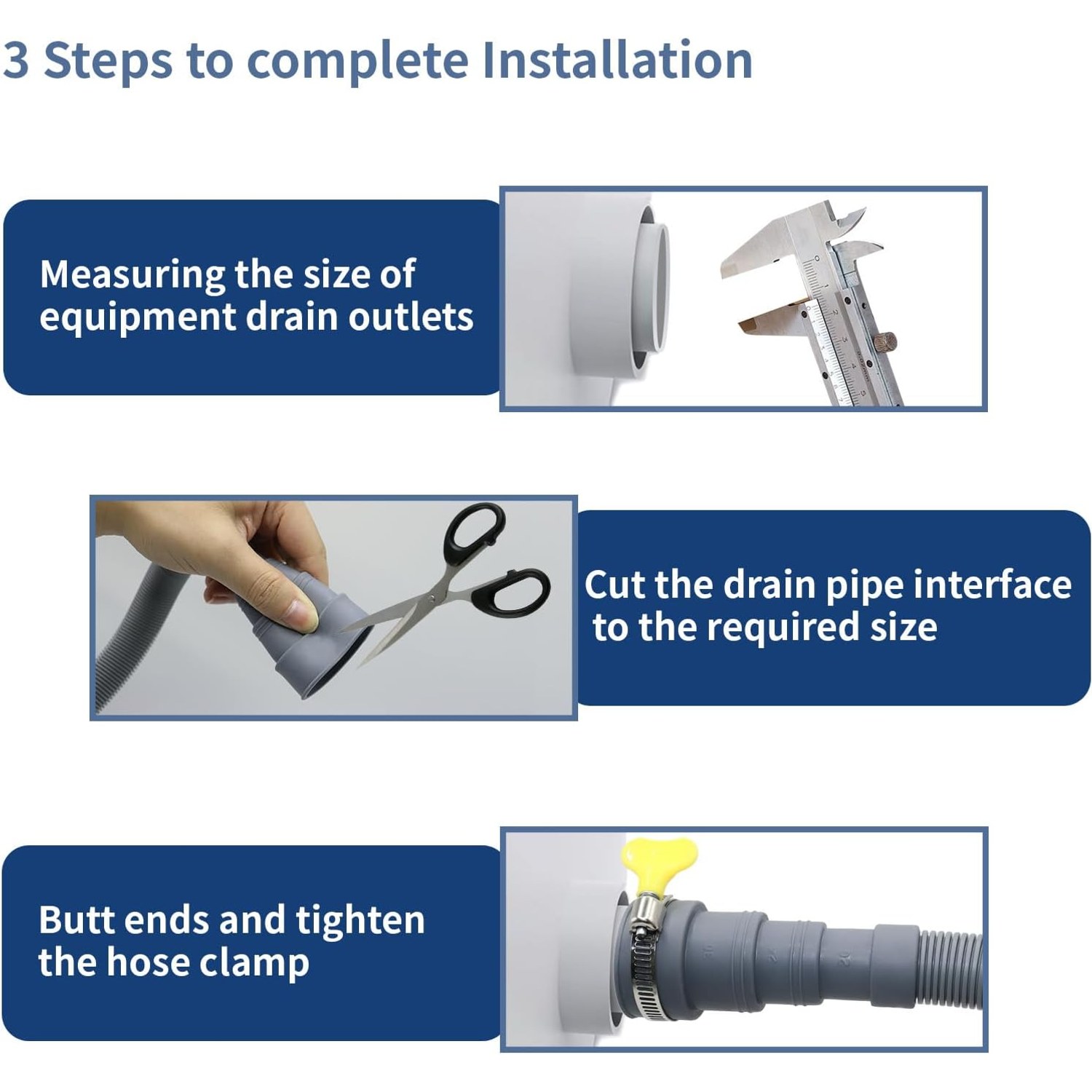
The connector has a 20 mm outer diameter. It pushes inside your existing drain hose, so that hose needs an inner diameter of 20 mm. Pull the end of your hose out of the standpipe, dry it and measure across the inside of the opening with a ruler. If it is close to 20 mm, the connector should grip. If it is clearly smaller or larger, this kit is not the right one.
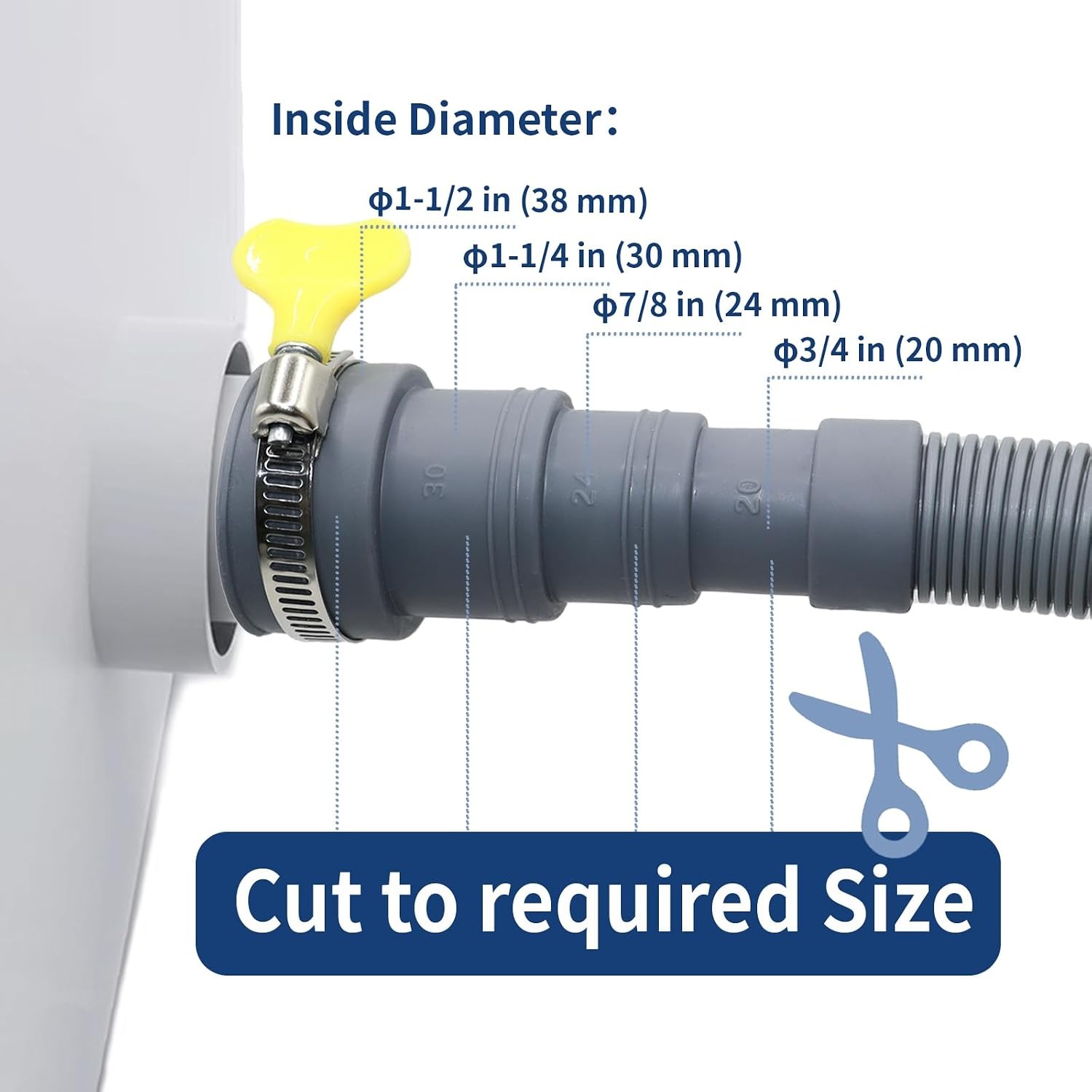
The ends of the extension hose are a different matter. They are stepped. The inner diameter goes through four sizes, 20, 24, 30 and 38 mm. The maker says the ends can be cut to meet your needs.
In practice, you leave the 20 mm step in place on the end that takes the connector. On the outlet end, you cut back to whichever step suits where the water is going. A spigot on a sink trap might want one size. A hose dropping loosely into a standpipe does not need a tight fit at all.
We cannot confirm a fit for any particular make or model of appliance. The measurements above are what the maker gives, and your ruler is the best check.
Check the appliance manual first
An extension hose is only half the question. The other half is the pump inside the machine.
Every washing machine and dishwasher has a small pump that pushes the waste water out. It can only push so far and lift so high. The maker of your appliance sets a longest permitted drain hose and a range of heights for the outlet. Those figures are in the manual, usually in the installation section.
If adding 1 metre keeps you inside those limits, carry on. If it takes you past them, the machine may drain slowly or leave water in the drum. In that case the right fix is to have a plumber bring the waste closer to the machine.
Fitting it, step by step
Turn the appliance off at the wall. Pull it forward enough to work behind it, and put an old towel and a shallow tray on the floor. There is always some water left in a drain hose.
Lift the existing hose out of the standpipe or off the sink spigot and let it drain into the tray.
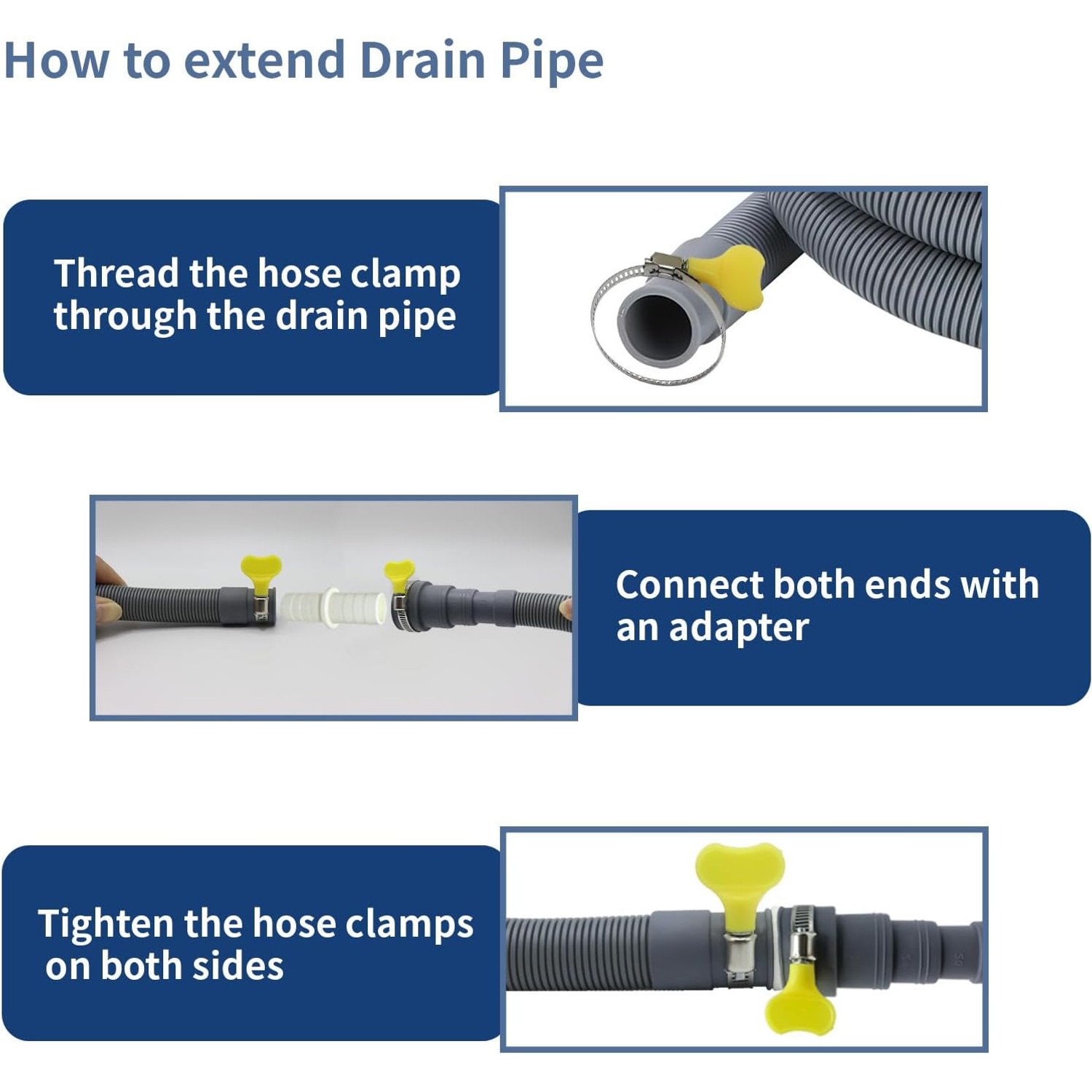
Slide a hose clamp loosely onto the end of the existing hose. Push the barbed connector into the hose until the hose covers the barbs on that side. The maker says this is done by hand, without tools.
Slide the second clamp onto the 20 mm end of the extension hose, then push that end onto the other side of the connector.
Move each clamp so it sits over the barbed section and tighten it. Firm is enough. A clamp done up so hard that it bites into the plastic can do more harm than good. The type of clamp screw is not stated by the maker, so have a screwdriver to hand.
Cut the outlet end to size if you need to, using a sharp craft knife. Cut a little at a time.
Fit the U-bend bracket near the outlet end so the hose forms a hook. Hang it into the standpipe or connect it to the spigot.
Height, the hook and siphoning
The U-bend bracket looks like the least important part of the kit. It is not.
A drain hose has to rise up and over before it goes down into the waste. That high point stops two problems. It stops dirty water from the sink or the drain running back into the machine. And it stops siphoning, where water is drawn out of the machine by gravity while it is still trying to fill.
The bracket holds that hook shape so the hose cannot sag flat or kink at the bend. Set the height according to your appliance manual.
If the hose goes into an open standpipe, do not push it far down, and do not seal the gap around it with tape. The standpipe needs air around the hose to work properly.
Run a test
Before you push the machine back, run a short rinse or drain cycle and watch the join the whole time the pump is running. Run a dry finger around both clamps. Look at the outlet end as well.
If there is a drip, stop the machine, re-seat the hose on the connector and tighten the clamp a little more.
When you slide the machine back, guide the hose by hand. This is where most kinks are made. The maker says the corrugated wall helps the hose resist kinks and return to shape after being squeezed, but no hose survives being crushed flat between a machine and a wall.
Try to leave the join somewhere you can see it, such as in the cupboard beside the machine.
When it is a job for a plumber
Joining a hose to a waste point that already exists is a normal household task. Some jobs nearby are not.
If there is no standpipe and no appliance spigot on the sink trap, one has to be fitted. If two appliances need to share a waste, the pipework needs the right fitting for that. If the existing waste is slow, leaking or badly sloped, it needs to be put right.
All of that is fixed pipework. It is work for a qualified plumber, and the Irish Building Regulations apply to drainage work.
If the machine will not drain at all, check the simple things first. Clean the filter on the machine. Look for a kink. If the standpipe itself is backing up, clear the trap by hand. We do not recommend chemical drain cleaners. And if several wastes in the house are slow together, the trouble is in the main drain. A blockage in a public sewer is a matter for Uisce Éireann or your local authority.
Looking after it
There is little to do. Look at the join after the first few washes and then every few months. Hose clamps can ease off slightly as plastic settles, and a quarter turn puts that right.
Once a year, pull the machine out, check the hose for flat spots or rubbing, and clean the fluff out of the hook end.
The short version
When a drain hose is too short, do not stretch it. Add length with a proper join.
This kit gives you a 1 metre grey polypropylene hose with stepped ends of 20, 24, 30 and 38 mm, a barbed connector with a 20 mm outer diameter, two stainless steel hose clamps and a U-bend bracket. The maker says it carries hot water up to 95 degrees Celsius.
Measure the inside of your existing hose. It needs to be 20 mm. Check your appliance manual for the longest hose and the outlet height it allows. Clamp both sides of the join, keep the hook at the outlet, and run a test cycle before you push the machine home. Anything that means new or changed waste pipework is a job for a qualified plumber.