
The complete guide
How To Choose A Kitchen Sink Strainer Plug That Actually Fits
The problem nobody notices until the water stops moving
A kitchen drain almost never blocks overnight. It fills up slowly, over weeks, with the stuff that slips past a tired old plug. A spoonful of rice here, a handful of coffee grounds there, some peelings, a bit of fat that cools and sticks, a few strands of hair. Each one is harmless on its own. Together they form a soft, greasy mass in the trap that eventually slows the water to a crawl.
By then you are holding a plunger, or worse, paying someone to clear it. The irritating part is that the fix was a small one all along. A strainer basket sitting in the waste opening catches almost all of that material before it ever enters the pipe. You empty it into the bin, rinse it, and carry on.
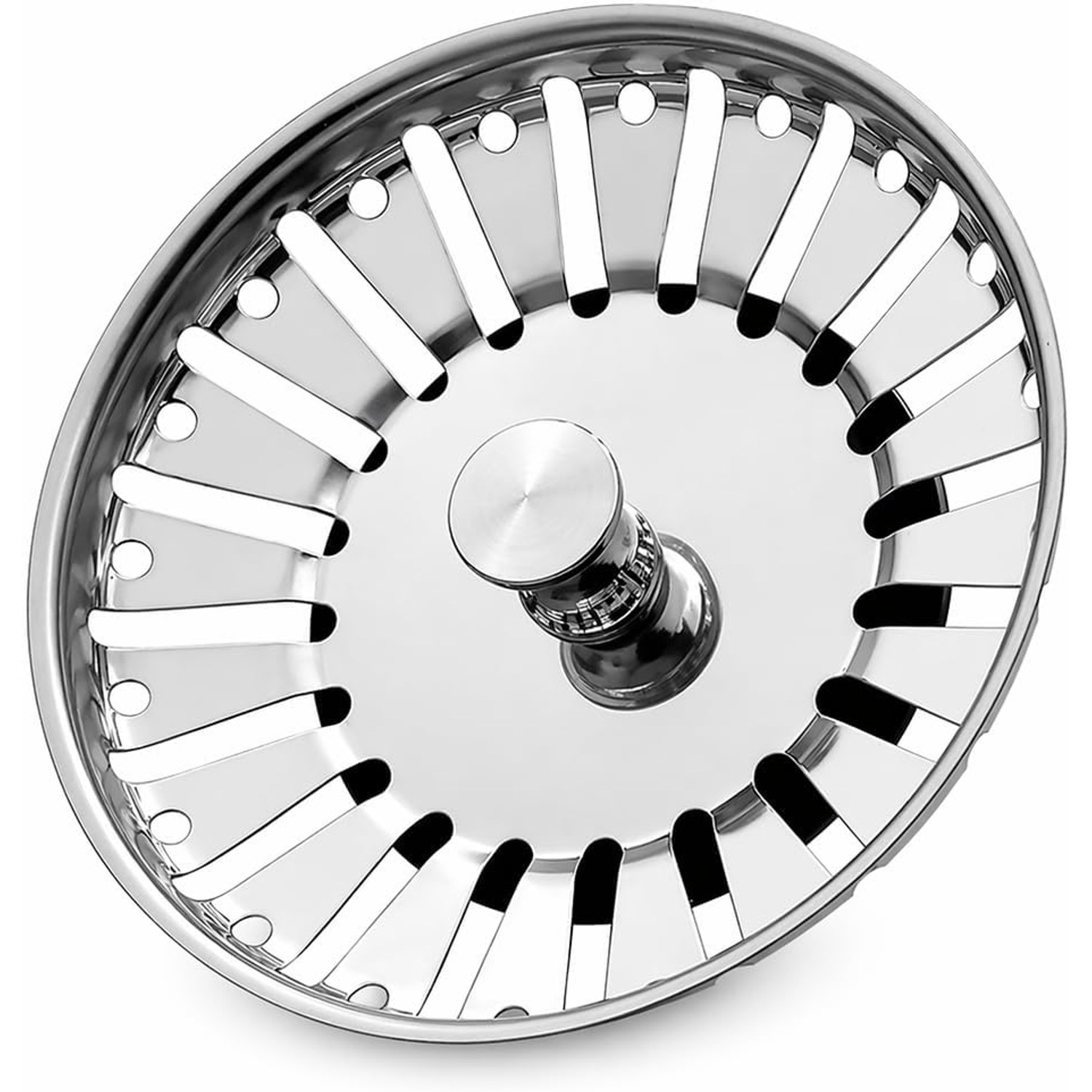
The 84mm strainer plug is one of those fixes. It is a stainless steel basket with a rubber sealing ring and a push-knob centre shaft, so it seals the sink when you want to fill it and strains the water when you let it go. One part, two jobs, no swapping.
How a combined plug and strainer works
Older kitchen sinks often had two separate items. A rubber or metal plug on a chain to hold the water, and a loose mesh basket you dropped in afterwards to catch scraps. The basket got in the way, went missing, or sat in a cupboard unused.
A combined unit solves that by building the seal into the strainer body. Push the centre knob down and the rubber seal presses against the sink rim, closing the waste. The bowl fills and stays filled. Lift the knob slightly and you create a gap for water to escape, while the perforated steel basket stays seated in the opening. Water drains, solids stay behind.
That small design change is why these get used. The strainer is never in the way, because it is the plug. There is nothing extra to find, fit or remember.
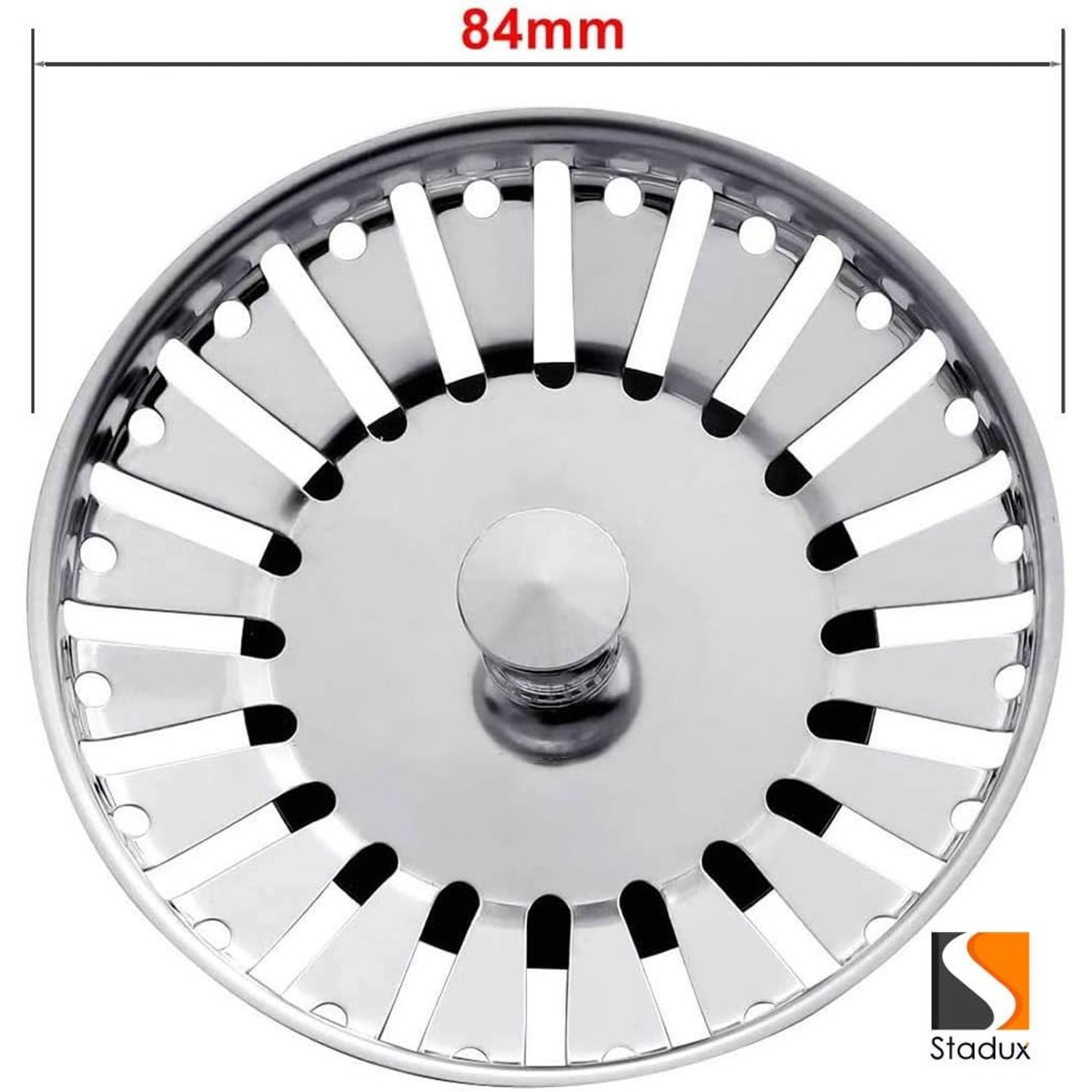
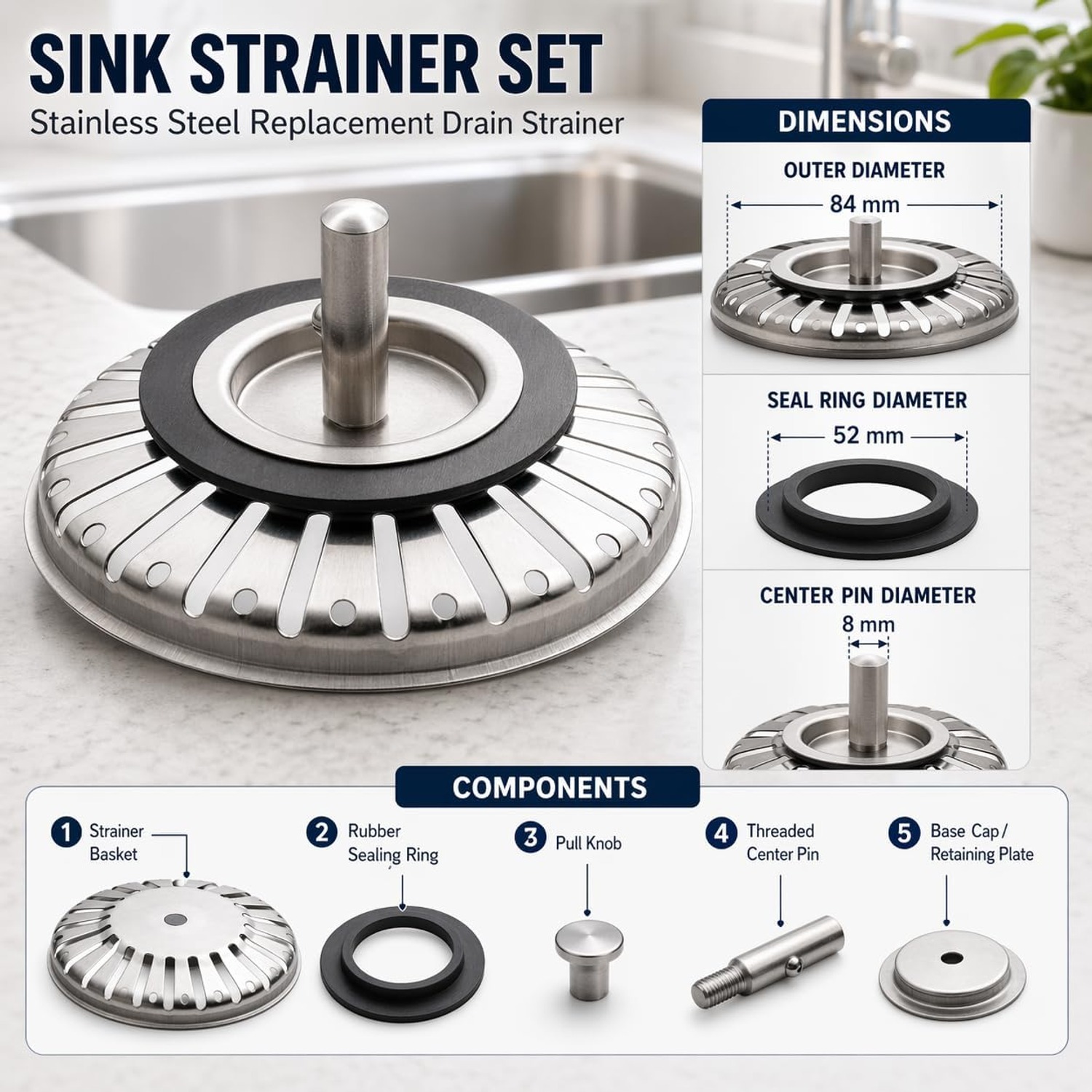
On this model the key figures are an 84mm outside diameter, a 55mm rubber seal and 30mm from the bearing to the rim. The listed item dimensions are 8.4cm wide by 7.8cm high. Those four numbers are what you compare when you are working out whether it will suit your sink.
Fit is the whole story
Here is the honest part, and it is the thing most product pages skip over. A strainer plug either fits your waste opening or it does not, and the brand name has nothing to do with it.
This one is designed for openings between 84mm and 86.3mm. That is a narrow band, and it covers a lot of common kitchen sinks, but not all of them. If your opening measures 90mm, this is the wrong part, no matter how well made it is.
Even matching the diameter is not quite enough. Sinks differ in seating depth, which is how far down the plug sits before it meets the rim. They differ in rim shape and in the design of the waste fitting underneath. A plug can have the right outer diameter and still fail to seal because it sits too high or too low.
So before you order, do this. Pull out your existing plug. Measure straight across the widest point of the circular opening in the sink, in millimetres. Then look at the old plug itself and note the diameter of its rubber seal, the length of its centre shaft and how deep the body sits. Compare all four with the numbers listed above. If they line up, you are in good shape. If something is clearly off, keep looking rather than hoping.
Two minutes with a ruler saves a return.
Who this suits
Anyone with a compatible kitchen sink and a habit of rinsing plates straight into the drain. That covers most households.
It is particularly worth having if you cook with rice, pasta, lentils or anything else that sheds small grains. Those are the classic blockage builders, because they swell and clump. The same goes for tea leaves and coffee grounds, which look harmless going down and then settle in the trap.
It also helps in homes where the kitchen sink does more than dishes. Washing a pet's bowl, rinsing muddy vegetables, cleaning a paintbrush, soaking something grubby from the garden. Hair, grit and leaves all end up in there, and a basket catches them easily.
Renters often find a replacement plug is the cheapest kitchen upgrade going. Worn plugs that no longer seal are extremely common in rentals, and swapping one out costs far less than living with a sink that will not hold water. Just measure first, and keep the original so you can put it back when you move.
Choosing between the options
Walk into a hardware shop and you will see a few styles sitting side by side. Here is how they actually differ.
A plain rubber plug on a chain seals well and costs almost nothing, but it catches nothing. Every scrap goes down with the water.
A loose mesh basket catches scraps nicely but does not hold water, so you still need a plug. Two items to store and two to lose.
A basket strainer with a lift-and-turn or push-knob mechanism, like this one, does both. It costs a bit more and it has to match your waste opening, which the loose basket does not. In return you get a fitting that stays in place and works without thinking.
Material matters too. Plastic strainers are cheap and they do work, but they stain, they can warp near hot water and the fine edges get brittle. Stainless steel handles heat, resists corrosion and cleans back to looking new. For a part that is wet every single day, steel earns its keep.
The last thing to weigh up is how easy it is to clean, which sounds minor and is not. A strainer that is awkward to empty quietly stops getting emptied.
Looking after it
The routine is short. After washing up, lift the basket out, tip the food waste into the bin or the compost caddy, then rinse the basket under warm water. A squeeze of dish soap and a soft brush clears anything stuck in the perforations.
Every so often, give it a deeper clean. The centre shaft unscrews, so the parts come apart and you can get at the rubber seal and the underside of the basket, where a film tends to build up. Wash, rinse, dry and screw it back together. Check the knob still moves freely before you refit it.
A few things to avoid. Do not leave bleach or strong drain chemicals sitting on the rubber seal, because that is what shortens a seal's life. Skip abrasive scouring pads on the steel, since they leave fine scratches that hold grime. Drying the steel after washing keeps water spots away, which is cosmetic but takes two seconds.
If the sink starts holding water less well over time, look at the seal and the sink rim before you assume the plug has failed. Nine times out of ten there is a crumb or a smear of grease stopping the rubber from sitting flat.
The short version
A kitchen sink strainer plug stops food waste getting into your pipes, which is the single cheapest way to avoid a blocked drain. This model combines a stainless steel basket with a rubber seal and a push knob, so one fitting holds water and strains it.
It fits sink waste openings between 84mm and 86.3mm, with an 84mm outside diameter, a 55mm seal and 30mm from bearing to rim. Measure your opening before you order, and compare the seating depth with your current plug as well as the diameter.
Clean it after each use and take it apart now and then. Do that, and it quietly does its job for years.