

The complete guide
How To Clean A Plughole And Waste Pipe With A Drain Brush
The gunk you cannot see
Take the cover off any shower waste that has been in use for a year and you will find the same thing. A grey, slippery sleeve of hair, soap and skin oils is stuck to the inside of the pipe. It is not a blockage yet. Water still gets by. But the opening is smaller than it was, and it gets smaller with every shower.
Kitchen sinks do the same with fat and food. Basins do it with toothpaste, soap and shaving foam. The overflow slot on a basin is often the worst of all, because nothing ever rinses it.
This build-up is the reason a drain starts to smell before it starts to block. It is also the reason a drain that has just been plunged clear can slow down again a few weeks later. The plunger moved the plug along. It did not clean the pipe.
A brush does. It scrubs the wall of the waste and brings the loose material back up to where you can bin it.
What is in the pack
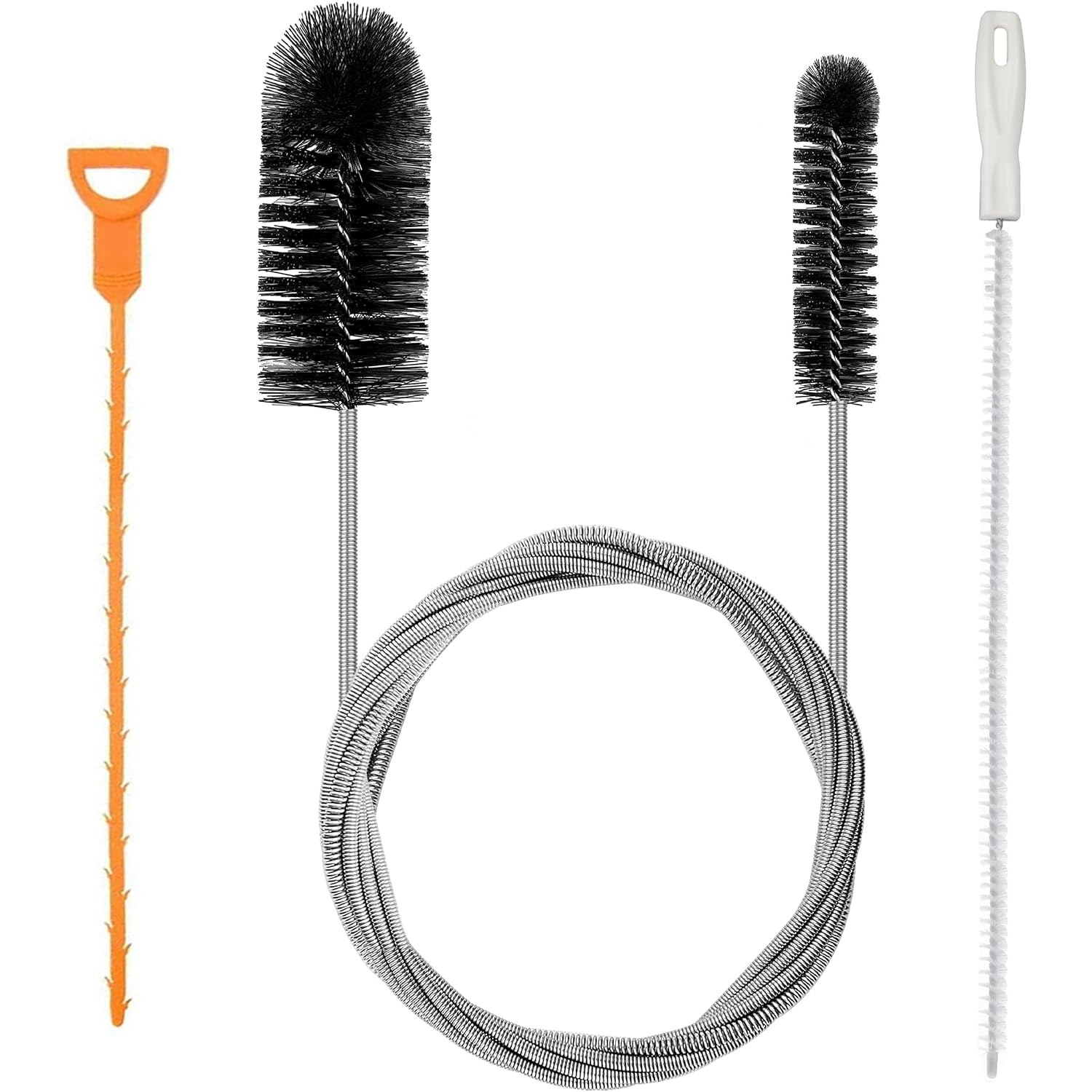
There are three tools in this set, and they are different lengths on purpose.
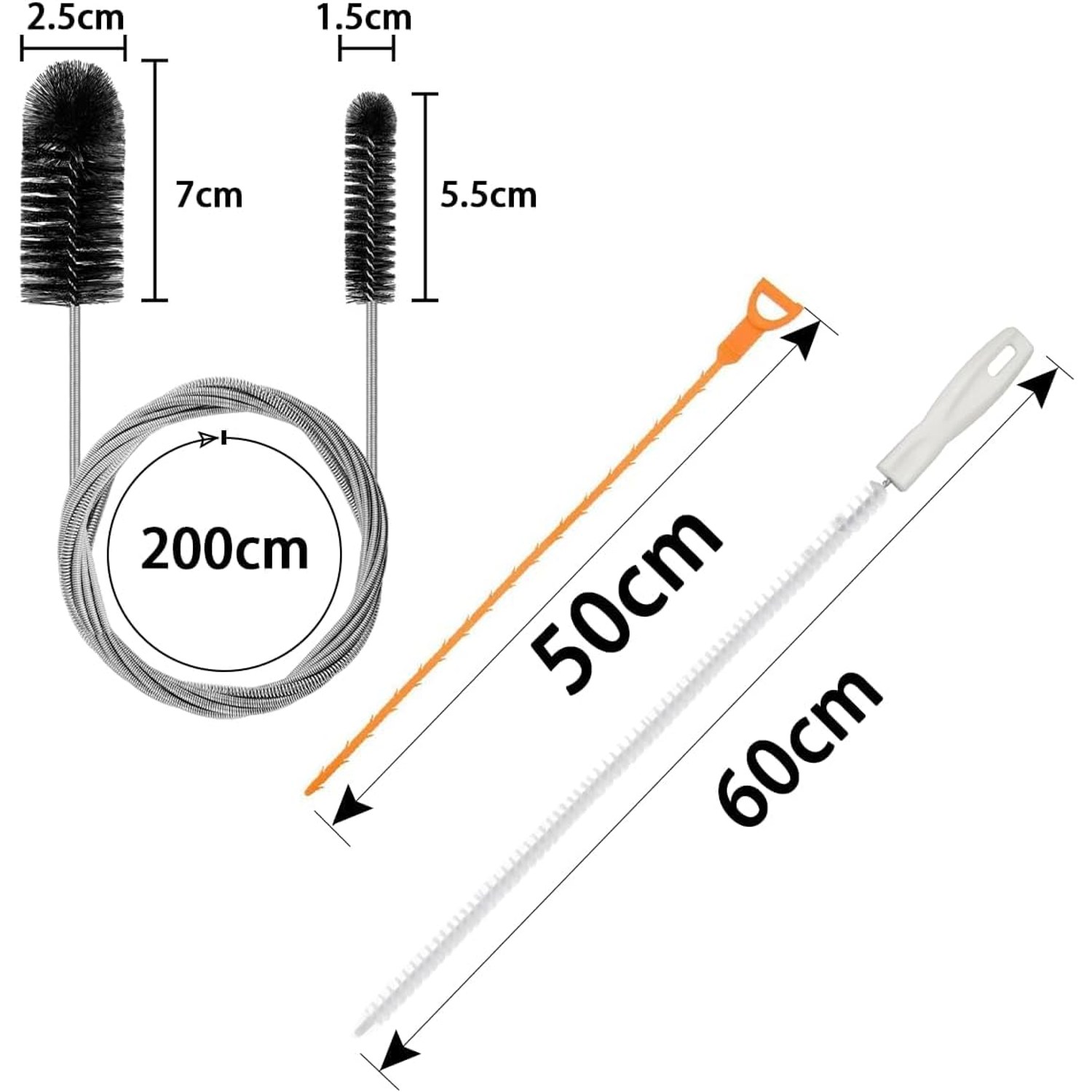
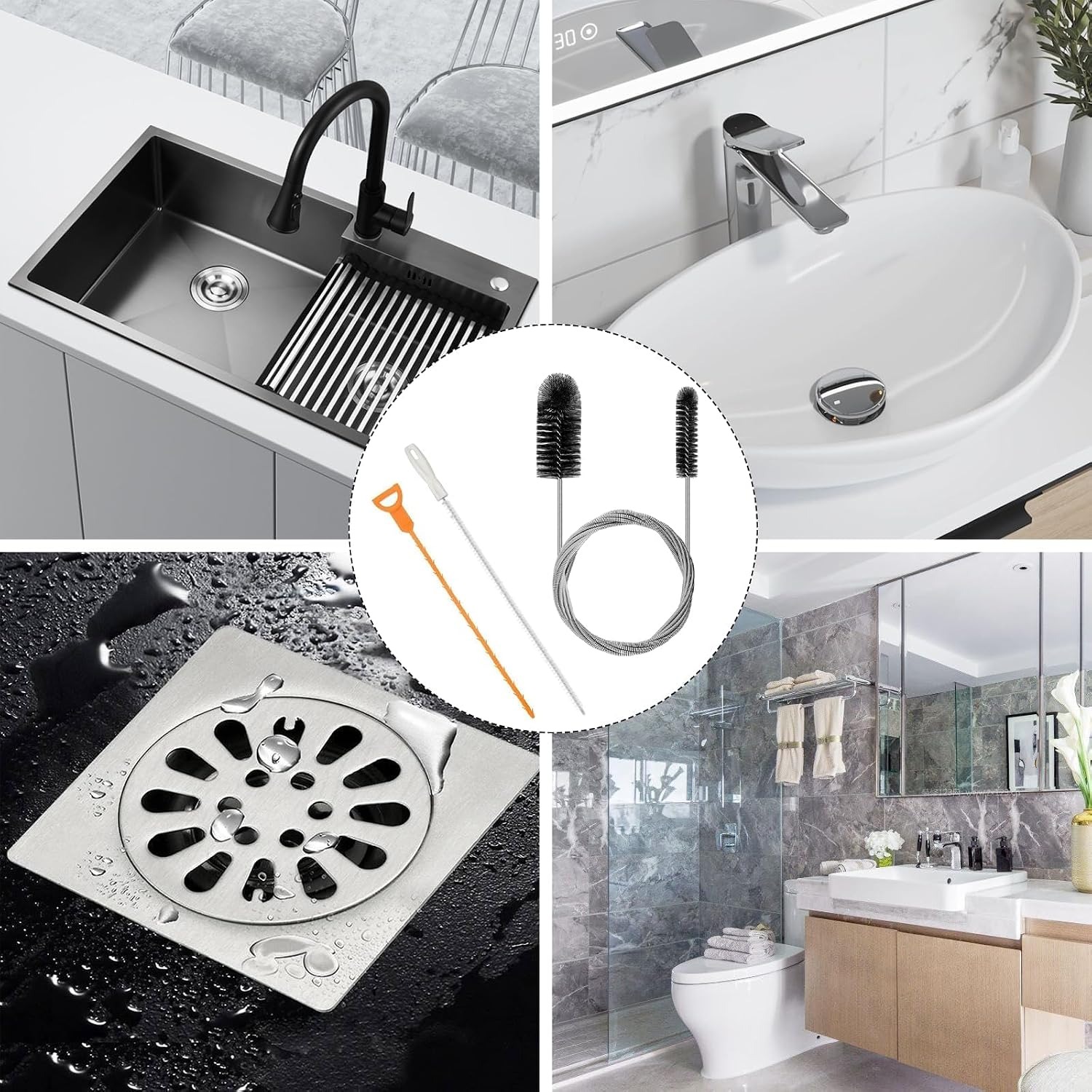
The first is a 200cm flexible brush with two bristle heads, one at each end of the wire. This is the long reach tool. It goes down past the trap, or along a thin tube that nothing else will fit.
The second is a 60cm sink brush. The maker lists it as white.
The third is a 50cm stick for shower drains, listed as orange.
The maker gives the colours of the set as black, white and orange. The bristles are described as nylon, the wire as 304 stainless steel, and polypropylene is listed among the materials. The lengths are measured by hand, so allow for a difference of 1 to 2 cm.
One thing the maker does not state is the diameter of the bristle heads. If you have a particular narrow tube in mind, go by the photos and measure the opening first.
How the brushes work
There is no trick to it. The wire is flexible, so it bends where the pipe bends. The bristles stand out from the wire and rub against the inside of the pipe as the tool moves.
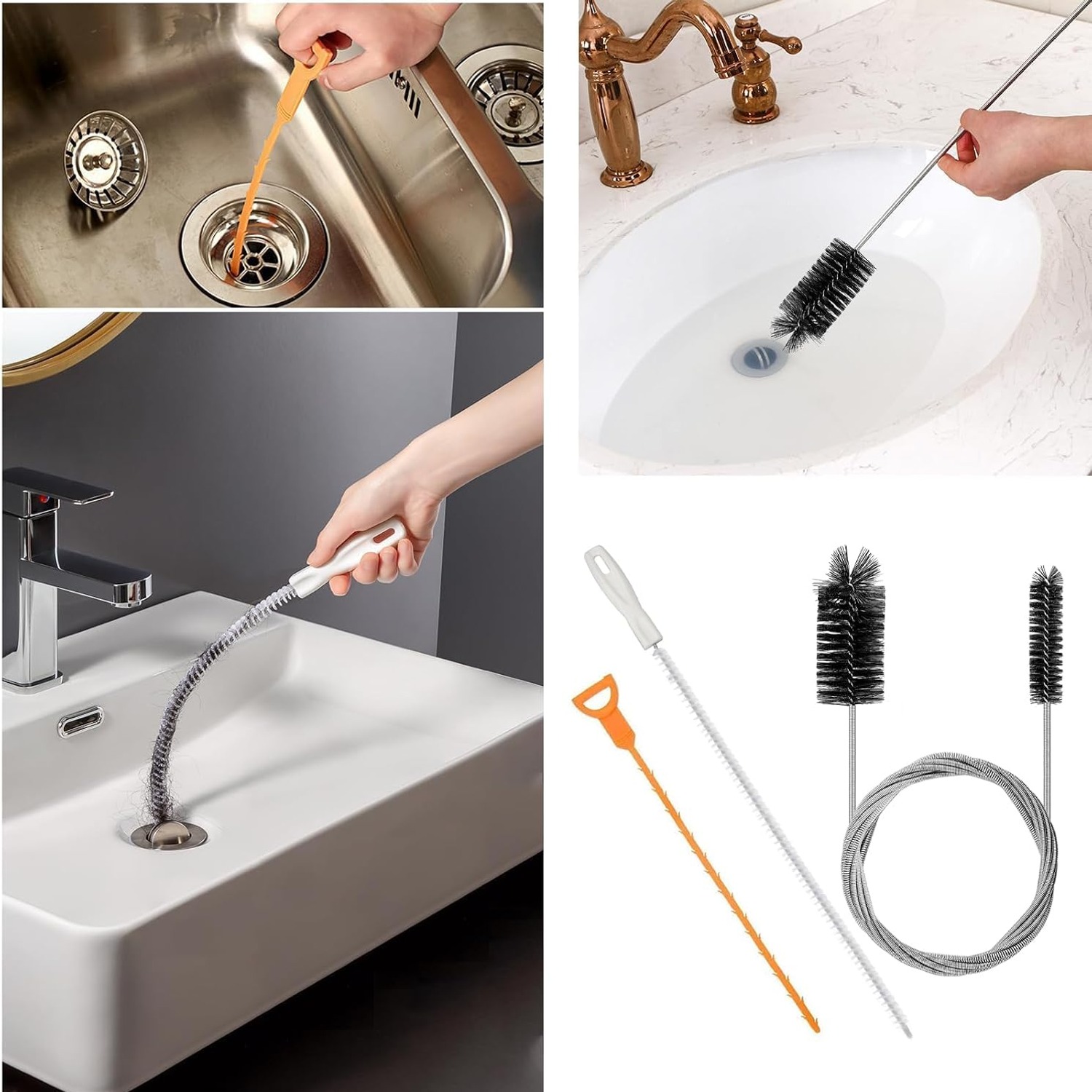
The maker's directions are short. Insert the tool into the drain. Twist it slightly so it catches hair and debris. Then pull it out slowly.
The slight twist does two things. It wraps loose hair around the tool, and it turns the bristles against the pipe wall so they scrub. The slow pull matters just as much. Pull fast and the clump you have gathered can slide off halfway up.
Because there is no motor and no chemical, you are in charge of the force. That is useful in an older house where the waste fittings have seen better days.
Which tool for which job
Start short. Most build-up sits within a hand's length of the plughole, so the 50cm stick or the 60cm brush will often do the whole job on a shower or a basin. They are easier to steer than a two metre wire, and there is less to clean afterwards.
Move to the 200cm brush when the short tools come back clean but the water is still slow. That tells you the problem is further on, past the trap and into the pipe behind it. Feed the long brush in a little at a time. When it stops at a bend, draw it back a few centimetres, turn it and try again. Do not shove.
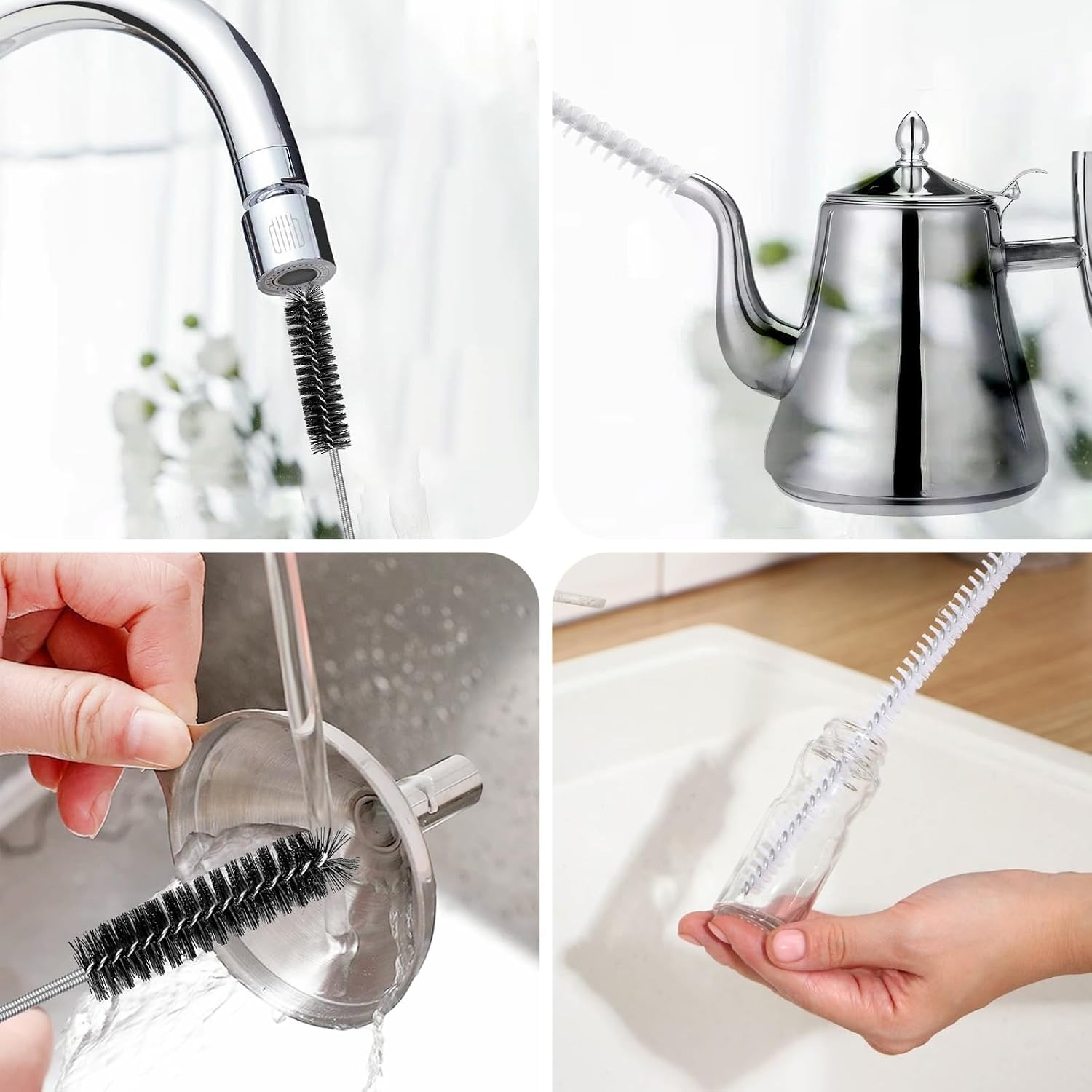
A long pipe cleaning brush is also the right pick for thin tubes. The maker lists a range of these, and they are covered further down.
If you want one rule, it is this. Use the shortest tool that reaches the dirt.
Using them without making a mess
Five minutes of preparation saves a lot of wiping up.
Put on rubber gloves. Lay an old towel around the plughole and have a few sheets of kitchen paper and a bag ready. Lift out the plug or the pop-up stopper if it comes out. On a shower, lift or unscrew the waste cover if yours is the kind that comes off by hand.
Feed the tool straight down the centre of the opening. The wire is steel, so keep it off the surface of an enamel bath or a polished basin.
Work in short strokes. Push in, turn, draw back. Wipe the head with kitchen paper each time it comes out, and put the paper in the bag. Do not rinse the hair back down the drain you have just cleaned.
When the tool comes back clean two or three times in a row, run the hot tap for a minute. A small squirt of washing-up liquid helps carry the greasy film away. Then put the plug or cover back.
We do not recommend chemical drain cleaners, before or after. They are not needed for this job, and they make it risky to put your hands and a tool anywhere near the water.
Beyond the bathroom
The maker lists several uses for the 200cm brush that have nothing to do with sinks.
One is the fridge. At the back of most fridges there is a small drain hole that carries condensation away. When it blocks with crumbs or a bit of vegetable, water pools under the salad drawer. A thin brush clears it. Check that the head fits the hole before you push.
Another is the car sunroof. Sunroof trays drain through thin tubes that run down inside the body of the car. Leaves and grit block them and the water ends up in the footwell. A sunroof drain cleaning brush can clear the top of the tube, but go slowly and stop at firm resistance. Those tubes are only pushed onto their fittings and can come off.
The maker also lists aquarium filters and fish tanks, washing machines and coffee makers. Two points of care apply. Unplug any appliance first and only clean the parts its manual tells you to. And keep a separate brush for anything that touches food, drink or fish. A brush that has been down a shower waste stays a drain brush.
What they will not do
These are thin hand tools. They are made for hair, slime and soft build-up in small wastes and narrow tubes.
They are not for toilets. They will not shift a hard object stuck in a pipe, and they will not reach a blockage many metres away. For a clog deep in the pipework, a drain snake is the next step.
If the kitchen sink, the bath and a toilet all slow down together, the trouble is in the main drain outside. A blockage in a public sewer is for Uisce Éireann or your local authority. One on your own property needs a drainage contractor. And any job that means changing fixed pipework belongs to a qualified plumber.
Looking after the set
Pull off what you can with gloved hands or paper. Rinse each tool under the tap with a little washing-up liquid, working the bristles with your fingers. Shake them off and leave them to dry.
Store the 200cm brush in loose, wide loops. Hang it on a hook or lay it flat on a shelf. Folding it tightly puts a kink in the wire, and a kinked wire does not feed through a bend the way a straight one does.
Keep the set somewhere dry. The maker lists the tools as reusable, and with a rinse after each job there is no reason to treat them as throwaway items.
The short version
Slow, smelly drains are usually coated on the inside with hair, soap and grease, starting just below the plughole. A brush scrubs that coating off and pulls it out.
This pack has a 200cm flexible brush with two bristle heads, a 60cm sink brush and a 50cm shower drain stick. The maker describes the bristles as nylon and the wire as stainless steel. Start with the shortest tool, twist slightly, pull slowly, and wipe the head each time.
Use the long brush for deeper runs and for thin tubes like a fridge drain hole or a sunroof drain. Rinse everything afterwards and store the long one loosely coiled. For toilets, hard blockages or anything outside the house, you need a different tool or a professional.