Drains Company
Company
Shop By Category
T&Cs
Shop Online
  • Size, material and fit listed
  • Free tracked delivery across Ireland over €120
  • 14-day returns

Flexible Drain Brush 155cm | Slim drain hole cleaning brush | long pipe cleaner brush

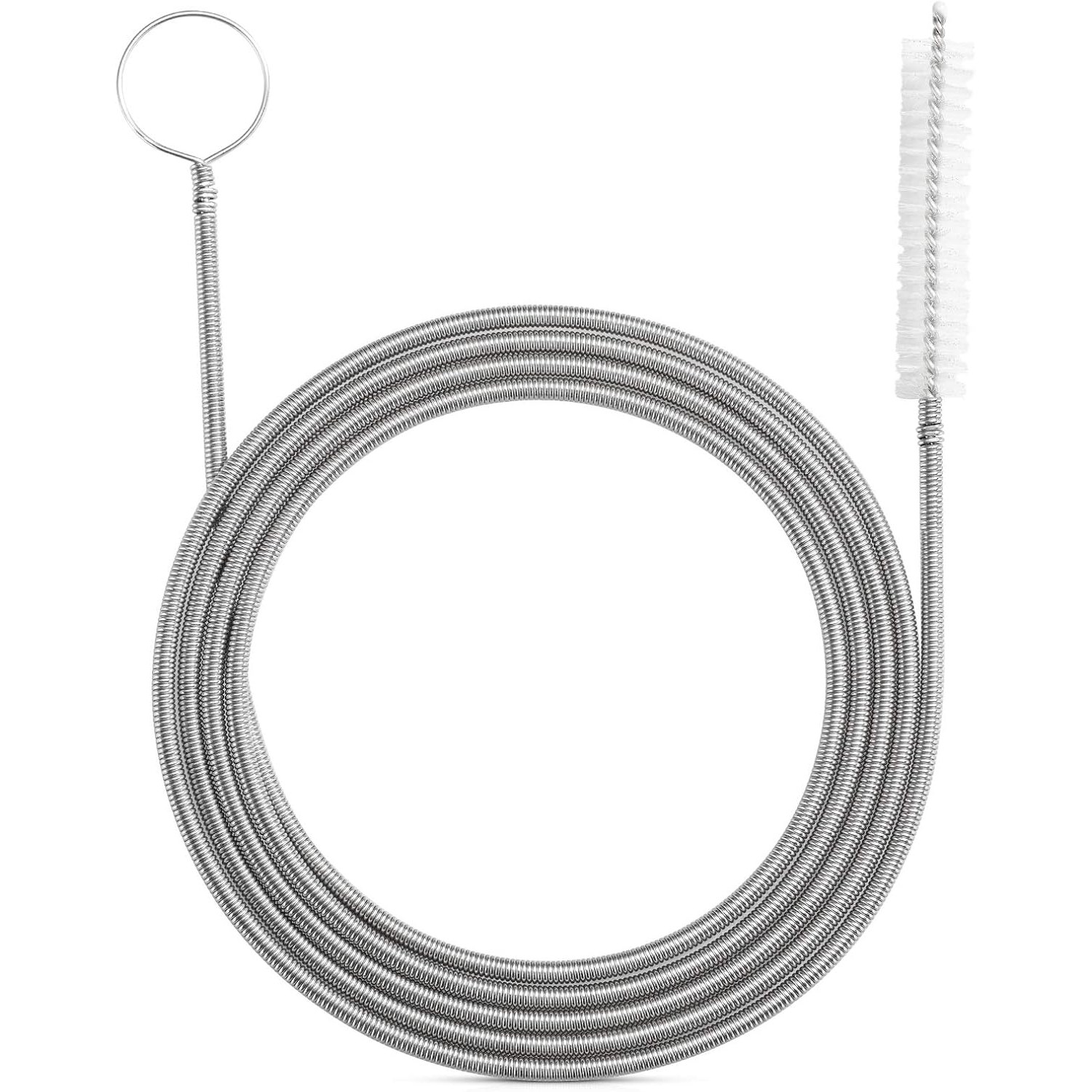
Flexible Drain Brush 155cm with Nylon Bristle Head

€15.99
  • 155cm Of Reach
  • Slim Bristle Head
  • Bends With Curves
  • Steel And Nylon

Price: €15.99

  • Free tracked delivery across Ireland on orders €120+, otherwise a flat €15
  • Pay by card or PayPal, handled by the payment provider
  • 14 days to change your mind, plus your statutory rights
Product specifications
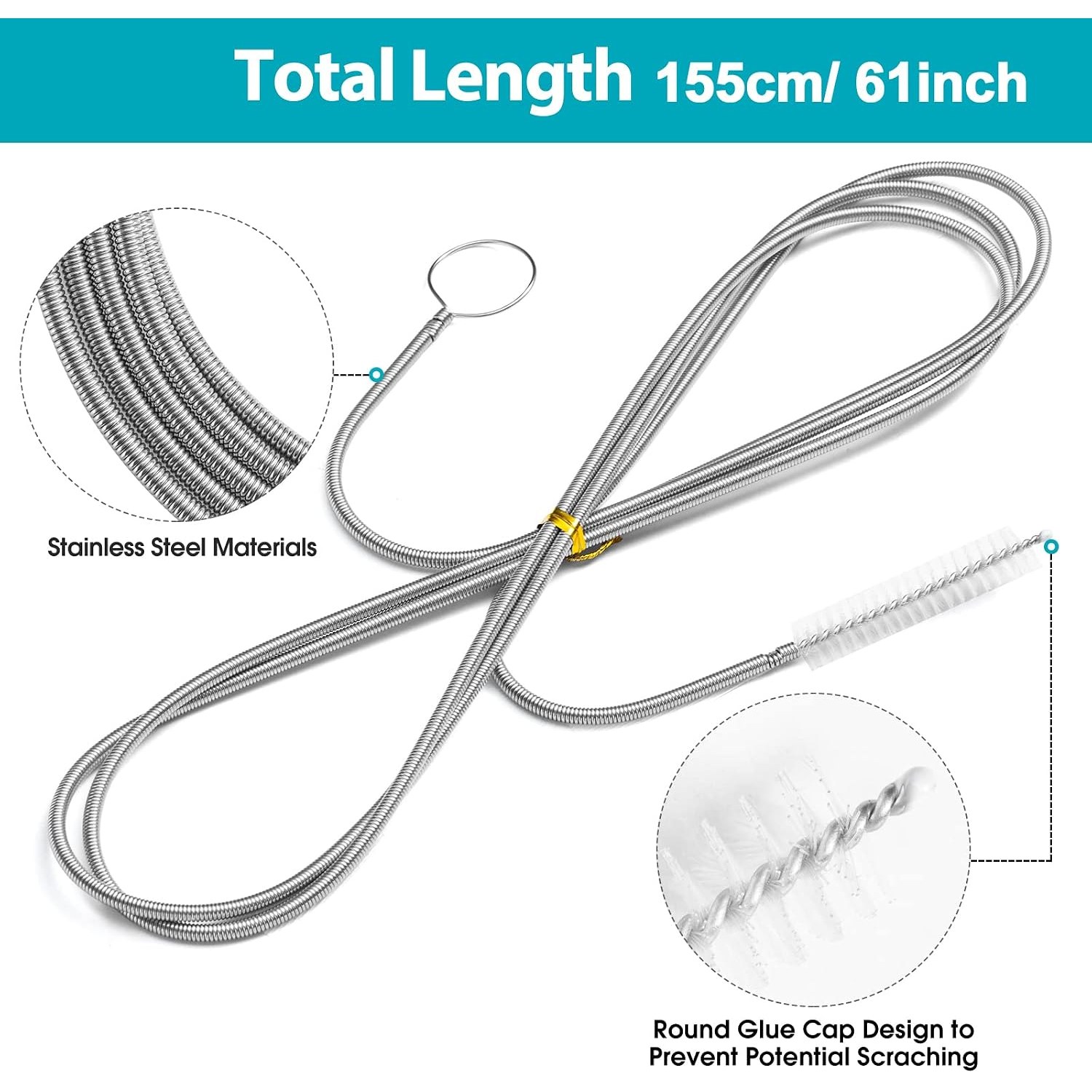
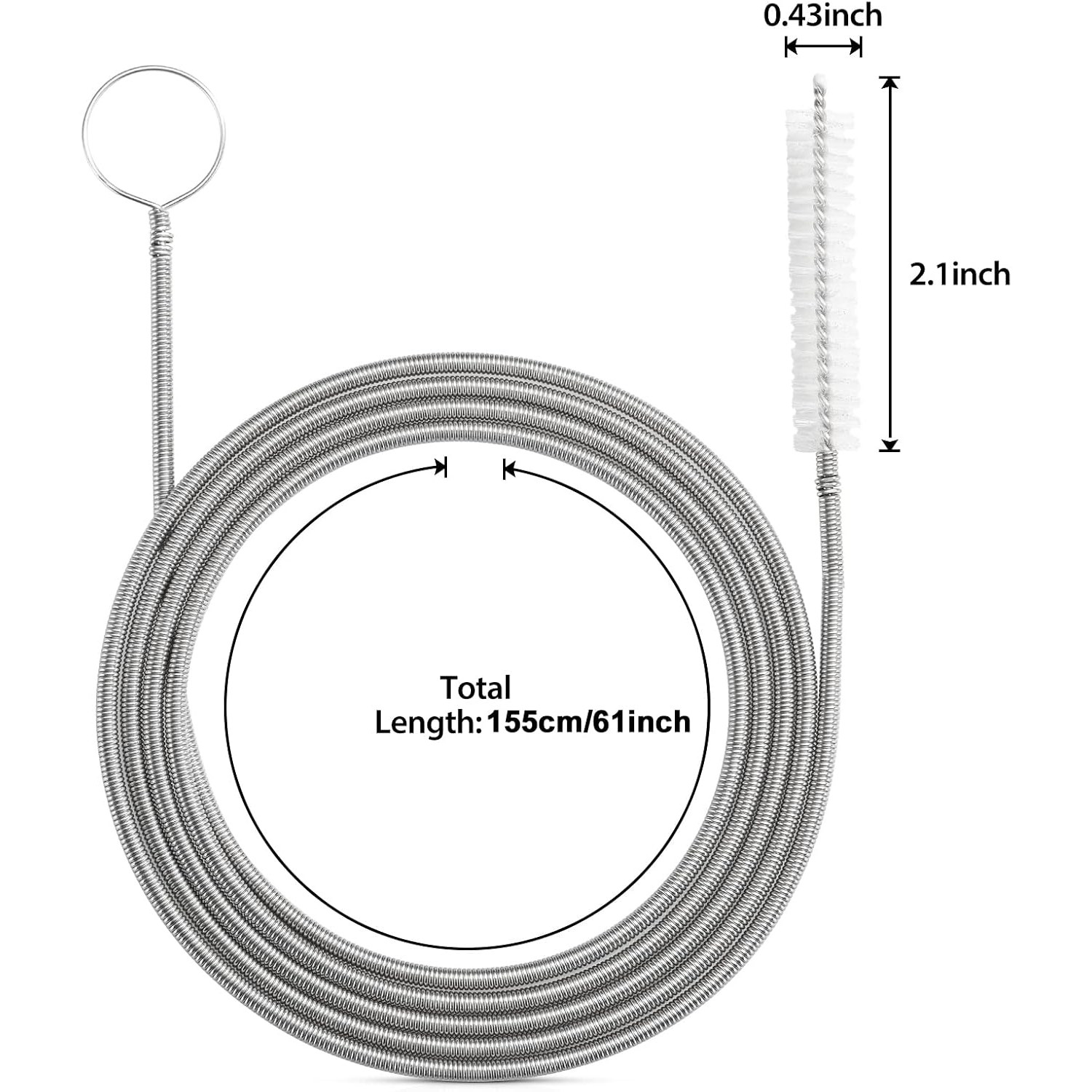
Total Length155 cm
Bristle Head5 cm long, 1 cm diameter
Stem And Handle MaterialStainless steel
Bristle MaterialNylon
FlexibilityFlexible, for curved pipes with bends of less than 90 degrees
ColourWhite
Quantity1 brush
Weight60 g
Intended UseCleaning narrow pipes and drainage openings
Weight60 g
Shipping & returns

Tracked delivery anywhere in Ireland. It is free on orders of €120 or more, and a flat €15 below that. Most orders arrive within 4 to 8 working days.

Under the Consumer Rights Act 2022 you have 14 days from delivery to cancel for any reason, and a further 14 days to send it back. You may handle the item as you would in a shop. We refund the price you paid, including standard delivery, though we may reduce the refund if it has been used beyond that. You cover the cost of returning it unless the item is faulty.

If it arrives faulty, damaged or not as described, we put it right at no cost to you under the Consumer Rights Act 2022 and the EU Sale of Goods Directive 2019/771, return postage included.

Shipping details · Refunds and returns

155cm Of ReachLong enough to scrub well past the opening of a narrow pipe.
Slim Bristle HeadThe maker gives the head as 5cm long and 1cm in diameter.
Bends With CurvesThe maker says it works in curved pipes with bends of less than 90 degrees.
Steel And NylonA stainless steel stem carries nylon bristles at the working end.

Scrub the slime out of narrow pipes with a flexible drain brush that reaches 155cm past the opening.

A long stainless steel stem with a 5cm by 1cm nylon bristle head bends through gentle curves, so you can clean overflows and slim waste pipes that a cloth or a short brush never touches.

This is one long, slim cleaning brush for narrow pipes, with a total length of 155cm according to the maker.

The bristle head is 5cm long and 1cm in diameter, so it fits openings that are too tight for an ordinary bottle brush.

The stem is stainless steel and flexes as you feed it in, which lets it follow gentle curves in a pipe.

Nylon bristles scrub away the slime and soap film that build up on pipe walls and cause smells.

At 60g it weighs very little, and it coils loosely for storage in a drawer or cupboard.

Flexible Drain Brush 155cm with Nylon Bristle Head

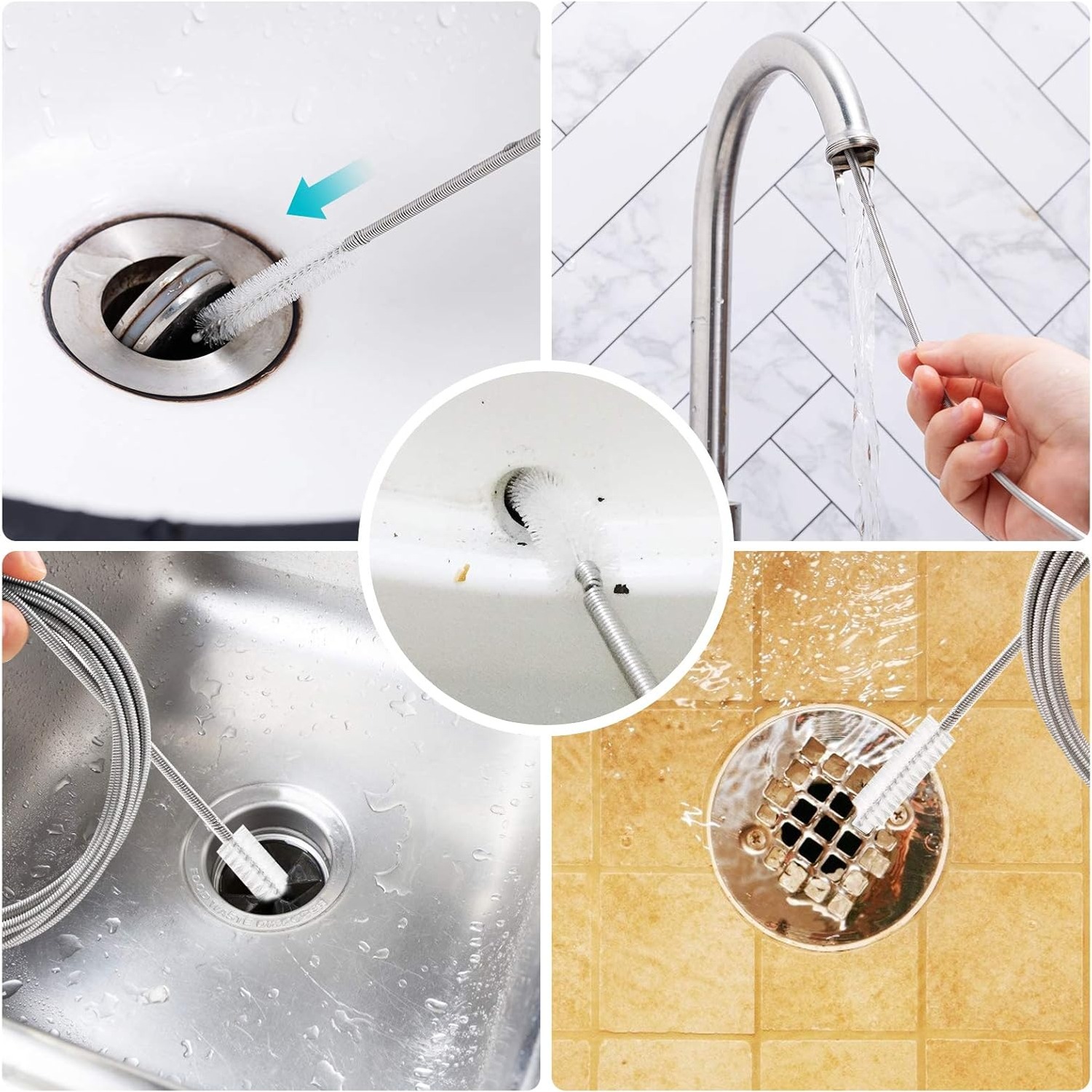
Some of the worst smelling parts of a sink are the ones you never see. The overflow channel behind a basin, the first stretch of a narrow waste pipe, the small drain openings that carry water away from fittings around the house. They collect soap film and slime over months, and a cloth cannot get near them. This brush is made for exactly that kind of narrow, awkward space.

Flexible Drain Brush 155cm with Nylon Bristle Head

The maker gives the total length as 155cm. At the working end is a bristle head 5cm long and 1cm in diameter. That is slim. It will pass through openings where a standard bottle brush or washing-up brush has no chance, and the length means you can keep feeding it in well past the point you can see.

Flexible Drain Brush 155cm with Nylon Bristle Head

The stem is stainless steel and the bristles are nylon. The maker describes the brush as very flexible and says it works in curved pipes where the bend is less than 90 degrees. That covers gentle curves and sweeping bends. A tight trap under a sink is a sharper turn, so the brush may stop there, and it should never be forced.

Flexible Drain Brush 155cm with Nylon Bristle Head

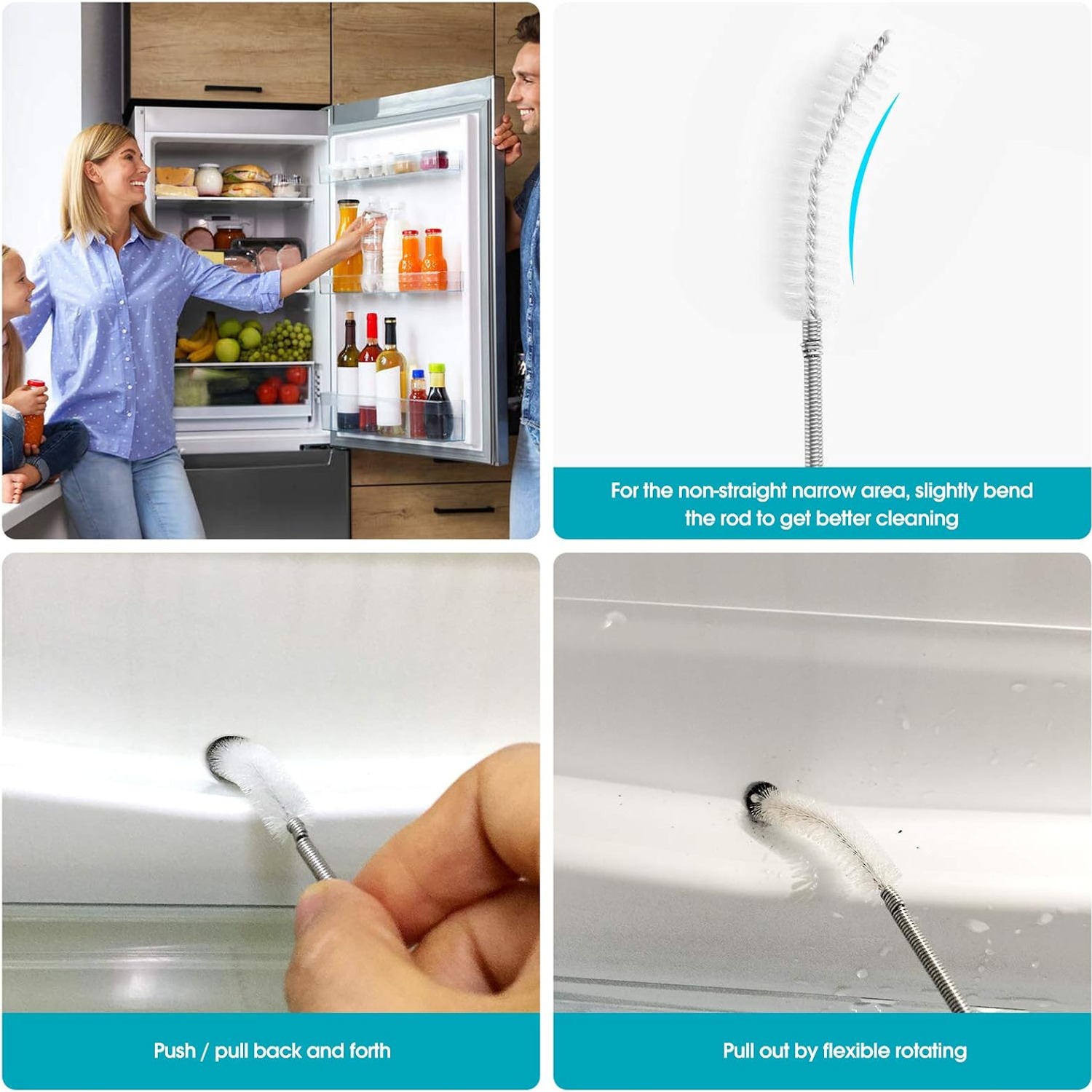
Using it is simple. Wet the head, add a little washing-up liquid, feed it in and work it back and forth while turning the stem. The bristles scrub the pipe wall and bring the loosened dirt back with them. Rinse and repeat until the head comes out clean.

Flexible Drain Brush 155cm with Nylon Bristle Head

It is a cleaning brush, not a blockage remover. It keeps narrow pipes and overflows fresh and helps stop build-up turning into a blockage. For a sink that has stopped draining completely, a plunger or a drain snake is the tool to start with.

Not sure yet? That is fine.

A drain part has to fit the drain you have, and you cannot always judge that from a photograph. Under the Consumer Rights Act 2022 you have 14 days from delivery to cancel for any reason, and a further 14 days to send it back. You can handle it as you would in a shop to check the fit. We refund the price you paid, including standard delivery, though we may reduce the refund if the item has been used beyond that.

If it turns up faulty, damaged or not as described, that is on us. The Consumer Rights Act 2022 and the EU Sale of Goods Directive 2019/771 cover you, and we pay the return postage. Read the full detail on our refunds and returns page, or ask us anything before you order.

Frequently Asked Questions

What is this brush for?

It is a long, slim brush for cleaning inside narrow pipes and drainage openings. The maker lists drainage as its intended use. It scrubs away slime and soap film that a cloth cannot reach.

How long is it?

The maker gives the total length as 155cm. That is enough to work well past the opening of most narrow household pipes. If you have been looking for a long drain brush, this is at the longer end for a hand tool.

How big is the bristle head?

The maker states the head is 5cm long and 1cm in diameter. It is a slim pipe brush, sized for narrow openings. Check that the opening you want to clean is wider than 1cm.

What is it made of?

The stem and handle are stainless steel and the bristles are nylon. Those are the two materials the maker names. Nothing else about the construction is stated by the maker.

What colour is it?

The maker lists the colour as white. Product photos show the brush as supplied. Screens can shift shades a little.

How many brushes do I get?

One. The maker lists a single brush in the pack. If you want one for the kitchen and one for the bathroom, order two.

How heavy is it?

The maker gives the weight as 60g. That is very light for a tool of this length. It will not tire your hand in use.

How flexible is it?

The maker describes it as very flexible and says it works in curved pipes with bends of less than 90 degrees. In plain terms, it follows gentle curves well. Sharp, tight turns are harder for it.

Will it go round the trap under my sink?

Possibly not. A trap is a tight turn, and the maker only claims bends of less than 90 degrees. If the brush stops, do not force it. Clean the trap by unscrewing it by hand over a bucket instead.

What kind of pipes does it suit?

Narrow ones. With a 1cm head it is a narrow pipe brush, suited to slim waste pipes, overflow channels and small drain holes. It is too small to scrub a wide pipe properly.

Can I use it to clean a basin overflow?

Yes, as long as the overflow slot is wider than 1cm. Overflows collect slime and are a common source of smells. A slim head like this works well as a basin overflow brush.

Will it fit through my plughole?

It depends on the waste. Many plugholes have a cross or grid, and the gaps vary. Measure the gap and compare it with the 1cm head diameter before you order.

Will it clear a blocked sink?

It is a cleaning brush, so do not expect it to shift a solid blockage. It loosens light build-up and keeps pipe walls clean. For a sink that will not drain at all, start with a plunger or a drain snake.

Will it pull hair out of a drain?

The bristles can catch some loose hair on the way back out. That is a bonus, not its main job. A hair removal tool or drain snake is better for a matted hair plug.

Will it scratch my basin or pipes?

The working end is nylon bristle, which is softer than bare metal, and the maker describes the head as made to avoid scratching. The stem is steel, so keep it centred in the opening. Do not drag the stem across a polished or enamelled surface.

Do the bristles rotate?

The maker describes the bristles as rotating. In use, you turn the stem between your fingers as you push and pull. That turning is what lets the bristles scrub all the way round the pipe wall.

Does it have a handle?

The maker lists the handle material as stainless steel. The shape of the handle end is not stated by the maker. Please check the product photos if the grip matters to you.

How do I use it?

Wet the head and add a drop of washing-up liquid. Feed it into the opening, then work it back and forth while turning the stem. Pull it out, rinse the head, and repeat until it comes out clean.

Do I need chemicals with it?

No. Warm water and a little washing-up liquid are enough. We do not recommend chemical drain cleaners.

Can I use it in a toilet?

No. A 1cm head is far too small to clean or clear a toilet outlet. It is made for narrow pipes.

Can I use it on an outside drain?

It is not suited to gullies or large outdoor pipes. Those need drain rods or a contractor. If the blockage is in a public sewer, contact Uisce Éireann or your local authority.

Is it safe on plastic waste pipes?

Nylon bristles are gentle on plastic. Work the brush with light pressure and stop if it meets firm resistance. Forcing the steel stem against a joint is what causes trouble, not the bristles.

What if the brush gets stuck?

Stay calm and do not yank it. Turn the stem gently while easing it back the way it went in. It usually frees itself once the head lines up with the pipe again.

How often should I use it?

For an overflow or a slow, smelly basin waste, every month or two is plenty. Regular light cleaning stops slime building into something thicker. It takes a couple of minutes.

Will it help with drain smells?

It can. Smells often come from slime on the walls of the overflow or the top of the waste pipe. Scrubbing that off with a drain hole brush and flushing with warm water removes the source.

How do I clean the brush afterwards?

Rinse the head under warm running water and work some washing-up liquid through the bristles with gloved fingers. Wipe down the stem. Let it dry fully before storing it.

How should I store it?

Coil it loosely or hang it up. Avoid sharp bends, because a kink in a steel stem tends to stay. A dry cupboard is the right place for it.

Is it a useful gift?

It is a practical extra for someone setting up a home, especially alongside a plunger. It is not glamorous. People are usually glad of it the first time a basin starts to smell.

How is it delivered?

Delivery is tracked within Ireland. Please see the Shipping page for the current delivery details. You will receive tracking information once your order is on its way.

What if it is not right for me?

You have a 14-day right to cancel after delivery. The Refunds & Returns page explains how to return an item. If it arrives damaged, contact us with your order number and a photo.

How To Clean Narrow Pipes And Overflows With A Long Flexible Brush

6 min read Drains Company

The dirt you cannot see

You can scrub a basin until it shines and still have a smell hanging around it. The reason is usually out of sight. Behind the overflow slot is a hidden channel that only gets wet when the basin is nearly full. Below the plughole is a short run of pipe coated in soap film. Neither place ever gets cleaned in the normal run of things, and both stay damp.

Damp plus soap plus skin and hair makes slime. It is a grey or black film that clings to the pipe wall and builds slowly. It smells, and over time it narrows the pipe and gives hair something to cling to. That is how a slow drain starts.

A cloth cannot reach it. A short bottle brush is too fat or too stubby. What you need is something long and thin with bristles on the end, and that is all this tool is.

What this brush is

It is a single brush with a total length of 155cm, according to the maker. The stem is stainless steel. At the working end is a nylon bristle head that the maker gives as 5cm long and 1cm in diameter.

Those two numbers tell you most of what you need to know. A 1cm head is slim. It goes into openings that would stop most household brushes. And 155cm is a lot of reach. On most jobs you will use only the first part of it, but the spare length means you are never the one who runs out before the dirt does.

The maker lists the colour as white and the weight as 60g. There is one brush in the pack.

How flexible it really is

The maker describes the brush as very flexible and says it works in curved pipes where the bend is less than 90 degrees. It is worth being clear about what that means at home.

A long, sweeping curve is no trouble. Neither is a pipe that changes direction gently. The steel stem flexes and follows the shape, and the head keeps scrubbing as it goes.

A tight turn is different. The trap under a sink or basin doubles back on itself in a very short space. That is a sharper bend than the maker describes, so the brush may stop there. If it does, leave it. Forcing a steel stem round a tight corner kinks it, and a kinked stem never slides the same way again. Traps are easy to deal with another way, which we will come to.

Where a slim brush earns its keep

The overflow is the obvious place. If the slot or hole is wider than 1cm, the head will pass through and you can scrub the channel behind it. This is often where a stubborn basin smell lives, and a minute of brushing followed by a rinse can clear it.

The top of the waste pipe is the next. Feeding the brush down through the plughole lets you clean the walls of the waste above the trap. Check the gaps in the plughole grid first, because they vary from one fitting to the next.

Beyond that, it suits any narrow pipe or drain opening around the house that you can reach from one end and that has no sharp turn in the first stretch. The maker lists pipes as the surface it is meant for and drainage as its use. If the opening is at least a little wider than the head and the route is fairly straight, it is a fair candidate.

It is not the right size for wide pipes. A 1cm head inside a broad waste pipe touches one side at a time and will take all day. And it is not a tool for toilets or outdoor gullies.

Cleaning brush, not blockage remover

It helps to be honest about what a brush like this can do. It cleans. It scrubs film off pipe walls and loosens light build-up before it becomes a problem. On the way back out, the bristles may bring some loose hair with them.

It does not clear a sink that has stopped draining. A solid plug of hair or fat needs pressure from a plunger or the grip of a drain snake. If you push a slim brush into a solid blockage, the likely outcome is that the head pokes a small hole through it, the water drains slowly for a day, and then you are back where you started.

Think of it the way you would think of a toothbrush. It is for routine cleaning, and routine cleaning is what keeps bigger trouble away.

Using it step by step

Put on gloves and have an old cloth or some kitchen roll to hand. Run a little warm water so the pipe is wet.

Wet the bristle head and add a drop of washing-up liquid. Feed the head into the opening and push gently. As you go, turn the stem between your fingers. The maker describes the bristles as rotating, and it is this turning that lets them scrub right round the pipe wall instead of just one side.

Work in short strokes, a hand's length in and out, moving a little deeper each time. When you feel the brush stop, do not lean on it. Ease back, turn the stem a little and try once more. If it still stops, that is as far as it goes.

Draw the brush out slowly and wipe the head on the kitchen roll. The first pass is usually the dirty one. Rinse the head, go in again, and repeat until it comes out more or less clean. Finish by running warm water through the pipe or filling the basin so that water runs through the overflow.

You do not need anything stronger than washing-up liquid. We do not recommend chemical drain cleaners.

If the trap is the problem

When the brush will not pass the trap, or the smell seems to come from lower down, clean the trap itself. Put a bucket underneath, unscrew the trap by hand, and tip the contents out. Rinse it in another sink or outside, and use the brush on the short straight pieces while they are off. Then refit it, hand tight, and run the tap to check for drips.

That is ordinary household maintenance. Anything that means cutting, moving or replacing fixed pipework is different. That is a job for a qualified plumber, and the Irish Building Regulations apply to drainage work.

If more than one fitting is slow or smelly at the same time, the cause is likely further along the drain. Inside your boundary, call a plumber or drain contractor. If the blockage is in a public sewer, contact Uisce Éireann or your local authority.

Brush, plunger or snake

People often ask which of the three they should own. The honest answer is that they do different jobs, and the symptoms tell you which one to pick up.

If the water drains at a normal speed but the basin smells, the pipe is dirty and not blocked. That is a job for a brush. If the water drains slowly or not at all, something is in the way. Start with a plunger, and move on to a drain snake if the plunger does not shift it. Once the water is running again, the brush comes back out to clean what is left on the walls.

Used that way, a slim brush is the tool you reach for most often and the one that saves you from needing the other two.

Looking after the brush

Rinse the head under warm running water as soon as you finish. Work a little washing-up liquid through the bristles with gloved fingers, rinse again, and shake off the water. Wipe the stem from handle to head with a cloth.

Let it dry before you put it away. Then coil it loosely or hang it up. The one thing to avoid is a sharp bend, because a kink in a steel stem tends to be permanent. A dry cupboard suits it better than a damp shed.

Keep the steel stem away from polished and enamelled surfaces when you are feeding it in. The nylon head is soft, but the stem is metal, and a little care keeps the basin unmarked.

The short version

This is one long, slim cleaning brush. The maker gives the length as 155cm and the bristle head as 5cm by 1cm. The stem is stainless steel, the bristles are nylon, and it weighs 60g.

It follows gentle curves and stops at tight ones, so do not force it round a trap. Use it with warm water and washing-up liquid to scrub overflows and narrow waste pipes every month or two. It keeps smells down and slows the build-up that leads to blockages. For a sink that will not drain at all, reach for a plunger or a drain snake instead.

Browse the shop

Basin starting to smell?

A few minutes with a long, slim brush clears the slime that a cloth and a rinse leave behind.

Ask us a question

Page summary

This is a single long, flexible cleaning brush for narrow pipes and drainage openings. The maker states a total length of 155 cm and a bristle head 5 cm long and 1 cm in diameter. The stem and handle are stainless steel and the bristles are nylon. The maker lists the colour as white and the weight as 60 g. The maker describes the brush as very flexible and suitable for curved pipes with bends of less than 90 degrees, and describes the bristles as rotating. It is intended for cleaning slime and residue from narrow pipes, not for clearing solid blockages. The shape of the handle end, the stem diameter and the country of origin are not stated by the maker.