

The complete guide
A Buyer's Guide To Leaf Guard Covers For Outside Drains
A small job that prevents a messy one
Most people do not think about the drain in the yard until it stops working. Then it gets all of their attention. Water spreads across the patio, the smell arrives, and somebody ends up on their knees with a glove on, pulling black sludge out of a hole in the ground.
Nearly all of that is avoidable. The drain did not block in a day. It blocked over months, as leaves and moss and bits of garden rubbish washed into it and settled. If those things had stayed on the surface, they could have been swept up in seconds.
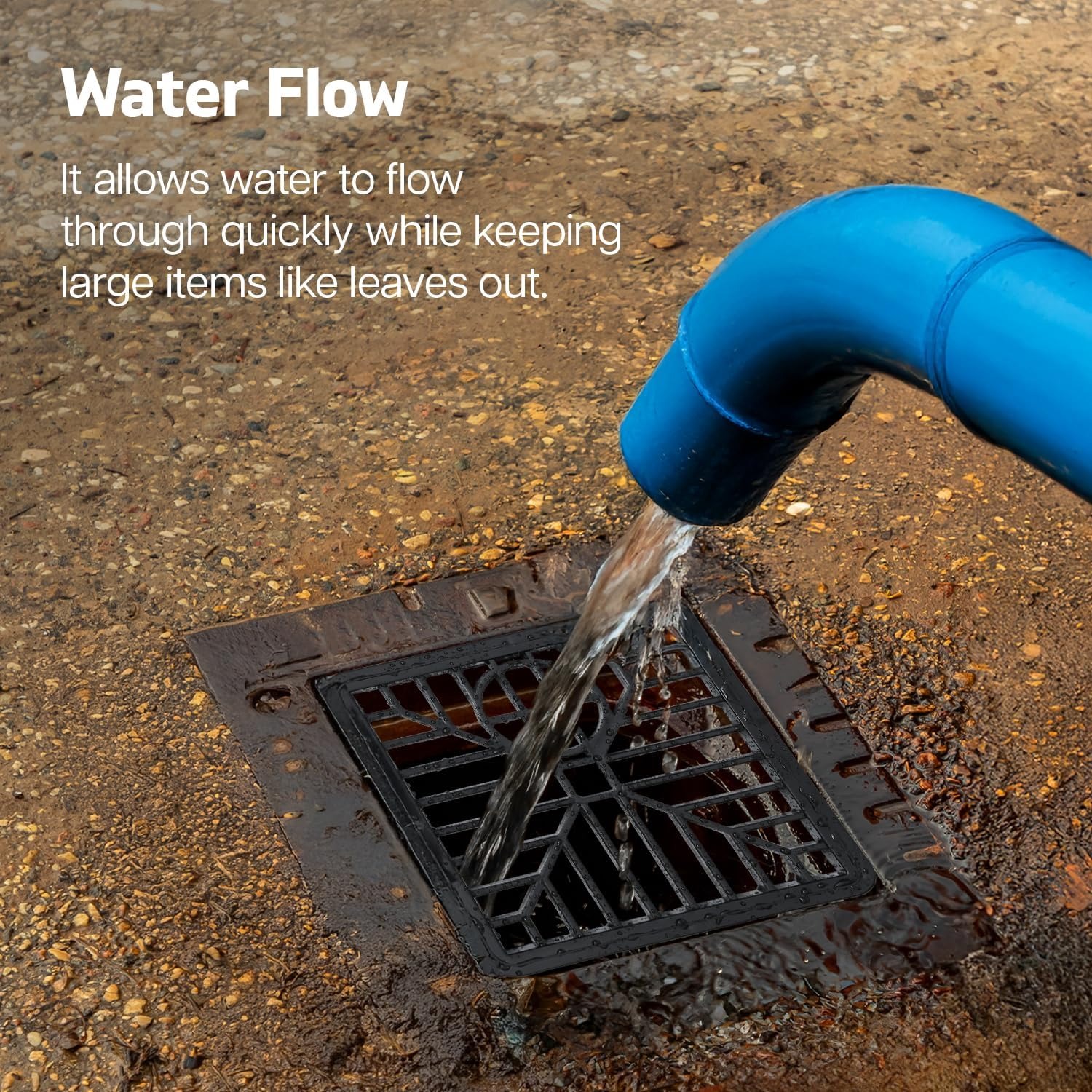
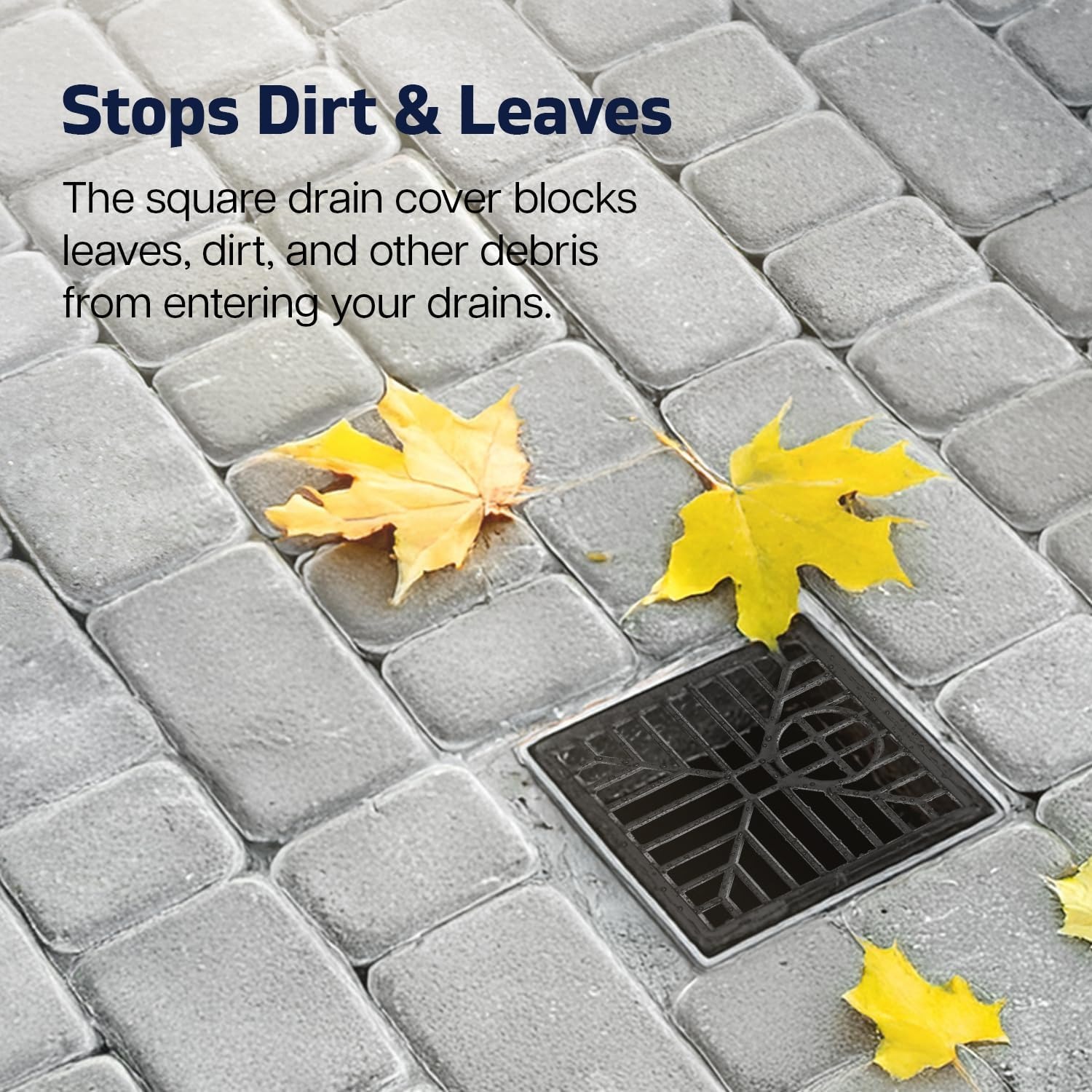
That is the whole idea behind a leaf guard. It is a simple grid that sits over the drain. Water goes through. Leaves do not.
How an outside drain blocks
The square drain beside the house is called a gully. Rainwater from the downpipes often runs into it, and in many homes so does the waste water from the kitchen sink or the washing machine. Under the grid there is a trap, a bend that holds water to keep sewer smells from coming up.
That trap is where the trouble starts. Anything heavier than water sinks into it. Leaves go soggy and sink. Soil washed off the patio sinks. Moss from the roof comes down the downpipe and sinks. In a gully that also takes kitchen waste, fat coats all of it and binds it together.
For a while the water finds a way past. Then one wet week it does not, and the gully overflows.
The standard grid on a gully has fairly wide slots. It is there to carry weight and to stop large objects from falling in. It was never meant to filter leaves. A leaf guard laid on top does that part of the job.
What this cover is
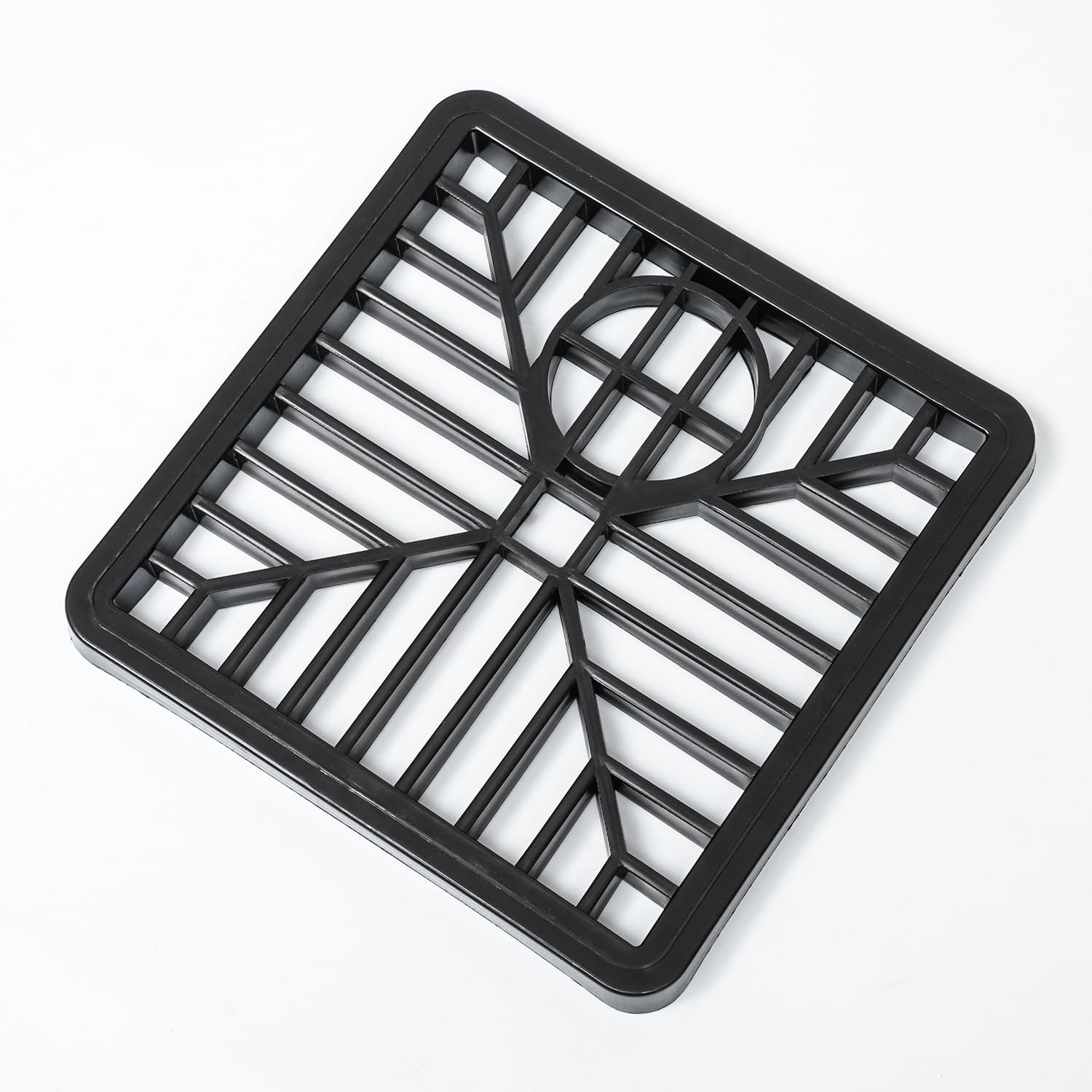
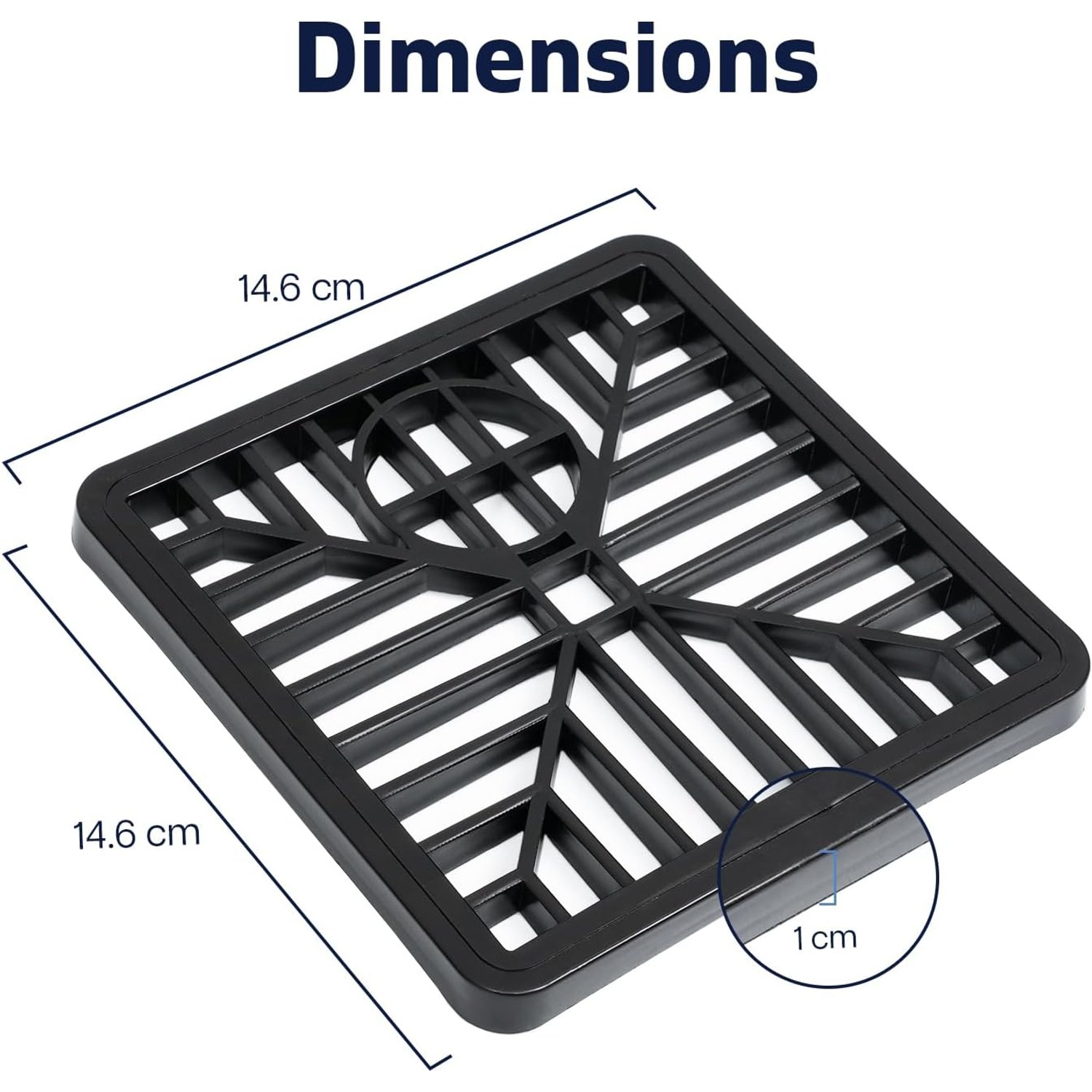
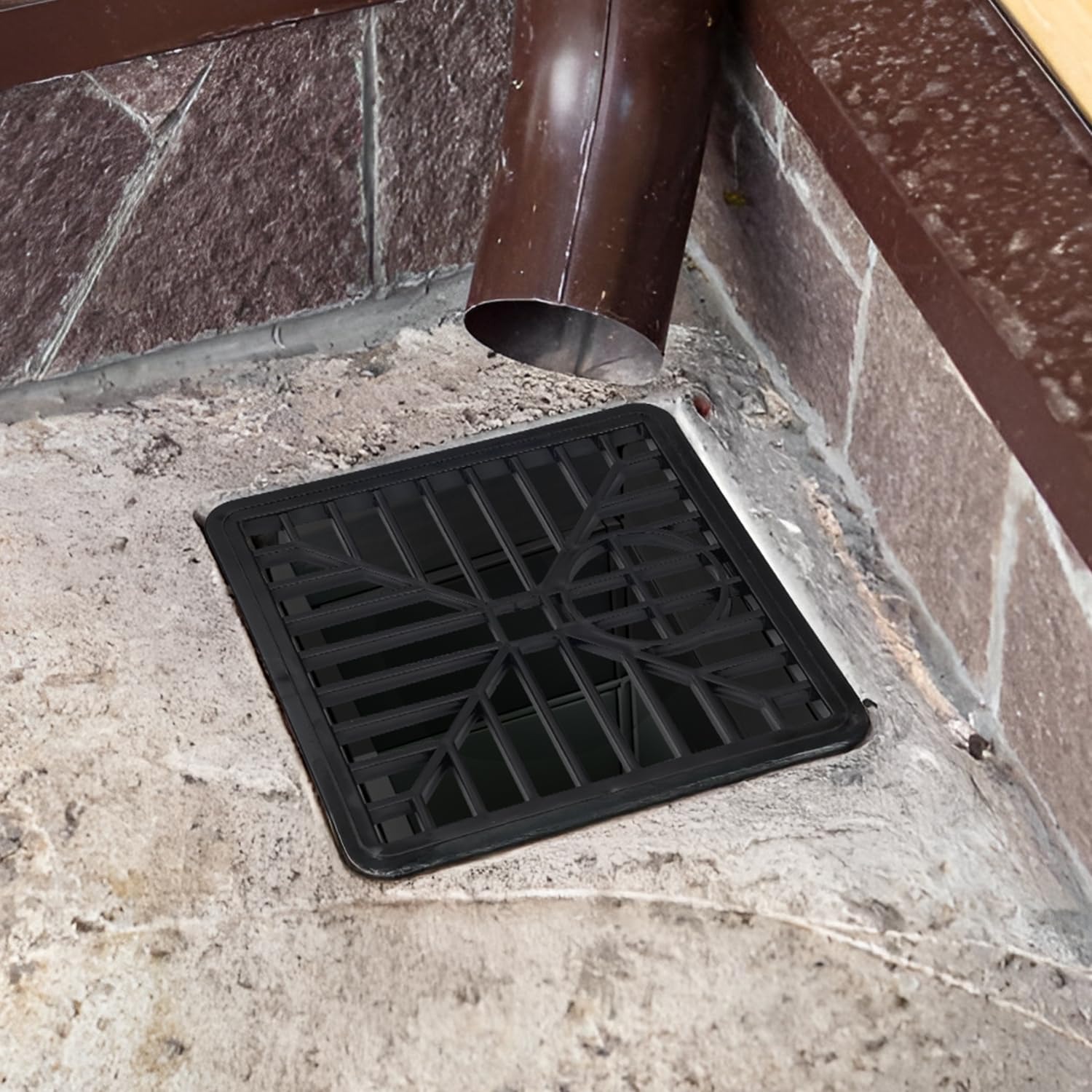
This is a square plastic drain cover. The maker gives the size as 5.75 inch square, which is about 146mm by 146mm. It is black, it has an open square grid, and it weighs 50 g. One cover comes in the pack.
The maker describes it as made to sit over a drain of that 146mm size, and separately lists a compatible size of 15 cm. The material is given as plastic with an unfinished surface. The type of plastic is not stated by the maker. Neither is the thickness.
The maker says there is nothing to install. You place it over the drain and it is ready. No tools, screws or clips are mentioned.
What it is not
This matters, so it gets its own section.
The maker names gardens, patios and driveways as places where the cover can be used. What the maker does not give is any rating for foot traffic or vehicle traffic. A cover that weighs 50 g and comes with no load figure should not be asked to carry a person, never mind a car.
So we treat it as a leaf guard. It goes on top of a sound gully grid, in a spot where nobody walks and no wheel runs. It is not a replacement for a cracked or missing grid. If your gully grid is broken, replace that first with a proper one.
It is also not a seal. It is an open grid, so it will not hold back smells, and the maker makes no claim about pests.
Measuring your drain
Gullies are not all the same size, so do not skip this step.
Clear the moss and dirt from around the grid so you can see its real edges. Measure across the grid in both directions, in millimetres. Then look at how the grid sits. Some sit down inside a raised lip or frame. Others sit flush with the paving.
If your grid is close to 146mm square, this cover is in the right range. If the grid sits inside a lip, check that a 146mm square will drop inside that lip. A cover that sits within a frame is held on all four sides and is much less likely to move. A cover that sits on top of flat paving can be nudged by a brush, a hose or the wind.
Look up as well as down. If a downpipe or a waste pipe ends just above the gully, check the gap between the end of the pipe and the grid. The maker does not mention any cut-out for a pipe, so the cover is a plain square that has to slide in underneath.
If your drain is round, or a good deal bigger than 15 cm, this is not the right guard for it.
Fitting it
There is very little to do.
Lift out any leaves already sitting on the gully. If the gully itself is full of sludge, clear that first, wearing gloves. A leaf guard keeps new debris out. It does nothing about what is already down there.
Brush the grid and the surround clean so the cover can sit flat. Place the cover over the drain. Pour a bucket of water over it to see that the water runs through freely and the cover stays where you put it.
That is the job done. Do not drill the gully surround to screw the cover down. The maker does not describe any fixing, and drilling can crack the surround.
Fitting a loose guard like this is something any householder can do. Changing the gully itself, or any pipework connected to it, is different. That is work for a qualified plumber, and the Irish Building Regulations apply to drainage work.
Looking after it through the year
A leaf guard does not remove the work. It moves the work to the surface, where it is quick and clean.
In autumn, check the cover about once a week if there are trees or hedges near the house. Lift it off, shake or brush the leaves into the garden waste, rinse it and set it back. If you leave a thick mat of wet leaves sitting on it, water will pool on top instead of draining, which defeats the purpose.
Through the other seasons, a look after heavy rain or a windy night is usually enough. Because the cover is light and has no stated fixing, wind can move it. Put it back and carry on.
Each time you clean it, look at the plastic. The maker says it is suited to outdoor conditions but gives no figure for sunlight or frost. All plastic left outdoors ages. If the cover has gone brittle or has cracked, replace it.
Fine material will still get through. Grit and silt are smaller than the holes in any grid. Once or twice a year, lift the main gully grid too and scoop out whatever has settled in the trap.
If the drain is already causing trouble
A cover is prevention. It is not a cure.
If the gully is overflowing now, deal with that first. Scoop out the trap by hand with a long glove. If that does not clear it, the blockage is further along the pipe, and it needs drain rods or a drainage contractor.
We do not recommend chemical drain cleaners. They do little against a plug of leaves and silt, and they make the water in the gully unpleasant and unsafe to put a hand into.
If more than one drain around the house is backing up, the problem may be in the main drain. A blockage in a public sewer is a matter for Uisce Éireann or your local authority.
Choosing a leaf guard
If you are comparing covers, a few things are worth checking.
Shape and size come first. Square for a square gully, and close to the size of your grid. For anyone hunting for the best square gully cover, the right answer is the one that matches the tape measure.
Next is how it stays in place. Some guards clip or screw on. This one is simply placed, which makes it quick to lift and clean.
Then think about where it will sit. Out of the way beside a wall is ideal for a light guard like this. In the middle of a path or a drive is not.
The short version
Outside drains block because leaves and debris wash in and settle in the trap. A leaf guard keeps them on the surface.
This one is a black plastic grid, 146mm square by the maker's figures, weighing 50 g and supplied singly. You place it over the drain with no tools. The type of plastic and the thickness are not stated by the maker.
The maker gives no foot or vehicle traffic rating, so use it as a leaf guard over a sound gully grid, away from feet and wheels. Measure your drain before ordering, clear the cover often in autumn, and replace it if the plastic starts to crack.