
The complete guide
How To Choose A Drain Strainer That Actually Stops Hair
The problem nobody notices until it is too late
A blocked drain is one of those household problems that gives you plenty of warning and still manages to catch you out. The shower takes slightly longer to clear. Then there is a shallow puddle around your feet by the end of a wash. Then one morning the water simply sits there, grey and still, and you spend an hour with a wire hook and a bottle of drain cleaner pulling out something you would rather not look at.
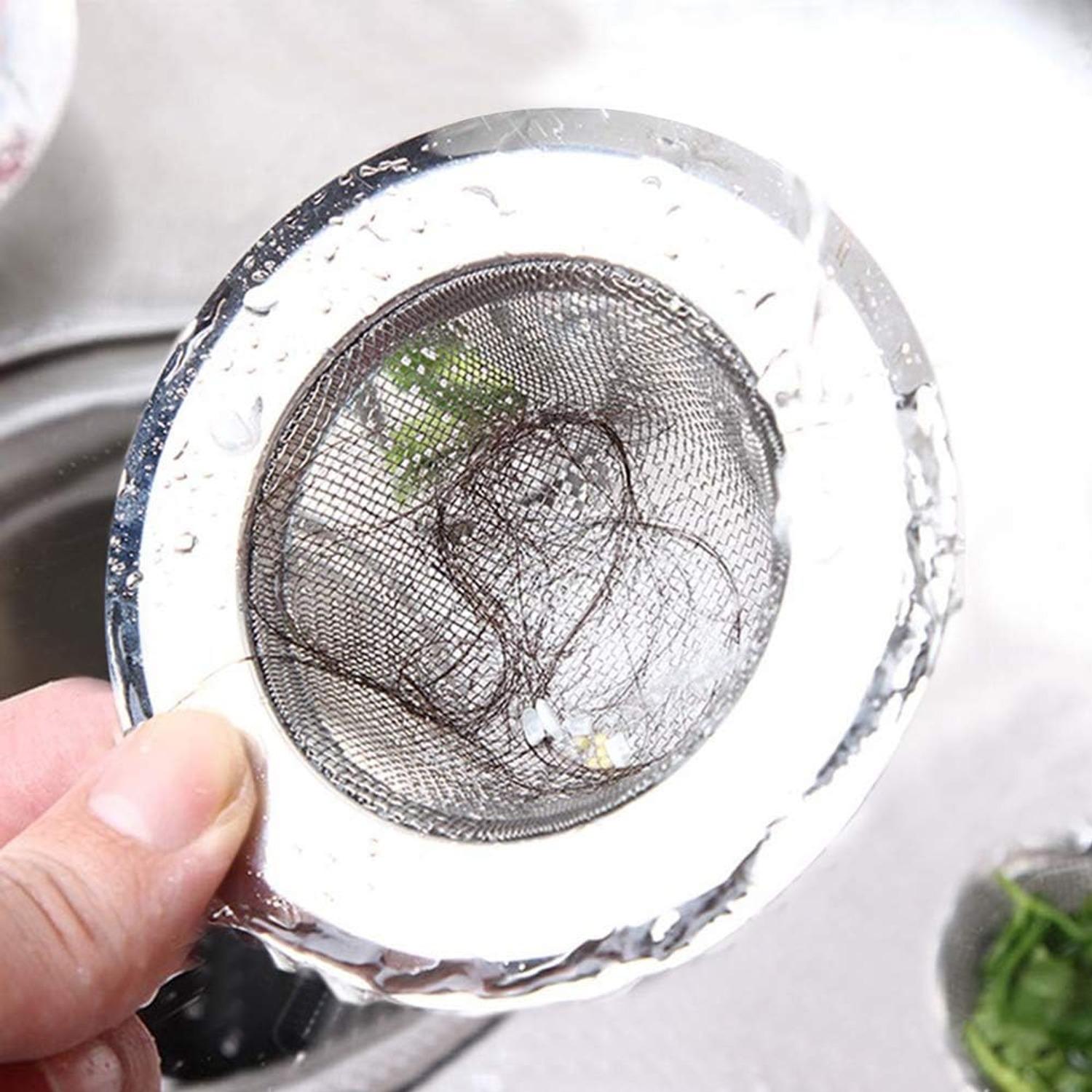
Almost all of it is hair. A single wash sheds dozens of strands, and each one catches on the rough edges inside the waste pipe. Soap, conditioner and skin cells stick to the hair, and the whole thing turns into a dense plug. The same thing happens at the kitchen sink with rice, coffee grounds, tea leaves and bits of food that slip past the washing-up.
The fix is not clever. It is a small metal sieve sitting over the hole so none of that gets in. That is all a drain strainer does, and done properly it saves you the drain cleaner, the plunger and, eventually, the call-out fee.
How a surface strainer works
There are two broad approaches to drain protection. One sits inside the drain, pushed down into the pipe. The other sits on top, over the opening. This one is the second kind.
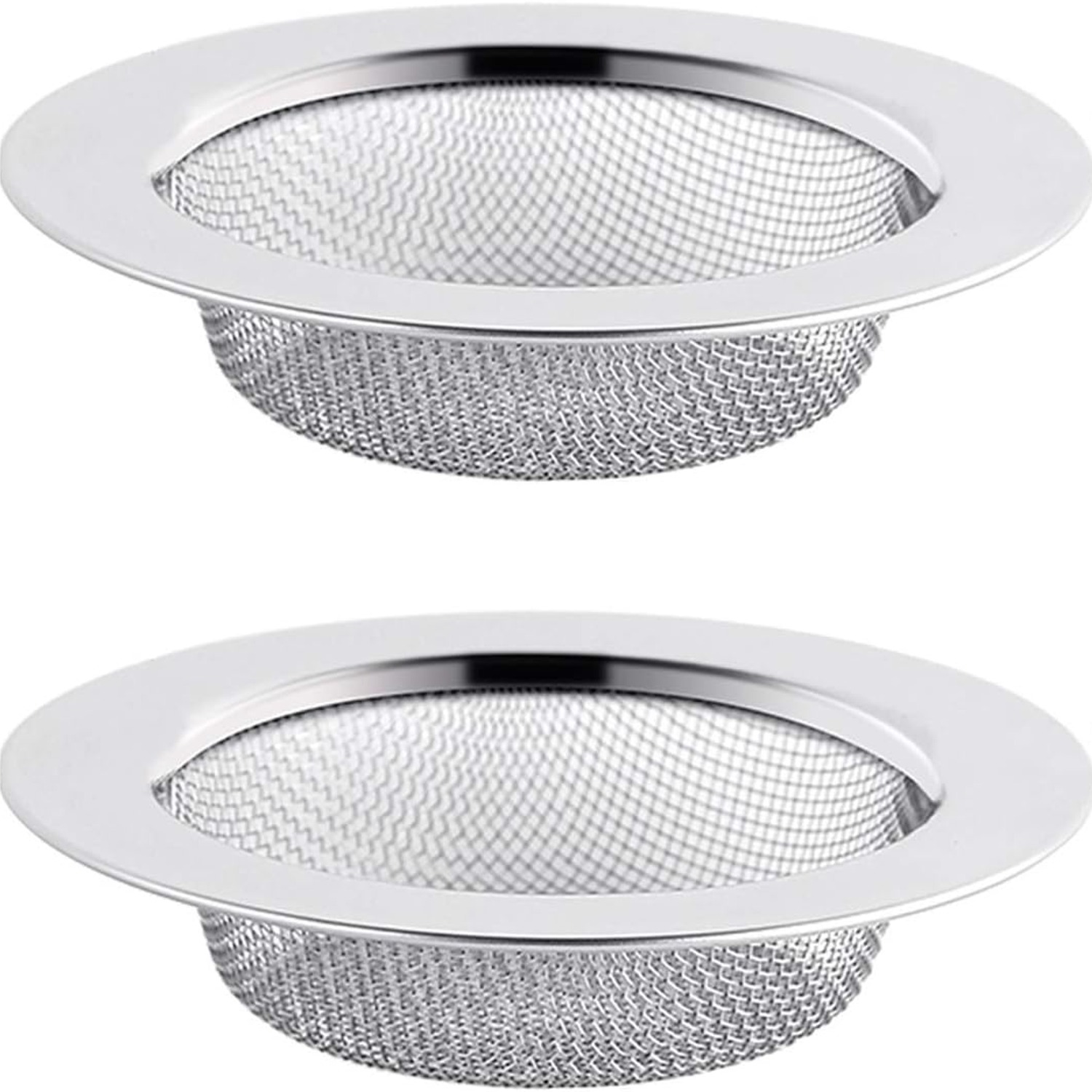
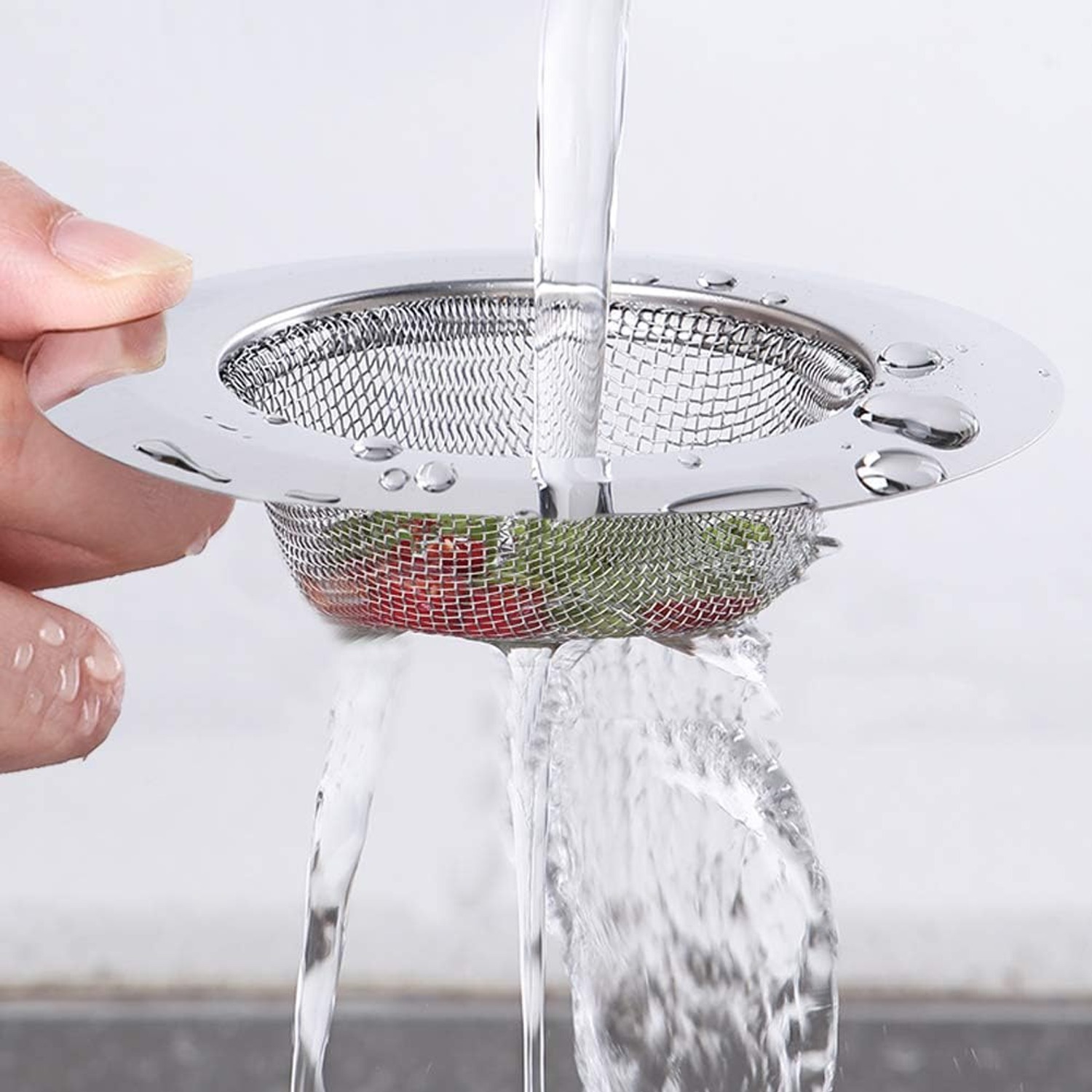
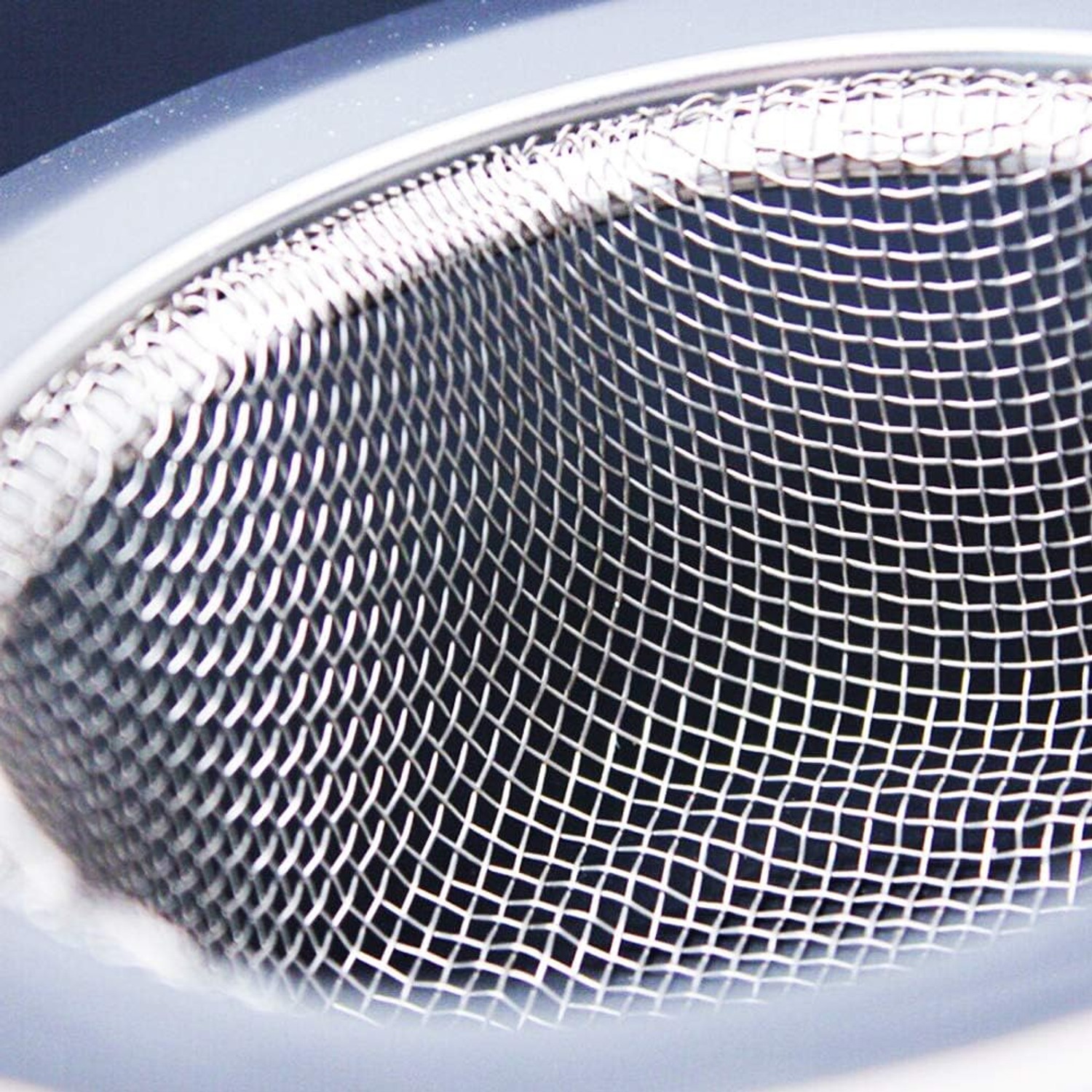
A surface strainer is a shallow perforated disc that rests on the lip around the plughole. Water flows through the holes, hair and debris stay on top, and you lift it out and empty it. Nothing has to be forced into place, nothing needs sealing, and if it does not suit your drain you just take it away again.
The hole size is where the design either works or fails. Too fine and the strainer behaves like a filter, clogging with soap scum and backing water up into the tray. Too coarse and hair threads straight through, which defeats the point. The holes on these strainers are sized to let the water out at close to normal speed while catching the hair and scraps that cause the trouble. You can see what is sitting on top, which doubles as a reminder to empty it.
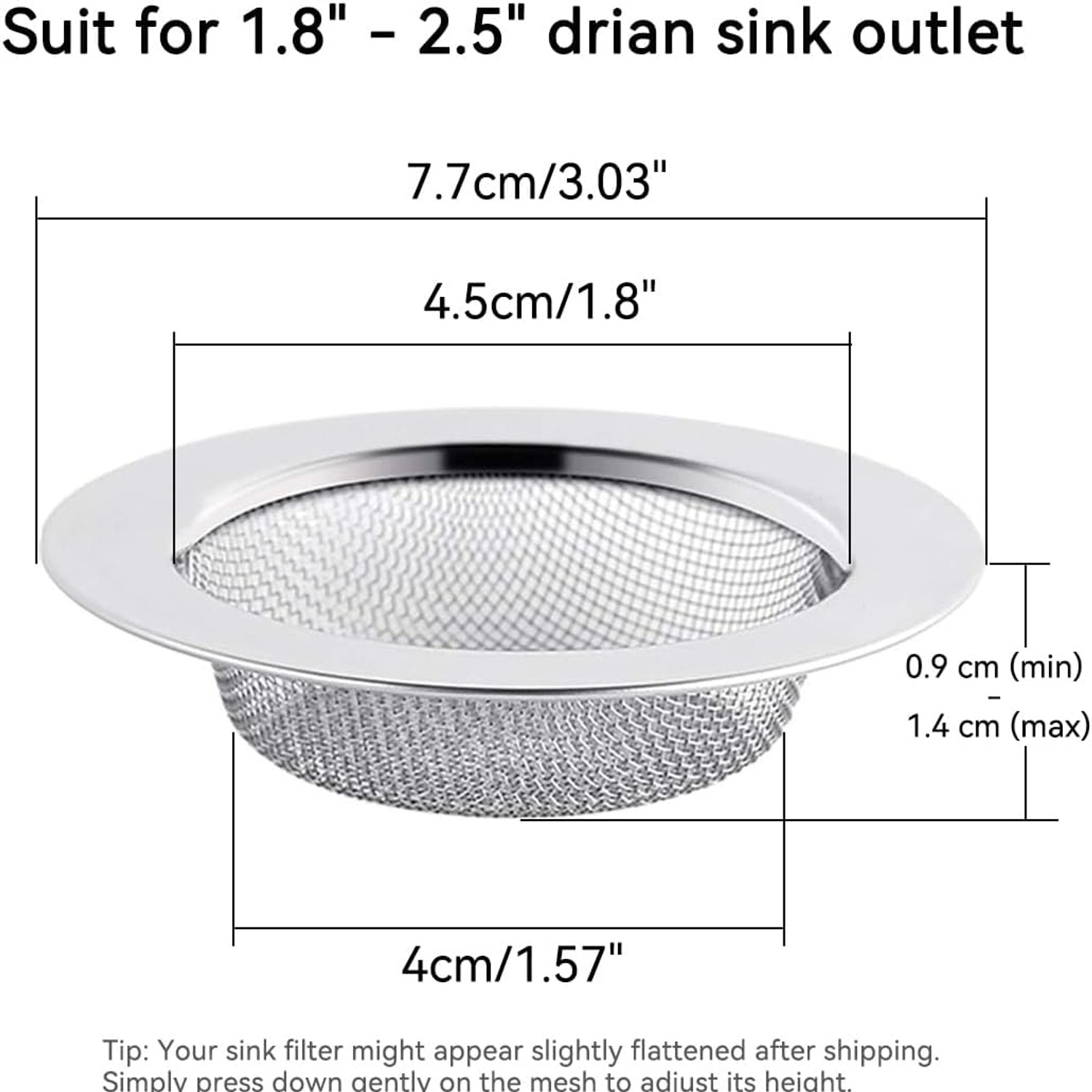
The shallow profile matters too. At roughly 1.4 cm high, these do not stand up like a cup in the middle of your shower floor. You will not kick one, and it will not interfere with bare feet.
Why stainless steel beats plastic here
Plastic strainers are everywhere because they are cheap to make. They also have a short life in a bathroom. Constant hot water makes the plastic brittle, shampoo and limescale stain it, and the thin edges warp until the strainer no longer sits flat. After a year it looks tired, and a warped strainer lets hair creep past the rim.
Stainless steel does not have those problems. It is listed here as rust resistant, which is the whole reason the material is used for sinks, taps and kitchen tools in the first place. Hot water does nothing to it. Shampoo does nothing to it. A scrub with a brush gets it back to clean rather than slowly wearing a coating off.
There is also the look. A silver stainless disc sits in a modern bathroom without announcing itself. It matches the chrome around your waste and tap, so it reads as part of the fitting rather than an awkward add-on. For something that lives permanently in the middle of your shower floor, that is worth more than it sounds.
Getting the size right
This is the one step people skip, and it is the only step that can go wrong.
Each strainer here measures approximately 7.7 cm across. The listed compatible groove diameter is about 1.8 inches, and because the strainer rests on top rather than pushing in, there is some tolerance on either side. What you are checking for is simple. Is your drain opening narrower than the strainer, and is there a flat rim around it for the strainer to sit on?
Take a tape measure or a ruler and measure straight across the opening of the drain, not the decorative plate around it. If the opening comes in under the width of the strainer, you are fine. If your drain is a long slot rather than a round hole, a round strainer is the wrong shape and you want a different product.
Most standard shower trays, bath plugholes and kitchen sinks in Irish homes fall comfortably in range. Older properties and unusual continental fittings are the ones worth measuring twice.
Who this suits
Anyone with long hair in the house is the obvious case. One person with long hair sheds enough in a week to start a blockage, and a surface strainer catches nearly all of it.
Households with pets that get washed in the bath or shower are the next group. Pet hair is shorter and denser than human hair, and it mats into the pipe fast.
Renters get good value from something that needs no tools and leaves no trace. You drop it in, and on moving day you lift it out and take it with you. There is nothing to repair and no deposit at risk.
Kitchens are the underrated use. Scraps that look harmless going down the sink build up with grease into something stubborn. A strainer over the kitchen drain catches rice, peelings, coffee grounds and tea leaves before they get the chance. Having two in the pack is why a lot of people put one in each room.
The people this does not suit are those with slotted or oversized floor drains, and anyone who wants a strainer that locks permanently in place. A surface strainer is removable by design, which is its advantage and its limit.
Living with it day to day
The routine is about as short as a cleaning routine gets. After a shower, lift the strainer, tip the hair into the bin, and put it back. Ten seconds. The reason it is worth doing promptly is that wet hair peels off a steel surface easily, whereas hair left to dry on sticks and needs picking at.
Once a week or so, give it a proper rinse with warm soapy water and a soft brush to clear any soap film from the smaller holes. If you would rather not think about it, both strainers are dishwasher safe and can go on the top rack with the normal load.
Avoid steel wool and aggressive scouring pads. They will not destroy the strainer, but they leave fine scratches that dull the finish and give soap scum something to grip. A nylon brush does the job better and faster.
One habit worth building, if you have a bath or a sink you fill regularly: take the strainer out before you put the plug in, and put it back once the water has gone. It stops you wondering why the plug will not seat properly.
Two is more useful than one
A lot of people buy a single strainer, put it in the shower, and then spend the next month wishing they had one for the kitchen. The two pack removes that decision.
The other way people use the second one is as a rotation. One strainer is in the drain and the other is going through the dishwasher or drying on the side. It means the drain is never left unprotected during the gap, which is usually when something slips through.
The short version
Hair causes most household drain blockages, and the cheapest place to stop it is at the surface. These are two stainless steel sieves, roughly 7.7 cm wide and 1.4 cm deep, that sit over a drain opening of about 1.8 inches and catch hair and food scraps while water runs through.
There is nothing to fit, nothing to glue, and nothing to unscrew when you move. The steel is rust resistant, so it handles daily soaking better than plastic, and it is dishwasher safe when you want a deeper clean.
Measure your drain opening first. If it fits, this is a small purchase that quietly prevents a much larger one.