
The complete guide
How To Choose And Use A Hand Crank Drain Snake
The problem nobody deals with until it is too late
A blocked drain is one of those household jobs that gets postponed. The water takes a bit longer to go down. Then it pools for a few seconds. Then one morning you are standing in a shower tray filling up around your ankles, and the job has become urgent on the worst possible day.
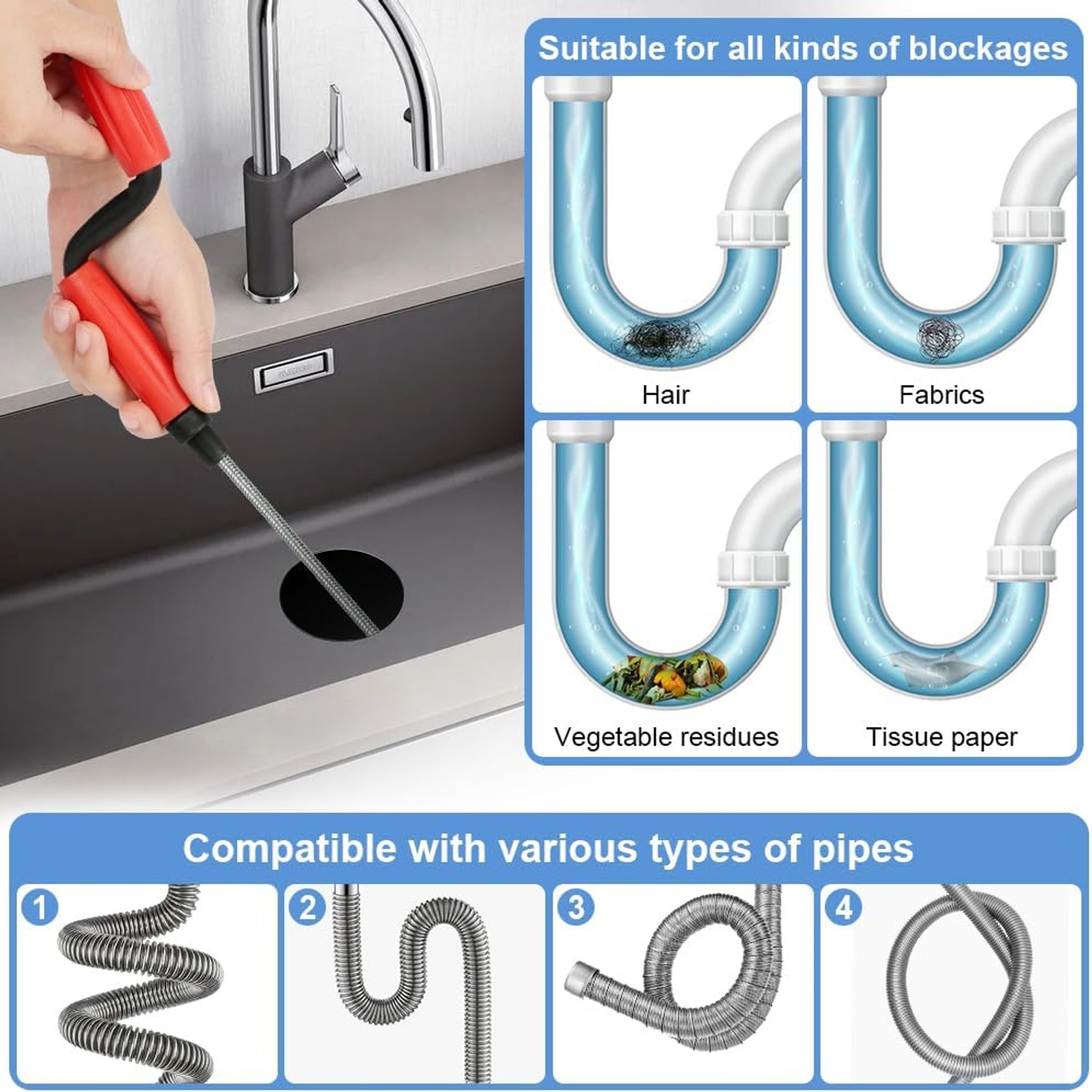
What has happened under the floor is not mysterious. Hair goes down the plughole every time someone showers. Soap and shampoo leave a waxy film on the inside of the pipe. In a kitchen, warm fat goes down as a liquid and sets as a solid a metre later. Each of those on its own is harmless. Together they build a plug that catches everything that follows.
The reason most quick fixes fail is simple. They do not reach. A plunger pushes pressure at the blockage but cannot grip it. Chemical cleaner needs to sit against the clog to work, and water finds its way past a hair plug rather than through it, so the liquid drains off and does almost nothing. Boiling water helps with grease and does nothing for hair.
A drain snake works because it physically travels to the clog and brings it back.
How a spring drain snake works
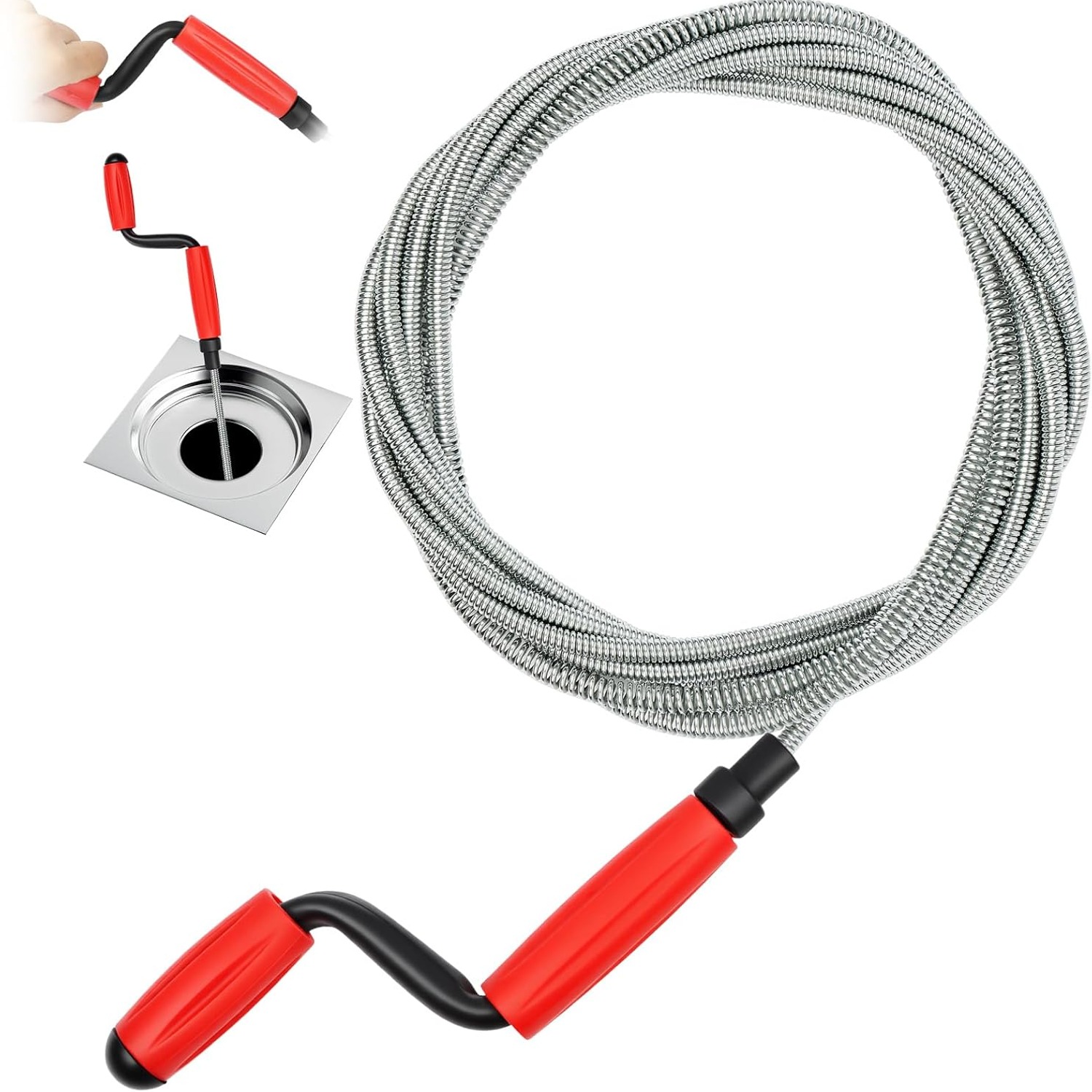
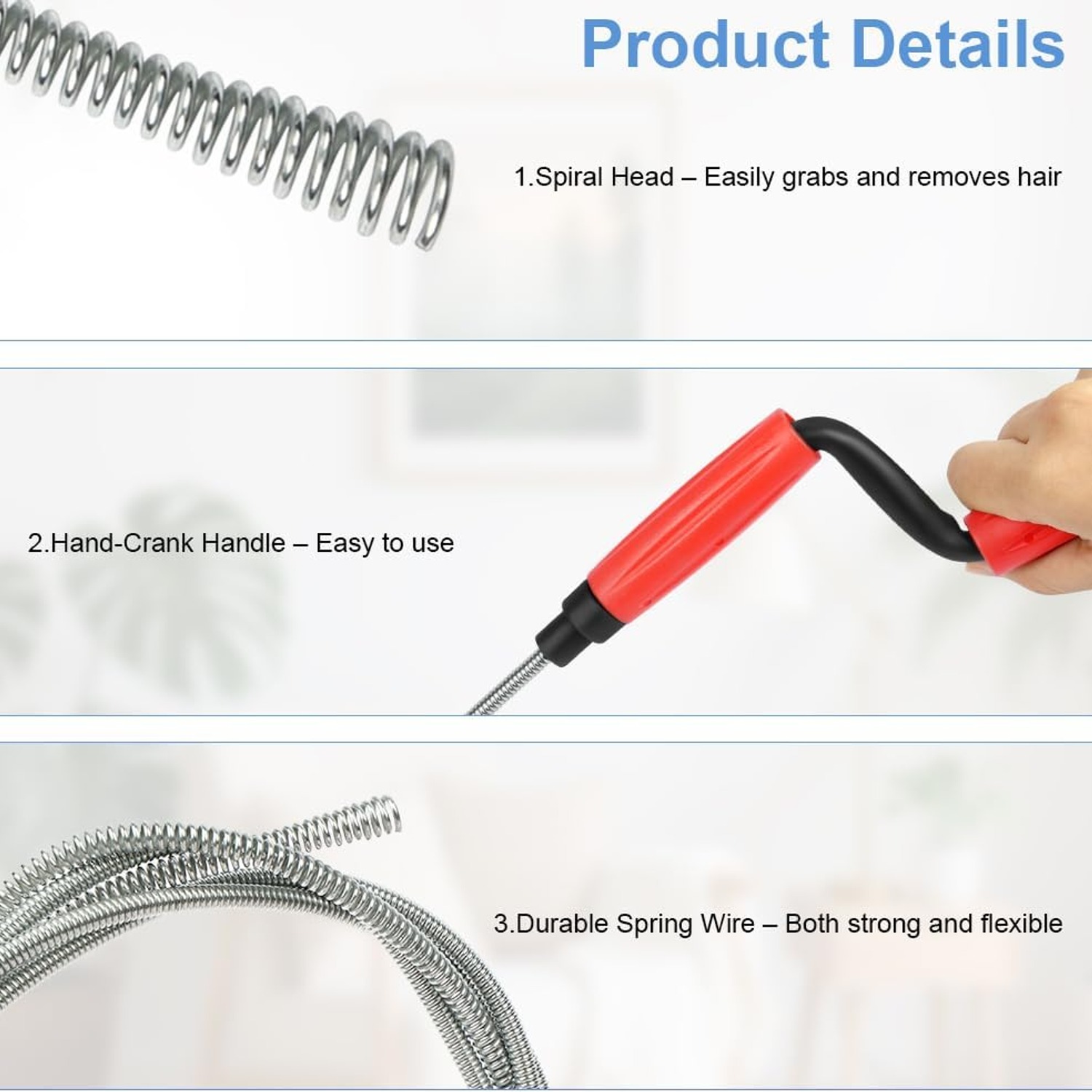
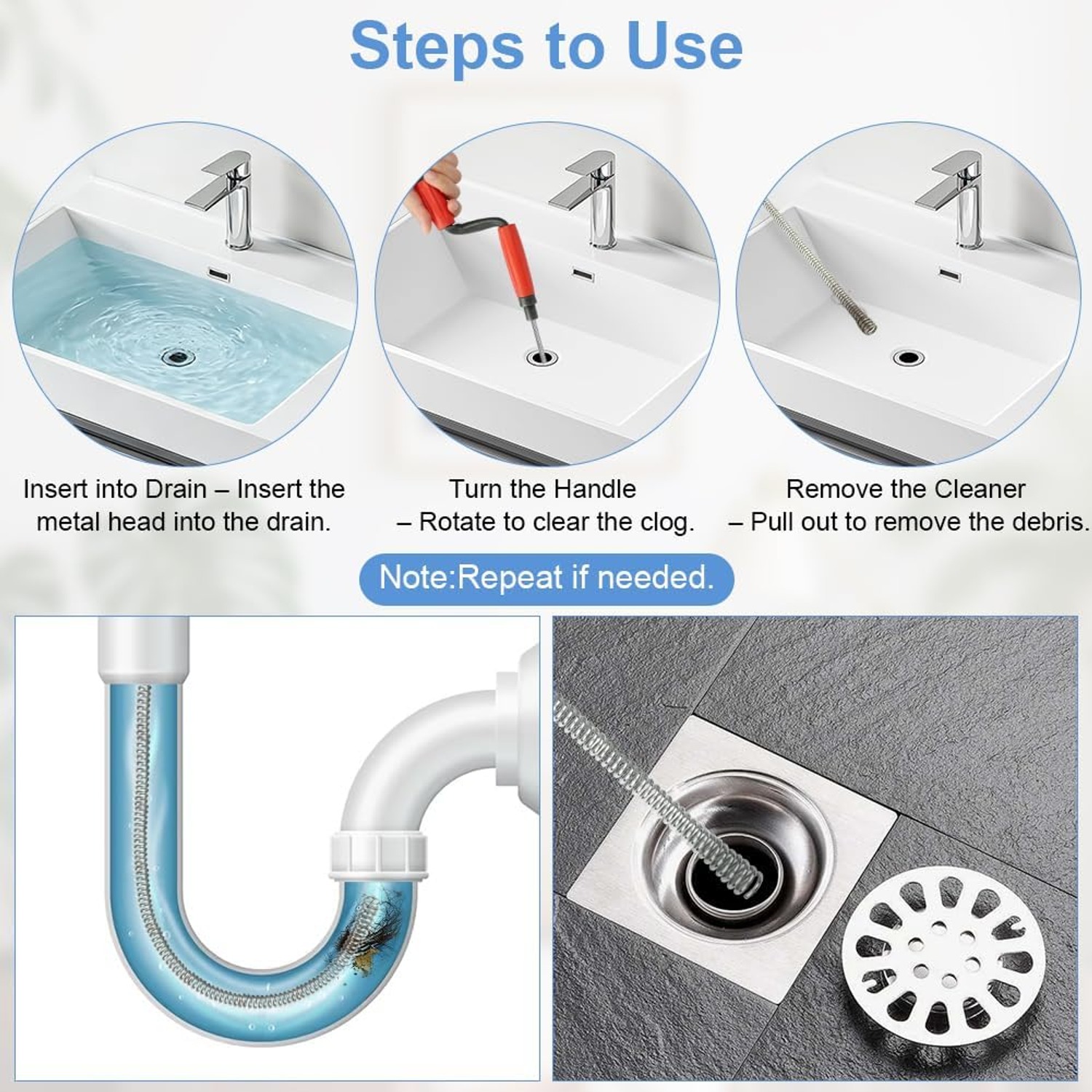
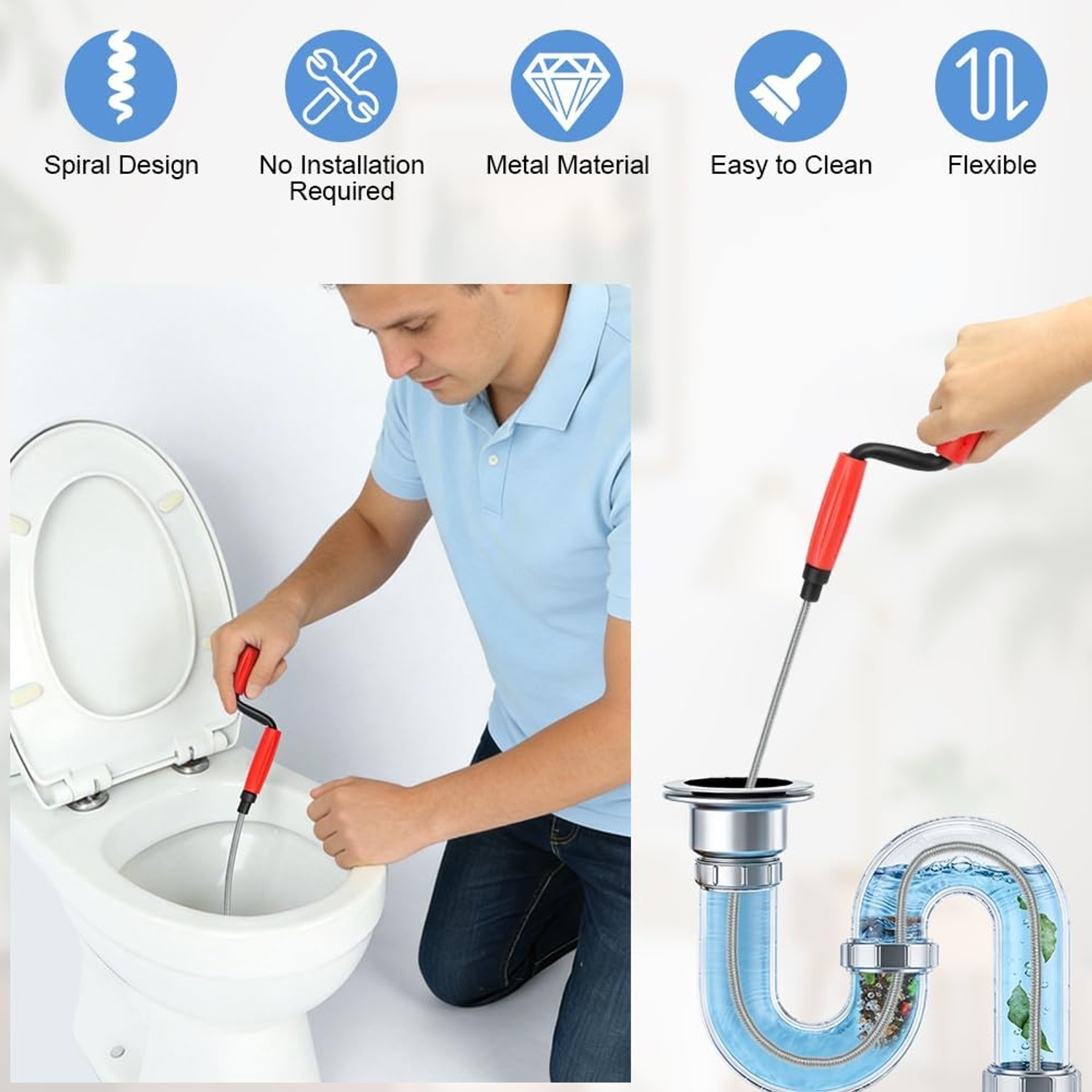
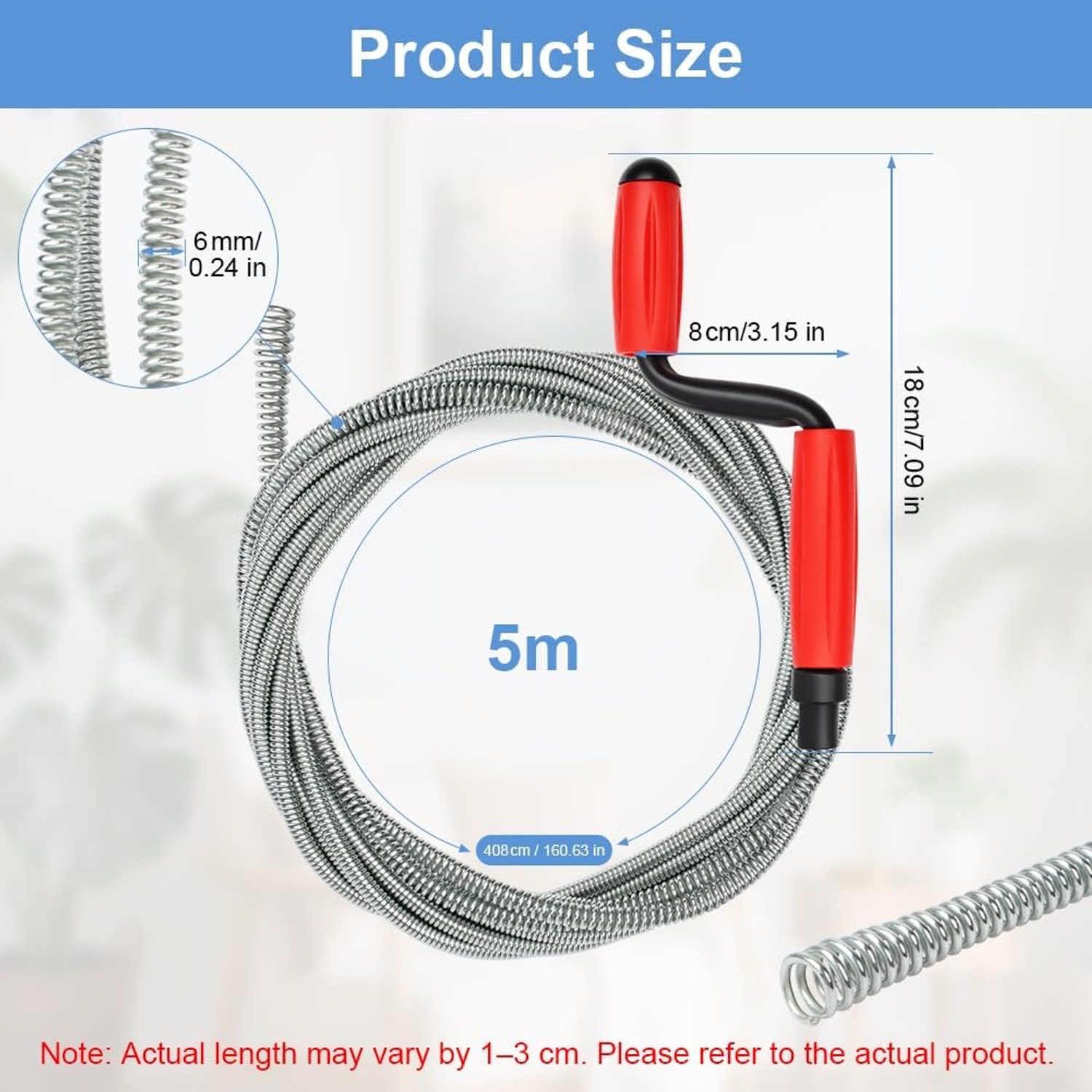
The tool is a long coil of flexible steel wire wound inside a plastic drum with a crank handle on the side. This one has 5 metres of 6mm wire. You pull out the end, feed it into the drain opening, and start turning the handle.
The flexibility matters more than anything else. Directly below your sink is a trap, a U-shaped section of pipe that holds water to keep smells out of the room. A rigid rod stops dead at that curve. A spring coil bends into it and keeps going, which is why this design has stayed popular for decades.
As you crank, the coil rotates inside the pipe. When the tip reaches the blockage you feel the handle stiffen. That feedback is useful. Keep turning in the same direction and the coil screws itself into the hair and sludge, the same way a corkscrew bites into a cork. Then you draw the wire back out, slowly, and the clump comes with it.
Sometimes the blockage breaks apart instead of coming out whole. That is fine too. Run hot water afterwards and the fragments flush away.
Who this suits
Renters get a lot of value from one, because it fixes the problem without touching any pipework and without a call-out charge. Homeowners with long hair in the house will use it a few times a year. Anyone managing a holiday let or student house usually keeps one in the cupboard permanently.
It also suits people who would rather not keep caustic liquid in the home. Drain chemicals are genuinely harmful if they splash, and storing them under a sink alongside the washing-up liquid is a risk if there are small children around. A steel coil in a plastic drum has none of that worry attached.
The one group it does not suit is anyone facing a serious structural drainage fault. If multiple fixtures back up at once, if there is a smell coming from outside, or if water comes up in one place when you drain another, the issue is in the main line and no household tool will solve it. That is a plumber's job with a camera.
Choosing the right length and thickness
Drain snakes come in a few sizes, and the two numbers that matter are length and wire diameter.
Length determines how far past the trap you can reach. Three metres covers the trap and a short branch pipe, which is enough for a basin in many flats. Five metres gives you the trap plus a decent run of horizontal pipe, which is where hair tends to settle once it has been pushed past the bend. For general household use, five is the more forgiving choice, and you never lose anything by having wire you do not use.
Diameter determines flexibility and strength. A 6mm coil threads easily through narrow bathroom waste pipes and tight siphon sections. Thicker wires carry more force but struggle in small-bore pipework and can be awkward in a basin. For sinks, showers and baths, 6mm is the sensible middle ground, which is what makes this a reasonable candidate if you are after the best 5m drain auger for everyday use.
What you should not do is try to use a thin household coil on a toilet or an outdoor gully. Toilets need a closet auger with a sleeve to protect the ceramic. Outside drains need proper rods. Buying one tool and expecting it to cover all three usually ends with a bent wire.
Using it without making a mess
Preparation makes the difference between a five minute job and an hour of cleaning up.
Put on gloves. Lay an old towel around the basin and have a plastic bag or lined bucket ready for what comes out. Clear everything off the surround, because you will be pulling out a wet metal wire and swinging it about more than you expect.
Feed the wire in gently. If it stops at the bend, pull back a little, twist the handle slightly to change the angle of the tip, and push again. Never force it straight into a curve. A kinked spring never quite travels the same way again.
When you hit the blockage, resist the urge to shove. Keep turning and let the coil do the work. Once you feel it has bitten, withdraw steadily rather than yanking. Pulling too fast can shake the debris loose halfway back up the pipe, and you will have to go and fetch it again.
Finish by running hot water for a minute or two to flush the loosened bits through. If the drain still runs slowly, go in a second time. Second passes often bring out more than the first.
Looking after it
The whole tool is steel and plastic, so care is short and obvious. Rinse the coil under the tap, wipe off what you can, and let it dry before you wind it back into the housing. Storing a wet spring inside a closed drum is the quickest way to find surface rust next time you open it.
Keep it indoors. A kitchen cupboard, a utility drawer or a toolbox is fine. A damp garden shed is not. The packed size is 19.8 x 16.8 x 3.1 cm and it weighs 530 g, so finding a home for it is easy.
If the coil picks up a kink, straighten it gently by hand rather than bending it back hard. Steel does not forgive repeated sharp bends in the same spot.
A bit of prevention goes a long way
Once you have cleared a drain, keeping it clear is mostly about what you stop sending down it. A cheap mesh strainer over a shower drain catches most hair before it ever enters the pipe. Wiping greasy pans with kitchen roll before washing keeps fat out of the kitchen waste. A weekly flush of very hot water through the kitchen sink keeps the walls of the pipe cleaner than they would otherwise be.
If you have long hair in the house, running the snake through the shower drain once every couple of months takes about three minutes and prevents the slow-draining stage entirely. That is a far easier habit than dealing with a full blockage, and it is the main argument for owning a drain clearing tool rather than borrowing one in an emergency.
The short version
Slow drains are almost always hair, soap and grease built up past the plughole where plungers and liquids cannot reach. A 5 metre spring coil with a 6mm wire reaches that spot, follows the bend of the trap, grips the clog and brings it back out.
It needs no power, no chemicals and no plumbing knowledge. It packs down small enough to live under the sink. And the first time it saves you a call-out fee, it has paid for itself several times over.
If the blockage is in a single fixture, this is the tool. If several fixtures back up together, call a plumber.