
The complete guide
How To Clear A Slow Plughole With Brushes And Hooks
What is really down there
When a basin or shower starts to drain slowly, it is tempting to picture something dramatic deep in the pipes. It is rarely that. In most homes the cause sits within arm's reach of the plughole.
In the bathroom it is hair. Strands catch on the crossbars of the waste, wrap around each other and collect soap, toothpaste and conditioner. Over a few months that becomes a grey, greasy rope hanging down into the trap.
In the kitchen it is fat and food. Warm fat goes down as a liquid, cools on the pipe wall and sets. Rice, coffee grounds and tea leaves stick to it. The pipe does not block all at once. It narrows.
Both of these are soft and both are close to the top. So the answer is simple. Get something thin and rough in there, scrub the walls, and pull the lump out.
What you get in the set
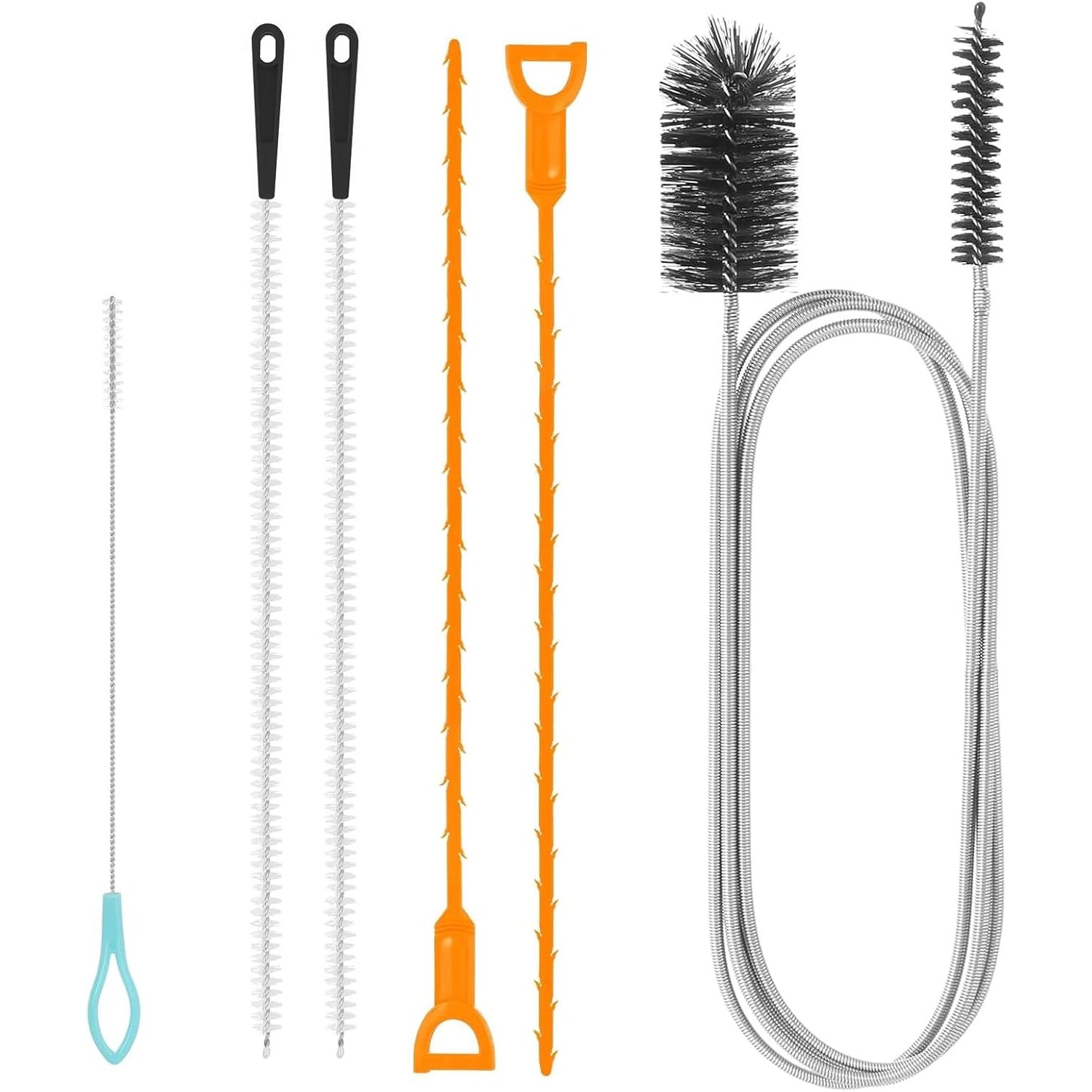
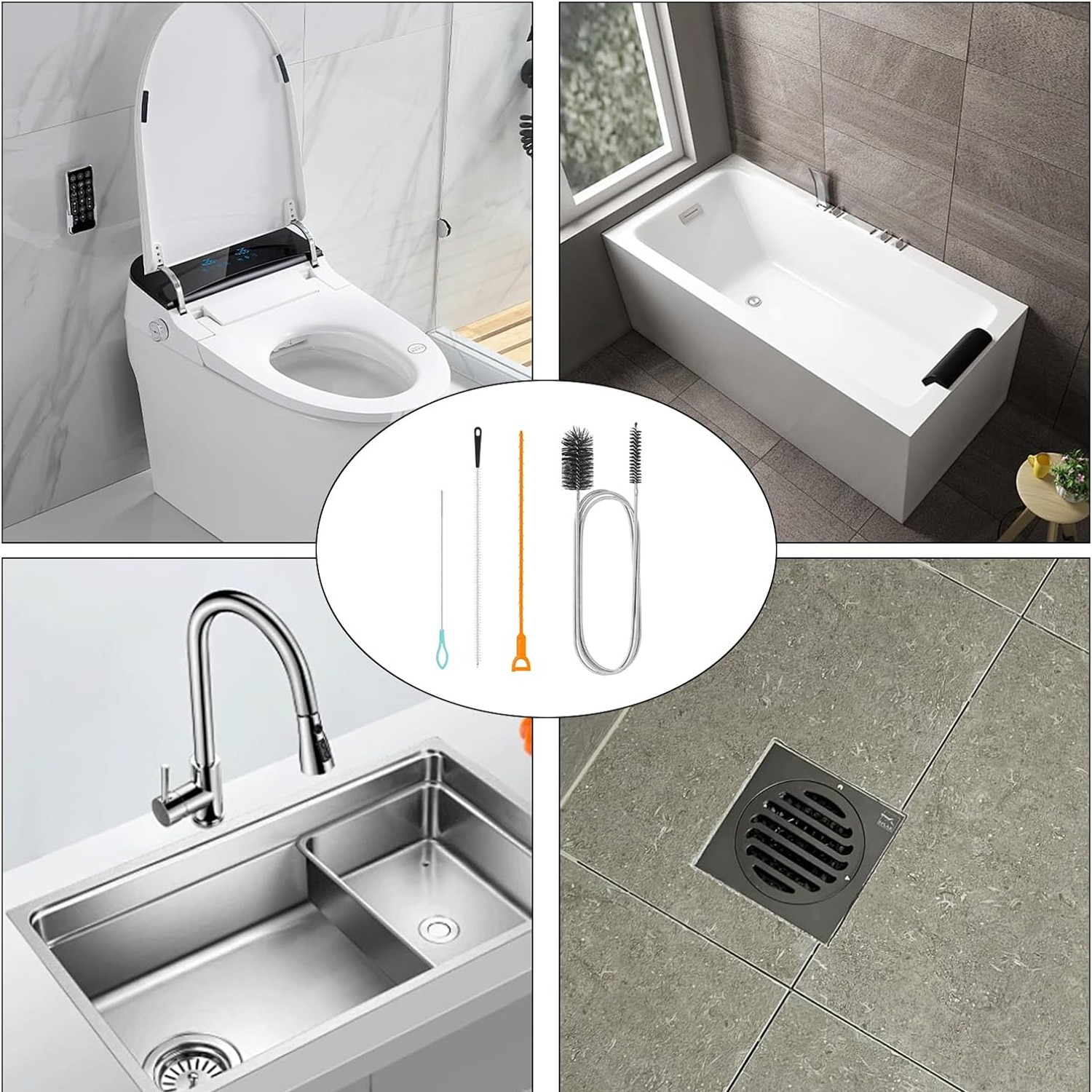
There are six pieces, and each has its own job.
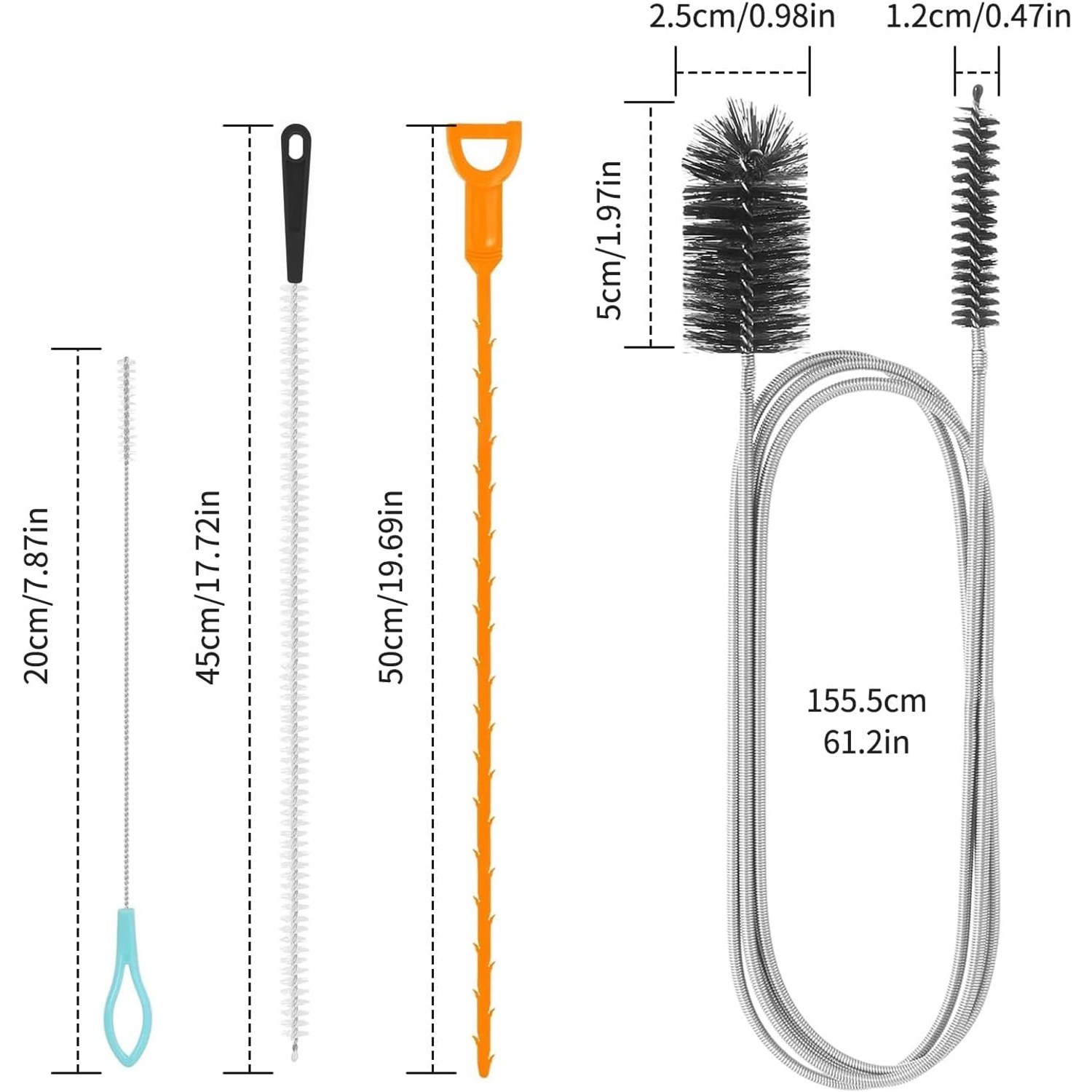
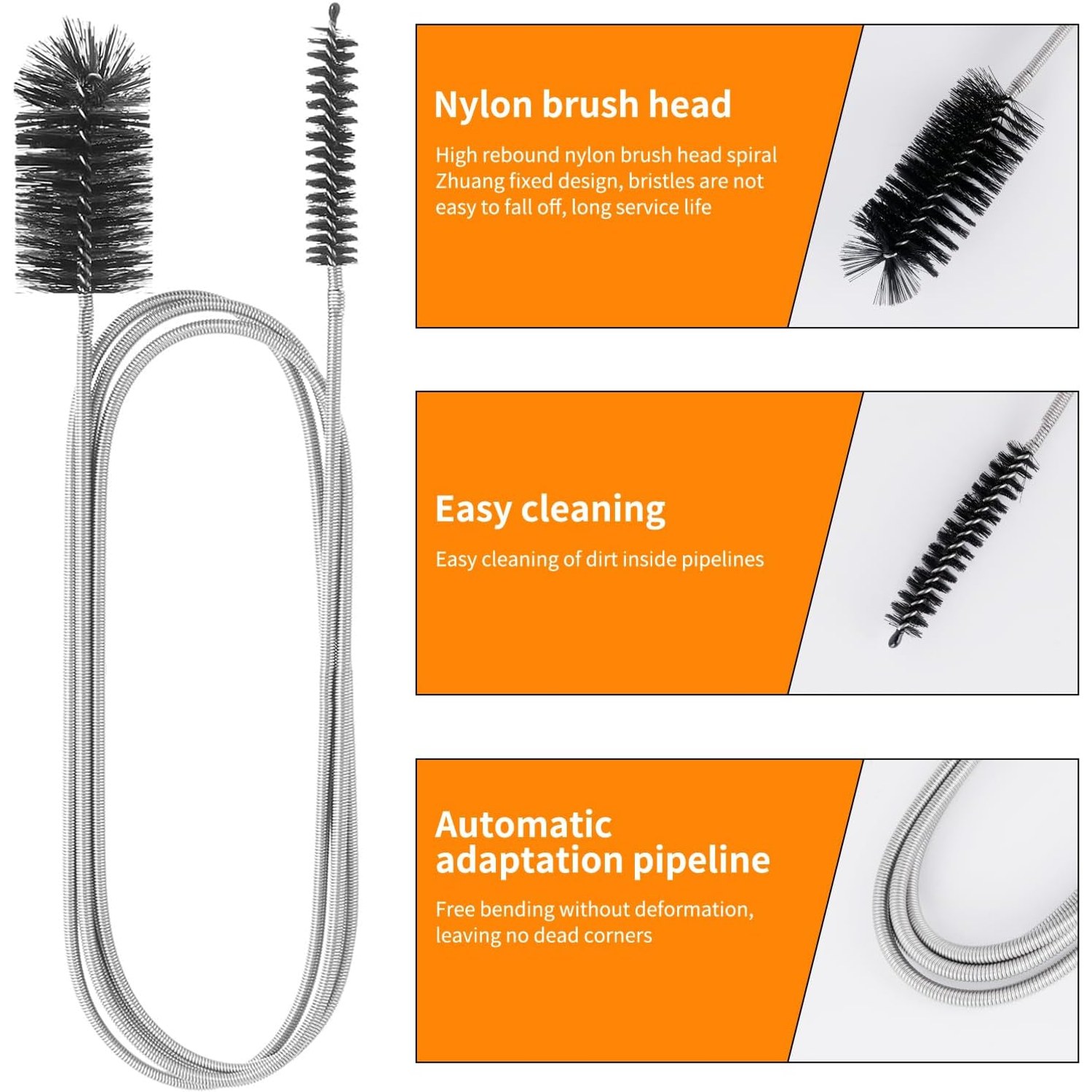
The longest is a double-sided nylon brush of 155cm. That is over a metre and a half, which is enough to pass through the trap under a sink and travel some way along the pipe behind it. It bends, so it can follow a curve.
Next are two sink brushes of 53cm each. These are the everyday tools. They reach down the plughole and into the trap of a basin or kitchen sink, which is where most of the residue sits.
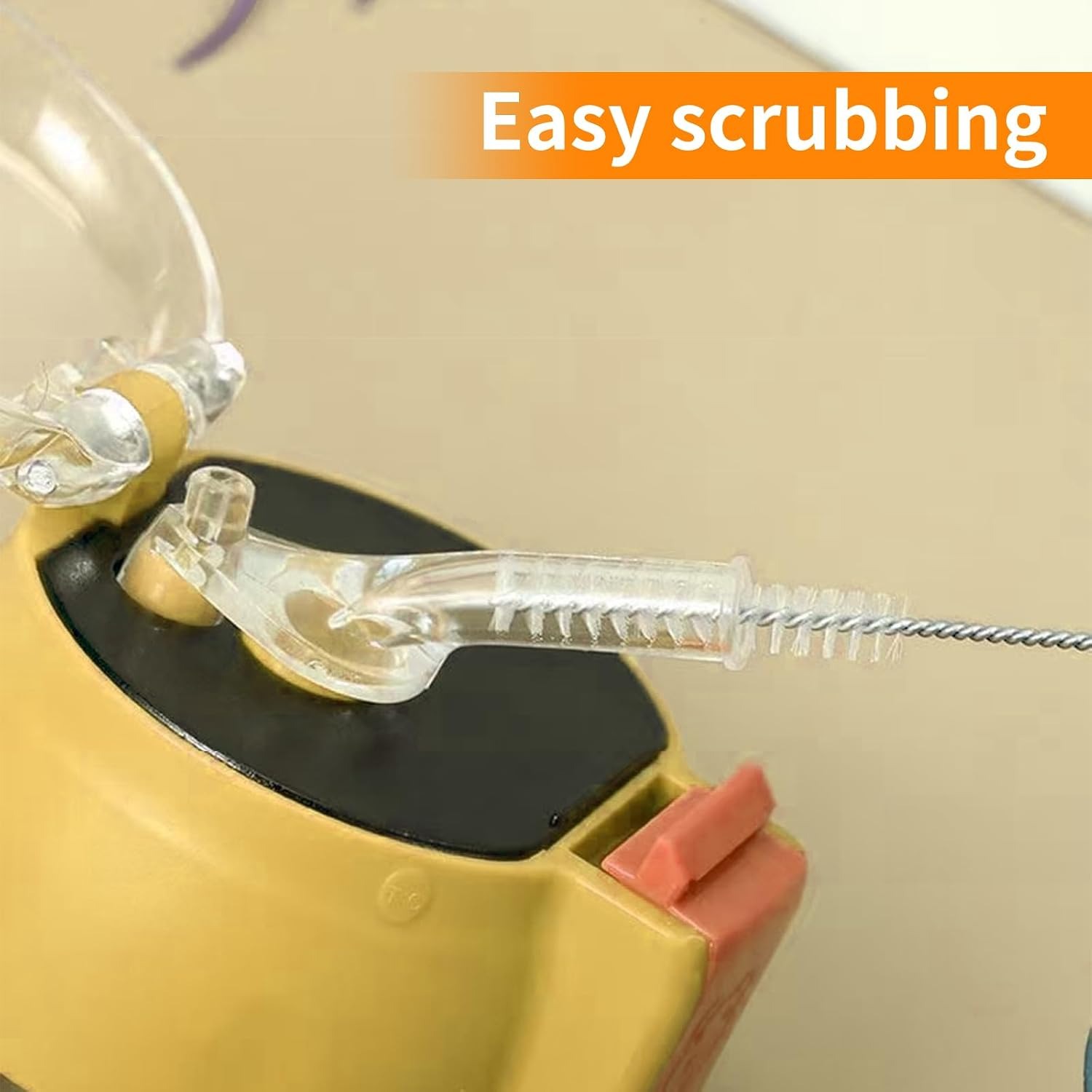
There is one short brush of 23cm. This is for the top few centimetres, the waste fitting itself, and small openings such as a basin overflow where the hole is wide enough.
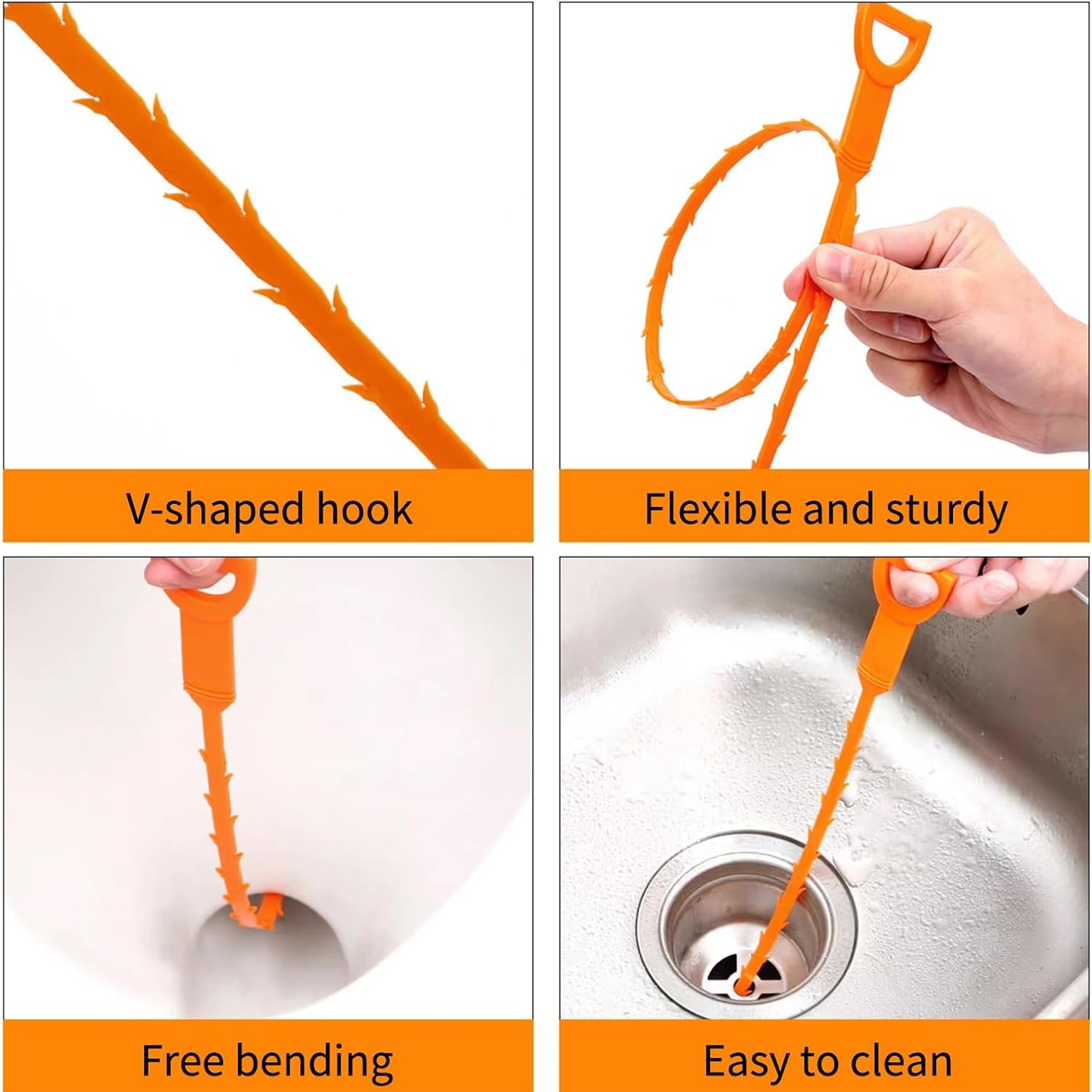
The last two pieces are hooks, each 50cm long. The maker calls them bristle hooks for baths. Their job is to catch hair and bring it back up.
The maker states that the set is made from stainless steel and nylon bristles, and the description also lists polypropylene. It does not say which piece uses which material. The bristles are described as medium firmness and the colour is given as white. The stated item dimensions are 24.5 x 15 x 2.2 cm and the stated weight is 0.17 kg, so the whole set is a slim, light bundle. Brush diameters are not stated by the maker.
Brush or hook first
It depends on what the blockage is made of.
If it is hair, start with a hook. A brush pushed into a clump of hair tends to shove it further down. A hook snags it. Feed the hook in, turn it gently so it catches, and draw it up slowly. Most of the time the hair comes out in one long piece.
If it is film and sludge, start with a brush. Bristles scrub the coating off the wall of the pipe, which a hook cannot do. This is the usual case in a kitchen sink.
Often you want both. Hook the hair out first, then brush what is left, then run the hot tap.
Using the set around the house
The method is the same everywhere. Insert the tool, turn it gently, and pull it back. What changes is which tool you pick.
In a shower, lift off the waste cover if it comes away by hand. Use a hook on the hair you can see and the hair just below it. Then run a 53cm brush around the inside of the waste.
In a bath, the plughole and the overflow are the two places to check. A hook down the plughole usually does the main work. The short brush with hot soapy water cleans the overflow if the opening allows it.
In a bathroom basin, a 53cm brush reaches the trap. If the basin has a pop-up plug that lifts out, take it out first. You will often find the worst of the hair wrapped around its stem.
In a kitchen sink, use a sink brush on the waste and trap, then the 155cm brush if the water is still slow. Finish with a couple of minutes of hot tap water.
The maker also lists toilets and mentions floor drains. These are slim tools, so on a toilet think of cleaning and not of clearing a full blockage. Whatever you use there, keep it for that job only. On a floor drain, lift the cover only if it is made to come off by hand.
One rule saves a lot of trouble. Keep the kitchen tools and the bathroom tools apart. With two sink brushes and two hooks in the set, that is easy to do.
Things to avoid
Do not force a tool that has stopped. If it meets the bend and will not go round, pull back a little, turn it, and try again gently. Forcing it kinks the stem.
Do not use any tool in a drain that has chemical cleaner sitting in it. The liquid can flick back onto your skin or into your eyes as the tool comes out. Flush with a great deal of water first. We do not recommend chemical drain cleaners in any case. A solid plug of hair often lets the liquid run past, and you are left with the same blockage plus a pipe full of something harsh.
Do not drag the stem across a polished basin or an enamel bath. Nylon bristles are kind to those surfaces, but the set also contains stainless steel. Keep the tool centred in the plughole, and lay a cloth around it if you are worried.
And do not rinse what you pull out back down the drain. Wipe it off with kitchen paper and put it in the bin.
Cleaning and storing the tools
Rinse each tool under the hot tap as soon as you finish. Work a little washing-up liquid through the bristles with your gloved fingers, rinse again, and shake off the water.
Let everything dry before you put it away. Store the pieces flat or loosely coiled. A sharp bend left in a stem for months tends to stay there.
A drawer in the utility room or a hook inside the cupboard under the sink is the right sort of home. The set weighs very little and takes up almost no room.
A monthly habit beats an emergency
Most people only think about a waste when it stops. By then the job is at its worst. The better way to use a set like this is little and often.
Once a month, run a hook down the shower or bath plughole and lift out whatever hair has gathered. It takes a minute and it is far less grim than a full blockage. Every few weeks, push a sink brush through the kitchen waste with hot water running. If a basin has a pop-up plug, lift it out now and then and wipe its stem.
A plughole strainer in the shower and a sink strainer in the kitchen will cut the work down again. They stop most of the hair and food at the top, and the long drain brush only comes out a few times a year.
Knowing when to stop
These are tools for soft blockages near the fitting. They are not drain rods and they are not a drain snake. The longest piece reaches 155cm, and that is the limit.
If you have worked through a waste with the hook and the brushes and the water still will not go, stop. The same applies if more than one fitting is backing up, or if water rises in the shower when the sink empties. That points to the main drain, and it is a job for a plumber. Any work that means altering fixed pipework should also go to a qualified plumber, and the Irish Building Regulations apply to drainage work.
If the blockage is in a public sewer, it is not yours to clear. Contact Uisce Éireann or your local authority.
The short version
Slow wastes are mostly hair and scum close to the plughole. Hooks pull hair out. Brushes scrub the pipe wall.
This set has six pieces. A 155cm double-sided brush, two 53cm sink brushes, a 23cm brush and two 50cm hooks. The maker states stainless steel and nylon bristles, medium firmness, in white, at 0.17 kg.
Insert, turn gently, pull back. Keep kitchen and bathroom tools apart, rinse them after use, and leave the chemicals on the shop shelf.