
The complete guide
How to Choose a Kitchen Sink Plug and Strainer That Actually Seals
The small part that causes the big annoyances
Nobody thinks about their sink plug until it stops working. Then it becomes the most irritating object in the kitchen. You fill the basin to soak a baking tray, walk away, and come back to find half the water gone. Or you lift the old rubber bung and a lump of yesterday's rice comes with it. Or there is a faint sour smell near the sink that no amount of wiping the worktop seems to fix.
All three of those problems trace back to the same fitting. The original plug that came with the sink is usually the cheapest component in the whole installation. The rubber hardens, the chain snaps, the strainer holes clog with grease, and the seal gives up. Once that happens, the sink stops being a basin and becomes a funnel.
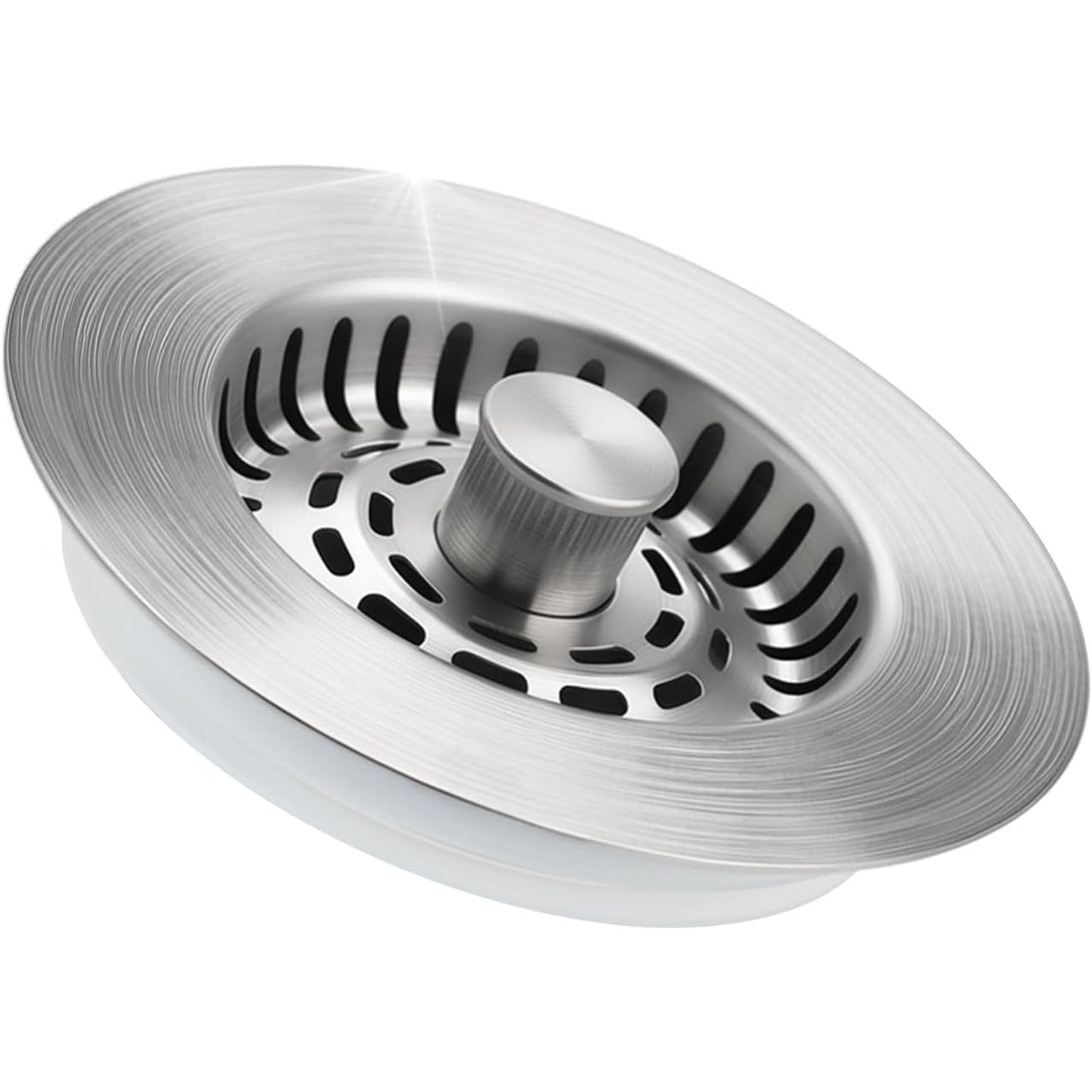
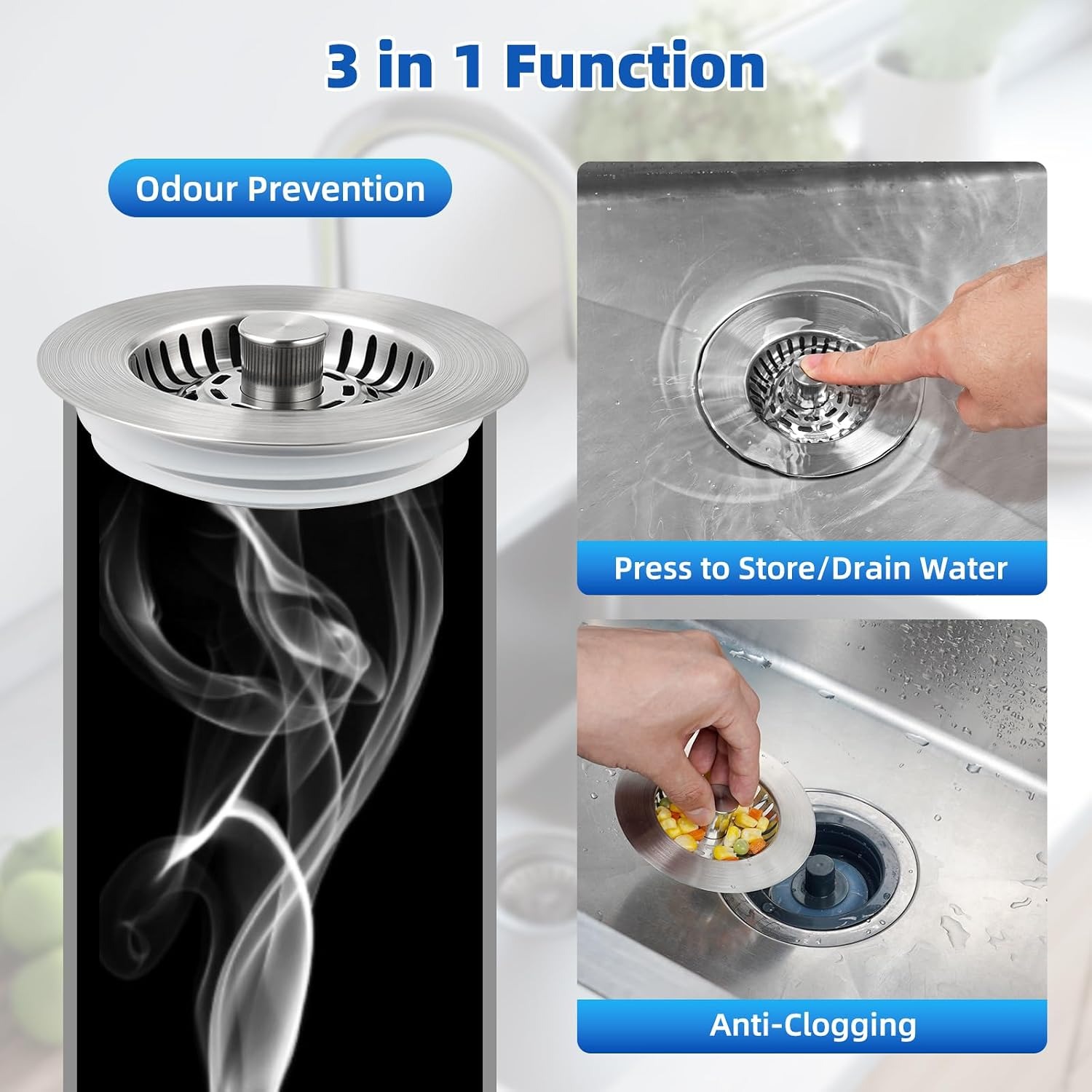
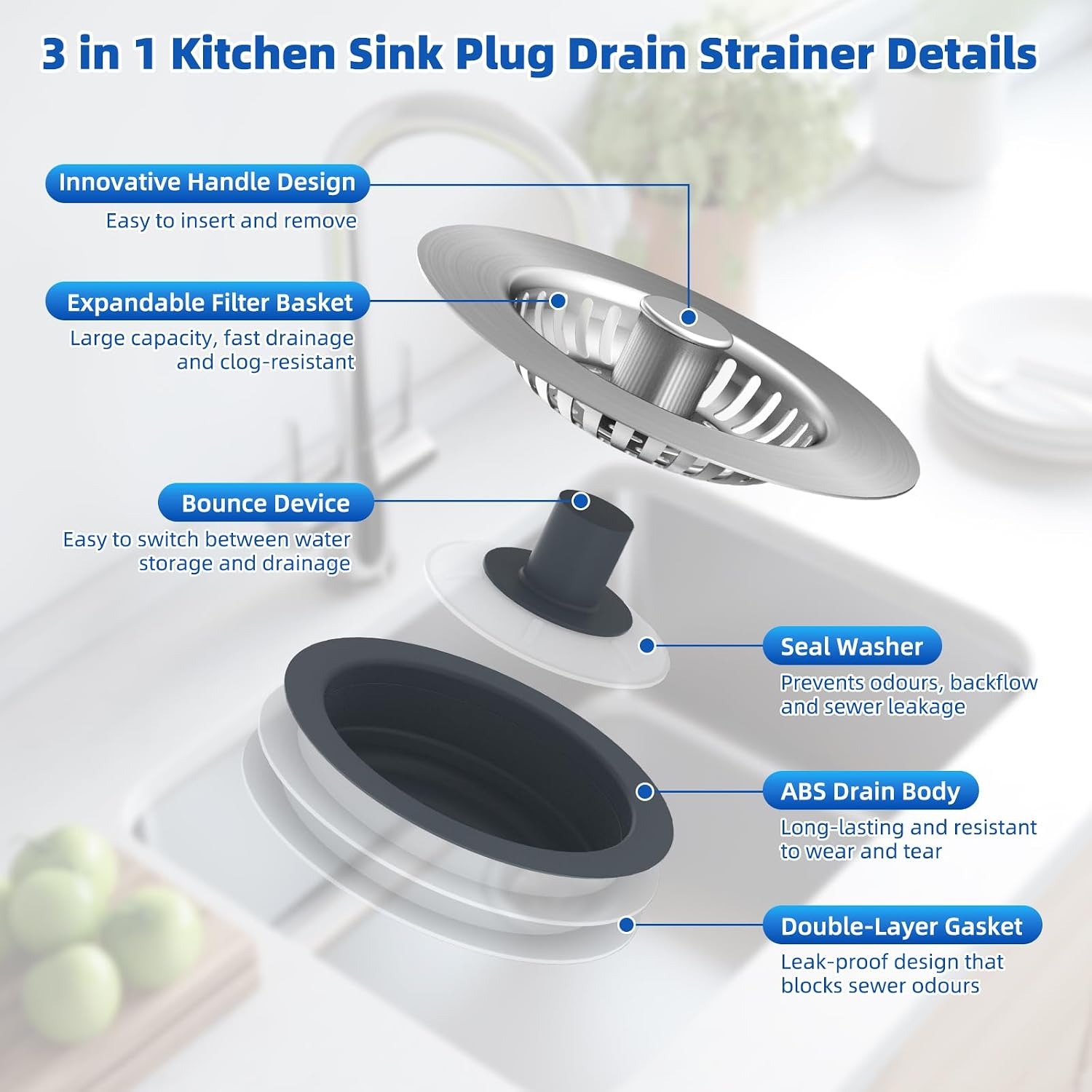
A three in one kitchen sink plug tackles all three at once. It seals so you can fill the sink. It strains so food waste never reaches the pipe. And the seal itself doubles as a barrier against the air coming back up the waste line. One part, three jobs, no moving between them.
How the three functions work together
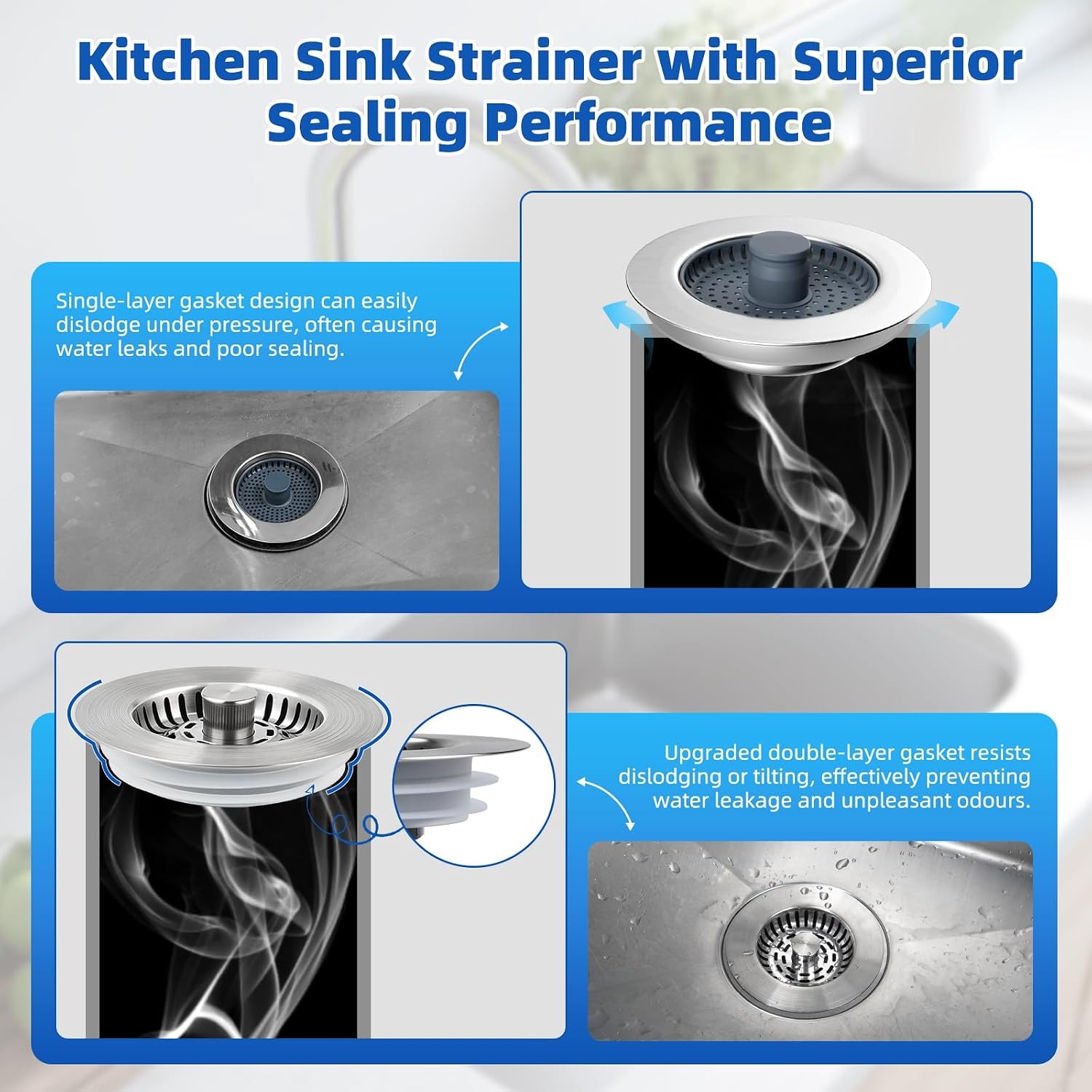
Start with the seal, because it is the foundation. This unit uses a double-layer rubber gasket rather than a single ring. Two seal faces mean that if one surface sits over a slight imperfection in the drain groove, the second still has a chance to make contact. That is why a twin gasket tends to hold a full sink longer than a single thin washer, which is the usual failure point on a budget plug.
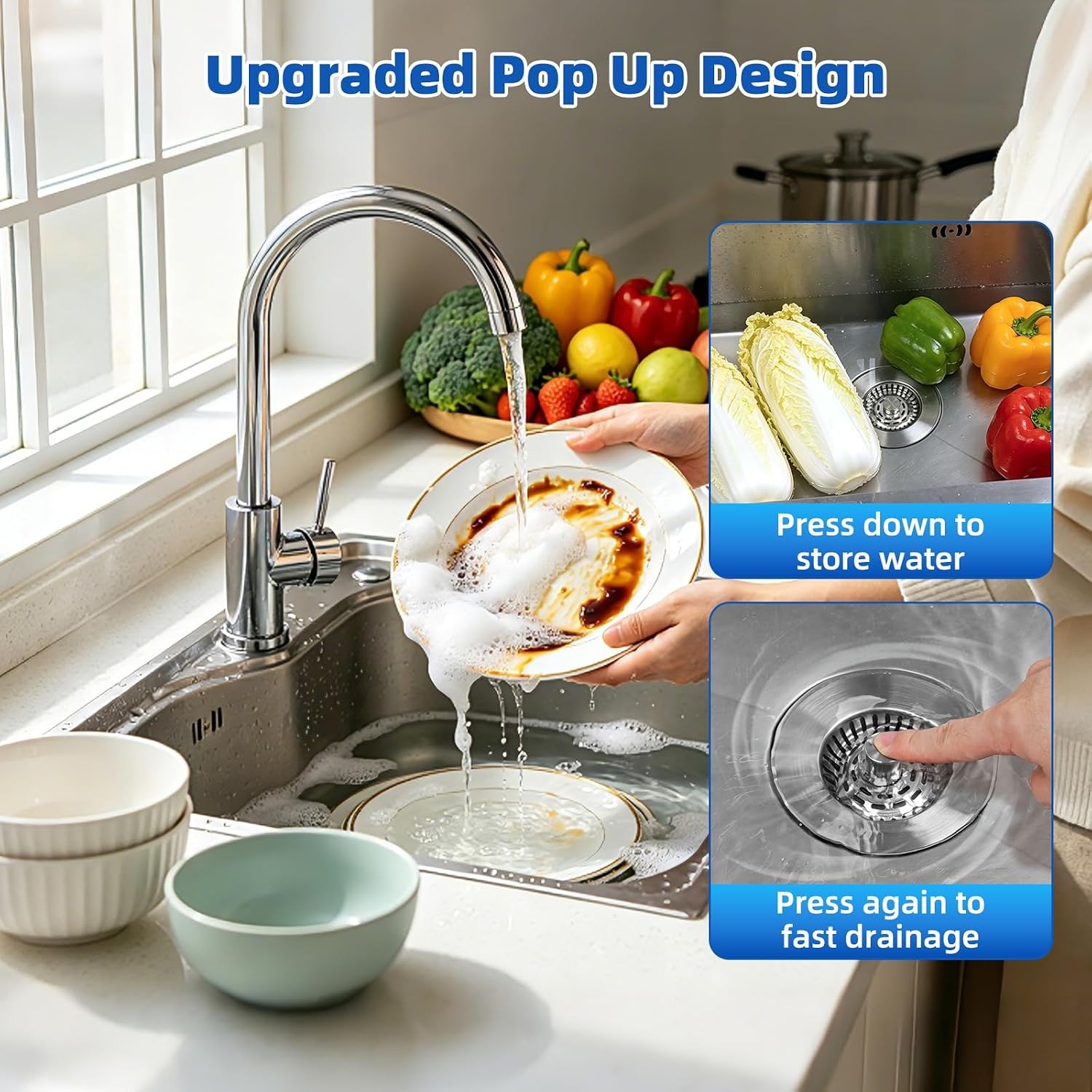
Above that sits the pop-up core. Press it once and it locks down in the closed position. Press it again and it springs back up to let water through. The point is not novelty, it is that you are not reaching into cold, greasy washing-up water to find a chain. Anyone who has done the dishes after a big meal knows exactly how unpleasant that moment is.
Then there is the strainer basket, made from SUS304 stainless steel. That grade is specified because kitchens are harsh on metal. Water sits on it constantly. Lemon juice, vinegar, tomato and wine all land in it. Hot water from a drained pan hits it regularly. SUS304 shrugs that off without rusting or pitting, which is more than you can say for a cheap chrome-plated basket that starts flaking inside six months.
The basket catches the solids: peelings, rice grains, tea leaves, crumbs, bits of pasta. Those are the things that build up in a trap and eventually turn into a blockage. Catching them at the sink surface, where you can tip them straight into the bin, is far easier than calling someone out to clear a pipe later.
Does it fit your sink?
This is the only question that really matters, and it is where most online sink plug purchases go wrong. People buy on looks, the parcel arrives, and the plug rattles around in a hole that is too big or refuses to sit down in one that is too shallow.
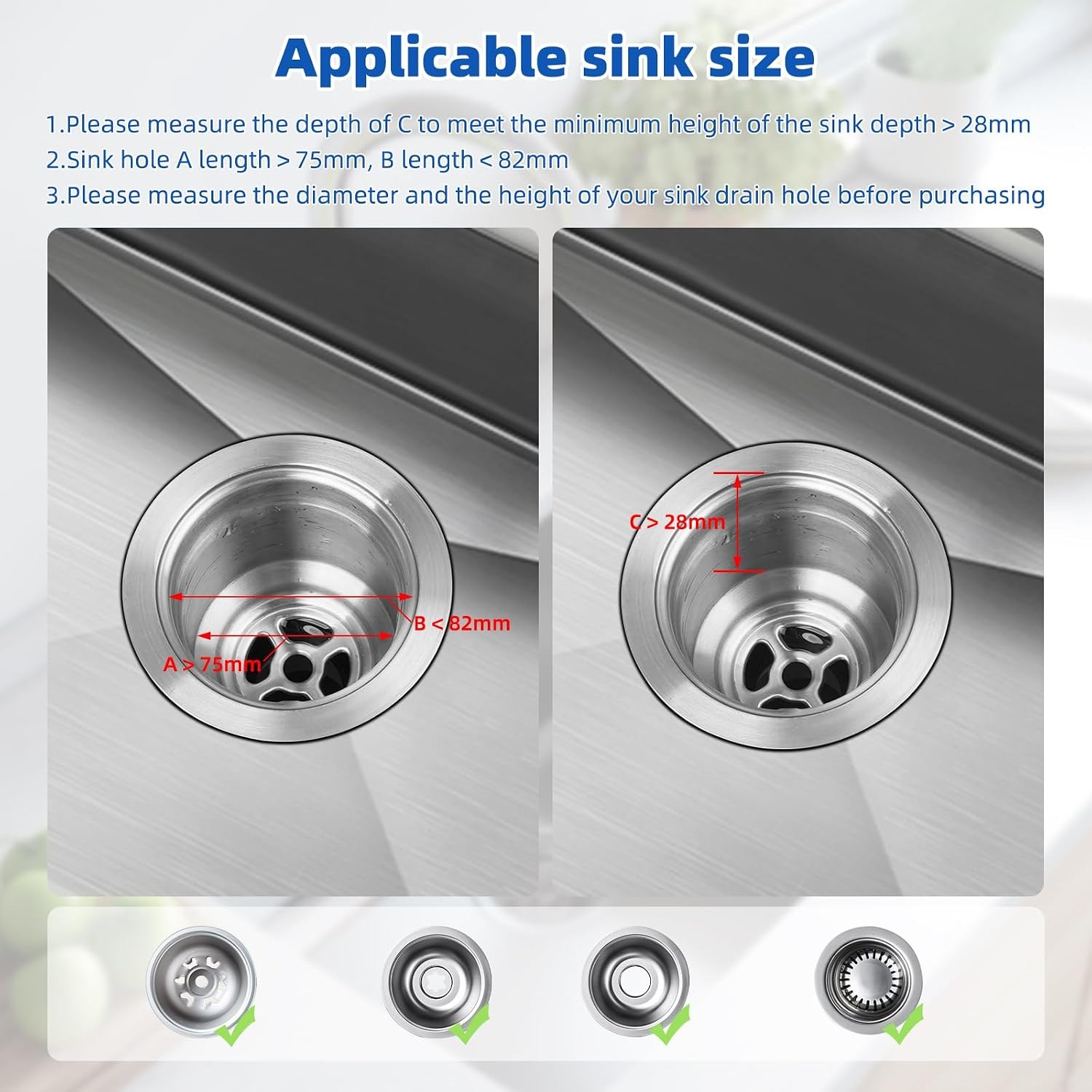
The two numbers to check are groove diameter and groove depth. This plug is listed for a compatible groove diameter of 75 millimetres and a compatible groove depth of 28 millimetres. Item depth is also given as 28 millimetres.
To measure, take a tape and lay it across the widest point of the drain opening inside the sink basin. You want the opening in the sink itself, not the pipe below the sink. Note that figure. Then measure from the sink surface down to the bottom of the recess where a plug would seat. That is your depth.
If your diameter lands near 75mm and your depth is around 28mm or more, you are in the right territory. Most standard kitchen drains fall in this range, which is why a universal sink plug exists as a category at all. If your measurements are notably smaller, you probably have a bathroom-sized waste and need something different.
One practical tip: measure before you order, not after the box arrives. It takes thirty seconds and saves a return.
Who this suits
Renters get a lot out of a plug like this. You cannot replace the sink, and you probably should not be re-plumbing anything, but swapping a drop-in stopper is reversible and takes no tools. Keep the original in a drawer and put it back when you move out.
Anyone who cooks from scratch benefits too. Peeling vegetables, rinsing rice, draining pasta: all of it sends solids toward the drain. A heavy-duty basket intercepts them. If you have ever paid for a drain to be cleared, you know the cost of that one job dwarfs the price of a decent strainer.
It also suits people who hand-wash a lot. Glassware, knives, non-stick pans and anything the dishwasher would ruin all get washed in a filled basin. That only works if the plug holds water reliably for the whole wash.
If you have a double-bowl sink, consider two units. One per bowl means you can fill the wash side and keep the rinse side draining freely. Each pack here contains a single stopper, so order accordingly.
Choosing between a plug, a strainer and a combined unit
There are three common options and they are not interchangeable.
A plain drain cover is the cheapest. It is a mesh or perforated disc that sits in the opening and catches scraps. It does not hold water. If you never fill the sink, that may be all you need.
A plain stopper seals but does not strain. It is what most sinks ship with. It works until the rubber ages, and it does nothing about food waste.
A combined unit does both, which is the case here. The trade-off is that you are depending on one part for two jobs, so build quality matters more. A stainless basket and a twin rubber seal are the two specs worth paying attention to, and both are present on this model.
Finish is the last consideration, and it is cosmetic rather than functional. Brushed nickel has a soft, matt sheen. It sits well against stainless steel sinks and brushed or satin taps, and it hides fingerprints and limescale spotting far better than polished chrome. If your tap is bright chrome you may prefer a matching polished plug, though in practice few people notice the drain fitting.
Keeping it working
Care is genuinely simple, and doing it keeps the plug functioning for years rather than months.
Empty the basket after each wash-up. Lift it out, knock the contents into the bin or compost caddy, rinse under the tap. This is the single habit that prevents slow drainage and smells.
Clean the rubber seal occasionally. Grease builds up on it, and a greasy gasket does not seat flat. Warm water and dish soap on a soft cloth is enough. Dry it and check it is sitting evenly in the groove.
Avoid abrasives on the brushed finish. Steel wool and scouring powder will leave scratch marks that never buff out. A non-scratch sponge handles anything that needs removing.
If you are using a chemical drain cleaner, take the plug out first. Caustic products are hard on rubber seals, and there is no reason to expose the gasket to them.
The short version
A kitchen sink plug is a cheap part that causes expensive problems when it fails. This one combines a sealed pop-up stopper, a SUS304 stainless steel strainer basket and a double-layer rubber gasket in a single drop-in fitting, finished in brushed nickel.
It is sized for a 75mm groove diameter with a 28mm groove depth, which matches a large share of standard kitchen drains. Fitting needs no tools. Cleaning takes a minute.
Measure your drain opening first. If the numbers line up, this replaces a tired old plug and quietly fixes three annoyances at once: a sink that will not hold water, scraps heading into the pipe, and that faint smell near the drain. If the numbers do not line up, tell us what you measured and we will say so rather than sell you the wrong part.