
The complete guide
A Plain Guide To Choosing A 700mm Linear Shower Drain
Why the drain comes first
When people plan a new shower they tend to start with the tiles, the glass and the shower head. The drain is an afterthought. Then the plumber arrives, asks how deep the floor is and where the waste pipe runs, and half the plan has to change.
In a walk-in shower or a wet room, the drain decides more than anything else. It sets how the floor slopes, how thick the floor build-up has to be and where the pipe goes underneath. Get it right on paper and the rest of the job is simple. Get it wrong and you find out when water pools in a corner or creeps towards the door.
This guide explains what a linear drain is, what this 700mm set includes according to its maker, and what to ask before you buy.
What a linear drain does differently
A traditional shower waste is a round hole, usually near the middle of the tray or floor. For water to reach it, the floor has to fall towards that one point from every side. On a tiled floor that means cutting tiles into four sloping triangles. Large tiles do not take kindly to that.
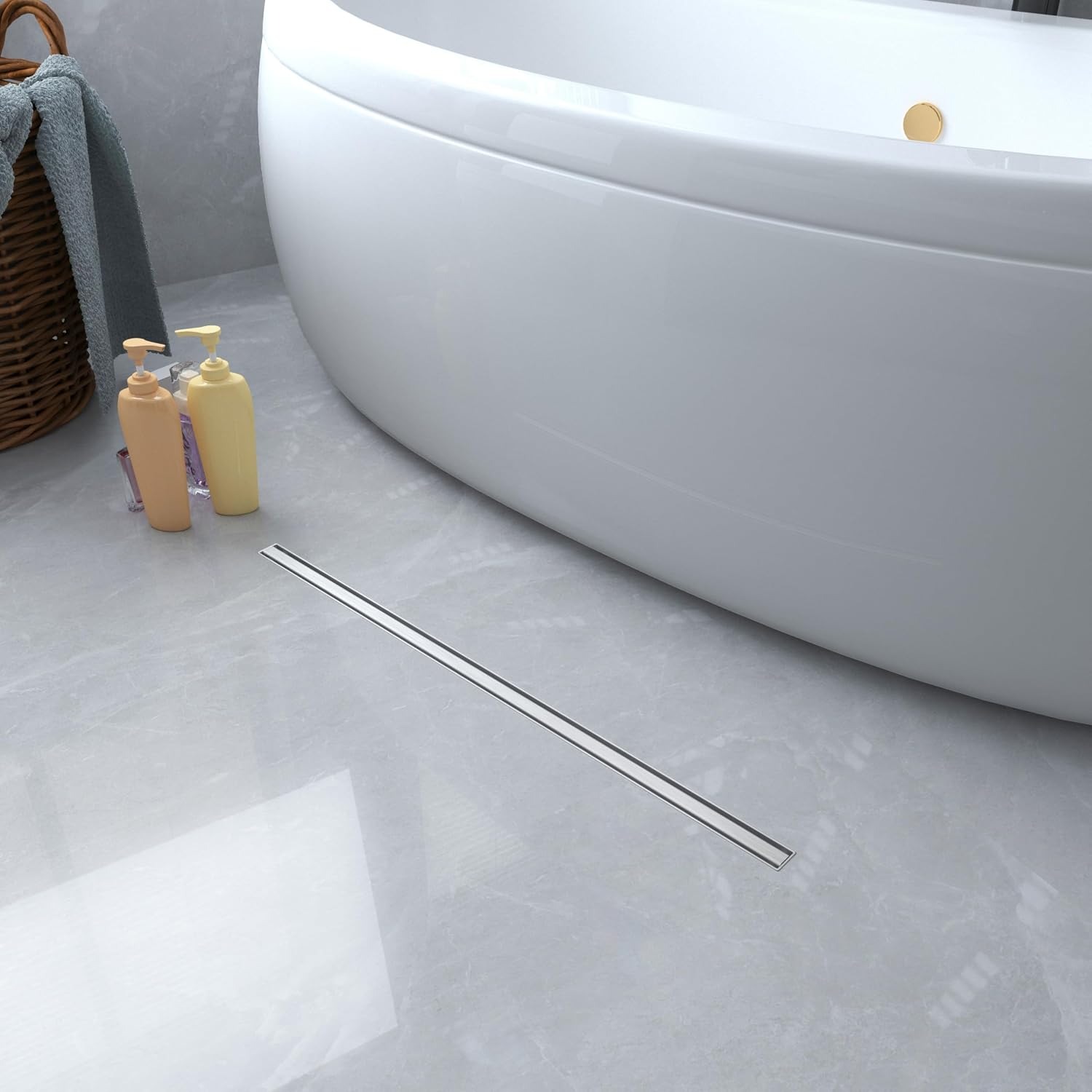
A linear drain is a long, narrow channel. It usually sits along the back wall or across the entrance to the shower. Because it is a line and not a point, the floor only has to slope one way. The tiler can lay big tiles in full pieces on a single gentle fall.
There is a comfort side to it as well. A level-entry floor with no tray edge to step over is easier for small children, older people and anyone unsteady on their feet. A linear drain is what makes that kind of floor practical.
What this set includes
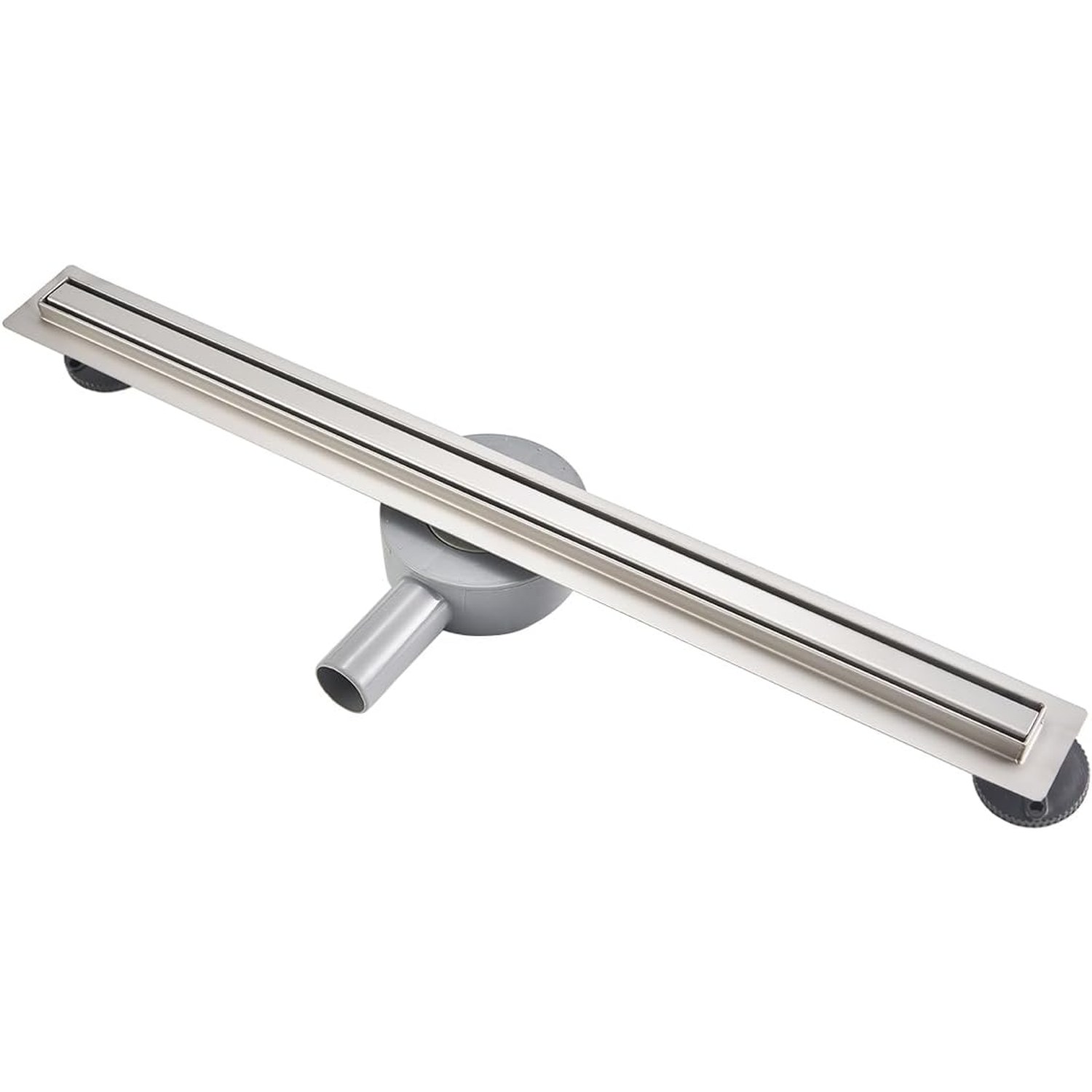
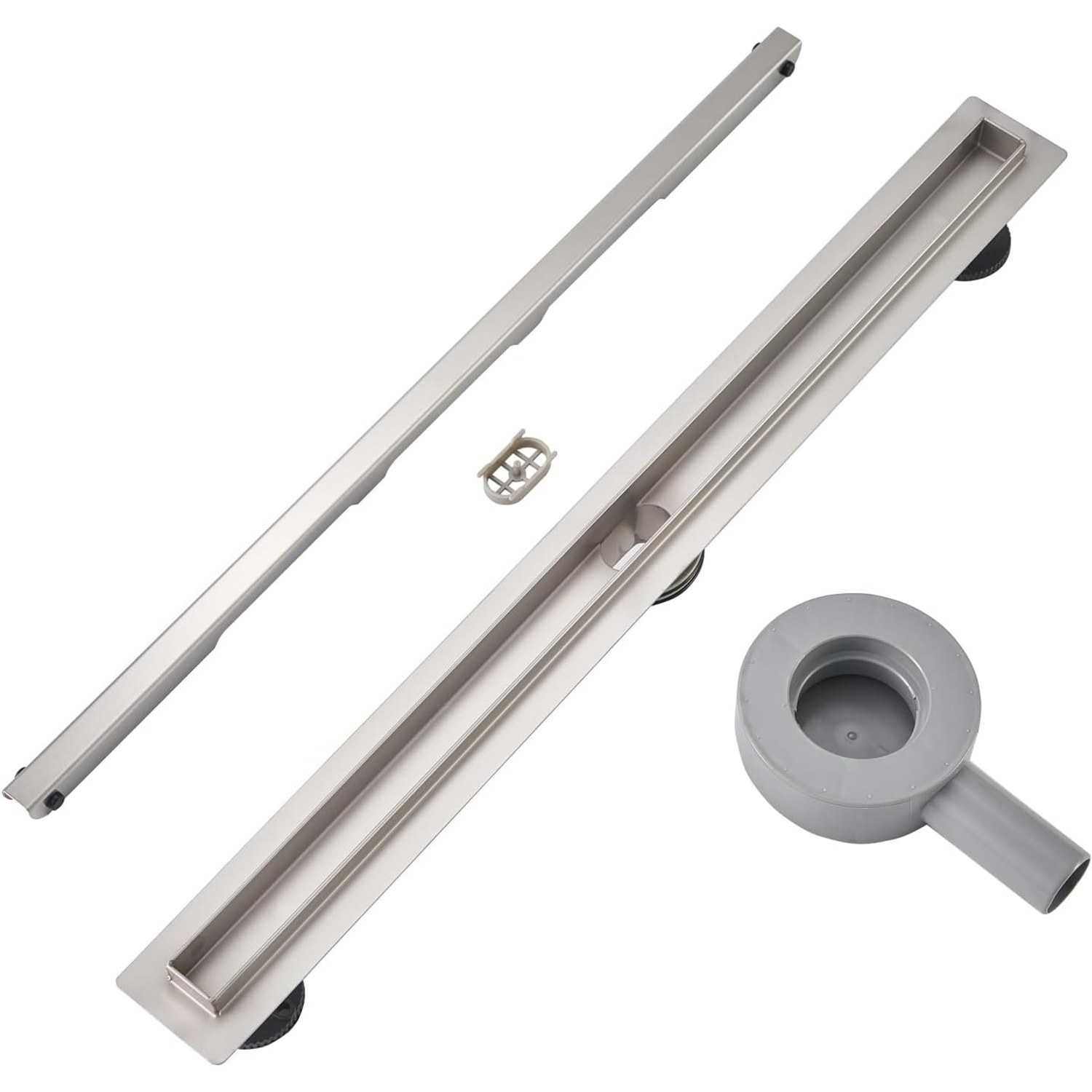
The maker describes this as a 70cm extra flat shower drain in stainless steel, supplied as a complete set with a 360 degree trap. In round figures, here is what is stated.
The channel is 700mm long. The material is given as 304 stainless steel and the finish as chrome.
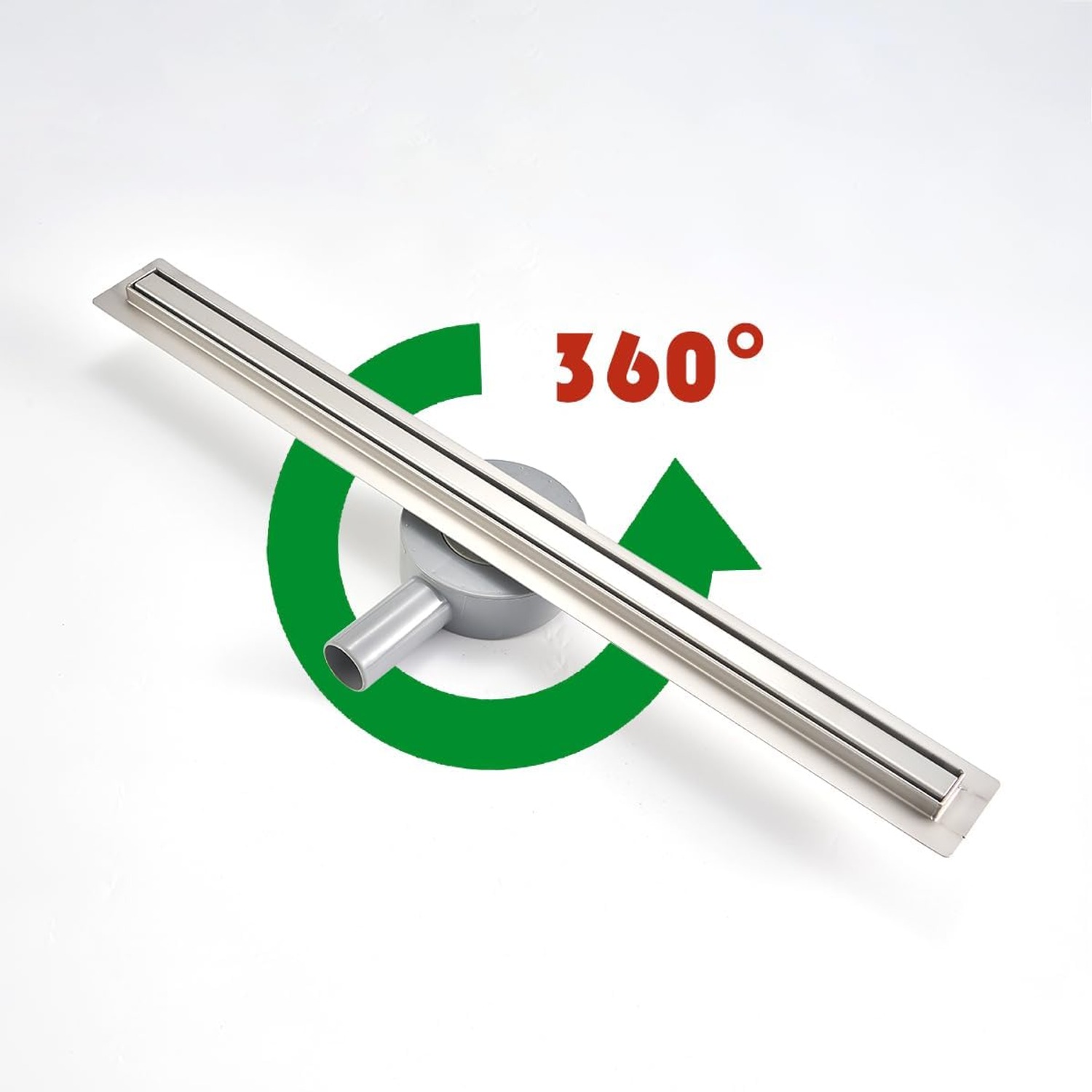
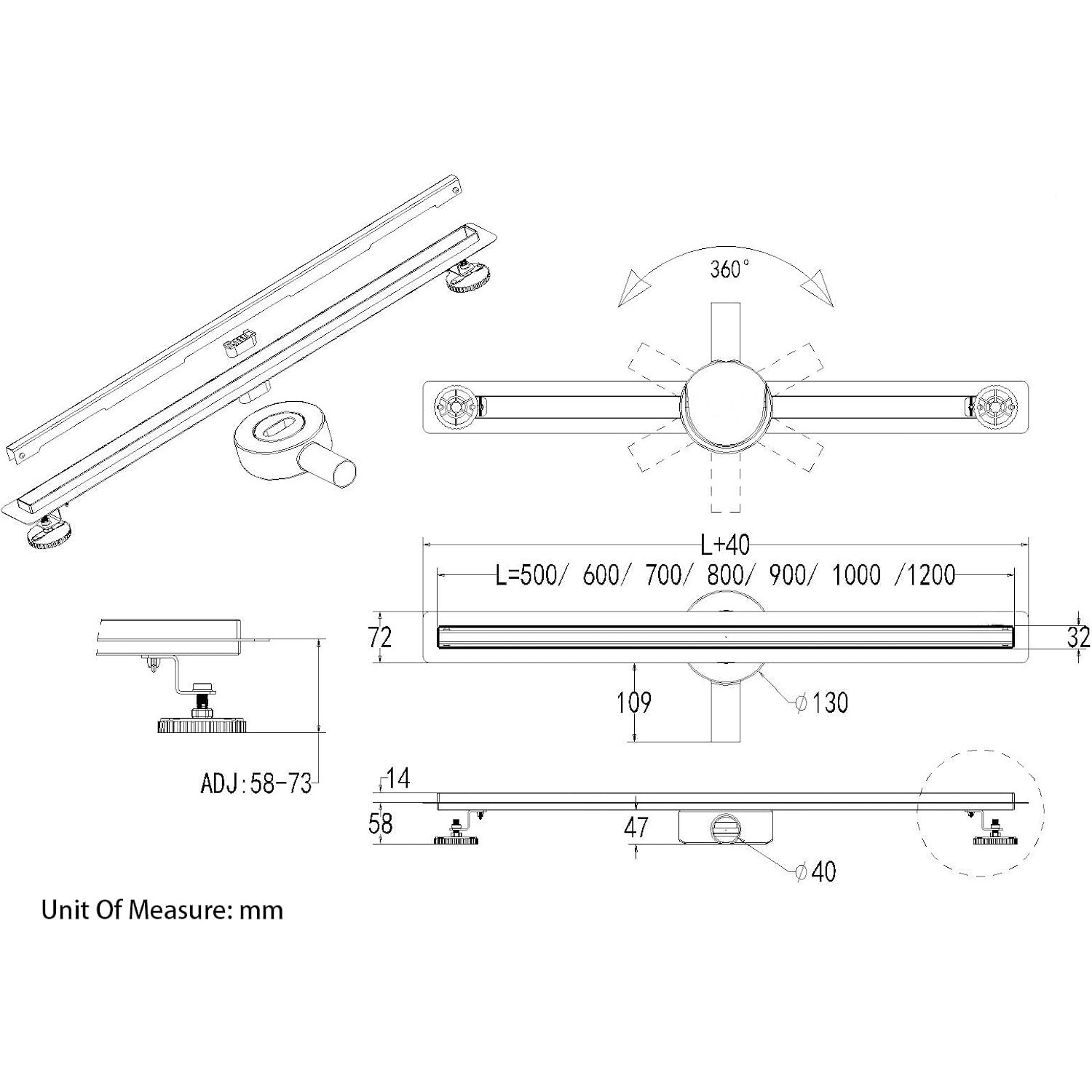
The trap is a slim type. It turns horizontally through 360 degrees. It has an odour seal built in, along with a hair strainer, and the maker says both can be removed for cleaning.
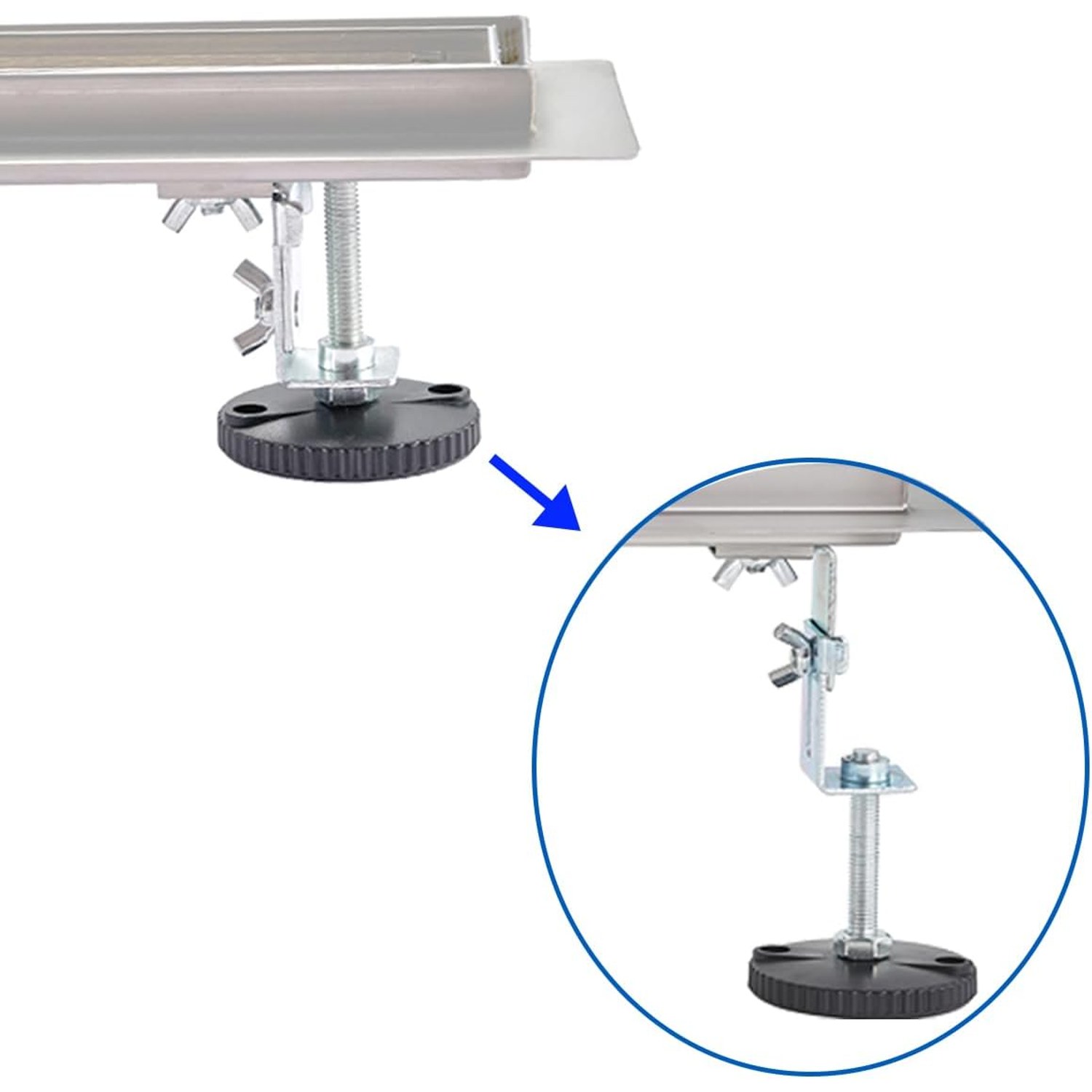
The channel stands on two-layer adjustable support feet, and the mounting height can be set from 77 to 121 mm.
The maker states a flow rate of up to 36 litres a minute. Assembly is required.
And here is what is not stated. The width of the channel, the diameter of the outlet, the style of the cover and the weight are all missing from the maker's details. None of those is unusual to check on site, but your plumber should look at the product photos, and then at the unit itself, before any floor is prepared.
The three numbers to check
The first is length. A 700mm channel suits a shower area a little wider than that, since there is normally a margin of tile at each end. Measure the finished width between walls, after tile and adhesive, not the bare blockwork.
The second is height. The maker gives 77 to 121 mm as the adjustable mounting range. Your floor needs that much depth available where the drain sits, and the waste pipe leaving the trap needs a steady fall all the way to the stack or the outside drain. On a solid ground floor that may mean chasing out the slab. On a timber floor upstairs it depends on the joists. Nobody should cut into a joist to make room for a drain without proper structural advice.
The third is flow. The maker's figure is up to 36 litres a minute. Compare that with what your shower puts out. An electric shower puts out a modest amount of water. A large overhead rain head on a pumped system puts out a great deal more, and two shower heads running together more again. Your plumber will also point out that a drain can only clear water as fast as the pipe behind it allows, so the pipe size and its fall matter as much as the figure on the drain.
The trap, the odour seal and the hair strainer
Every waste in a house needs a trap. It holds a little water in a bend, and that water blocks drain smells from coming back up the pipe. On a linear drain the trap sits under the channel, hidden in the floor.
A slim trap is used here because floor depth is always tight. The fact that this one turns through 360 degrees is a real help on site. Pipe routes under bathroom floors are rarely where you would like them to be, and being able to point the outlet in any horizontal direction saves bends and awkward joints.
The hair strainer sits where you can reach it from above. Hair is the main thing that slows a shower drain, and it is far better caught at the top than left to wind itself into the pipe. Because the strainer and the odour seal lift out, cleaning does not need tools or a plumber.
Who fits it
This is the part to be clear about. Fitting a linear shower drain is not like changing a shower head.
It means altering fixed pipework, setting the drain to an exact height in the floor, forming the falls and waterproofing the whole area so that water cannot get past the edge of the channel into the structure. That is a job for a qualified plumber, working alongside your tiler or builder. The Irish Building Regulations apply to drainage work, and a leaking wet room floor is an expensive thing to put right.
The maker does not list a waterproofing membrane or sealing collar with this set. Ask your installer what tanking system they use and how they will seal it to the channel.
Questions to put to your plumber before you order
Is there 77 mm or more of depth where the drain will sit, with a fall on the pipe after it?
Which way will the waste pipe run, and does the 360 degree trap suit that route?
What size is the waste pipe in the house, and will an adaptor be needed? The outlet diameter is not stated by the maker.
Is 700mm the right length for the finished width of the shower?
Can the shower output be handled by a drain rated by its maker at up to 36 litres a minute?
Who is responsible for the waterproofing, the plumber or the tiler?
If you can get clear answers to those six, you are in a good position to buy.
It also helps to have the drain on site before the floor work starts. Your plumber can then hold the actual unit against the plan, check the outlet and set the feet, instead of working from a drawing. Keep the packaging until that check is done.
Living with it
Day to day, a linear drain asks for very little. Once a week in a busy house, take out the hair strainer and rinse it under the tap. Every month or so, lift out the odour seal too, rinse it and put it back. Pour a jug of water down afterwards so the trap is full.
Wipe the steel with a soft cloth and a mild cleaner. Avoid wire wool, scouring powder and bleach left to sit. They can mark a chrome finish.
If the room starts to smell after a holiday, the water in the trap has probably dried out. Run the shower for half a minute.
We do not recommend chemical drain cleaners. With a strainer and seal you can reach by hand, there is no need for them.
The short version
A linear drain lets a shower floor fall in one direction, which suits large tiles and level-entry showers. This set is a 700mm channel that the maker describes as 304 stainless steel with a chrome finish. It comes with a slim trap that turns through 360 degrees, a removable odour seal and a hair strainer.
The support feet adjust the mounting height from 77 to 121 mm, and the maker states a flow rate of up to 36 litres a minute. Width, outlet size and weight are not stated by the maker.
Have a qualified plumber check the depth, the pipe route and the outlet before you commit, and leave the fitting and waterproofing to the trades. After that, the upkeep is a weekly rinse of the strainer.