
The complete guide
A Buyer's Guide To Outdoor Drain Covers And Leaf Guards
The gully nobody looks at until it floods
Every house has a few of them. A small drain at the foot of a downpipe. Another outside the kitchen wall where the sink waste comes out. Maybe one in the middle of the yard. Plenty of people here call them shores, and most of us never think about them from one year to the next.
They work quietly until the autumn. Then the leaves come down, the wind pushes them into every corner, and the lowest corner is always where the drain is. A handful of leaves lands in the gully. Rain presses them down. Moss off the roof and grit from the yard settle on top. By November there is a plug of black sludge sitting in the trap, and the next heavy shower sends water across the patio and up against the wall.
Clearing it then is a miserable job. You are on your knees in the wet with your arm down a drain. A cover over the gully turns that into something much simpler. The leaves land on top and you lift them off.
What a drain cover does, and what it does not
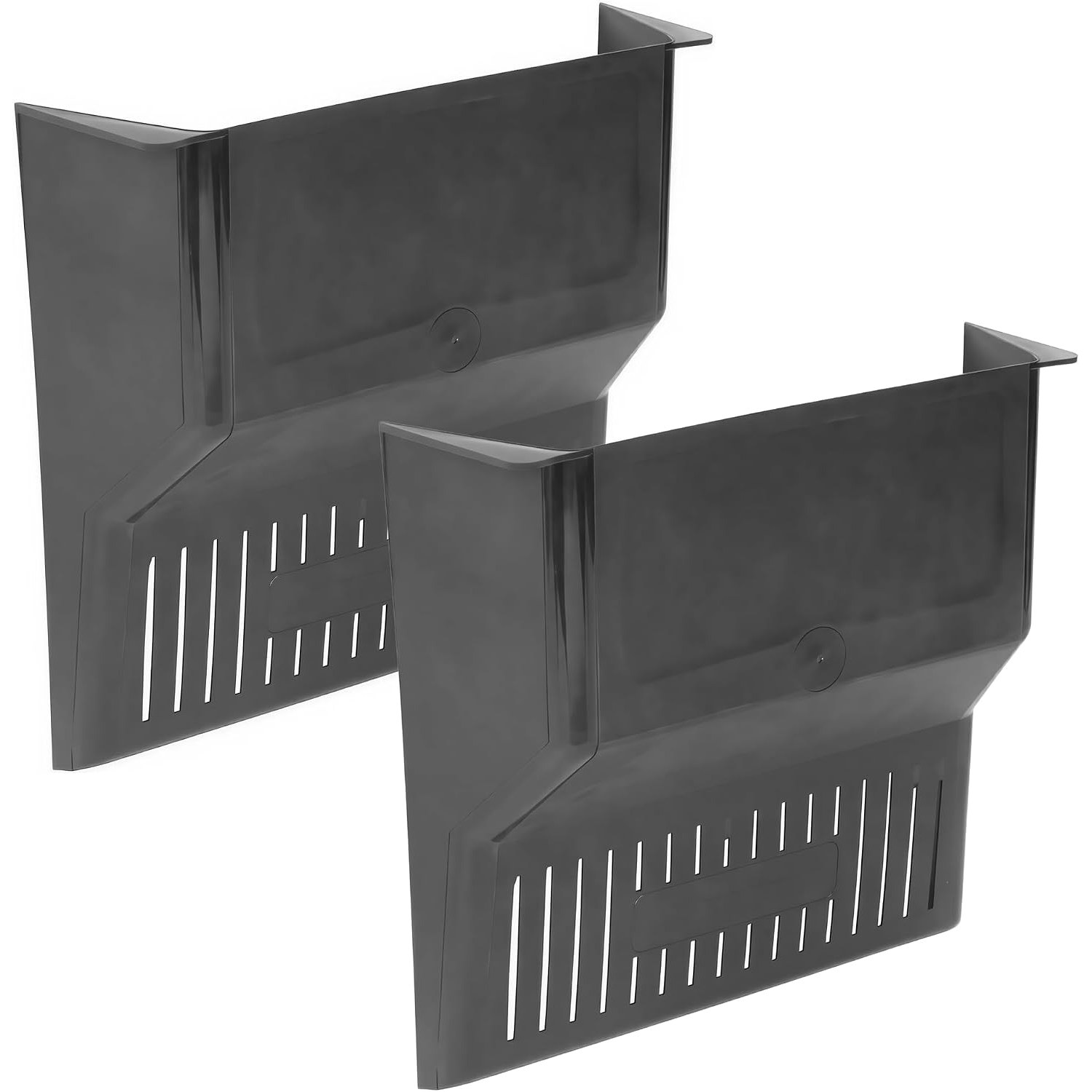
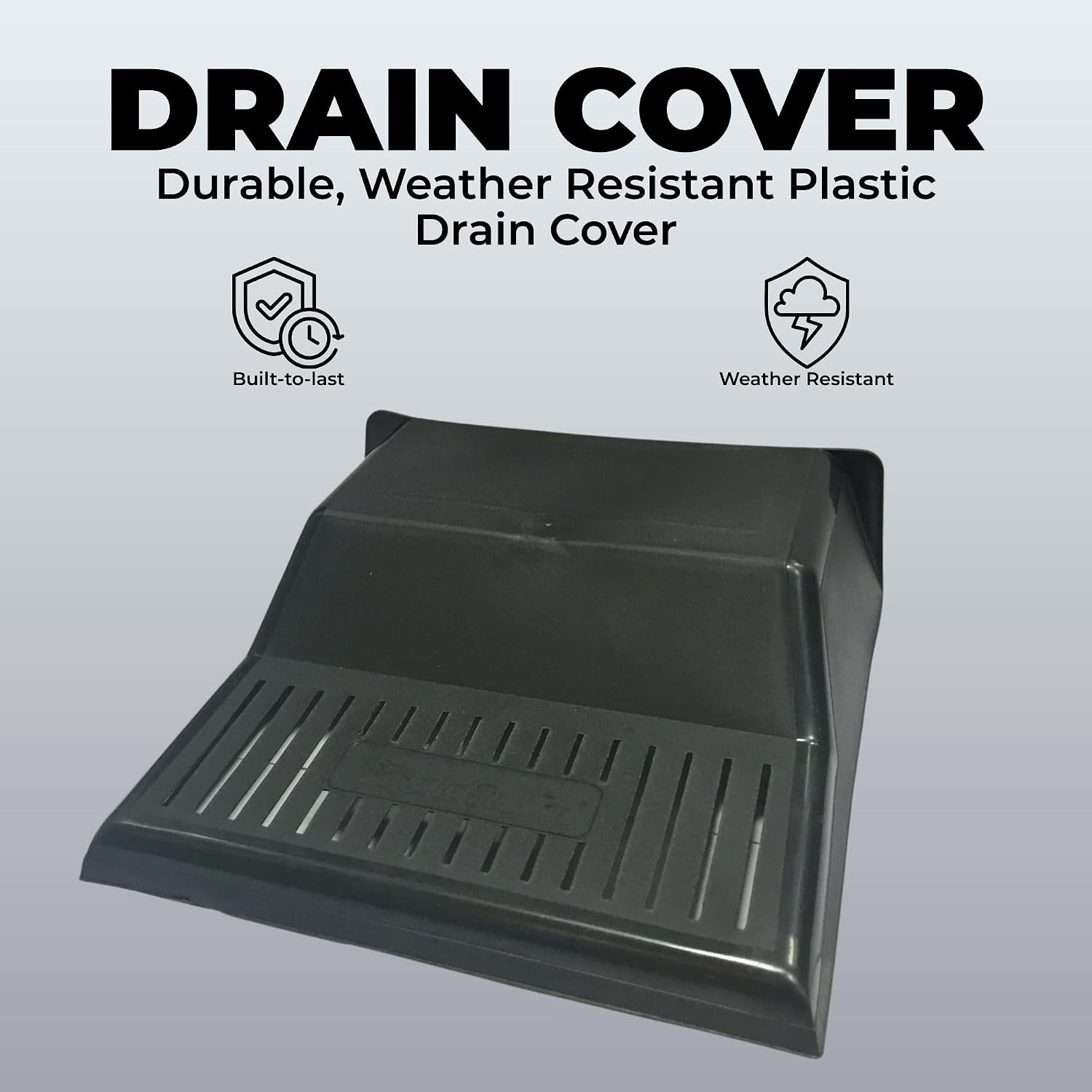
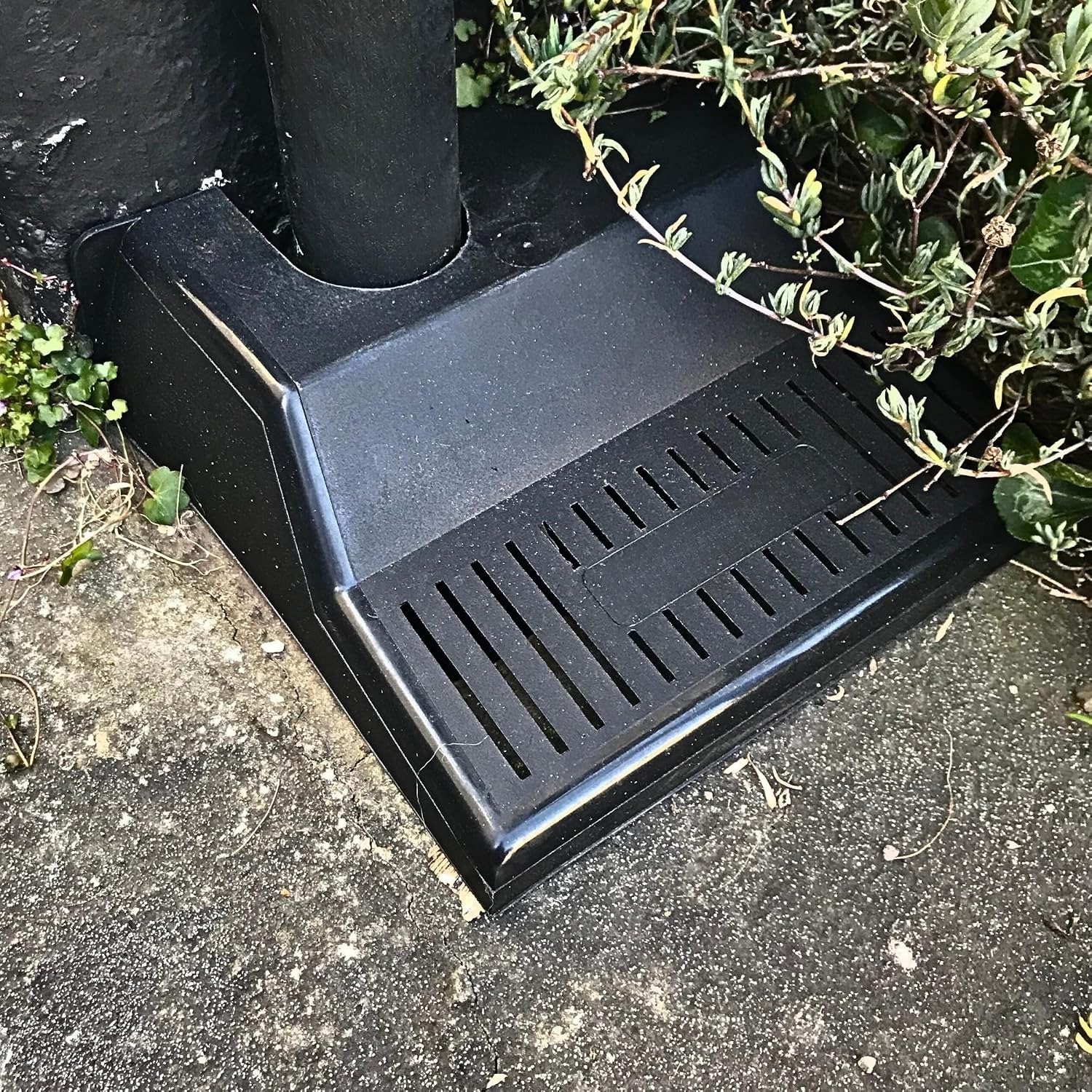
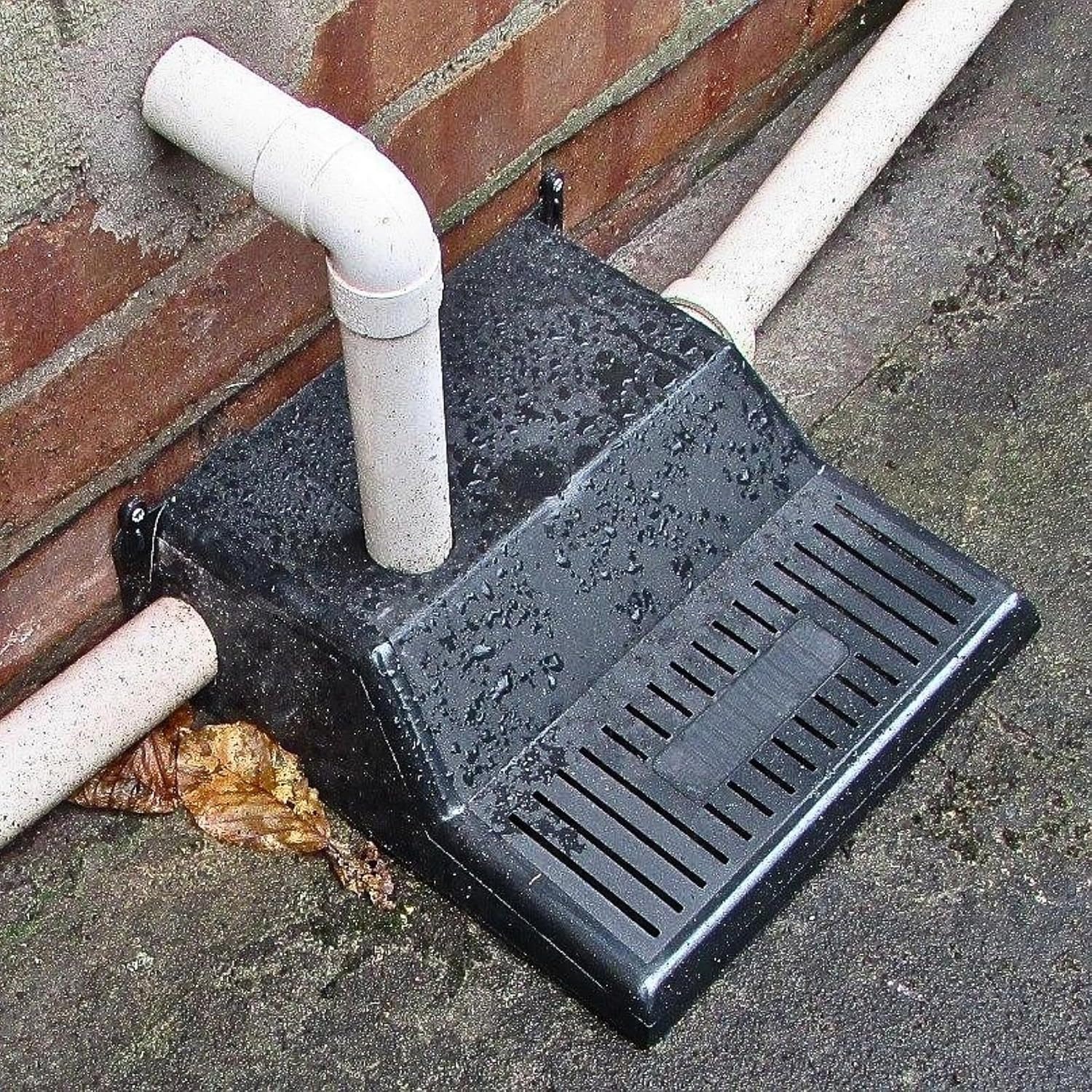
A leaf guard is a simple thing. It is a cover with openings in it. Water passes through. Anything larger than the openings stays above.
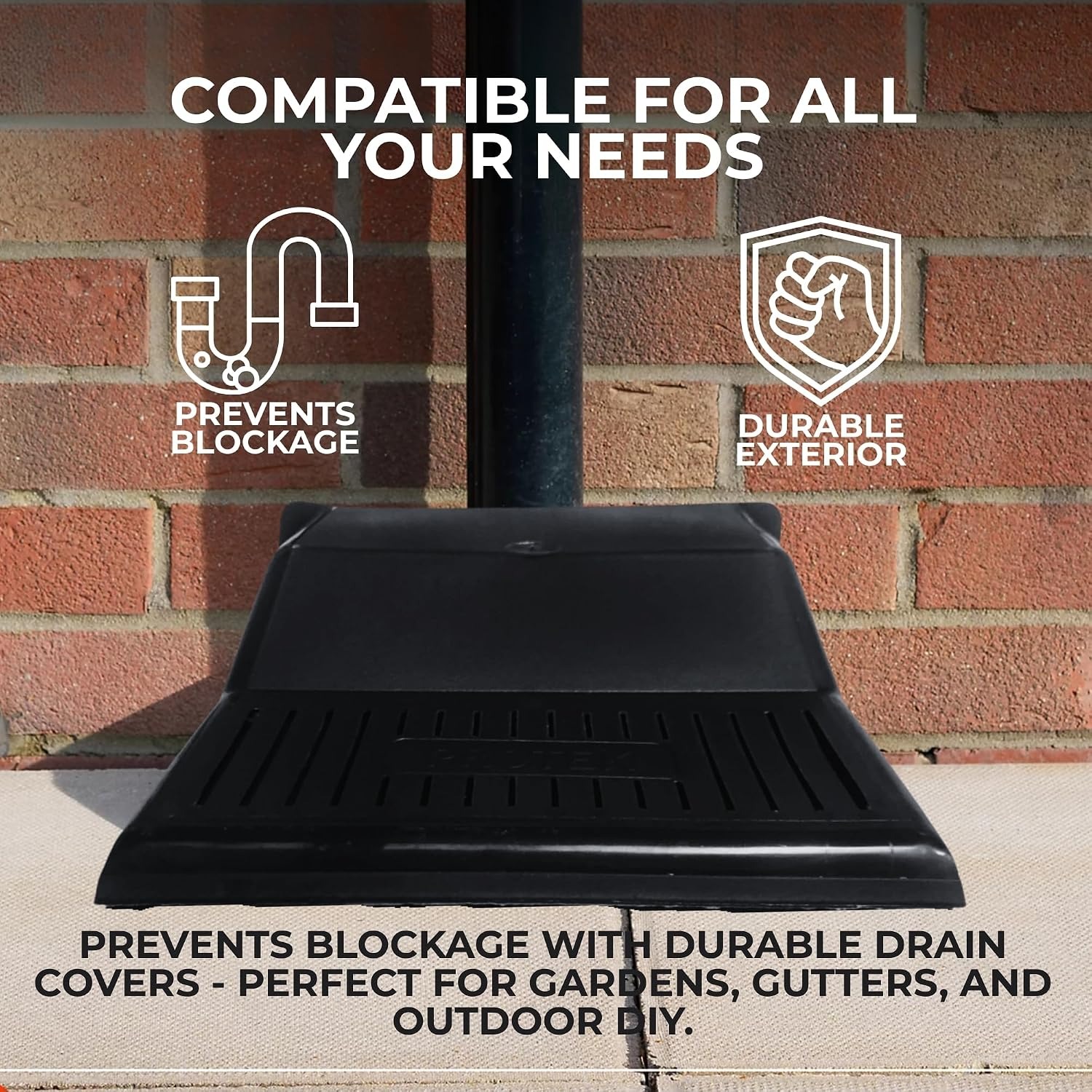
That changes where the mess collects. Without a cover, debris goes into the gully and down into the trap, where you cannot see it and can barely reach it. With one, it sits on the surface in plain view.
It helps to be clear about the limits. A cover does not stop fine silt or grit, which wash through with the water. It does not seal the drain, so it will not stop a smell. It will not clear a gully that is already blocked. And it only works if somebody lifts the leaves off now and then. A cover buried under a wet mat of leaves will hold water back just as a blocked gully would.
What is in this pack
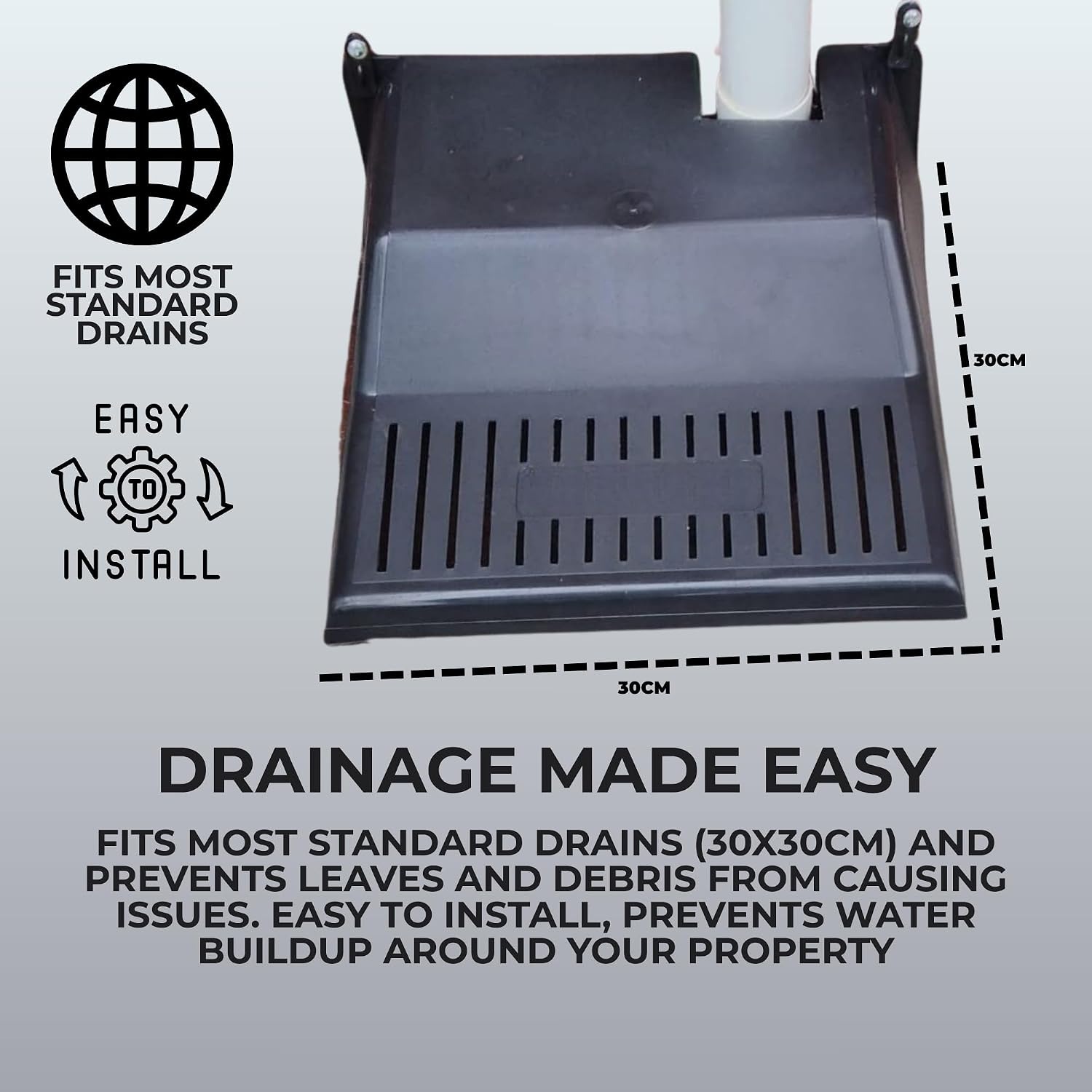
The pack holds two covers. Each one is black plastic, and the maker gives the size as about 30cm by 30cm by 9cm.
The maker describes the plastic as UV-stabilised. That is the usual treatment for plastics that live outdoors, and it is there to slow the damage that sunlight does over the years. The maker does not state a service life.
According to the maker, a cover suits standard outdoor drains up to 30cm wide. If your drain is smaller, the maker says the cover can be cut to size with snips and then pushed into place. For a snug fit that lasts, the maker suggests securing it with plastic gully fixings. The maker does not state that fixings are supplied, so plan on the pack being the two covers and nothing else.
The weight is not stated by the maker.
Foot traffic, vehicles and where to put it
This is the part to read twice.
The maker names patios, gardens and driveways as places this cover can be used. What the maker does not give is any rating for weight. There is no statement that it is made for foot traffic, and none for vehicles.
Without that, we treat it as a leaf guard and not as a load-bearing cover. In practice that means a few plain rules. Do not fit it where people walk. Do not fit it where a car, a van or a loaded wheelbarrow will pass over it. Do not use it to replace a metal grating that was set into a path or driveway, because that grating was carrying weight and this is not made to.
Where it does belong is on the quiet drains. The gully tucked against the house wall under a downpipe. The one behind the oil tank. The drain in a flower bed or at the edge of a lawn. Those are the ones that fill with leaves, and nobody stands on them.
If a drain in a trafficked spot needs a new cover, ask a builders' merchant or a plumber for a grating with a stated rating for that use.
Measuring your gully
Measure before you order. It takes two minutes.
Clear the leaves and any loose grit away from the drain so you can see the edges. Measure straight across the opening one way, then the other, and write both figures down in centimetres. Look at the shape too, and at whether there is a ledge or rim just inside the opening.
Compare what you have with the size of the cover, about 30cm each way. If your drain is that size or a little under, you are in the range the maker describes. If it is smaller, you will be cutting the cover down. If it is wider than 30cm, this cover will not span it.
Older houses can have gullies in sizes and shapes that are no longer standard. Do not assume. Measure each drain you plan to cover, because the front and back of the same house often differ.
Fitting it
Start with a clean gully. There is no point covering a drain that is already half full. Put on gloves, lift out the leaves and sludge by hand or with a trowel, and pour a bucket of water through to check it runs away freely.
Offer the cover up to the opening. If it needs trimming, mark the line with a marker. Cut a little outside the line with snips, try the fit, and take off more if you need to. It is easy to remove plastic and impossible to put it back. Watch your fingers on the cut edges.
Push the cover into the opening until it sits level and does not rock. In a sheltered spot that may be all it needs. In an open yard that catches the wind, add the plastic gully fixings the maker suggests.
Where a downpipe ends above the gully, the cover simply sits underneath it. Where the pipe runs down into the gully itself, the cover would need an opening for it. The maker does not say whether the cover is intended to be cut that way, so think about that drain before you buy.
Fitting a cover is a householder's job. Altering the gully, the trap or the pipe beneath it is not. That is fixed drainage, the Irish Building Regulations apply to it, and it should be left to a qualified plumber or drainage contractor.
Keeping it working through the autumn
A cover asks for very little. While the leaves are falling, look at it once a week and after any windy night. Pick the leaves off and put them in the compost or the brown bin. Do not brush them into the next drain along.
Once or twice a year, lift the cover out. Scrub it with a stiff brush and water. While it is off, look into the gully and scoop out any silt that has washed through. Then press the cover back in.
In a hard frost, leave it alone. Plastic is less forgiving when it is frozen, and a cover that is iced into place can crack if you lever at it.
When the drain is already blocked
If water is standing in the gully, a cover is not the fix. Clear the gully by hand first. Most blockages at this point are just a plug of leaves and silt sitting in the trap, and they come out with a gloved hand and a bucket of water.
We do not recommend chemical drain cleaners. They do little against a plug of leaves and silt, which has to be lifted out by hand anyway.
If the gully is clean and water still will not run away, the trouble is further down the line. On your own property that is a job for a plumber or drainage contractor. If the public sewer is blocked, contact Uisce Éireann or your local authority.
The short version
Outdoor drains block because leaves and rubbish fall into them. A cover keeps that debris on top, where it takes seconds to remove.
This pack has two black plastic covers, each about 30cm by 30cm by 9cm. The maker says they suit drains up to 30cm wide, can be cut with snips and push into place. Fixings are suggested by the maker but not stated as included.
No rating for foot or vehicle traffic is given. Use these as leaf guards on drains nobody walks or drives over. Measure first, clean the gully before fitting, and clear the leaves off through the autumn.