
The complete guide
How To Use A Bellows Plunger On A Slow Sink Or Shower
When the water stops going down
It tends to start small. The basin takes a little longer to empty after you brush your teeth. The shower tray holds a shallow pool that was not there last month. Nobody does anything, because the water does still go, just slowly.
Then one evening it does not go at all, and you are looking at a sink of grey water with the washing up still to do.
What has happened is ordinary. Under every sink, bath and shower there is a trap, a bend in the pipe that holds water to keep drain smells out of the room. That bend is also where things settle. Hair and soap film collect in a bathroom. Fat and food scraps collect in a kitchen. Each wash adds a thin layer, and one day the gap left for water is too small.
A plunger is the usual first answer, and for good reason. It needs no tools, you do not have to open any pipework, and it works on the part of the drain where most household clogs sit.
How a bellows plunger works
A classic plunger is a rubber dome on a stick. You push, the dome flattens, and a puff of air and water goes down the plughole. It works, but a lot of the push is spent squashing air.
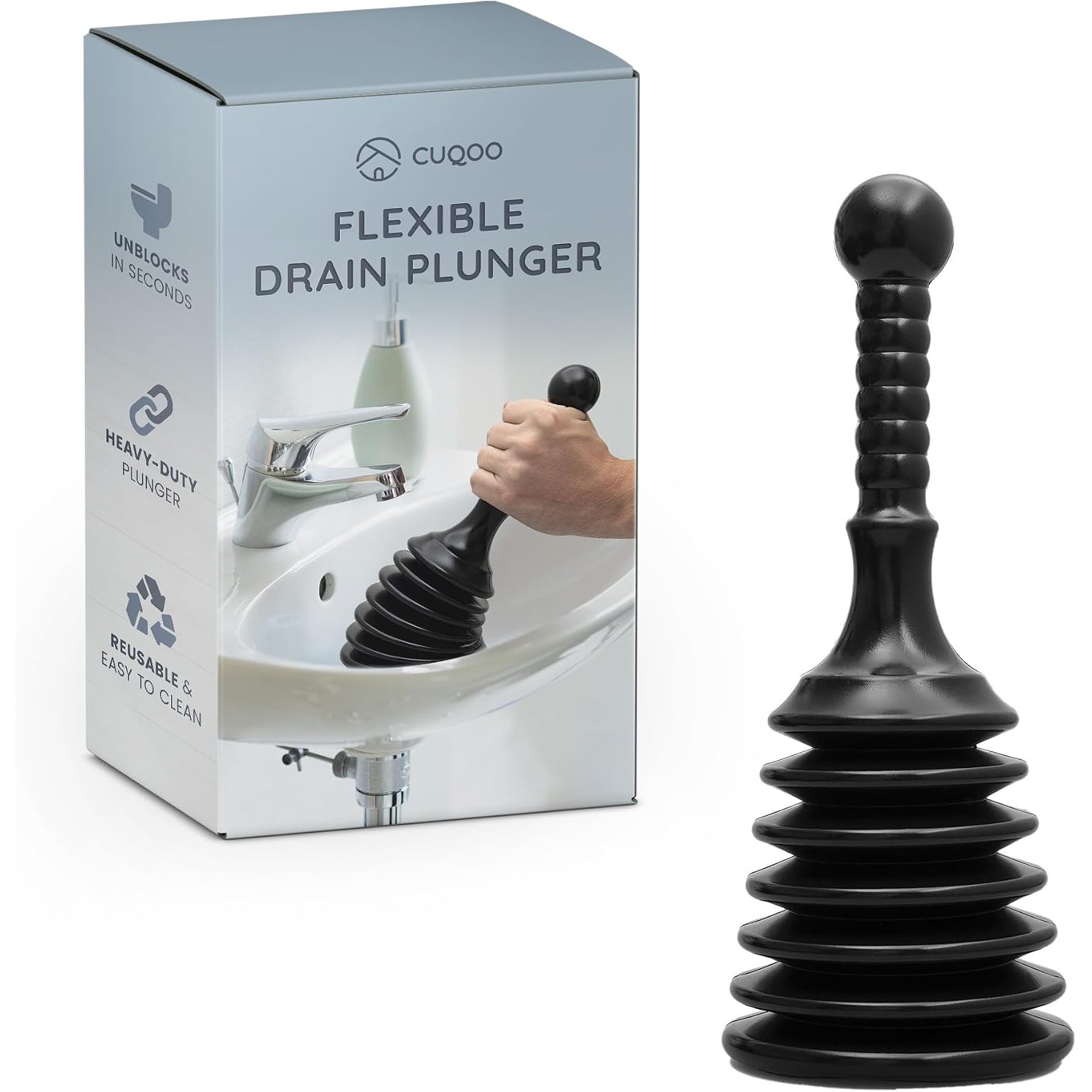
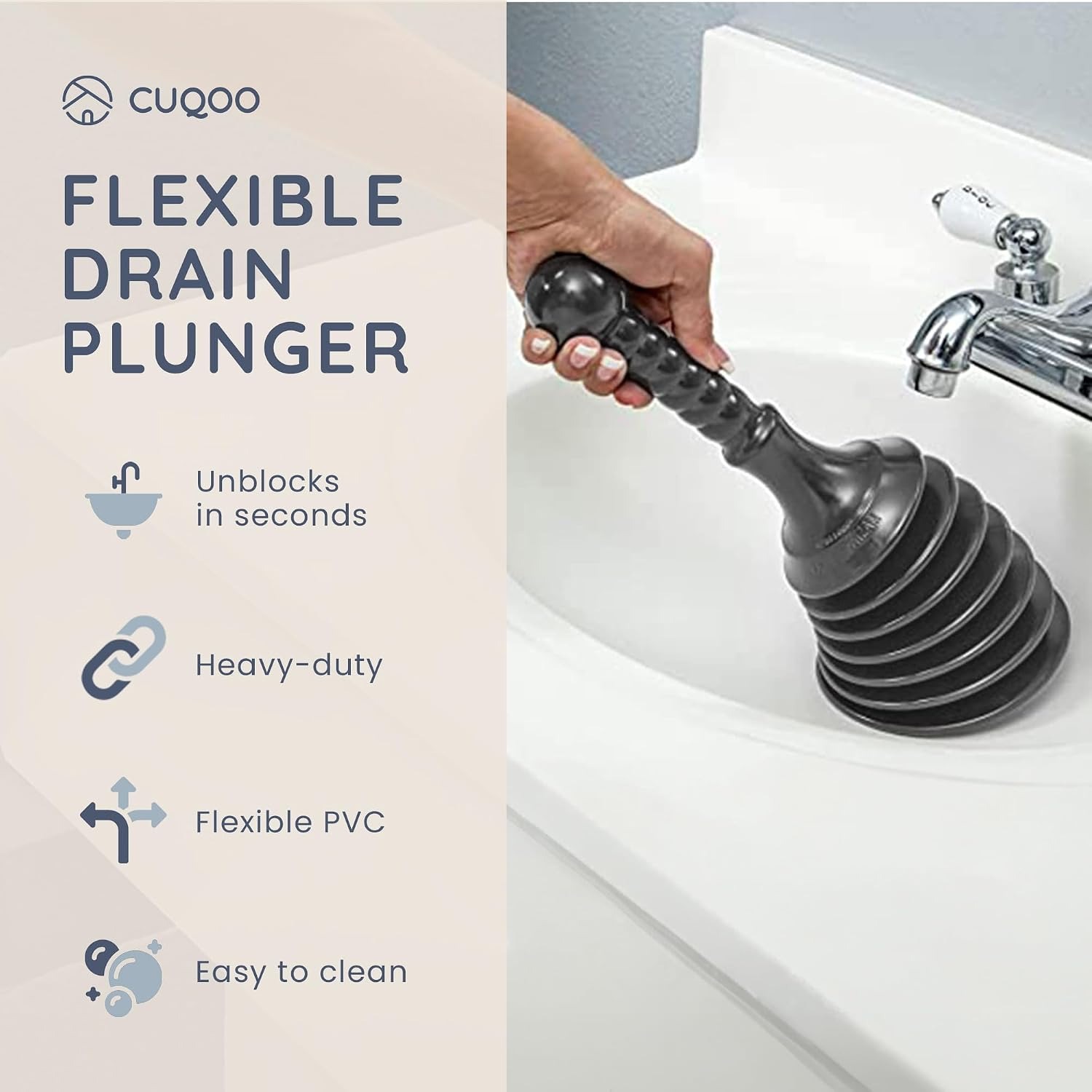
A bellows plunger has a different shape. The body is a stack of folds, like a concertina or an accordion, with a large opening at the bottom. You sit that opening over the plughole and press down. The folds close up and whatever is inside is sent down the waste.
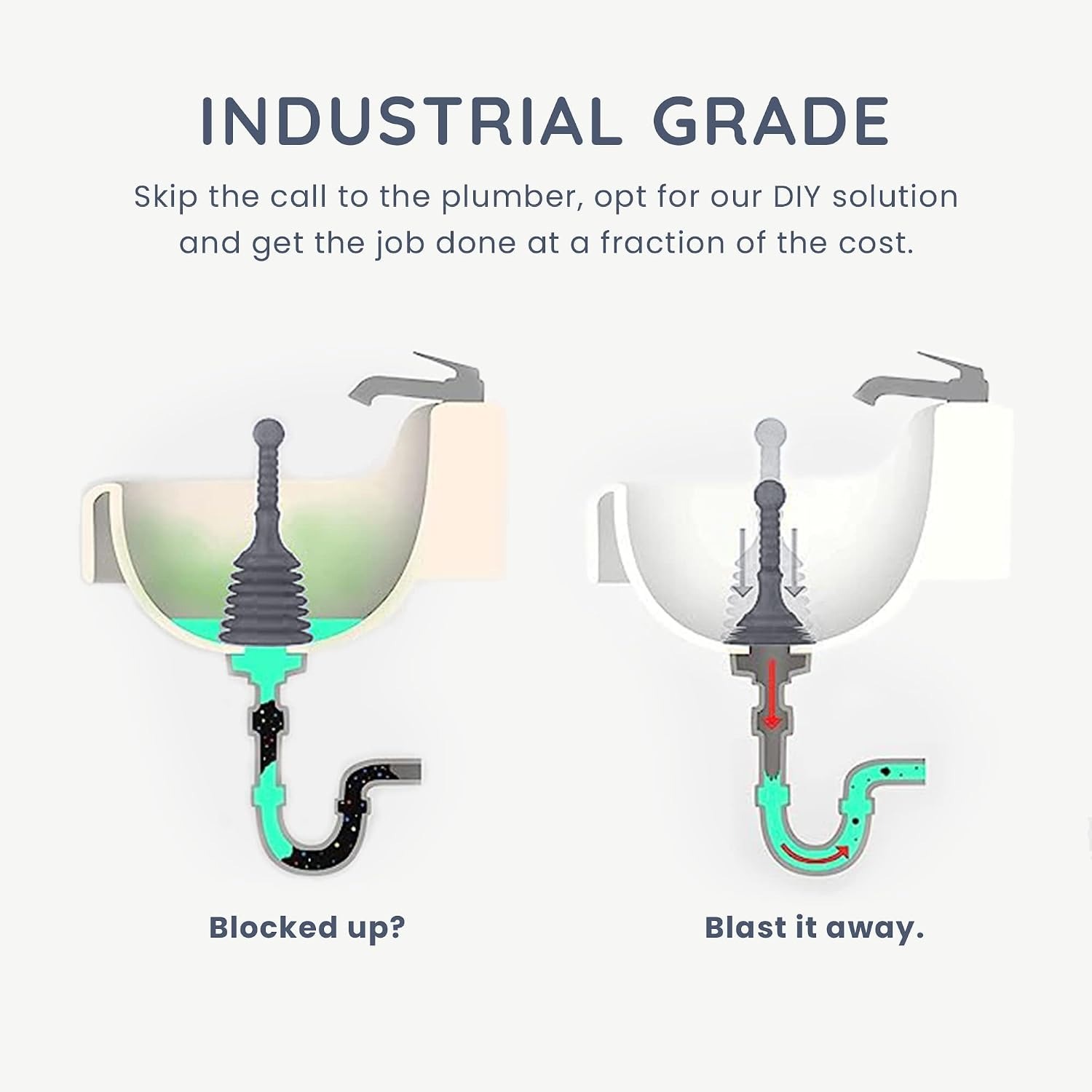
The maker of this one says it pushes water at the blockage, not just air. That matters because water does not squash. When you press on a column of water, nearly all of that push arrives at the clog. Air gives way first, so less of it gets there.
When you let go, the folds open again and pull back on the water in the pipe. That back and forth movement is what loosens a clog. A soft plug of hair and soap rocks, breaks up, and moves on down the pipe where the bore is wider.
There is no motor and nothing to charge. It is a hand tool, and the maker lists it as needing no batteries.
Where it suits and where it does not
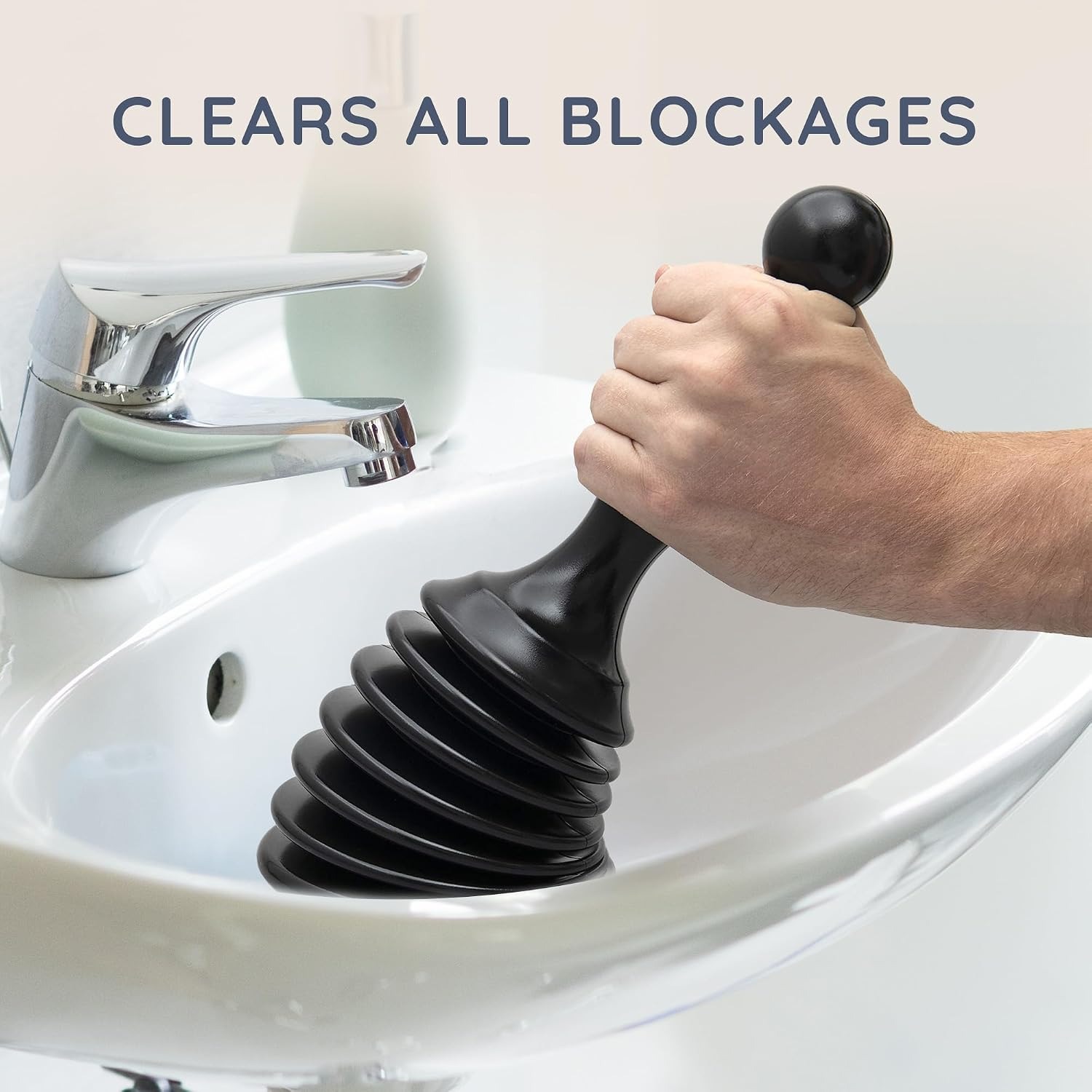
This is sold as a sink and shower drain plunger, and that is the right way to think about it. It suits kitchen sinks, bathroom basins, baths and shower trays. The maker says you can place it over the plughole even when the shower tray is already full of water, which is handy, because that is exactly when most people go looking for a shower tray unblocker.
The maker also mentions toilets. We would be careful there. The width of the opening is not stated by the maker, so there is no way to confirm it will seal against a toilet pan, and a plunger that cannot seal cannot do much. If the toilet is the fitting that keeps blocking, buy a plunger made for that shape.
There are also blockages no plunger will fix. If the kitchen sink, the bath and the downstairs toilet all slow down together, the problem is not in a trap. It is in the main drain outside. A blockage in a public sewer is a matter for Uisce Éireann or your local authority. One on your own property needs a drainage contractor with rods or a jetter.
Getting a good seal
Nearly every failed attempt with a plunger comes down to the seal. If pressure can escape somewhere easier than through the clog, it will.
Start with the overflow. Most basins and baths have one, a slot or a round opening near the top. It joins the waste pipe just below the plughole. Leave it open and each push sends water up and out of the overflow. The maker's advice is to block it with a damp cloth before you start, and that is the single most useful tip for a sink or bath. Hold the cloth firmly in place with one hand while you pump with the other.
A double kitchen sink needs the same thinking. The two bowls share a waste, so put the plug in the bowl you are not working on.
If the basin has a pop-up stopper, lift it out if it will come. Leaving it in puts an obstacle between the plunger and the pipe.
Lastly, make sure there is water over the rim of the opening. A few centimetres is enough. If the sink has drained dry, run the tap for a moment. A plunger working in air is mostly making noise.
Step by step
Put on rubber gloves and move anything you care about off the surround. Plunging can splash.
Cover the overflow, or plug the second bowl. Check that water covers the plughole.
Sit the large opening flat over the plughole. Press down slowly the first time. This pushes trapped air out of the folds so the next strokes move water.
Now pump. The maker suggests a couple of firm pumps to begin with. Keep the opening pressed to the surface as you go, so the seal holds on both the push and the pull.
Lift it away and watch. If the water starts to drop, even slowly, you are winning. Give it another round. If nothing changes after four or five rounds, stop. Forcing it will not help, and the clog probably needs a different tool.
When the water runs away, turn on the hot tap and let it run for a minute or two. That carries the loosened bits through the trap and along the pipe so they do not settle again a metre further on.
One point on safety. Do not plunge a drain that has had chemical cleaner poured into it. We do not recommend those products at all, and plunging is one reason why. Whatever is in the water can splash back on your skin and into your eyes. If a chemical has already gone down, flush with plenty of cold water over time, wear eye protection, and if in doubt leave it for a plumber.
What the maker tells us about this one
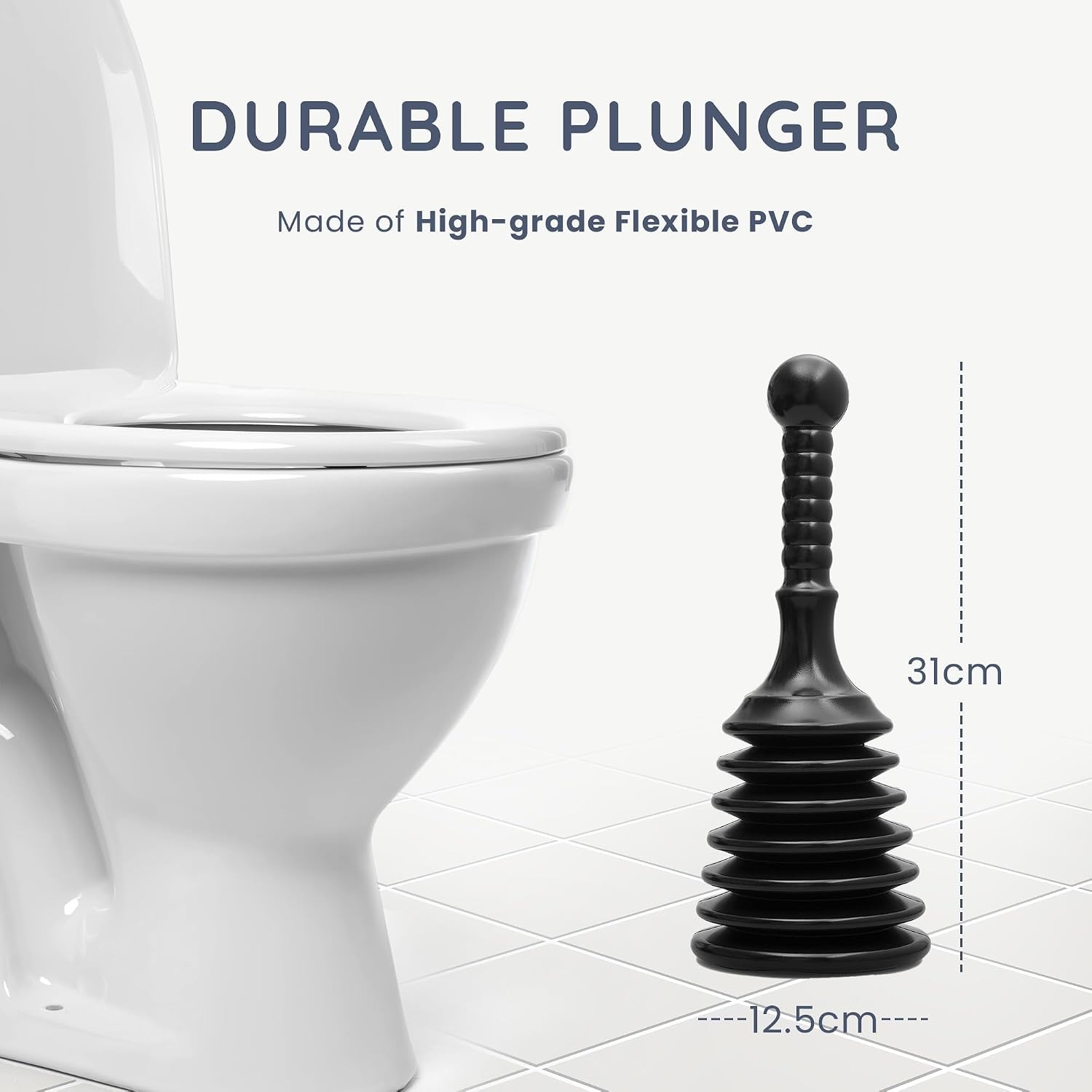
It is worth being plain about what is known. The maker describes the material as PVC. The size is given as 10 x 1 x 10 cm and the weight as 130 g. One plunger comes in the pack, and it is the only item included.
The colour is not stated by the maker, and neither is the width of the opening. Go by the photos, and look at your own plughole before you order. Most sink and basin plugholes are modest in size, but a large shower waste with a wide chrome cover is worth measuring.
Cleaning and storing it
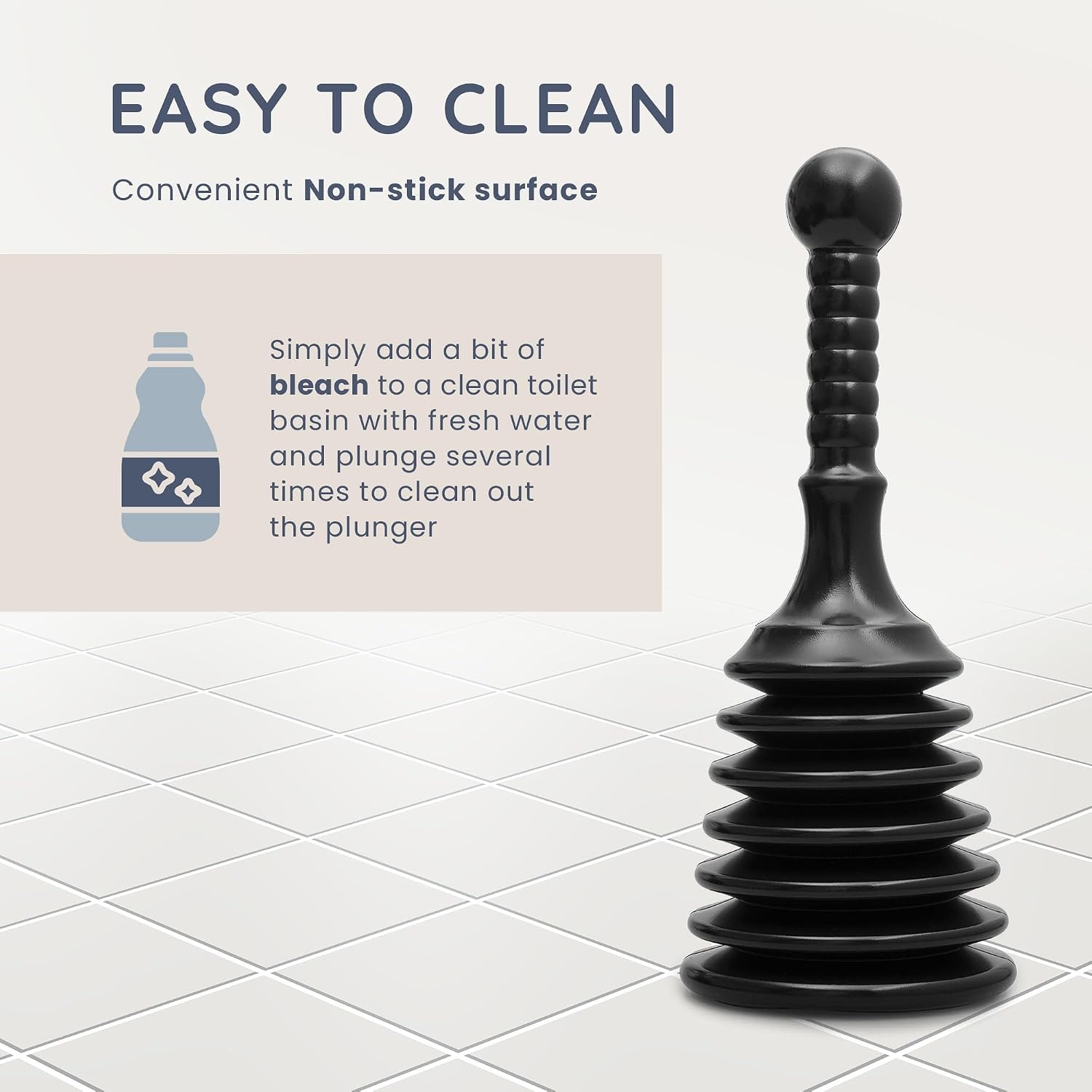
A plunger that is put away dirty is not nice to pick up next time. The maker's method is short. Spray it with a cleaning product, then rinse it with clean water so nothing is left sitting in the chamber.
A good way to rinse the inside of the folds is to pump it a few times in a bucket or a sink of clean water. Shake it off, stand it somewhere to dry, and then put it in the cupboard under the sink. Keep it out of strong sunlight, as with most plastics.
If you use it in both the kitchen and the bathroom, rinse it well between the two.
Keeping drains clear afterwards
Once the water is running again, a few habits make the next blockage less likely.
In the shower, a simple hair catcher over the waste stops most hair before it reaches the trap. In the kitchen, wipe greasy pans with kitchen paper before washing them, and use a sink strainer for food scraps. Run hot water for half a minute after washing up.
And when a drain first starts to slow, deal with it that week. A partial clog is soft and shifts with a few pumps. A full one has had months to pack down.
When to stop and call someone
A plunger is a first step, not a cure for everything. If a few good attempts do nothing, the next option is to take off the trap under the sink and clean it by hand, with a basin underneath to catch the water. A drain snake reaches further again.
If you find a leak under the sink, a waste pipe that has come apart, or a job that means changing fixed pipework, that is work for a qualified plumber. And if the trouble is outside the house, in a gully or a shared drain, it is not a plunger job at all.
The short version
Most slow sinks and showers are blocked close to the plughole, in the trap. A bellows sink plunger sits over the plughole and pumps water down at that spot. The maker says it pushes water where a plain cup mostly pushes air, and that it works in a shower tray that is already full.
Cover the overflow with a damp cloth, keep the opening under water, and start with a couple of firm pumps. Rinse it clean and keep it under the sink.
It suits sinks, basins, baths and shower trays. For toilets, for several drains blocking at once, or for anything involving the pipework itself, you need a different tool or a plumber.