
The complete guide
How To Choose A Leaf Guard For An Outside Gully
Why outside gullies block
Walk round most houses in November and you will find a gully that looks more like a compost bin. Leaves, moss from the roof, bits of twig and windblown litter all end up there. The gully sits at the lowest point of the yard, so everything loose heads for it.
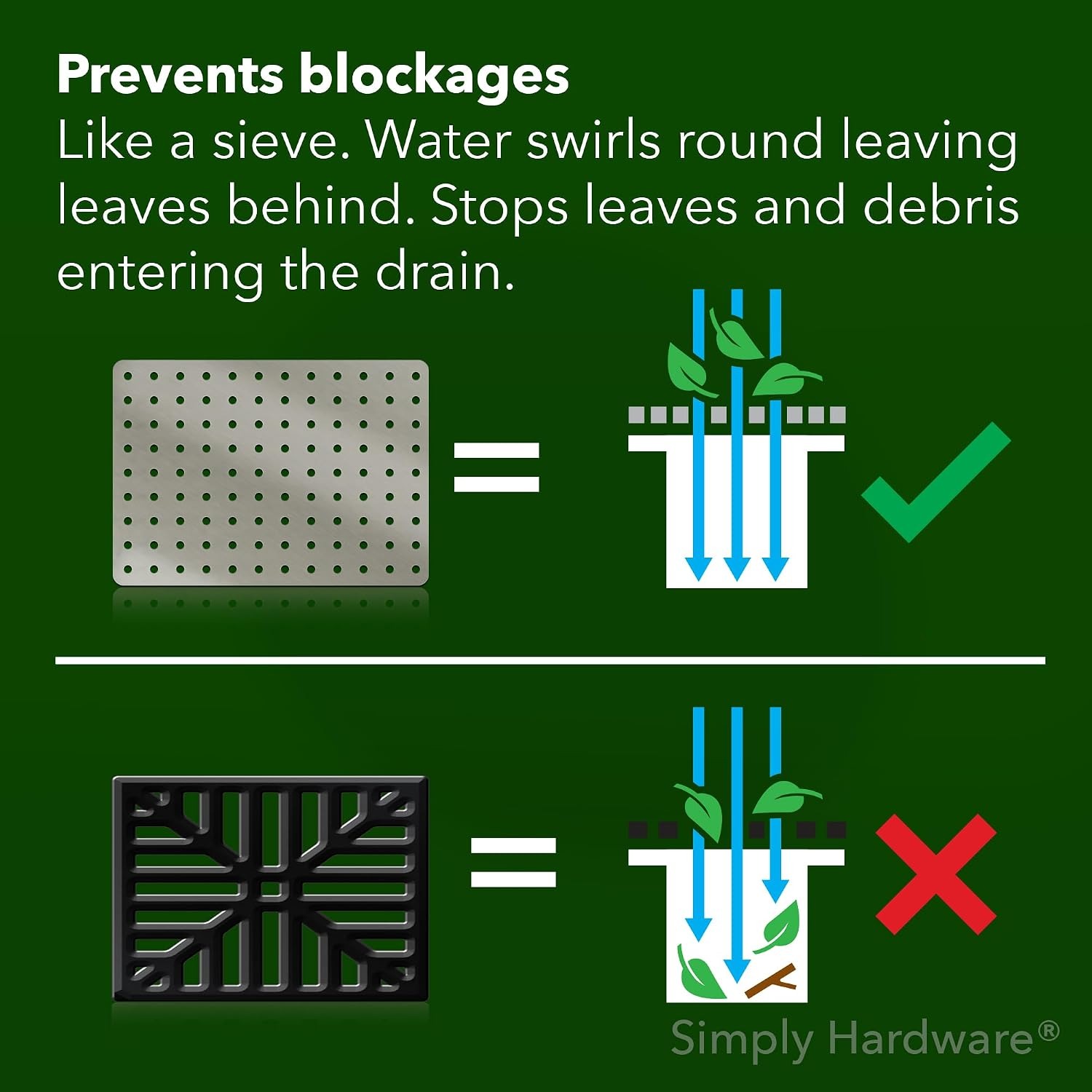
A standard gully grid has wide slots. They let water in quickly, and they let leaves in just as quickly. Once inside, the leaves sink into the trap. They soak, rot and pack down into a dense mat that water struggles to get through.
You find out when it rains hard. The water from the kitchen waste or the rainwater pipe has nowhere to go. It ponds around the gully, spreads across the path and sometimes sits against the wall of the house. Then someone has to kneel down with a glove and dig the muck out by hand.
A leaf guard changes where the leaves stop. In place of the trap, they stop on top, in the open, where a brush can reach them.
What this cover is
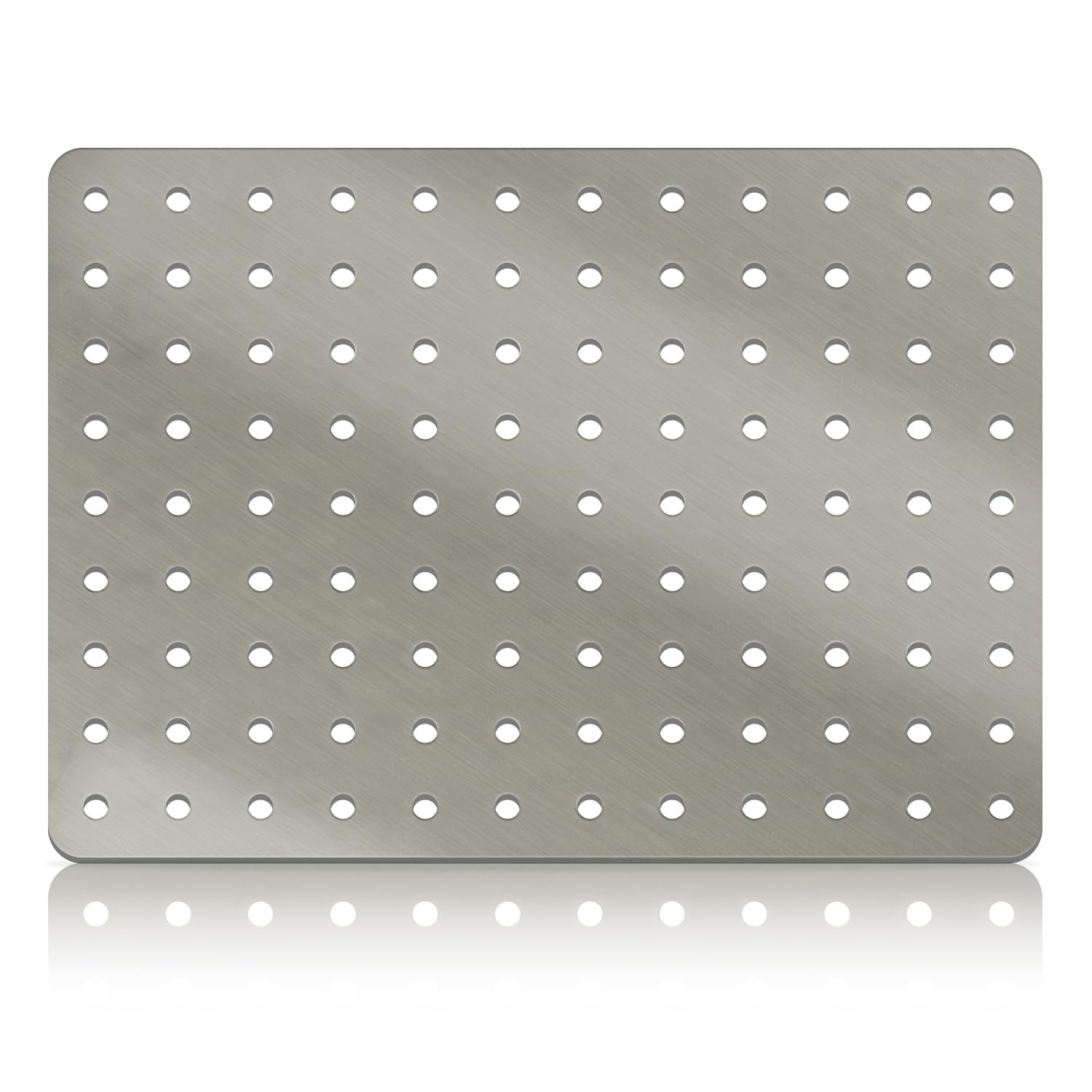
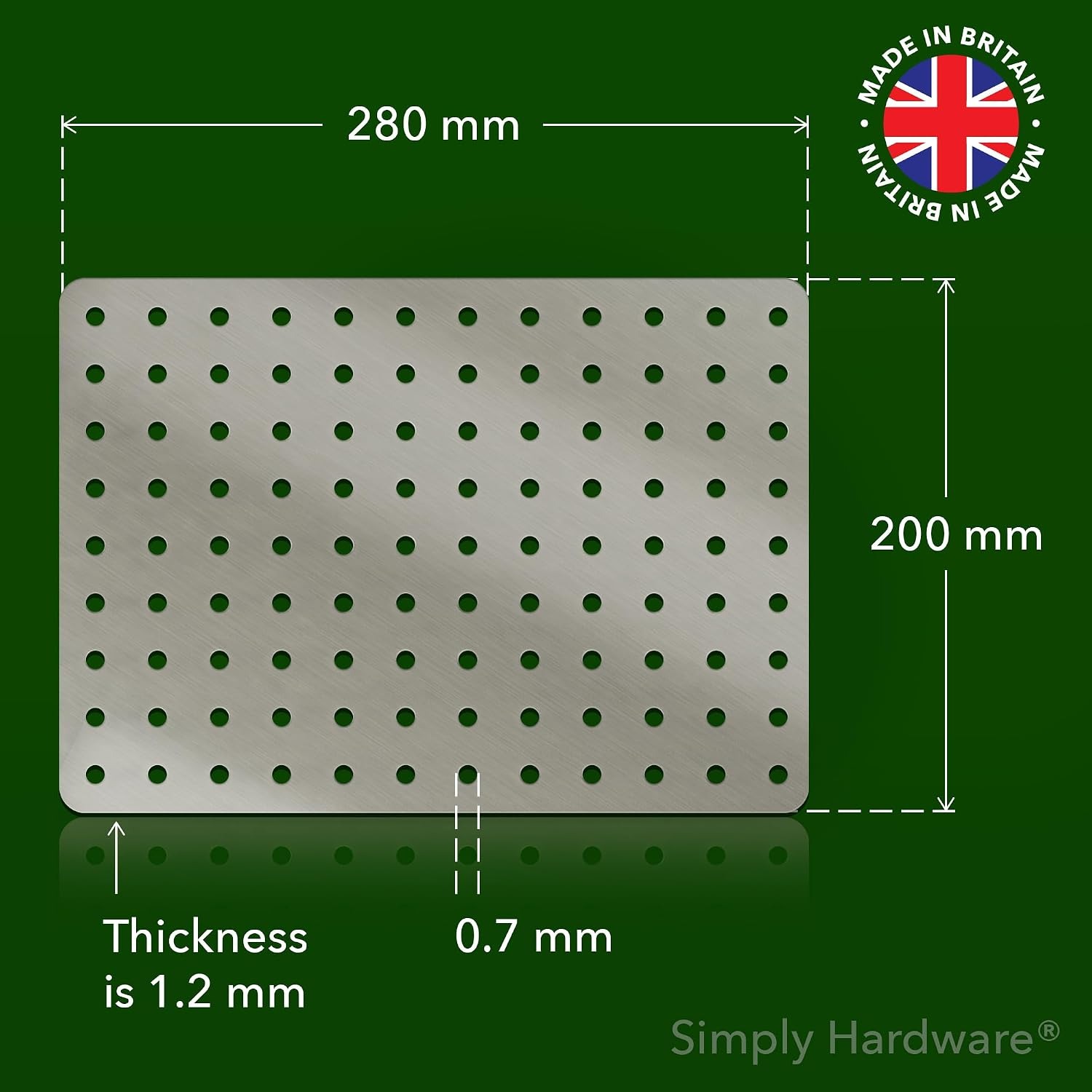
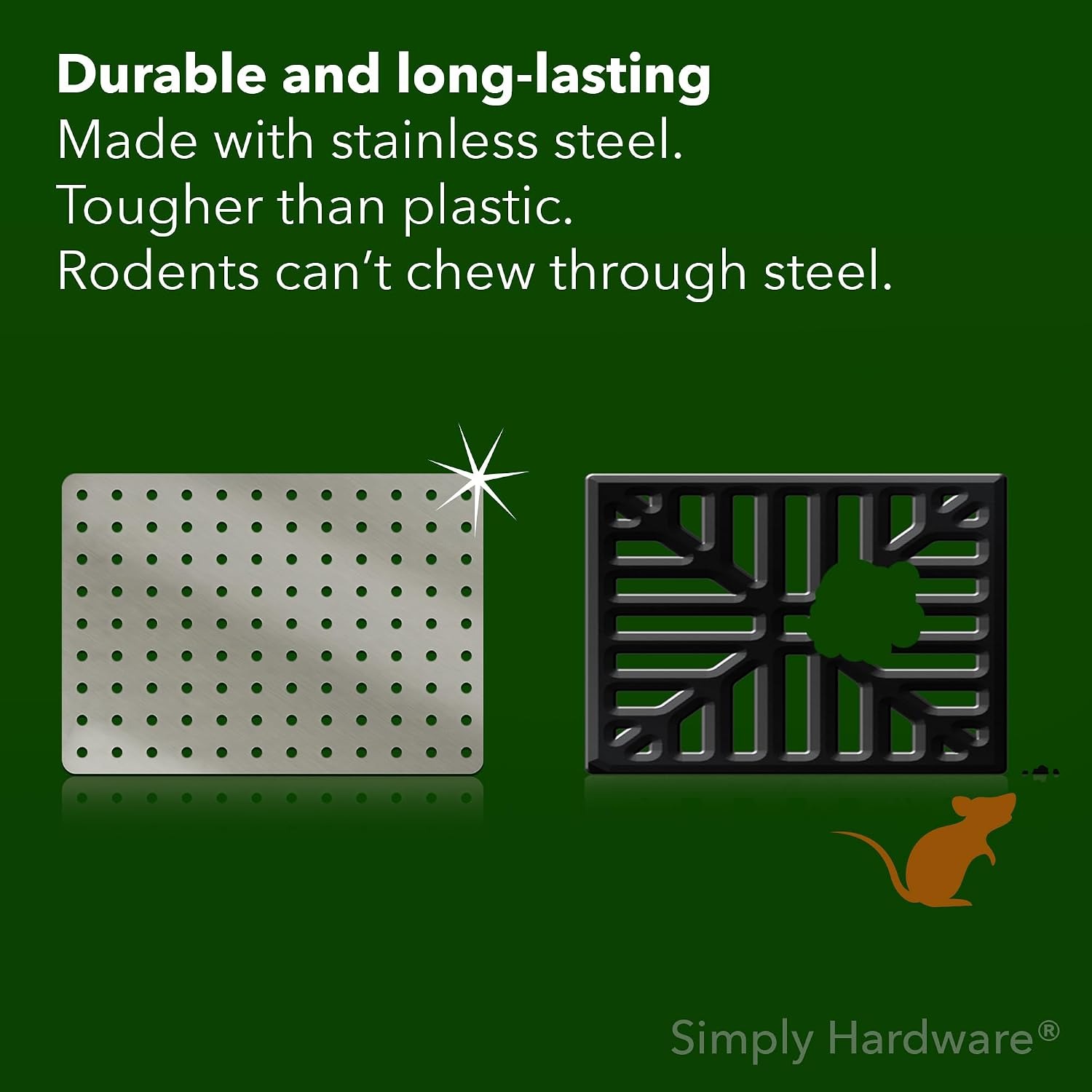
This is a flat rectangle plate made from satin stainless steel. It measures 280 x 200mm, which the maker also gives as 11 x 8 inch. The colour is listed as silver.
It has 108 holes. The maker gives the diameter of each hole as 7mm. The dimensions list a thickness of 0.1 cm, so the sheet is about 1mm thick.
The maker calls it a drain guard, a drain protector or a swirl cover. The idea is that it works like a sieve. Water runs across the plate and drops through the holes. Leaves are too big to follow, so they are left behind.
One cover comes in the pack. The weight is not stated by the maker, and neither is the method of fixing.
The most important limit
Before anything else, read this part.
The maker states that this product is not suitable for pedestrian or road traffic. It is recommended for homes and other private properties.
In plain terms, it is a leaf guard. It is not a load-bearing cover. It is a thin sheet of steel, about 1mm thick, and it is not built for a foot or a wheel.
So think about where your gully is. A gully tucked against the house wall under a waste pipe, where nobody steps, is the right place for it. A gully in the middle of a path, in a doorway or on a driveway is not. For those you need a cover that its maker states is made for traffic, and this is not one.
If you are in any doubt about whether people might step on the spot, treat it as a walking area and choose a different product.
Replace the grid or cover it?
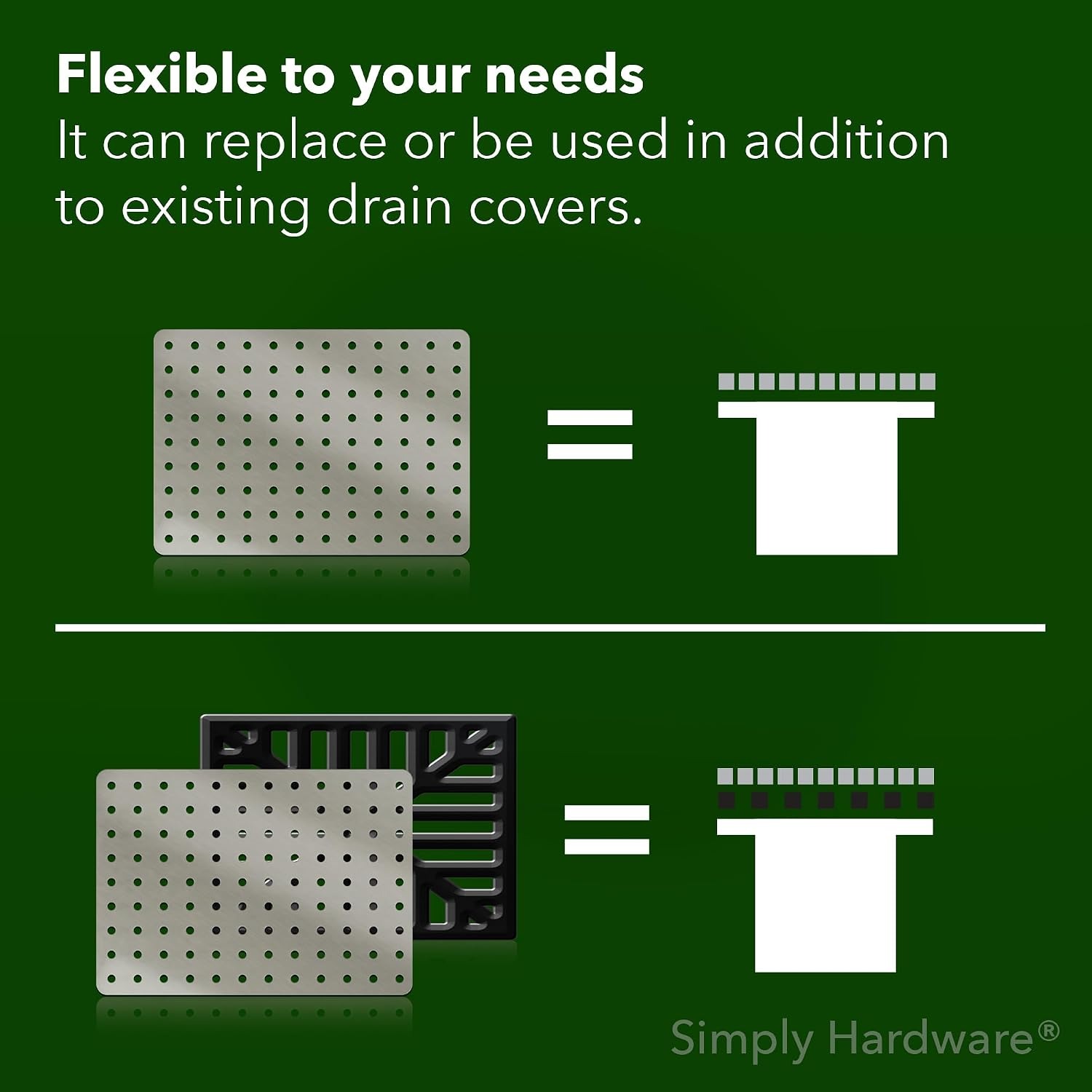
The maker says this plate can be used to replace an existing drain cover or in addition to one.
For most homes, the second option is the sensible one. Your existing grid is the part designed to sit in the gully frame. Leave it where it is. Put the stainless steel drain guard over it as a second, finer layer. The old grid keeps its job, and the new plate keeps the leaves out.
Replacing a grid outright only makes sense where the old one is missing or broken and the gully is well away from any foot traffic. Even then, remember the plate is thin and the maker gives no fixing method.
Measuring for a good fit
A leaf guard only works if it covers the whole opening. A gap along one edge is an open door for leaves.
Measure the top of your gully in millimetres. Take the length and the width of the grid or of the opening it sits in. Then compare that with 280 x 200mm.
Check a few other things while you are there. Is the gully surrounded by a raised kerb or sunk into concrete? A plate that is larger than the recess will not sit flat. Does a pipe come down onto the grid? The maker does not describe a pipe cut-out on this cover, so a pipe that drops straight onto the grid may get in the way of a flat plate. Many waste pipes stop a little above the grid, in which case the plate can slide underneath, but you need to look.
If your measurements are close but not exact, send them to us before you order. It is easier to check first than to return a cover that does not suit.
Putting it in place
The maker does not state how the plate is fixed, so we will not invent a method. What we can say is practical.
Clear the gully first. There is no point covering a trap that is already full of rotting leaves. Lift the grid, scoop out the debris with a gloved hand or a small trowel, and flush it with a bucket of water. Put the grid back.
Lay the plate flat over the grid and check that it sits without rocking. Watch it through the first spell of heavy rain and wind. If it lifts or shifts, it needs a different arrangement, and you should contact us for advice.
None of this involves altering pipework, and it should stay that way. If the gully itself is cracked, sunken or holding water, that is a repair for a qualified plumber or drainage contractor. The Irish Building Regulations apply to drainage work.
Keeping it working
A leaf guard moves the problem to somewhere easy. It does not remove the need to clear leaves.
In autumn, look at the cover once a week and after any windy day. Sweep the leaves off with a hand brush or lift them away. If a layer of wet leaves is left to mat down over the holes, water will pond on top of the plate just as it would in a blocked gully.
Through the months when fewer leaves fall, a check every few weeks is usually enough. Moss and silt can fill the holes over time. A soft brush and warm water clears them. Poke out any hole that is plugged.
Stainless steel copes well outdoors, but it is not immune to marks. Near the sea, or where it sits in standing dirt, it can pick up surface staining. A wash now and then keeps the satin finish looking clean. Avoid wire wool and harsh scourers.
Rodents and air vents
The maker mentions two more uses.
The first is keeping rodents out of outside drains. The maker gives the hole diameter as 7mm and suggests the steel plate is harder for rodents to get through than a plastic alternative. That is a reasonable point, but we will not promise it solves a rodent problem. If you have seen rats near a drain, a cover is one small part of the answer. Speak to a pest control professional as well.
The second is exterior air vents. The maker says the plate is suitable for installation on them. Take care here. Some vents supply air to a boiler, stove or other fuel-burning appliance, and those must never be restricted. If you are not sure what a vent is for, ask a registered installer before covering it.
Whose drain is it?
This cover is for drains on your own property. The gullies in the road and on the public footpath belong to the local authority. Do not cover those, even if they sit right outside your gate. If a public gully is blocked, report it to the council. Trouble in the public sewer is a matter for Uisce Éireann or the local authority.
The short version
Outside gullies block because leaves fall through the grid and rot in the trap. This rectangle drain cover stops them at the top. It is a flat plate of satin stainless steel, 280 x 200mm, about 1mm thick, with 108 holes of 7mm.
The maker states it is not suitable for pedestrian or road traffic. Use it only where nobody walks or drives, and treat it as a leaf guard and not a load-bearing cover.
Measure your gully, clear it out, lay the plate over the existing grid and sweep the leaves off through autumn. If the gully still floods when it is clean, call a qualified plumber.